Can You Take LiveGood Supplements Together?
Can You Take LiveGood Supplements Together?
Many LiveGood supplements can potentially be used within the same routine, but that does not mean every product should be taken together by every person. The safest approach is to compare labels, identify repeated ingredients, consider medication interactions, and add only products that serve a clear purpose.
A multivitamin, D3-K2, magnesium, greens powder, protein, collagen, coffee, and targeted wellness formula can overlap in nutrients or effects. Taking more products does not automatically produce better results.
This guide explains how to combine LiveGood supplements more carefully, what ingredient overlaps to check, how to organize morning and evening timing, and how to build a simpler routine around your immediate goal.
Medical and affiliate disclosure: This article is educational and is not personal medical advice. I am an independent LiveGood affiliate and may earn a commission if you use an affiliate link, at no additional cost to you. Ask a qualified healthcare professional or pharmacist to review your complete routine if you take medication, have a medical condition, are pregnant or nursing, are preparing for surgery, or are purchasing supplements for a child.
Quick Answer: Can LiveGood Products Be Combined?
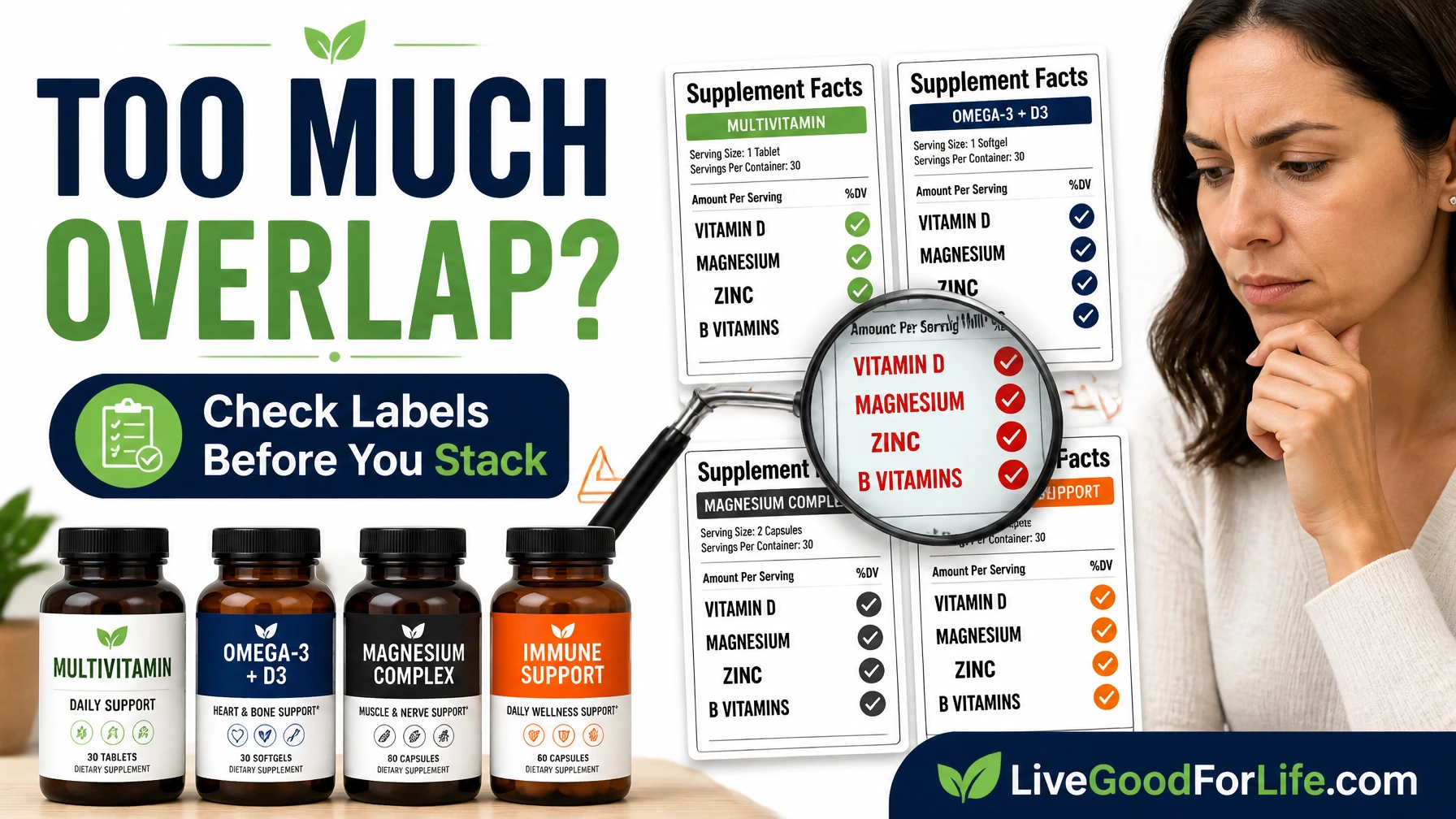
Some LiveGood products may fit together, but the correct combination depends on their current labels and your individual circumstances. Products such as protein and greens serve different purposes and may be easy to use in one routine. A multivitamin combined with separate vitamin D, magnesium, zinc, iron, or another multi-ingredient formula requires closer calculation because nutrients can overlap.
Before combining products:
- Write down every supplement, medication, fortified drink, and nutrition powder you use.
- Compare serving sizes rather than bottle-front claims.
- Add the daily amount of repeated nutrients.
- Check warnings, allergens, stimulant content, and medication interactions.
- Use the lowest number of products needed for a clear purpose.
- Confirm the routine with a healthcare professional when risk factors apply.
Why Supplement Overlap Matters
A broad multivitamin can contain dozens of vitamins and minerals. A greens powder may add botanicals and naturally occurring nutrients. Protein powders can be fortified. Bone, energy, hormone, and immune formulas may repeat nutrients already present elsewhere.
The National Institutes of Health advises people using multivitamins, fortified foods, and other supplements to ensure that their combined intake does not exceed established upper limits for vitamins or minerals.
| Possible Overlap | Where It May Appear | What to Check |
|---|---|---|
| Vitamin D | Multivitamin, D3-K2, bone-support formulas, fortified foods | Total daily amount, blood-test guidance, calcium-related conditions |
| Vitamin K | Multivitamin, D3-K2, greens | Consistency and anticoagulant medication such as warfarin |
| Magnesium | Multivitamin, magnesium formula, bone formulas, antacids or laxatives | Supplemental total, digestive effects, kidney health, medication spacing |
| Zinc | Multivitamin, immune products, protein or specialty formulas | Total amount and long-term balance with other minerals |
| Iron | Women’s multivitamin, prenatal products, standalone iron | Whether iron is appropriate, constipation, medication interactions, laboratory guidance |
| B vitamins | Multivitamin, energy products, fortified protein and drinks | Repeated high amounts, especially niacin and vitamin B6 |
| Caffeine or stimulants | Coffee, energy products, pre-workout or weight-management formulas | Total caffeine, timing, sleep, anxiety, heart or blood-pressure concerns |
Labels and formulas can change. Check the container you own rather than relying on an old webpage or image.
How to Read Labels Before Stacking Supplements
- Check the serving size. Two capsules may represent one serving even when the front label shows only the nutrient name.
- Read the amount per serving. Do not confuse ingredient-compound weight with the declared nutrient amount.
- Notice the Daily Value. It provides context, but it is not a personalized dose recommendation.
- Compare every repeated nutrient. Add amounts from multivitamins, standalone supplements, fortified powders, and drinks.
- Read other ingredients. Check allergens, sweeteners, botanicals, caffeine sources, and inactive ingredients.
- Review warnings and directions. Product-specific instructions take priority over a general routine.
Our guide to reading supplement labels and spotting underdosed blends provides a deeper label checklist. You can also review available documents in the LiveGood Certificates of Analysis directory.
Multivitamin and D3-K2 Together
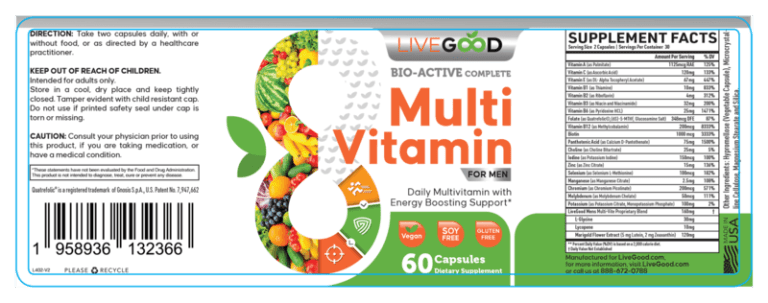
A LiveGood multivitamin and Organic D3-K2 may both contribute vitamin D, and the multivitamin may also contain vitamin K. Combining them is not automatically inappropriate, but you should calculate the complete daily amount and consider why you are adding the separate D3-K2 product.
Useful questions include:
- How much vitamin D does the multivitamin provide at the full serving?
- How much additional D3 and K2 is in the separate product?
- Do you have a recent vitamin D blood test or professional recommendation?
- Do you take warfarin or another medication affected by vitamin K?
- Do you have kidney, calcium, parathyroid, or bone-health concerns?
LiveGood’s current D3-K2 directions recommend taking it with food. Because vitamins D and K are fat-soluble, a meal containing some fat may support absorption. Follow the current label and personalized medical guidance rather than adding capsules simply because two products are available.
Multivitamin and Magnesium Together
Multivitamins often contain some magnesium, while a dedicated magnesium formula may contain a larger supplemental amount. Check the elemental magnesium listed on both Supplement Facts panels and include magnesium from antacids or laxatives.
Too much supplemental magnesium commonly causes diarrhea, nausea, or abdominal cramping. People with impaired kidney function need professional guidance because the kidneys help regulate magnesium.
Magnesium can also interfere with the absorption of some medications. NIH guidance notes interactions with certain antibiotics and oral bisphosphonates. A pharmacist can tell you how many hours to separate your exact medication and magnesium product.
Greens and a Multivitamin Together
Organic Super Greens and a multivitamin are not identical. A multivitamin provides declared amounts of selected vitamins and minerals. A greens powder provides concentrated plant ingredients and may include other components such as herbs, algae, enzymes, or probiotics.
Some people may use both, but check:
- Whether the greens formula adds vitamins or minerals already present in the multivitamin
- Green tea, matcha, or another potential caffeine source
- Vitamin K considerations for anticoagulant medication
- Digestive tolerance to concentrated greens, enzymes, or probiotics
- Allergens and sensitivities
Greens powder should not replace vegetables, fruit, fiber-rich foods, or a varied diet. It is a supplement to food, not a substitute for it.
Protein and Collagen Together
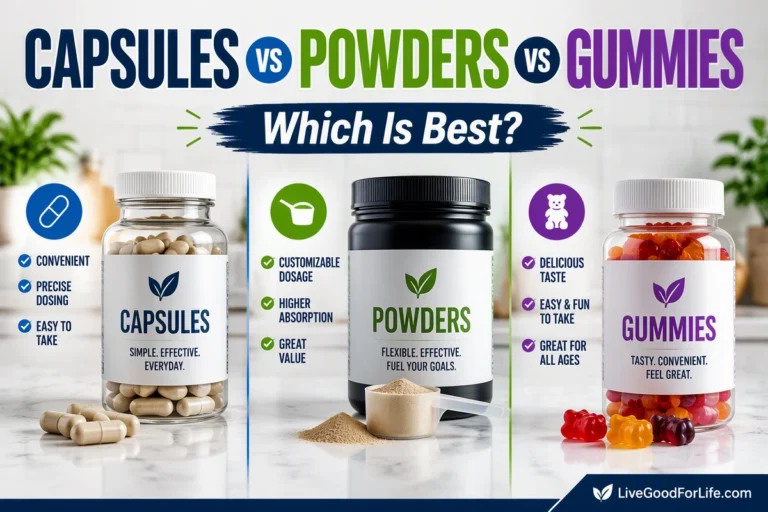
Protein powder and collagen can both contribute protein, but they are not nutritionally interchangeable. A complete protein provides all essential amino acids in appropriate proportions. Collagen has a different amino-acid profile and should not be treated as the only protein source in a diet.
They may be used in the same day or even the same drink if the current product directions, total protein intake, digestive tolerance, allergies, and health circumstances support that choice.
| Product Type | Main Role in a Routine | Important Check |
|---|---|---|
| Plant or whey protein | Convenient dietary protein | Total protein needs, calories, allergens, kidney or liver guidance |
| Collagen peptides | Collagen-specific amino-acid source | Animal source, added ingredients, and not using it as the only protein |
Read our detailed LiveGood Collagen Peptides guide for source, formula, and safety considerations.
Be Careful With Energy and Stimulant Products
Caffeine can come from coffee, tea, matcha, energy powders, pre-workouts, weight-management products, and some herbs. Combining several sources can make the total difficult to recognize.
Check every label if you experience or manage:
- Sleep difficulty
- Anxiety or sensitivity to stimulants
- Heart rhythm or blood-pressure concerns
- Pregnancy or nursing
- Medication that interacts with caffeine or stimulants
Avoid assuming that a “natural energy” description means caffeine-free. Look for caffeine amounts and botanical sources on the current label.
Build a Simple Routine Around One Goal
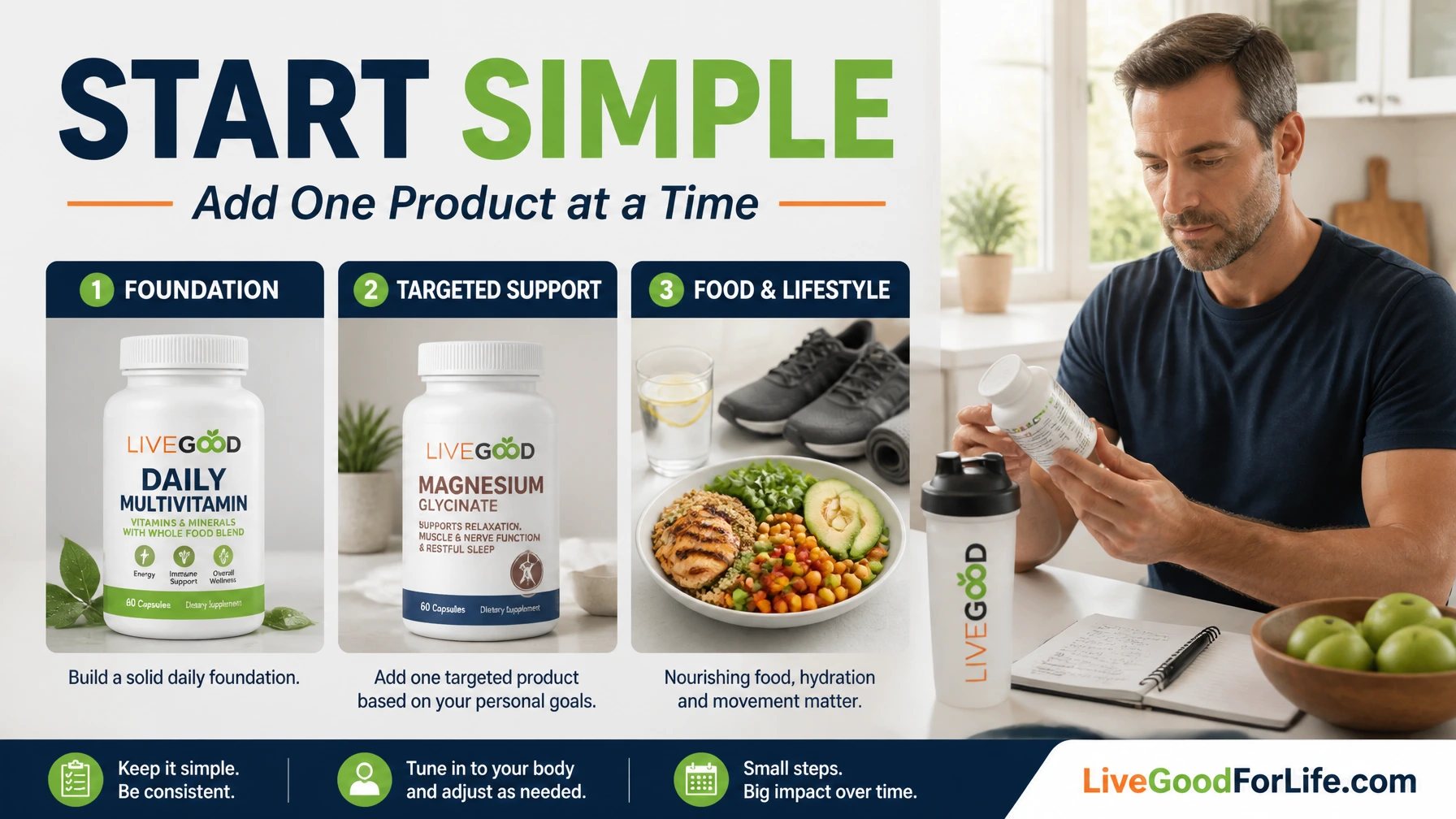
A routine is easier to evaluate when it begins with one immediate goal rather than a long product list. The free LiveGood health questionnaire currently asks you to choose:
- Lose Body Fat
- Build Lean Muscle
- Just Get Healthier
After choosing a goal, the questionnaire continues through additional questions and offers a language selector. Use it as an educational planning tool, not as a diagnosis, medical assessment, or replacement for care from a qualified professional.
Choose Your Goal and Get a Free Health Report
If Your Goal Is to Lose Body Fat
Begin with food intake, protein adequacy, movement, sleep, and a sustainable energy balance. Supplements cannot replace these fundamentals. Avoid stacking multiple stimulant or weight-management formulas without professional review.
If Your Goal Is to Build Lean Muscle
Prioritize progressive resistance training, adequate total dietary protein, calories appropriate to your goal, recovery, and sleep. A protein powder can be a convenience rather than a requirement. Add performance products one at a time and check medications and health conditions.
If Your Goal Is to Get Healthier
Focus on dietary quality, regular movement, sleep, hydration, stress management, medical care, and correction of documented deficiencies. A simple multivitamin or another targeted product may be easier to assess than beginning with several overlapping formulas.
A Practical Morning and Evening Schedule
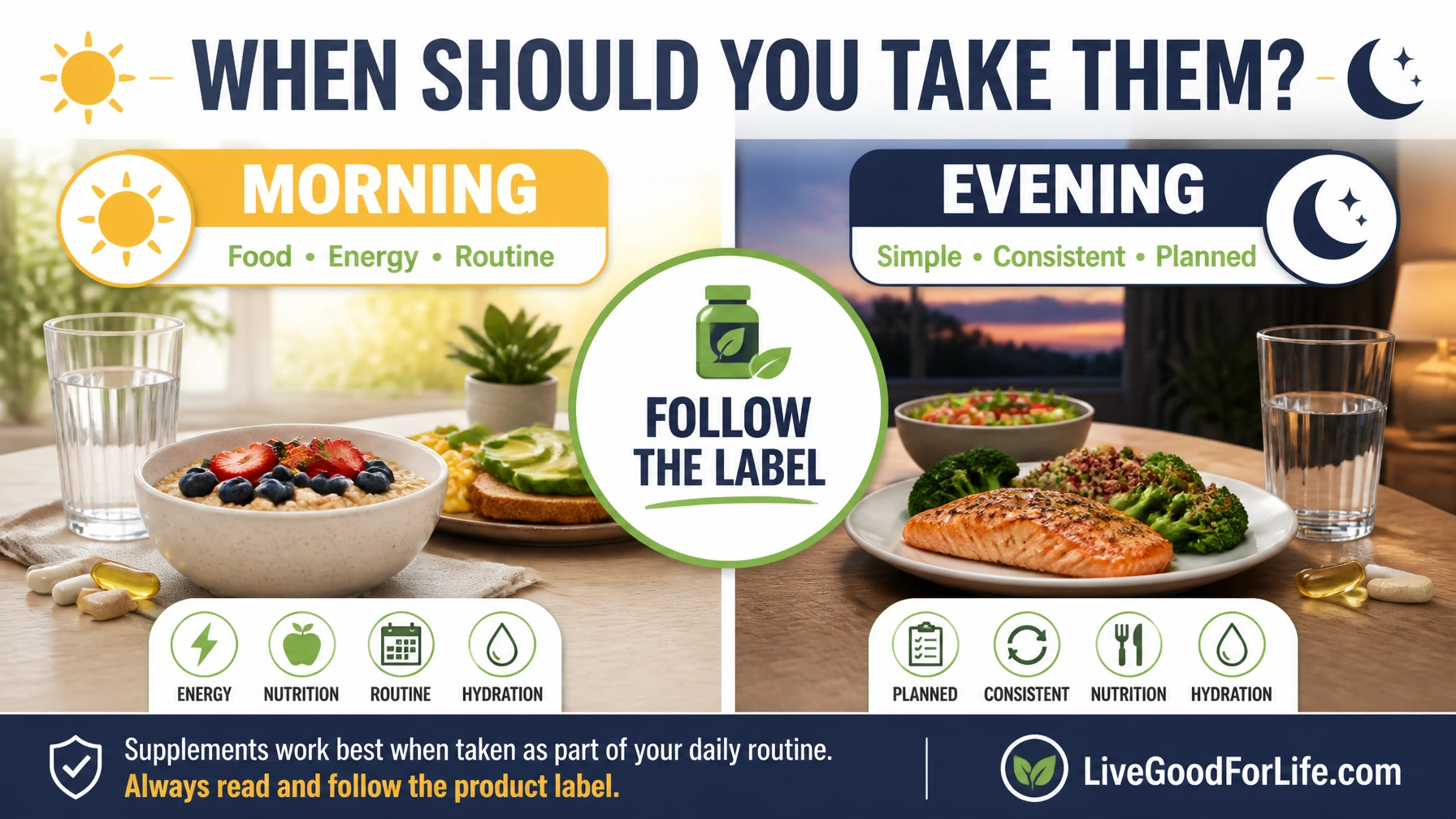
There is no universal schedule for every LiveGood product. The example below is a planning framework, not a prescription.
| Time | Products That May Fit | What to Consider |
|---|---|---|
| Breakfast or first meal | Multivitamin or D3-K2 when directed with food | Food tolerance, fat-soluble nutrients, medications |
| Morning or early day | Coffee or energy products | Total caffeine and possible sleep effects |
| Meal, smoothie, or convenient time | Greens, protein, or collagen | Current directions, calories, protein total, digestive tolerance |
| Evening if suitable | Magnesium when label and medication schedule allow | Digestive effects, kidney health, medication spacing |
If a label gives a specific time or requires food, follow that direction. If timing conflicts with medication instructions, ask a pharmacist rather than guessing.
Introduce One Product at a Time
Starting several supplements on the same day makes it difficult to identify which product caused a benefit, side effect, allergy, digestive change, or sleep problem.
- Choose one product with a clear purpose.
- Read the complete label and start only as directed.
- Track tolerance, symptoms, and relevant measurements.
- Allow enough time to evaluate it unless a reaction requires stopping sooner.
- Add another product only when there is a reason and no unresolved concern.
Stop and seek appropriate medical help for severe or allergic-type symptoms. Do not restart a suspected product without professional advice.
Who Should Get Professional Advice Before Combining Products?
Speak with a qualified clinician or pharmacist before stacking supplements if you:
- Take prescription or regular over-the-counter medication
- Use warfarin, antibiotics, thyroid medication, diabetes medication, blood-pressure medication, diuretics, or bisphosphonates
- Have kidney, liver, heart, endocrine, digestive, bleeding, or autoimmune conditions
- Are pregnant, trying to conceive, or nursing
- Are preparing for surgery
- Have allergies or a medically restricted diet
- Are buying supplements for a child or older adult with complex health needs
Bring photographs or a written list of every label and serving size. The product name alone is not enough for a proper interaction review.
LiveGood Routine Checklist
- Every product has a clear purpose.
- I checked all Supplement Facts panels.
- I calculated repeated vitamins and minerals.
- I counted all caffeine and stimulant sources.
- I checked medication and health-condition warnings.
- I am following serving and meal directions.
- I introduced products individually where practical.
- My routine supports rather than replaces food, sleep, movement, and medical care.
Browse the LiveGood product catalogue and buying guide and our independent LiveGood supplement reviews before choosing a combination.
Frequently Asked Questions
Can I take a LiveGood multivitamin, D3-K2, and magnesium together?
They may appear in the same routine, but first calculate repeated vitamin D, vitamin K, magnesium, and other nutrients. Medication use, laboratory results, kidney function, and individual needs can change what is appropriate.
Can I mix LiveGood Super Greens with protein powder?
LiveGood describes Super Greens as suitable for mixing in water or a smoothie. Check both labels, allergens, total calories, caffeine or botanical ingredients, and digestive tolerance.
Can collagen and protein powder be used on the same day?
They can potentially be used on the same day, but collagen is not a complete replacement for dietary protein. Include both in your total protein and calorie planning.
Should all LiveGood supplements be taken in the morning?
No. Timing depends on the product directions, food requirements, caffeine, digestive tolerance, medications, and your schedule. Follow each current label.
Is more than one supplement always better?
No. More products can increase cost, ingredient overlap, interaction risk, and difficulty identifying side effects. Use the simplest routine that addresses a genuine need.
Can the free health report tell me which supplements I medically need?
No online questionnaire should be treated as a medical diagnosis, laboratory assessment, or prescription. Use it for general education and discuss personal medical needs with a qualified professional.
Create a Routine You Can Understand
The best supplement routine is not the one with the most bottles. It is the one where every product has a purpose, every label has been checked, total amounts make sense, and potential interactions have been considered.
Start with food and lifestyle fundamentals, choose one immediate goal, and add products conservatively. When medication, medical conditions, pregnancy, surgery, or complex formulas are involved, ask a clinician or pharmacist to review the complete stack.
Start the Free LiveGood Health Questionnaire
References and Further Reading
- NIH Office of Dietary Supplements: Multivitamin and Mineral Supplements
- NIH Office of Dietary Supplements: Magnesium
- NIH Office of Dietary Supplements: Vitamin D
- NIH Office of Dietary Supplements: Vitamin K
Medical disclaimer: Dietary supplements are not intended to diagnose, treat, cure, or prevent disease. Individual needs and interactions vary. This content does not replace advice from a doctor, pharmacist, registered dietitian, or other qualified healthcare professional.
Information notice: Product names, ingredients, amounts, directions, prices, and availability may change. Read the current label on the product you own before use.