17 Foods That Support Better Digestion Naturally
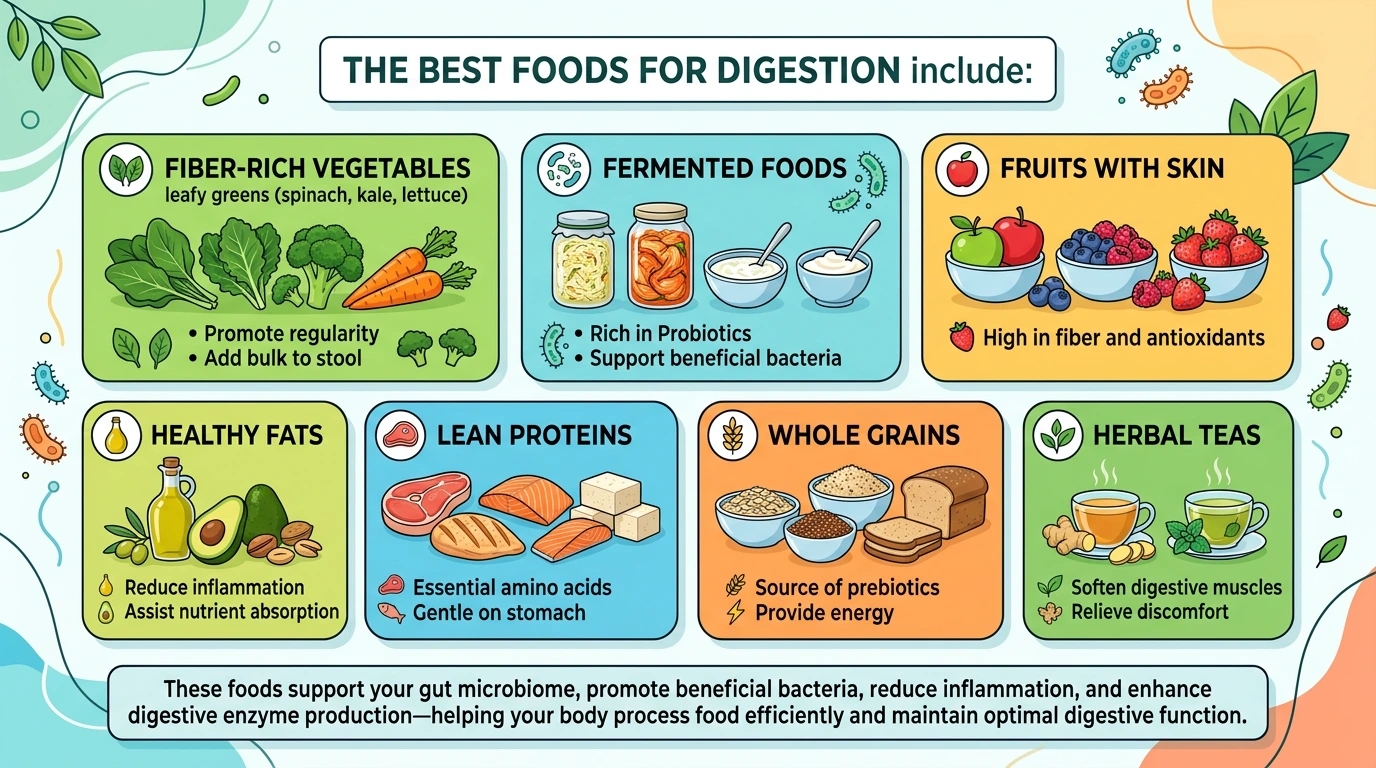
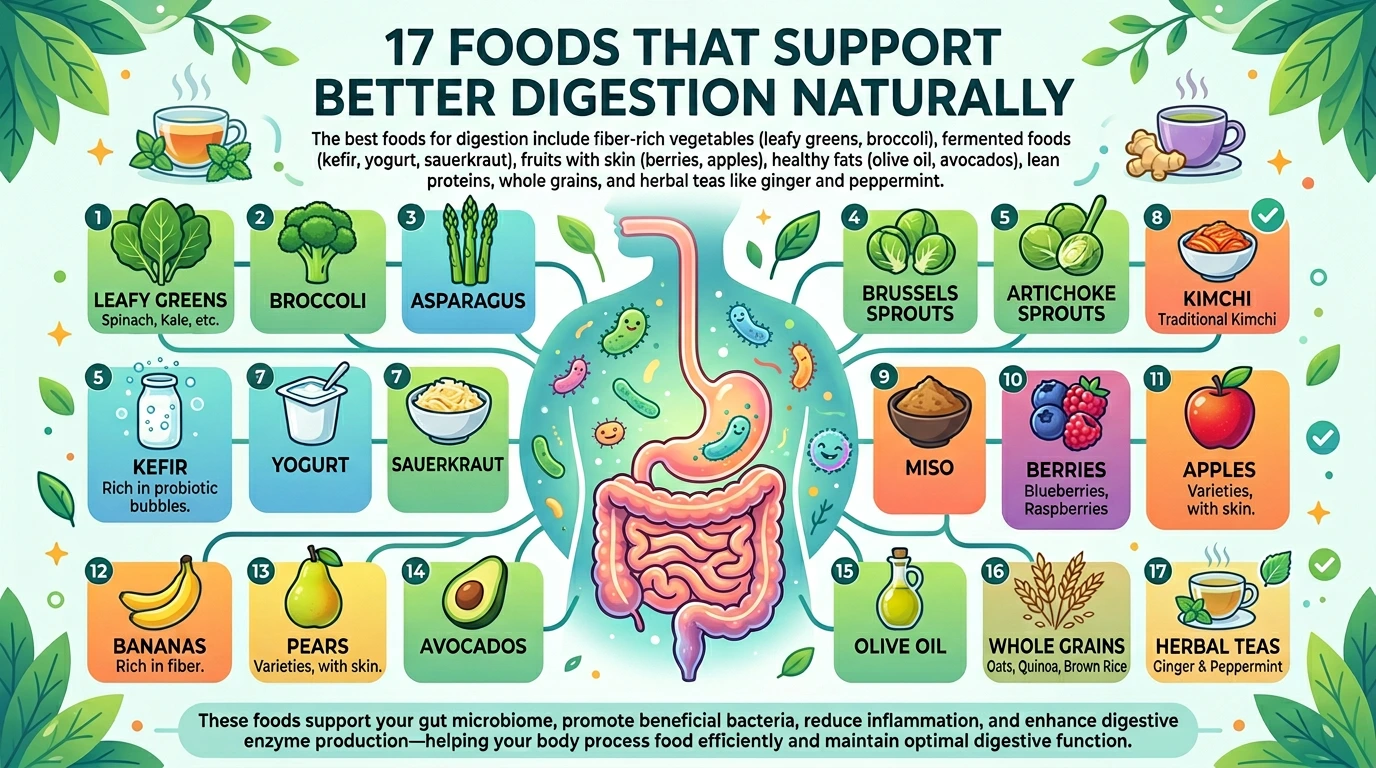
The best foods for digestive wellness often include fiber-rich vegetables, berries, fermented foods, apples with skin, healthy fats, cooked starches, gentle herbs, and simple protein sources. These foods may support a balanced eating routine by adding fiber, fluids, polyphenols, healthy fats, and food-based nutrients that many people do not get enough of.
Last Updated: April 2026 | Reading Time: 8–10 minutes
Introduction: Why Digestive Wellness Matters
Your digestive system plays a major role in how your body handles food, fluid, fiber, and nutrients. It also works closely with your gut microbiome, which is why many people feel better when they build consistent food habits instead of chasing quick fixes.
This guide is not a treatment plan for IBS, reflux, inflammatory bowel disease, constipation, diarrhea, food allergies, nutrient deficiencies, or any medical condition. If you have ongoing, severe, unexplained, or worsening digestive symptoms, it is best to speak with a qualified healthcare professional.
The goal here is simple: give you 17 practical foods to compare, try gradually, and use as part of a realistic digestive wellness routine.
How We Selected These Foods
These foods were selected using three practical criteria:
- Everyday usefulness: foods many people can find in normal grocery stores
- Digestive-routine fit: foods that provide fiber, fluids, polyphenols, healthy fats, protein, or gentle herbs
- Flexibility: foods that can fit into different meal styles and preferences
Different foods work for different people. A food that feels helpful for one person may cause bloating, reflux, or discomfort for someone else. Start small, track your response, and adjust based on your tolerance.
📌 Key Facts at a Glance
- Fiber is the most consistently supported dietary factor for gut health. It resists digestion in the small intestine, reaches the colon, and is fermented by gut bacteria into short-chain fatty acids (SCFAs) including butyrate — the primary energy source for colon cells. Multiple studies confirm that higher dietary fiber intake shifts gut microbiome composition and diversity.
- Most adults in Western countries get only 12–18g of fiber per day, well below the National Academies of Medicine Adequate Intake of 25g (women) and 38g (men). This gap is considered a meaningful public health concern by the USDA and WHO.
- Individual response varies significantly. Two people eating the same foods can have very different gut microbiome responses. High inter-individual variation is one of the most consistent findings in gut microbiome research — which is why “start small and track your response” is evidence-based advice, not just caution.
- Some foods on this list are high-FODMAP. Garlic, apples, and avocado contain fermentable carbohydrates that can worsen symptoms in people with IBS or FODMAP sensitivity. These foods support digestion for many people but can cause bloating or discomfort for others.
- Fermented foods provide live cultures that vary by product and storage. Whether live cultures survive processing and reach the gut in meaningful numbers depends on the specific strain, the product, and how it is stored. Not all fermented foods are equal.
- No food on this list treats or cures any digestive condition. The evidence supports these foods as part of a healthy dietary pattern — not as standalone treatments for IBS, IBD, reflux, constipation, or any diagnosed medical condition.
The 17 Foods That May Support Better Digestion
1. Leafy Greens: Spinach, Kale, and Arugula
Leafy greens provide fiber, magnesium, potassium, folate, and plant compounds that can fit well into a digestion-friendly eating pattern.
Why they may help: Fiber adds bulk to meals and can support regularity when increased gradually and paired with enough fluids. Magnesium is also involved in normal muscle and nerve function.
How to use: Add spinach to smoothies, use kale in soups, or enjoy arugula in salads. Start with a small portion if raw greens make you feel bloated.
2. Berries: Blueberries, Raspberries, and Strawberries
Berries provide fiber, water, and polyphenols in a naturally sweet package.
Why they may help: Whole berries contain fiber from the skin, seeds, and pulp. This makes them a better digestive-wellness option than juice for many people.
How to use: Try half a cup to one cup with yogurt, oats, smoothies, or as a snack.
3. Ginger Root
Ginger is a common kitchen herb used in tea, cooking, and wellness routines.
Why it may help: Some people find ginger tea or fresh ginger comfortable before or after meals. It should not be used as a treatment for nausea, reflux, IBS, pain, or digestive disease without professional guidance.
How to use: Steep grated ginger in hot water, add it to soups, or use it in stir-fries. Start small if you are sensitive to strong herbs.
4. Fermented Foods: Yogurt, Kefir, Sauerkraut, and Kimchi
Fermented foods may contain live cultures depending on how they are made and stored.
Why they may help: Fermented foods can add variety to a gut-friendly routine. Look for labels that mention live and active cultures, and watch added sugar in yogurt or kefir.
How to use: Start with small servings, such as a few tablespoons of sauerkraut or a small serving of yogurt or kefir.
5. Apples With Skin
Apples provide water, fiber, and pectin, a type of soluble fiber.
Why they may help: Whole apples can support a higher-fiber eating pattern. The skin contains useful fiber, but some sensitive people may tolerate peeled or cooked apples better.
How to use: Try one small or medium apple as a snack, sliced into oatmeal, or cooked with cinnamon.
6. Bone Broth
Bone broth is a warm, savory food that can be used as a base for soups or sipped on its own.
Why it may help: Some people find warm broths gentle and easy to include when they want simple foods. Bone broth should not be presented as healing the gut lining, sealing intestinal permeability, or treating digestive problems.
How to use: Use as a soup base, sip a warm cup, or cook grains and vegetables in broth for extra flavor.
7. Peppermint Tea
Peppermint tea is a caffeine-free herbal drink many people use after meals.
Why it may help: It can be a calming part of a mealtime routine. However, peppermint may worsen reflux for some people, so it is not right for everyone.
How to use: Brew peppermint tea and drink it slowly after meals or in the evening if it agrees with you.
8. Extra-Virgin Olive Oil
Extra-virgin olive oil provides monounsaturated fats and polyphenols and is a common part of Mediterranean-style eating patterns.
Why it may help: Healthy fats can make meals more satisfying and help the body absorb fat-soluble nutrients from vegetables.
How to use: Use one to two tablespoons in dressings, over cooked vegetables, or in soups.
9. Sweet Potatoes
Sweet potatoes provide fiber, potassium, carbohydrates, and carotenoids.
Why they may help: They can be a gentle, filling carbohydrate for many people. Cooking and cooling potatoes can increase resistant starch, which some people tolerate well and others may need to add slowly.
How to use: Bake, roast, or boil sweet potatoes and pair them with protein and healthy fats.
10. Avocado
Avocado provides fiber, potassium, and monounsaturated fats.
Why it may help: It can make meals more satisfying and add gentle fiber for many people. Some people with sensitive digestion may need smaller portions because avocado can be rich.
How to use: Try a quarter to half an avocado with eggs, salads, bowls, or toast.
11. Fennel Seeds
Fennel seeds are traditionally used after meals in many food cultures.
Why they may help: Fennel tea may feel soothing for some people after meals. It should not be used as a treatment for bloating, IBS, reflux, or digestive disease.
How to use: Steep one teaspoon of fennel seeds in hot water for tea, or use fennel in cooking.
12. Wild-Caught Salmon
Salmon provides protein and omega-3 fatty acids EPA and DHA.
Why it may help: Protein supports balanced meals, and omega-3s are widely researched in general wellness and inflammatory-balance contexts. Salmon should not be used as a treatment for digestive inflammation or gut disorders.
How to use: Try two servings weekly if you eat fish. Bake, grill, or poach salmon and pair it with vegetables and a starch you tolerate well.
13. Turmeric
Turmeric is a spice commonly used in curries, soups, and golden milk.
Why it may help: Turmeric contains curcumin, a compound often studied in wellness research. Food-level turmeric can be part of a flavorful eating routine, but it should not be used to treat inflammation, pain, IBS, IBD, or digestive disease.
How to use: Add small amounts to meals, soups, rice, or warm drinks. Pair with food if it bothers your stomach.
14. Raw Almonds
Almonds provide fiber, vitamin E, magnesium, and healthy fats.
Why they may help: A small portion can support a higher-fiber eating pattern and provide a satisfying snack. Nuts are calorie-dense and may not fit everyone’s digestion.
How to use: Try a small handful, almond butter, or chopped almonds over yogurt or oatmeal.
15. Cooked Carrots
Cooked carrots provide fiber, water, and carotenoids in an easy-to-use vegetable.
Why they may help: Cooking softens the texture and may make carrots easier for some people to tolerate than raw vegetables.
How to use: Roast, steam, or boil carrots until tender. Add olive oil, herbs, or spices you tolerate well.
16. Garlic
Garlic contains prebiotic fibers such as inulin and FOS, and it adds flavor to meals.
Why it may help: Prebiotic fibers can fit into a gut-friendly eating pattern, but garlic can also trigger gas, bloating, or reflux in some people. It is also a common FODMAP concern for sensitive digestion.
How to use: Use small amounts in cooked meals, dressings, soups, or roasted vegetables if you tolerate it.
17. Slippery Elm Bark
Slippery elm is an herbal product traditionally used in soothing routines.
Why it may help: It contains mucilage, which forms a gel-like texture when mixed with water. It should not be described as healing irritated tissue, reducing inflammation, or treating digestive conditions.
How to use: Follow the product label if using slippery elm powder or tea. Take it away from medications and supplements unless a qualified professional says otherwise, because it may affect absorption.
How to Choose and Use These Foods
Start simple: You do not need all 17 foods immediately. Choose three or four that sound realistic for your meals and use them consistently before adding more.
Build gradually: Increase fiber slowly over two to three weeks. A fast jump in fiber can temporarily increase gas or bloating.
Hydrate: Fiber works best when fluid intake is consistent. Drink enough water for your body, activity level, and climate.
Track your response: Everyone’s digestive system is different. Notice which foods feel comfortable and which foods do not fit your routine.
Consider timing: Some people prefer ginger or peppermint around meals, fermented foods with meals, and cooked vegetables earlier in the day. Use what feels practical and comfortable.
Simple 7-Day Starter Plan
Days 1–2: Add one gentle cooked vegetable, such as cooked carrots or sweet potato.
Days 3–4: Add one fruit option, such as berries or an apple if tolerated.
Days 5–6: Add one fermented food or one herbal tea option, such as yogurt, kefir, ginger tea, or peppermint tea.
Day 7: Review your response. Keep what feels good and pause anything that causes discomfort.
What the Research Shows on Food and Digestive Health
Here is an honest summary of what human research actually supports — and where the evidence is still developing.
Dietary fiber and gut microbiome — well-established relationship. Fiber that resists small intestine digestion is fermented by colonic bacteria, producing SCFAs (short-chain fatty acids). Multiple controlled dietary interventions confirm that increasing fiber intake shifts gut microbiome composition and increases populations of fiber-fermenting bacteria. Butyrate-producing bacteria are particularly associated with gut epithelial health. The relationship between fiber and gut microbiome diversity is one of the more consistent findings in nutrition research.
Fermented foods — promising but strain-specific and individual. Research shows that fermented foods containing live cultures can influence gut microbiome composition, but effects are highly individual and strain-dependent. A 2021 Stanford study (Wastyk et al., Cell) compared high-fiber vs. high-fermented food diets and found the fermented food diet increased microbiome diversity while the high-fiber diet showed more variable individual responses. Neither study showed that fermented foods treat digestive conditions.
Polyphenol-rich foods (berries, olive oil, turmeric) — mechanistic evidence, limited direct clinical data. Polyphenols are metabolized in part by gut bacteria, and observational data consistently associates higher polyphenol intake with gut microbiome diversity. Direct clinical trials isolating specific polyphenol-rich foods on digestive outcomes are limited. The mechanism is plausible; the clinical evidence in humans is early.
Ginger — best evidence for nausea, limited for broader digestion. NCCIH acknowledges evidence for ginger in nausea (pregnancy-related and chemotherapy-related). Evidence for ginger in IBS, reflux, or general digestive comfort is limited and inconsistent. Use it as a comfortable food habit, not as a digestive treatment.
FODMAP foods and individual sensitivity — well-documented. Garlic, apples, and avocado are high in fermentable oligosaccharides, disaccharides, monosaccharides, and polyols (FODMAPs). In people with IBS, these compounds can worsen bloating, gas, and abdominal discomfort. The low-FODMAP diet has the most clinical trial evidence of any dietary approach for IBS symptom management. This does not mean these foods are “bad” — it means they are individual. Many people without IBS tolerate them well.
Slippery elm — traditional use, very limited clinical evidence. NCCIH notes that there is insufficient evidence to rate the effectiveness of slippery elm for most uses. Its mucilage content is documented; whether this produces meaningful clinical digestive benefits in humans is not established by current research. Use with awareness that evidence is limited.
Most food and gut health research is observational or based on microbiome studies rather than clinical outcomes trials. This is normal for nutrition science — but it means individual response, dietary context, and consistency matter more than any single food.
🏛️ What Health Authorities Consistently Say
The USDA, WHO, Harvard T.H. Chan, NIH, and the Academy of Nutrition and Dietetics all point in the same direction on food and digestive health:
- Whole plant foods first. Vegetables, fruits, legumes, and whole grains are consistently recommended as the dietary foundation for gut and overall health. No supplement replaces the variety and synergy of whole foods.
- Fiber is a nutrient of public health concern in the U.S. (USDA Dietary Guidelines 2020–2025). Most Americans fall well below recommended daily intake, making fiber-rich foods practically important.
- The gut microbiome is highly individual. No single food or eating pattern produces the same gut microbiome response in every person. Diversity of plant foods is a consistently recommended strategy over fixating on single “superfoods.”
- Digestive symptoms warrant professional evaluation. Ongoing, severe, or unexplained digestive symptoms should be assessed by a qualified healthcare professional, not managed with food lists alone.
- No food is FDA-approved to treat digestive conditions. Foods support general wellness as part of a balanced diet — they are not medicines for IBS, IBD, reflux, constipation, or any diagnosed condition.
Educational context only. Not a replacement for medical advice or personalized dietary guidance from a registered dietitian.
Frequently Asked Questions
Q: How long before I notice changes?
A: It varies. Some people notice comfort changes quickly, while others need a few weeks of consistent food habits. Avoid promising a timeline, and track one simple metric such as bloating, regularity, or meal comfort.
Q: Are these foods suitable for people with IBS or sensitive digestion?
A: Not always. IBS and sensitive digestion vary widely. Some foods on this list, including garlic, apples, avocado, fermented foods, and high-fiber options, may not fit every person. Start with small portions and ask a qualified healthcare professional or dietitian if symptoms are ongoing.
Q: Can I take supplements instead of eating these foods?
A: Supplements may be useful for some people, but they should not replace balanced meals or medical guidance. Food gives you a broad mix of nutrients, fiber, fluids, and texture that supplements do not fully replace.
Q: Do I need organic versions?
A: No. Conventional versions can still be useful. If budget matters, focus first on eating more whole foods consistently.
Q: What if I have food allergies or intolerances?
A: Skip foods that do not fit your body, diet, or medical needs. This list gives options, not requirements.
Q: How much fiber is too much?
A: Too much too quickly can cause gas, bloating, or discomfort. Increase slowly, hydrate, and adjust if your body does not tolerate a certain amount.
Q: Can children eat these foods?
A: Many common foods on this list can fit into family meals, but portions and choking safety matter. Ask a pediatrician if a child has allergies, medical concerns, digestive issues, or restricted eating.
Q: Do cooking methods matter?
A: Yes. Some people tolerate cooked vegetables better than raw vegetables. Steaming, roasting, and soups can be easier starting points than large raw salads.
Find Your Best Gut-Health Support
Answer a few quick questions to see gut-focused product matches, optional add-ons, pricing, and simple next-step ideas for your routine.
Personalizing your gut-health picks...
Build a Digestive Wellness Routine That Fits Your Life
You do not need to overhaul your whole diet overnight. Start with three foods from this list that sound easy and realistic. Use them consistently, notice how your body responds, and adjust from there.
The best food is the one you can actually eat regularly, tolerate well, and enjoy. For some people that is berries and yogurt. For others it is cooked carrots, sweet potatoes, ginger tea, or salmon with vegetables.
If you want to compare additional digestive wellness support, you can review LiveGood’s wellness products and use the personalized nutrition tools to explore options that may fit your routine.
Sources & References
- USDA. Dietary Guidelines for Americans 2020–2025. dietaryguidelines.gov
- WHO. Healthy Diet. who.int
- Harvard T.H. Chan School of Public Health. Fiber. nutritionsource.hsph.harvard.edu
- MedlinePlus. Digestive Diseases. medlineplus.gov
- NCCIH. Ginger. nccih.nih.gov
- NCCIH. Slippery Elm. nccih.nih.gov
- Wastyk HC, et al. Gut-microbiota-targeted diets modulate human immune status. Cell. 2021;184(16):4137–4153.
- Sonnenburg JL, Bäckhed F. Diet–microbiota interactions as moderators of human metabolism. Nature. 2016;535(7610):56–64.
- Cleveland Clinic. What To Eat for Gut Health. my.clevelandclinic.org
Affiliate disclosure: This page may contain affiliate links. If you purchase through my links, I may earn a commission at no extra cost to you.
Important disclaimer: This article is for educational purposes only and is not medical advice. Food choices and supplements are not intended to diagnose, treat, cure, or prevent any disease. Speak with a qualified healthcare professional if you have ongoing digestive symptoms, severe pain, blood in stool, unexplained weight loss, persistent vomiting, food allergies, medical conditions, medication use, pregnancy/nursing, or concerns about a child’s digestion.