Premium Black Seed Oil Review: 5% Thymoquinone, Ingredients, Price and Value
⚡ Quick Answer
Premium Black Seed Oil is a cold-pressed Nigella sativa softgel standardized to 5% Thymoquinone — 1,000 mg per serving, 30 servings per bottle. At the member price of $14.95, that works out to about $0.50 per serving. Best for people who want a potency-marked, no-mess alternative to liquid black seed oil.
📌 Key Facts at a Glance
- Thymoquinone (TQ) is the primary studied bioactive compound in Nigella sativa oil — the compound most researchers focus on when evaluating black seed oil potency.
- Standardization matters: commercial black seed oils without a stated TQ percentage can range widely in actual concentration. A stated 5% TQ gives buyers a specific benchmark to compare.
- Cold-pressed extraction preserves the natural fatty acid and phytochemical profile of the oil better than heat-based extraction methods.
- Nigella sativa has a documented history of use in traditional medicine across Middle Eastern, South Asian, and North African cultures, predating modern supplementation by centuries.
- This product contains gelatin softgels — not suitable for vegetarians or vegans.
- Nigella sativa may interact with blood-thinning medications (such as warfarin) and requires caution during pregnancy — check with a healthcare professional if taking medications.
- No black seed oil or Thymoquinone product is FDA-approved to diagnose, treat, cure, or prevent any disease.
- NCCIH (NIH’s National Center for Complementary and Integrative Health) classifies Nigella sativa as a natural product with preliminary research but insufficient high-quality clinical evidence to recommend it for specific conditions.
Premium Black Seed Oil Review
5% Thymoquinone, Ingredients, and Everyday Value
Premium Black Seed Oil is a black cumin seed oil softgel supplement designed for people who want a simple daily product with a stronger potency marker than generic black seed oil labels usually provide. This review looks at the ingredient panel, the 5% Thymoquinone standardization, the serving format, and whether the price makes sense for everyday use.
A product review focused on label clarity, routine fit, and value rather than exaggerated claims.
Quick Overview
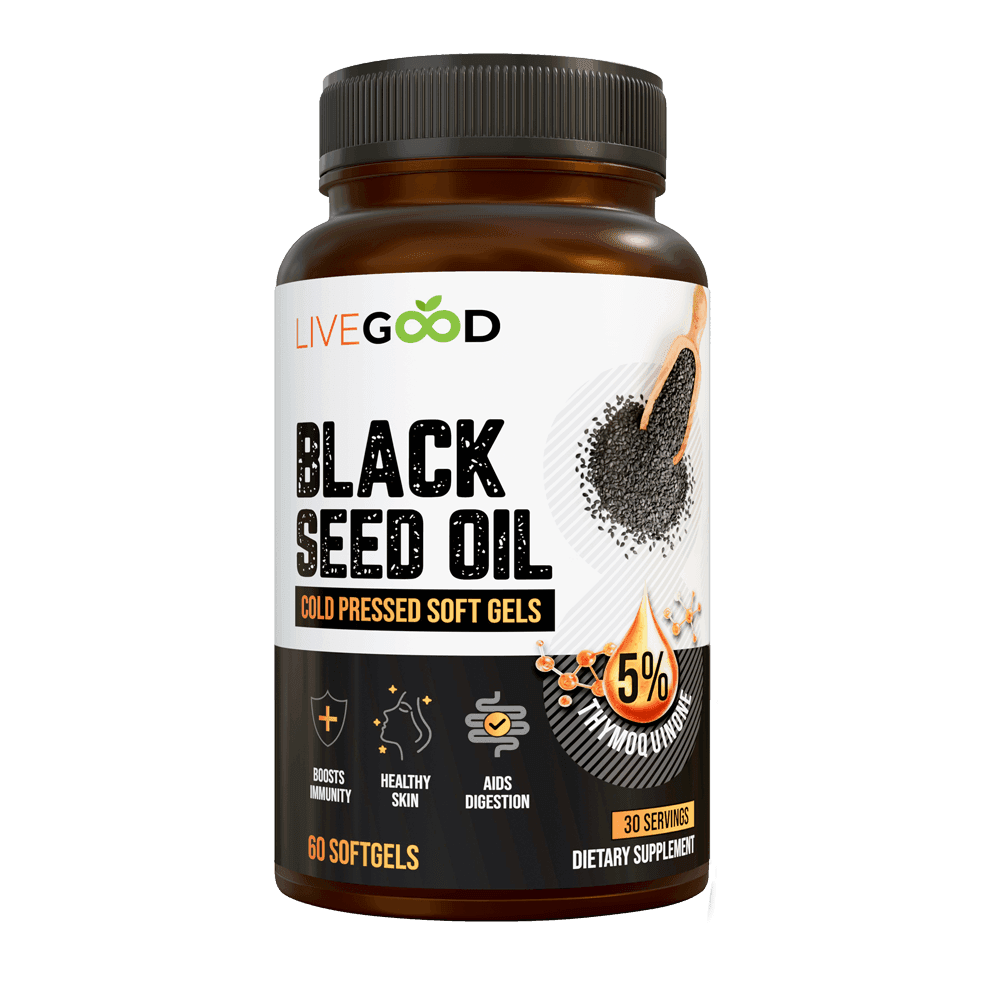
Premium Black Seed Oil is a softgel supplement made from black cumin seed oil, also known as Nigella sativa. The standout detail on the label is the 5% Thymoquinone standardization, which gives shoppers a more specific way to judge potency than a generic black seed oil label alone. With 60 softgels and a serving size of 2 softgels daily, one bottle provides 30 servings.
Why People Consider Premium Black Seed Oil
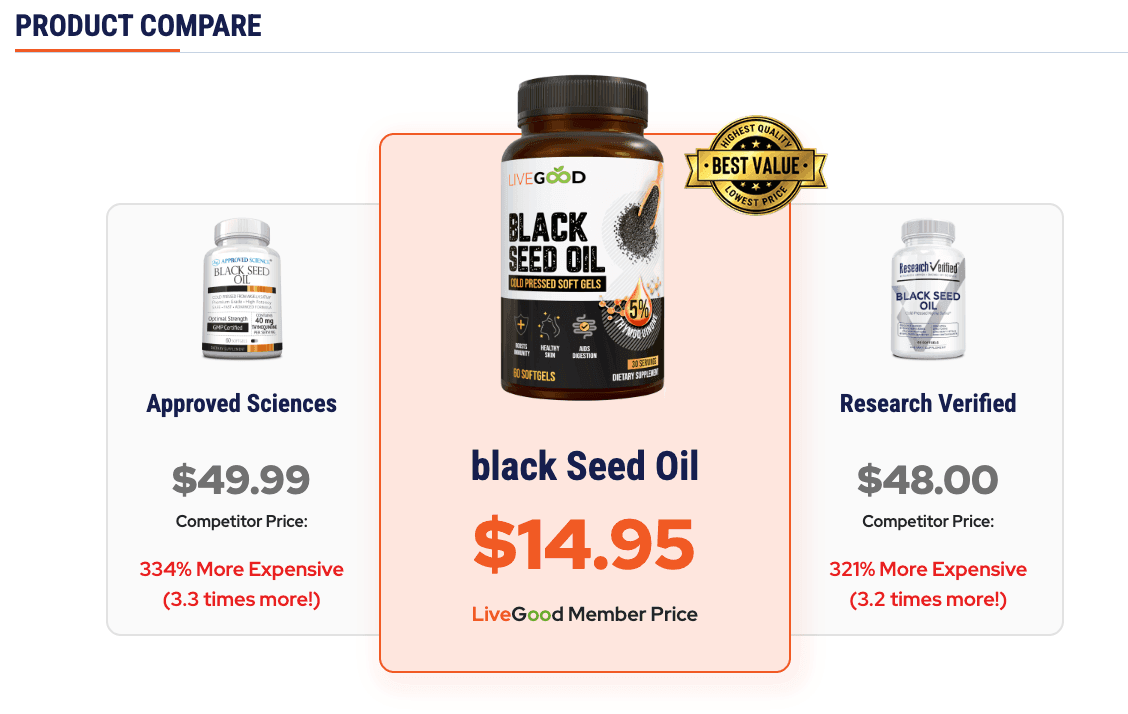
Most people looking at black seed oil are comparing three things at once: potency, simplicity, and price. This product stands out because it uses a clearly stated Thymoquinone percentage, a convenient softgel format, and a member price that is much lower than the comparison products shown on the brand material.
Simple Daily Support
Some buyers want a black seed oil supplement that is easy to take every day without measuring liquids or dealing with taste.
Ingredient Curiosity
Others are mainly interested in the 5% Thymoquinone standardization because it gives them a more meaningful potency marker.
Value Search
A lot of shoppers are also comparing member pricing with competitor pricing and asking whether the cost per serving feels reasonable.
What Is Premium Black Seed Oil?
Premium Black Seed Oil is a cold pressed softgel supplement made from black cumin seed oil. The supplement facts panel lists 1,000 mg of black cumin seed oil per serving, standardized to 5% Thymoquinone, with a serving size of 2 softgels and 30 servings per container. The label also lists gelatin, glycerin, and purified water as other ingredients.
Good details to know: it is a capsule-based supplement, intended for daily use, and the product page material highlights a 4.93 rating from 14 reviews along with member and retail pricing.
For broader background on supplement basics and general ingredient education, the MedlinePlus dietary supplements guide is a helpful reference.
Key Ingredients in Premium Black Seed Oil
This formula is simple, which is part of its appeal. Instead of combining a long list of actives, it centers on one main ingredient and gives readers a clear potency marker to compare.
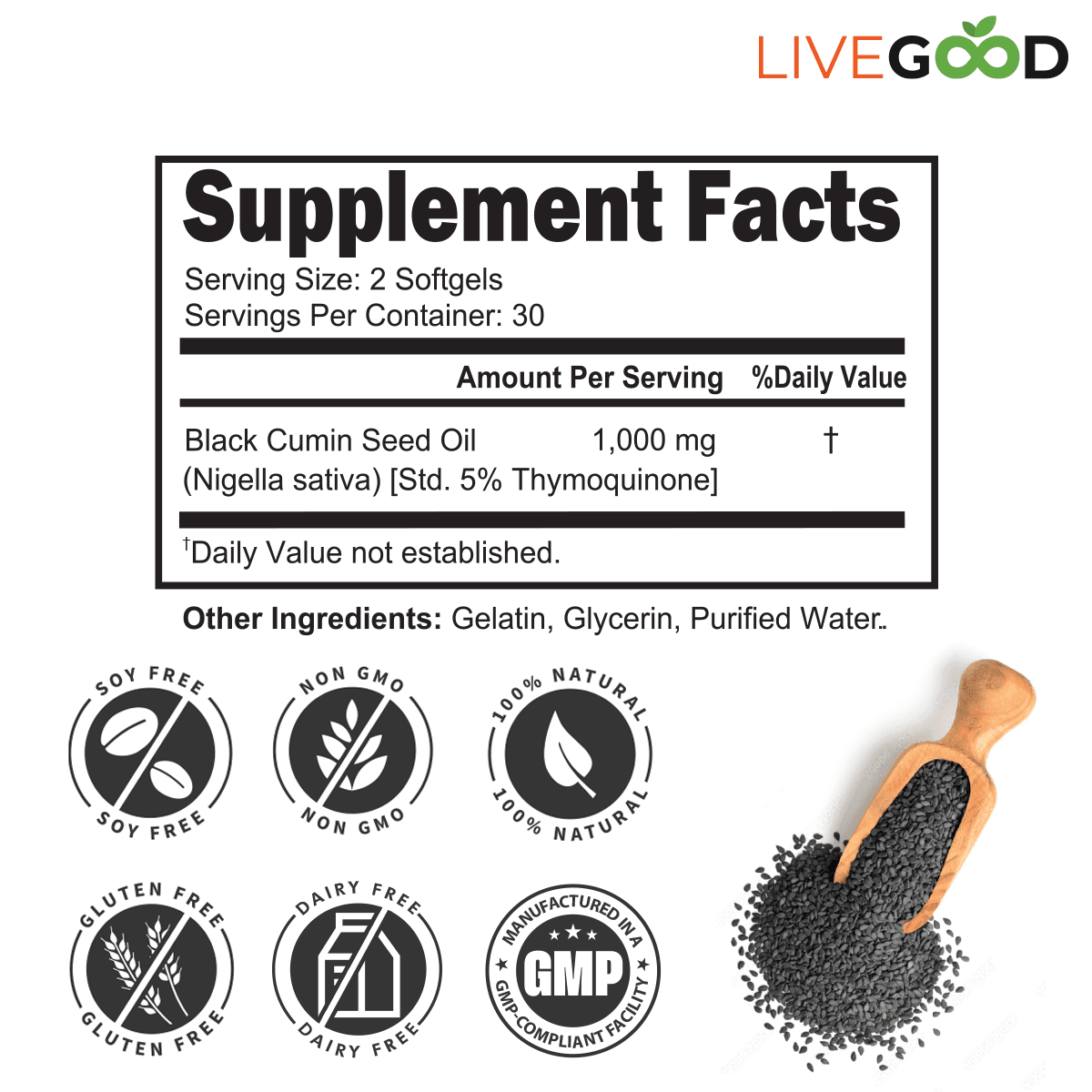
Black Cumin Seed Oil
The formula provides 1,000 mg per serving from Nigella sativa, the plant commonly associated with black seed oil supplements.
5% Thymoquinone
This is the main potency marker on the label. It gives shoppers a clearer way to compare concentration than products that only say black seed oil without a stated standardization.
Simple Supporting Ingredients
Other ingredients are listed as gelatin, glycerin, and purified water, which keeps the formula easy to understand.
For readers who want more general supplement education, NCCIH’s supplement guidance is a strong external resource.
How to Use Premium Black Seed Oil
The label directions are simple: take 2 softgels daily with a glass of water. The product material also says it is best taken with food. At that serving size, one bottle lasts about 30 days.
Routine fit: this is the kind of product that works best for people who prefer a straightforward capsule routine over oils, powders, or more complicated supplement stacks.
For broader advice on smart supplement use, interactions, and quality, see NCCIH’s guide to using dietary supplements wisely.
Taste, Mixability, and Convenience
Taste
Because this is a softgel product, it avoids the stronger taste that some people associate with liquid oils.
Mixability
There is no mixing required, which makes the format easier for people who want low-effort daily use.
Convenience
A two-softgel serving is simple to store, carry, and fit into an existing supplement routine.
What Premium Black Seed Oil Is Designed to Support
The product materials position this formula around broad wellness support themes tied to black seed oil and Thymoquinone, including everyday immune support, antioxidant support, and general vitality language. The strongest reader-first way to interpret that is not as a promise, but as a reason to examine the label, the standardization, and the overall routine fit more carefully.
Daily Wellness Routine
This product is best understood as a simple daily supplement for people who want black seed oil in a convenient capsule form.
Formula Purpose
The 5% Thymoquinone standardization is the clearest signal of what makes this formula different from more generic black seed oil products.
Routine Fit
It may fit best for people who want a concentrated black seed oil supplement without dealing with the mess or taste of liquid oil.
Who Premium Black Seed Oil May Fit Best
Ingredient-Conscious Shoppers
People who want a black seed oil product with a clearly stated 5% Thymoquinone standardization.
Convenience-Focused Buyers
People who prefer softgels over liquid oils and want a no-mix, no-mess routine.
Value Seekers
Buyers comparing price per serving and looking for a lower-cost option than higher-priced competitors.
Who Premium Black Seed Oil May Not Be For
People expecting instant results
A supplement like this makes more sense as part of a consistent routine, not as a fast fix.
Vegetarians or vegans avoiding gelatin
The other ingredients list includes gelatin, so that may matter for some shoppers.
People needing personal medical guidance
Anyone who is pregnant, nursing, taking medications, or managing a health condition should speak with a qualified healthcare professional before use.
For a plain-language overview of supplement basics and safety, MedlinePlus Dietary Supplements is another strong educational reference.
Price Per Serving and Value
For many buyers, value is one of the strongest parts of the story here. The product materials show a member price of $14.95 and a retail price of $34.95. With 30 servings per container, the approximate cost works out to about $0.50 per serving at member price and about $1.17 per serving at retail price.
Value snapshot:
Retail price: $34.95
Member price: $14.95
Servings per container: 30
Approximate price per serving: $0.50 member / $1.17 retail
Pros and Cons
Pros
- Clearly stated 5% Thymoquinone standardization
- Simple 1-ingredient focus with easy-to-read label
- Convenient softgel format
- Competitive member pricing and low cost per serving
- 30-day supply with straightforward daily use
Cons
- Gelatin softgels may not suit every dietary preference
- Membership pricing model may not appeal to everyone
- Readers still need realistic expectations and consistent use
- People who prefer liquids may not want softgels
What the Research Suggests
The following summarizes what published pharmacological and clinical research generally indicates about Nigella sativa and thymoquinone. Most studies are preliminary — laboratory findings and small clinical trials, not large-scale clinical recommendations.
- Antioxidant activity: Thymoquinone has been characterized as a free-radical scavenger in in vitro and animal studies. Laboratory research consistently identifies antioxidant activity, though translating these findings to human clinical outcomes requires further evidence.
- Anti-inflammatory pathways: In laboratory and animal models, TQ has been studied for effects on NF-κB signaling and prostaglandin pathways — mechanisms shared with inflammation research. Human data remains limited and preliminary.
- Small clinical trials: Several small RCTs (typically 12–16 weeks, small sample sizes) have examined black seed oil supplementation for blood pressure, lipid profiles, and fasting blood glucose. Results are mixed; methodological quality varies widely across studies.
- Immune modulation: Observational and small-scale studies have examined Nigella sativa’s effect on immune markers. No regulatory body has endorsed clinical use based on current findings.
- Standardization relevance: Higher TQ concentrations such as 5% are associated with greater biological activity in laboratory settings. However, standardized supplements at this specific concentration have not been evaluated in large clinical trials.
- Drug interaction signals: In vitro research and case reports suggest possible additive effects with anticoagulants (warfarin), antidiabetic medications, and antihypertensives. This has not been studied at scale but warrants caution for people on these medications.
Note: The majority of Nigella sativa research is conducted in vitro or in animal models. Small human trials exist but are insufficient to support clinical recommendations. These findings represent current research directions, not confirmed health benefits for individuals.
🏛️ Expert Consensus Summary
Key health authorities share a consistent position on Nigella sativa and black seed oil supplements:
- NCCIH (NIH): states that Nigella sativa has been studied for several conditions but there is “not enough high-quality evidence to recommend it as a treatment for any health condition.”
- Memorial Sloan Kettering Cancer Center notes thymoquinone shows activity in laboratory studies but human clinical evidence remains limited and inconclusive for specific conditions.
- MedlinePlus / NIH: lists Nigella sativa as a dietary supplement with a traditional use history; recommends reading labels, checking for medication interactions, and consulting healthcare providers before use.
- Medical consensus: black seed oil is generally considered safe for short-term use in healthy adults at typical serving sizes, but requires professional guidance for people who are pregnant, nursing, taking blood-thinning medications, or managing metabolic conditions.
- A stated Thymoquinone percentage is considered a meaningful quality indicator by supplement educators, as products without standardization may have inconsistent and unverifiable potency.
This reflects educational consensus from health authorities and is not medical advice or an endorsement of any specific product for any medical condition.
Frequently Asked Questions
What is Premium Black Seed Oil?
It is a black cumin seed oil softgel supplement standardized to 5% Thymoquinone.
How do you use Premium Black Seed Oil?
The label says to take 2 softgels daily with a glass of water, and it is best taken with food.
How many servings are in Premium Black Seed Oil?
There are 30 servings per bottle, based on a serving size of 2 softgels.
What are the key ingredients in Premium Black Seed Oil?
The main ingredient is 1,000 mg of black cumin seed oil from Nigella sativa, standardized to 5% Thymoquinone.
Is Premium Black Seed Oil good value?
At the member price, the cost per serving is low for a clearly standardized black seed oil softgel product.
Final Thoughts on Premium Black Seed Oil
Premium Black Seed Oil stands out most for three reasons: the clear 5% Thymoquinone standardization, the simple daily softgel format, and the strong member-price value story. For readers who want a black seed oil product that is easy to understand and easy to compare, those are meaningful strengths.
Best Angle
Potency marker, ease of use, and price-to-value.
Tone to Keep
Helpful, cautious, practical, and label-focused.
Best Reader Fit
People comparing concentrated black seed oil options for everyday use.
Before buying any supplement, it is wise to review the label carefully and make sure it fits your preferences, routine, and comfort level with the formula.
Sources & References
- NCCIH, National Center for Complementary and Integrative Health. Black Seed. nccih.nih.gov
- MedlinePlus, U.S. National Library of Medicine. Black Seed (Nigella sativa). medlineplus.gov
- MedlinePlus. Dietary Supplements. medlineplus.gov
- NCCIH. Using Dietary Supplements Wisely. nccih.nih.gov
- Tavakkoli A, et al. Review on Clinical Trials of Black Seed (Nigella sativa) and Its Active Constituent, Thymoquinone. Journal of Pharmacopuncture. 2017;20(3):179–193.
- Ahmad A, et al. A review on therapeutic potential of Nigella sativa: A miracle herb. Asian Pacific Journal of Tropical Biomedicine. 2013;3(5):337–352.
- Majdalawieh AF, Fayyad MW. Immunomodulatory and anti-inflammatory action of Nigella sativa and thymoquinone. International Immunopharmacology. 2015;28(1):295–304.
- Memorial Sloan Kettering Cancer Center. Black Seed (Nigella sativa). mskcc.org
This content is for general informational purposes only and is not medical advice. Statements about dietary supplements have not been evaluated by the Food and Drug Administration, and these products are not intended to diagnose, treat, cure, or prevent any disease. Always read the label and speak with a qualified healthcare professional before use if needed. This page may also contain affiliate links, which means we may earn a small commission at no extra cost to you.