Chlorophyll and Zeolite Review: Ingredients, Safety, Liquid Format, Price & Label Tips
⚡ Quick Answer
Chlorophyll and Zeolite is a 2 fl oz liquid tincture with 30 servings per bottle. Each 2 ml serving contains 100 mg chlorophyll, 100 mg zeolite clinoptilolite, and 4 mg copper. Member price is .95 (~Chlorophyll and Zeolite is a 2 fl oz liquid tincture with 30 servings per bottle. Each 2 ml serving contains 100 mg chlorophyll (as sodium copper chlorophyllin from organic mulberry leaves), 100 mg zeolite clinoptilolite, 4 mg copper, and 5 mg sodium. The member price is $14.95, which works out to about $0.50 per serving. It suits people who prefer a liquid dropper over capsules and want a short, readable ingredient list. It should not be used as a medical detox, heavy-metal removal, or toxin-cleansing product — those are marketing terms, not clinical outcomes.
📌 Good to Know Before You Buy
- Chlorophyll in supplements isn’t the same as chlorophyll in spinach. The form used here is sodium copper chlorophyllin — a water-soluble, semi-synthetic derivative that’s far more stable than plant chlorophyll and easier to put into a supplement.
- The copper content is worth noting. At 4 mg per serving, that’s roughly 444% of the Daily Value for copper. It comes from the chlorophyllin source itself. If you’re already taking a multivitamin or other products with copper, pay attention to how much you’re stacking.
- Zeolite clinoptilolite is a natural volcanic mineral with a porous structure. In lab settings it binds to certain ions, which is why some companies market it for “detox.” What happens in a lab doesn’t always translate to a clear benefit in the human gut.
- The product says don’t take it within an hour of magnesium. That’s a real interaction to keep in mind — zeolite can act as a binder and may affect the absorption of other minerals taken at the same time.
- Your liver and kidneys already handle detoxification. Supplements like this can be part of a wellness routine, but no dietary supplement is a medically recognized tool for removing toxins, heavy metals, or environmental chemicals from the body..50 per serving). It is not a medical detox product — no dietary supplement is approved to remove toxins or heavy metals from the body.
- The FDA has not evaluated or approved this product for any health condition, and none of the ingredients are regulated as medicines.
- Anyone who is pregnant, nursing, on medication, or managing kidney or liver disease should speak with a healthcare professional before using this product.
Chlorophyll and Zeolite Review
Ingredients, Safety, Liquid Format, Price & Label Tips
Chlorophyll and Zeolite is a liquid dietary supplement for people comparing a simple chlorophyll and zeolite formula. This review looks at the ingredient profile, dropper format, serving details, safety cautions, and whether the price makes sense for everyday use.
A review focused on label clarity, convenience, routine fit, price, and realistic expectations.
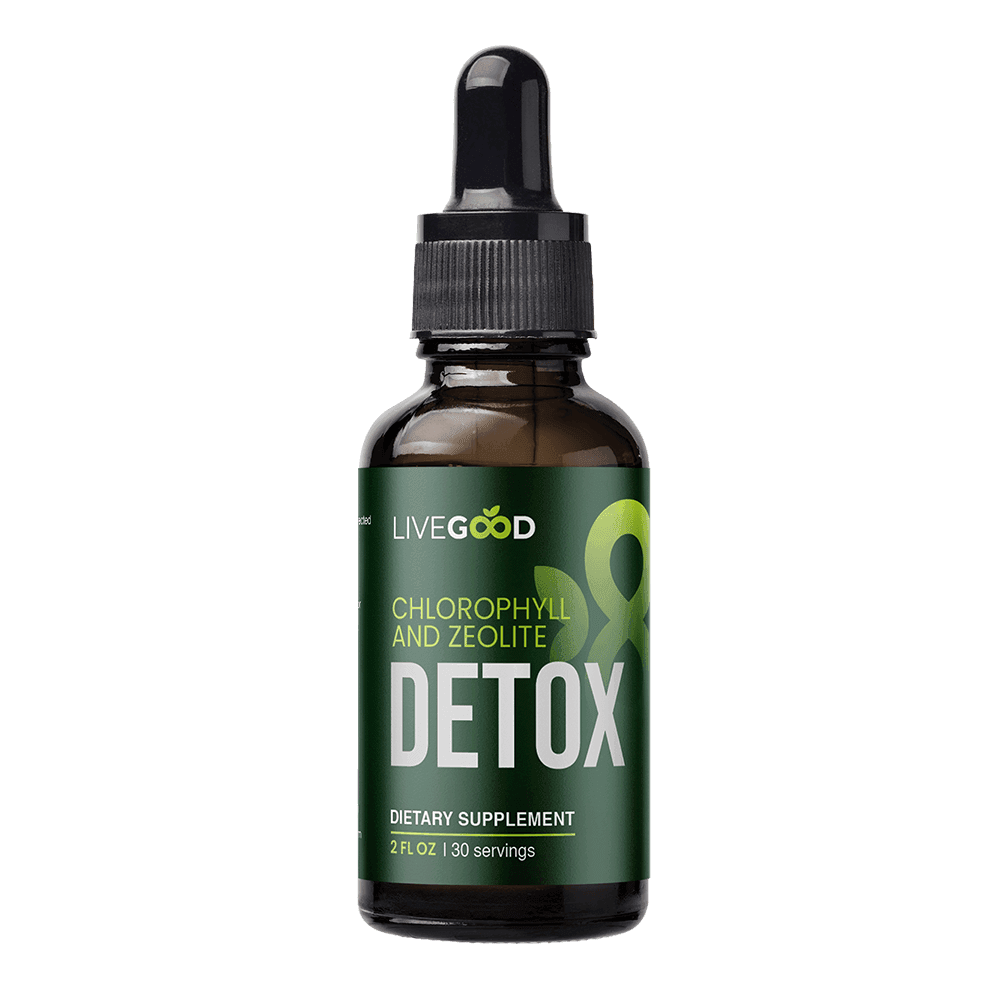
Main product image from the site gallery.
Important: This content is educational only and is not medical advice. Chlorophyll and zeolite supplements are not intended to diagnose, treat, cure, prevent, remove, or “detox” any disease, toxin exposure, heavy metal exposure, or medical condition. Ask a qualified healthcare professional before use if you take medication, are pregnant or nursing, have kidney disease, liver disease, copper metabolism concerns, digestive conditions, upcoming surgery, allergies, or a medically restricted diet.
Quick Overview
Chlorophyll and Zeolite is a 2 fl oz liquid tincture with 30 servings per bottle. The label uses a 2 ml serving size, and the supplement facts panel lists 100 mg chlorophyll, 100 mg zeolite clinoptilolite, 4 mg copper, and 5 mg sodium per serving. The product page material also shows a member price of $14.95, a retail price of $29.95, and a 5.00 rating from 1 review.
Why People Compare Chlorophyll and Zeolite Products
Most people looking at a product like this are comparing simplicity, ingredients, serving format, safety fit, and price. The appeal here is the easy dropper format, the short label, and the lower member price compared with higher-priced liquid products shown in the product materials.
Simple Daily Use
Some buyers want a liquid supplement they can take under the tongue or mix with water without adding capsules or powders.
Ingredient Curiosity
Others are mainly interested in the chlorophyll and zeolite combination and want a clearer understanding of what the label actually contains.
Value Search
A lot of shoppers are also comparing member pricing, bottle size, and cost per serving against other liquid supplement products.
What Is Chlorophyll and Zeolite?
Chlorophyll and Zeolite is a dietary supplement in liquid tincture form. The bottle size is 2 fl oz and the label shows 30 servings. The serving size is 2 ml, which equals 2 full dropperfuls. This makes it different from capsule-based products because it is built around a flexible liquid format instead of pills.
Good details to know: it is a liquid product with clearly listed amounts for chlorophyll, zeolite clinoptilolite, copper, and sodium. That makes the formula easier to read than many long proprietary blends.
For broader background on supplement basics and safety, the MedlinePlus dietary supplements guide is a helpful reference.
Key Ingredients in Chlorophyll and Zeolite
One of the stronger parts of this product is that the label is easy to read. Instead of a long proprietary blend, the formula keeps the focus on a small number of clearly listed ingredients.
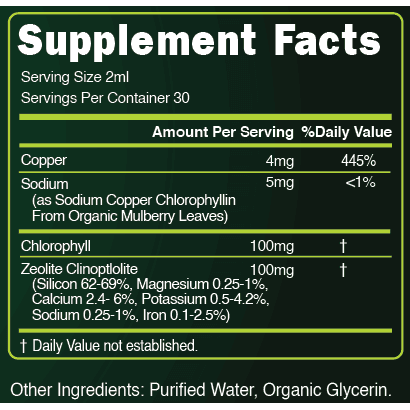
Supplement facts image from the site gallery.
Chlorophyll
The supplement facts panel lists 100 mg chlorophyll per serving, sourced from sodium copper chlorophyllin from organic mulberry leaves.
Zeolite Clinoptilolite
The label lists 100 mg zeolite clinoptilolite per serving, making it one of the main identity ingredients in the formula.
Copper and Sodium
Each serving also includes 4 mg copper and 5 mg sodium, which are clearly disclosed on the supplement facts panel.
Other ingredients: purified water and organic glycerin.
For more general guidance on smart supplement use and product quality, see NCCIH’s guide to using dietary supplements wisely.
How to Use Chlorophyll and Zeolite
The product directions say to take 2 full dropperfuls under the tongue or mix with water once or twice daily. Each dropperful equals 1 ml, so one serving is 2 ml. The product materials also note that some people prefer taking it before bed, and they advise not taking it within an hour of magnesium.
Routine fit: this is the kind of supplement that may appeal to people who want a flexible liquid format they can use directly or mix into water, instead of adding another capsule to their daily routine.
For broader supplement safety guidance, see NCCIH.
Taste, Mixability, and Convenience
Taste
Because this is a liquid tincture, taste preference can matter more than it does with capsules. Some people may prefer mixing it with water for a lighter experience.
Mixability
The label allows either under-the-tongue use or mixing with water, which gives it more flexibility than a fixed capsule routine.
Convenience
A small 2 fl oz bottle is easy to store and work into a daily routine, especially for people who like dropper-based supplements.
What This Product Should and Should Not Be Used For
A balanced way to view this product is as a general wellness supplement built around chlorophyll and zeolite. It should not be treated as a medical detox product, heavy-metal detox product, treatment, cure, or substitute for medical care.
Daily Routine Fit
This product is easiest to understand as a daily-use liquid supplement for people interested in chlorophyll and zeolite together in one formula.
Label Comparison
The chlorophyll and zeolite pairing is the product’s main identity feature, and that combination is what most shoppers will be evaluating first.
Realistic Expectations
Use it as an optional supplement, not as a quick fix for fatigue, digestion, toxin exposure, heavy metals, skin issues, weight loss, or any medical concern.
Who Chlorophyll and Zeolite May Fit Best
Ingredient-Conscious Shoppers
People who want a short formula with clearly listed chlorophyll and zeolite amounts.
Liquid Supplement Fans
People who prefer tinctures or droppers over capsules, gummies, or powders.
Value Seekers
Buyers comparing lower member pricing against other liquid supplement products.
Who Should Be Careful Before Using It?
People expecting detox results
This product should not be used to remove toxins, heavy metals, chemicals, medications, or alcohol from the body.
People with medical considerations
Ask first if you take medication, have kidney or liver disease, have copper metabolism concerns, are pregnant or nursing, or have digestive conditions.
People using multiple supplements
Be careful stacking this with other products that contain copper, minerals, binders, greens, detox blends, or strong botanical ingredients.
For a plain-language overview of supplement basics and safety, MedlinePlus Dietary Supplements is another strong educational reference.
Price Per Serving and Value
For many buyers, value is one of the main comparison points here. The product materials show a member price of $14.95 and a retail price of $29.95. With 30 servings per bottle, the approximate cost works out to about $0.50 per serving at member price and about $1.00 per serving at retail price.
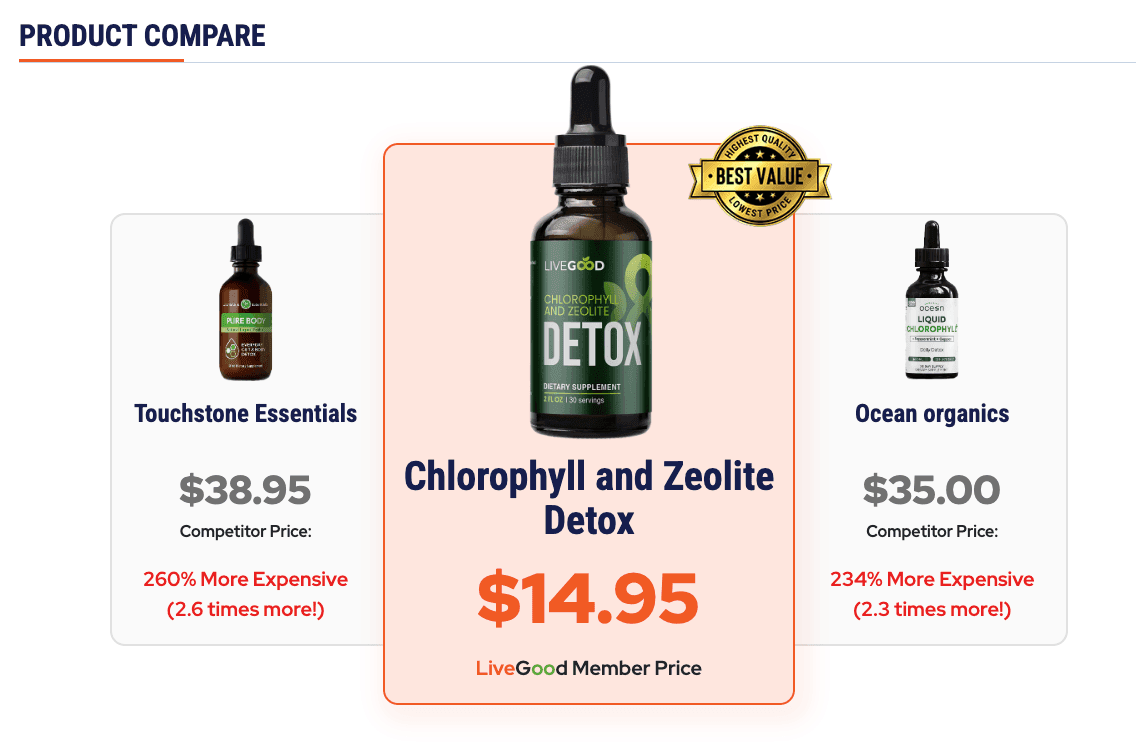
Price comparison image from the site gallery.
Value snapshot:
Retail price: $29.95
Member price: $14.95
Servings per bottle: 30
Approximate price per serving: $0.50 member / $1.00 retail
Pros and Cons
Pros
- Easy-to-read supplement facts panel
- Liquid tincture format for flexible use
- Chlorophyll and zeolite clearly disclosed per serving
- Competitive member price and low cost per serving
- 30-serving bottle with straightforward daily use
Cons
- Liquid format may not suit every preference
- Taste may matter more than with capsules
- Membership model may not appeal to everyone
- Not a medical detox or heavy-metal detox product
- Not ideal for people who need personalized medical guidance before supplement use
What the Research Actually Shows
Here’s a plain-English summary of what studies have and haven’t found on the two main ingredients in this product. Nothing here is a clinical recommendation — it’s just context so you can read the label more confidently.
- Chlorophyllin and antioxidant activity: In lab settings, chlorophyllin shows free-radical scavenging activity. The National Cancer Institute has studied it as a possible chemopreventive agent in animal and some small human trials. Results are early and don’t support clinical claims — but the research direction is real.
- Chlorophyllin and deodorizing: Some older clinical research found that chlorophyllin reduced body odor and fecal odor in nursing home patients. This is one of the more documented observations, though it’s not a reason most people reach for a supplement today.
- Zeolite clinoptilolite — the adsorption angle: In laboratory and some animal studies, zeolite clinoptilolite has shown an ability to bind ions and certain compounds. A small number of human studies have examined effects on gut microbiome markers and mineral excretion. Results are preliminary and sample sizes are small.
- Zeolite and the “detox” claim: The idea behind zeolite as a detox agent is that its porous structure traps substances in the gut before they’re absorbed. While this is plausible in theory, the clinical evidence for meaningful toxin or heavy-metal removal in humans is not established. NCCIH notes that “detox” supplement claims generally lack solid scientific backing.
- Copper — an essential mineral with an upper limit: Copper is genuinely important for normal body function, including enzyme activity and connective tissue support. But the tolerable upper intake level for adults is 10 mg per day. At 4 mg per serving, this product gets you close to half that if you’re taking it alongside other copper sources. It’s not alarming — just worth tracking if you stack supplements.
- Liquid absorption vs capsules: There’s some reasoning that liquid supplements may absorb faster than some capsule forms, since they don’t need to be broken down first. But this doesn’t automatically mean better outcomes — it just changes the delivery speed.
Most chlorophyllin and zeolite research involves small sample sizes, short durations, or animal models. What’s known is promising in some directions but doesn’t yet support strong clinical recommendations. Use this as background, not as a health claim.
🏛️ What Health Authorities Generally Say
No major health body has published specific guidance on this exact product, but here’s what the relevant authorities say about the ingredients and the broader category:
- NCCIH (NIH): states clearly that there is no convincing evidence that “detox” or “cleansing” supplements remove toxins from the body or improve health in people who don’t have a diagnosed toxic exposure condition.
- National Cancer Institute (NCI): has published educational information noting that chlorophyllin has been studied for potential chemopreventive properties, but that evidence in humans is limited and no clinical recommendation has been made.
- MedlinePlus / NIH: categorizes chlorophyll as a dietary supplement, notes some early evidence for odor control, and flags that the supplement form (chlorophyllin) behaves differently than natural plant chlorophyll.
- On copper specifically: the NIH Office of Dietary Supplements confirms copper is an essential nutrient, but cautions that excessive intake above the tolerable upper limit (10 mg/day for adults) can cause adverse effects including nausea, liver damage, and other issues over time.
- The general medical consensus is that the human body has its own detox system in the liver and kidneys — and that no commercially available supplement replaces or significantly enhances that system for healthy people.
This is educational context, not a product endorsement or medical advice. If you have specific health questions, your doctor or pharmacist is the right person to ask.
Frequently Asked Questions
What is Chlorophyll and Zeolite?
It is a liquid dietary supplement that combines chlorophyll and zeolite clinoptilolite in a 2 fl oz tincture bottle.
How do you use Chlorophyll and Zeolite?
The directions say to take 2 full dropperfuls under the tongue or mix with water once or twice daily.
How many servings are in Chlorophyll and Zeolite?
There are 30 servings per bottle, based on a 2 ml serving size.
What are the key ingredients?
The main listed ingredients are chlorophyll, zeolite clinoptilolite, copper, and sodium.
Is this a detox product?
It is marketed with detox-style wording, but it should not be used as a medical detox, heavy-metal detox, toxin-removal product, or treatment for any condition.
Who should ask a professional before using it?
Ask first if you take medication, are pregnant or nursing, have kidney disease, liver disease, copper metabolism concerns, digestive conditions, upcoming surgery, allergies, or a medically restricted diet.
Is Chlorophyll and Zeolite good value?
At the listed member price, the cost per serving is low for a 30-serving liquid supplement. Still, value depends on your actual use, shipping, membership costs, and whether the product fits your routine safely.
Final Thoughts on Chlorophyll and Zeolite
Chlorophyll and Zeolite stands out most for three things: the easy liquid format, the short and readable ingredient panel, and the low member-price value story. For readers who want a simple liquid supplement that is convenient to use and straightforward to compare, those are meaningful strengths.
Best Angle
Liquid convenience, clear ingredients, and price-to-value.
Tone to Keep
Helpful, cautious, practical, and label-focused.
Best Reader Fit
People comparing simple liquid supplements for everyday use.
Before buying any supplement, review the label carefully and make sure it fits your preferences, routine, medications, health context, and comfort level with the formula.
Sources & References
- NCCIH, National Center for Complementary and Integrative Health. Detoxes and Cleanses: What You Need to Know. nccih.nih.gov
- NCCIH. Using Dietary Supplements Wisely. nccih.nih.gov
- MedlinePlus, U.S. National Library of Medicine. Chlorophyll. medlineplus.gov
- MedlinePlus. Dietary Supplements. medlineplus.gov
- NIH Office of Dietary Supplements. Copper — Consumer Fact Sheet. ods.od.nih.gov
- National Cancer Institute. Chlorophyllin (PDQ). cancer.gov
- Lamprecht M, et al. Supplementation with a zeolite compound in humans — effects on micronutrient status and gastrointestinal tolerance. Journal of the International Society of Sports Nutrition. 2015;12:1.
- Ferreira CM, et al. Chlorophyllin: a sodium copper salt that modulates genotoxicity. Mutation Research / Genetic Toxicology. 2011.
This content is for general informational purposes only and is not medical advice. Statements about dietary supplements have not been evaluated by the Food and Drug Administration, and these products are not intended to diagnose, treat, cure, or prevent any disease. This product should not be used as a medical detox, toxin-removal, or heavy-metal detox product. Always read the label and speak with a qualified healthcare professional before use if you take medication, have a medical condition, are pregnant or nursing, or have safety questions. This page may also contain affiliate links, which means we may earn a small commission at no extra cost to you.