Best Protein Powders 2026: Plant-Based vs Whey
⚡ Quick Answer
The best protein powder is the one that fits your diet, stomach, and daily routine. For dairy-free use, compare plant-based options (pea, rice, hemp). For dairy users, whey isolate is the common choice. Judge value by cost per serving, not tub price — and always check protein grams, allergens, and sweeteners before buying.
📌 Key Facts at a Glance
- The RDA for protein is 0.8g per kg of body weight for sedentary adults. Active adults, strength trainers, and people over 60 typically need more — most exercise researchers use 1.4–2.0g/kg as a practical range.
- Whey protein is a complete protein containing all 9 essential amino acids. It comes from milk during cheese production and is one of the most studied protein supplements in sports nutrition research.
- Most plant proteins are incomplete on their own — meaning they don’t contain all essential amino acids in ideal proportions. Blending pea + rice protein is the most common fix, since their amino acid profiles complement each other.
- Whey isolate vs concentrate: isolate has more protein per gram and less lactose than concentrate, making it easier to tolerate for people with mild lactose sensitivity.
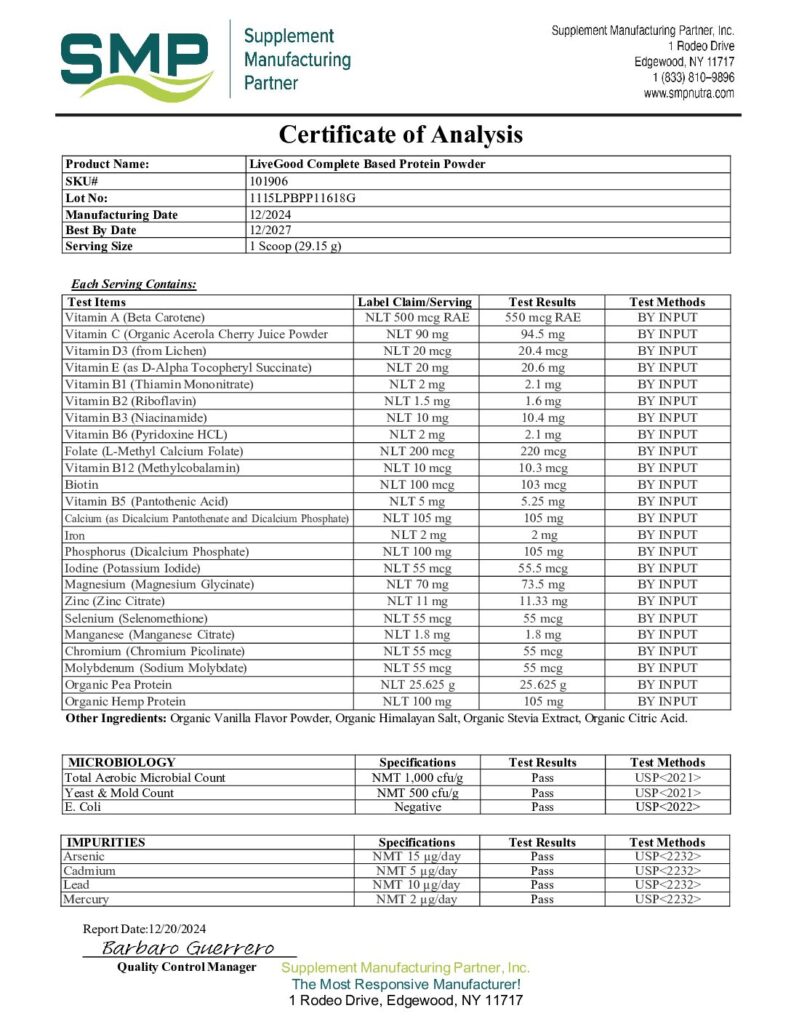
- Heavy metals testing matters. Plant-based protein powders in particular have been flagged in independent testing for elevated lead, cadmium, and arsenic. Third-party testing (NSF, Informed Sport, or COA availability) is a meaningful quality signal.
- Added sugars can vary widely — from 0g to 20g+ per serving depending on the product. Always check the Nutrition Facts panel, not just the front label.
- Protein powders are classified as dietary supplements under FDA DSHEA — they don’t require pre-market safety approval or independent efficacy testing before sale.
What to Know Before Buying Protein Powder
If you are comparing the best protein powders, the smartest place to start is not the front price of the tub. Compare protein per serving, servings per container, cost per serving, ingredients, sweeteners, allergens, testing information, and whether the powder fits how you actually eat.
This guide focuses on practical buying decisions: plant-based protein vs whey protein, what to check on the label, how to compare value, and when a product may or may not fit your routine. Protein powder can help add protein to meals or smoothies, but it is not a treatment, medical product, or replacement for balanced meals.
Affiliate disclosure: This page may contain affiliate links. If you purchase through my links, I may earn a commission at no extra cost to you.
Important disclaimer: This article is for educational purposes only and is not medical advice. Protein powders and supplements are not intended to diagnose, treat, cure, or prevent any disease. Speak with a qualified healthcare professional before changing your protein intake if you have kidney disease, liver disease, food allergies, digestive conditions, are pregnant or nursing, take medication, or have personal health questions.
Quick Buying Summary
| Buyer question | Simple answer |
|---|---|
| Best first check | Protein grams, servings, cost per serving, ingredients, allergens, and testing information |
| Best for dairy-free | A plant-based protein powder such as pea, hemp, rice, or a blend |
| Best for dairy users | Whey protein isolate may be a good option if you tolerate dairy |
| Best value tip | Compare cost per serving instead of only comparing tub price |
| What to avoid | Big promises, hidden sugar, vague blends, poor labeling, and products that do not fit your diet |
For most people, the best protein powder is the one that fits your diet, tastes good enough to use consistently, does not upset your stomach, and gives a clear amount of protein per serving.
Top LiveGood Protein Options to Compare
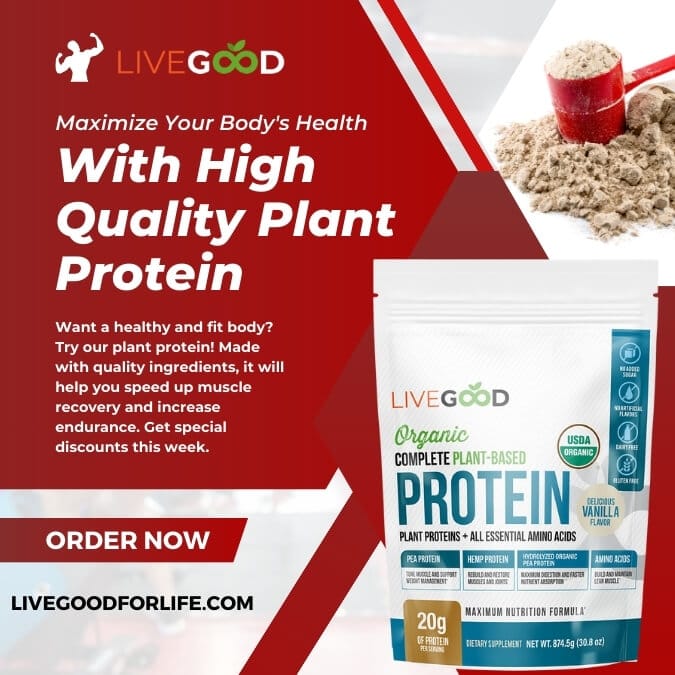
LiveGood has both a plant-based protein option and a whey protein option. Check the current product pages before ordering because prices, membership terms, subscribe-and-save options, shipping, taxes, labels, and availability can change.
| Product | Best fit | What to check before buying |
|---|---|---|
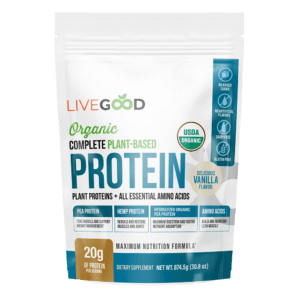
| LiveGood Plant-Based Protein | People who want a dairy-free, vegan protein powder | Protein per serving, flavor, sweeteners, allergens, serving count, and current price |
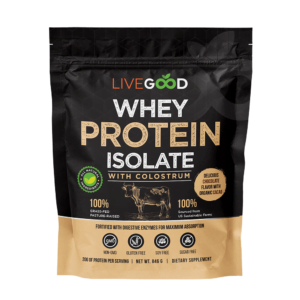
| LiveGood Whey Protein Isolate with Colostrum | People who tolerate dairy and want a whey isolate option | Dairy tolerance, protein per serving, added ingredients, serving count, and current price |
Plant-Based Protein vs Whey Protein
The choice between plant protein and whey protein usually comes down to diet preference, dairy tolerance, taste, texture, and how you plan to use it. Neither option is automatically best for everyone.
| Protein type | May be a good fit if | Things to check |
|---|---|---|
| Plant-based protein | You want a vegan or dairy-free option, or you do not tolerate whey well | Protein source, amino acid blend, texture, sweeteners, and allergens |
| Whey protein isolate | You tolerate dairy and prefer a dairy-based protein powder | Dairy sensitivity, lactose level, added ingredients, and flavor |
| Protein blends | You want a broader amino acid profile from multiple protein sources | Whether the label clearly lists sources and serving details |
Best Plant-Based Protein Powder for Daily Use
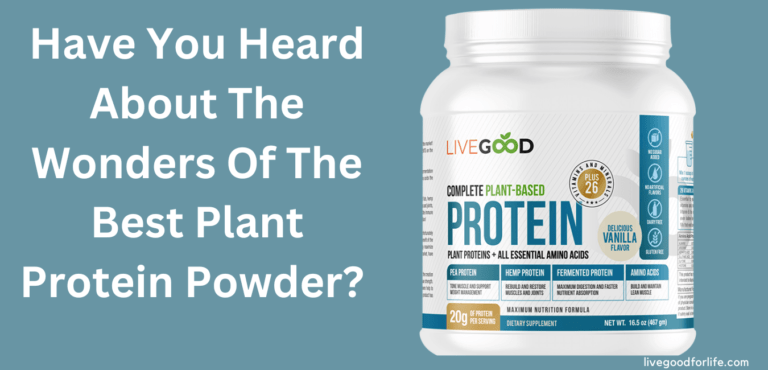
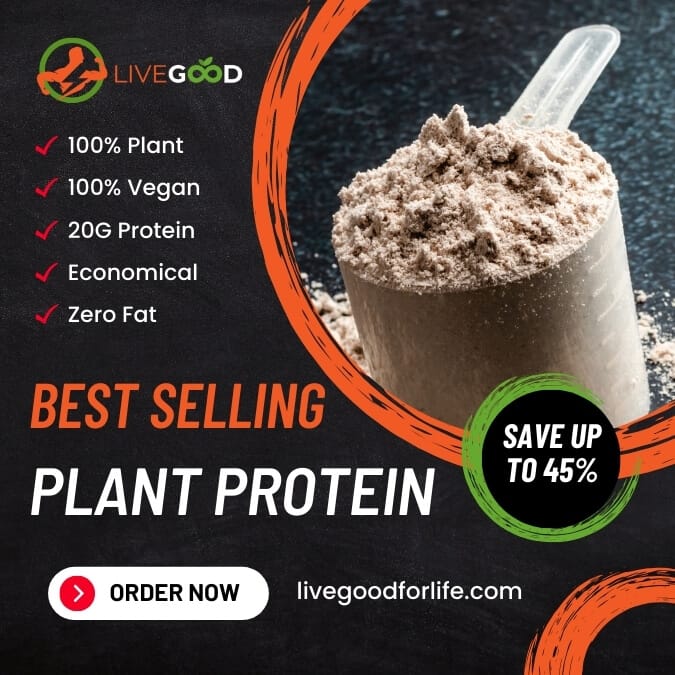
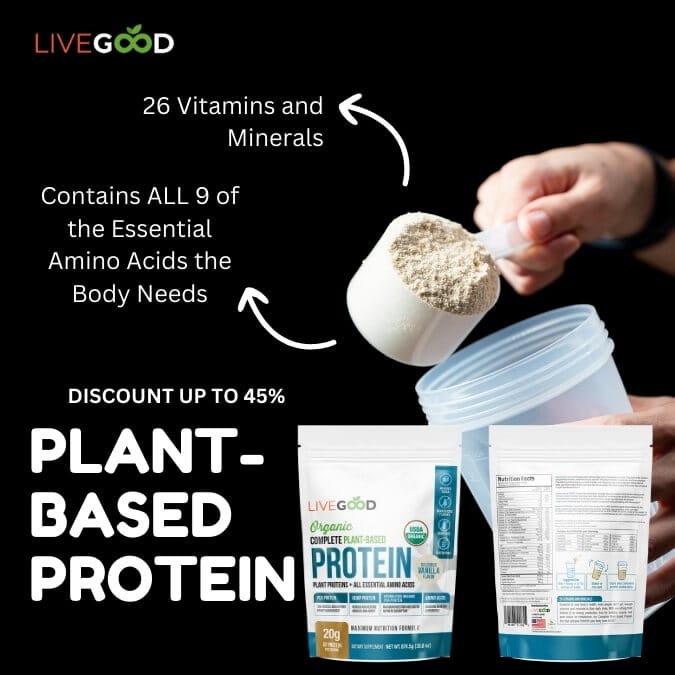
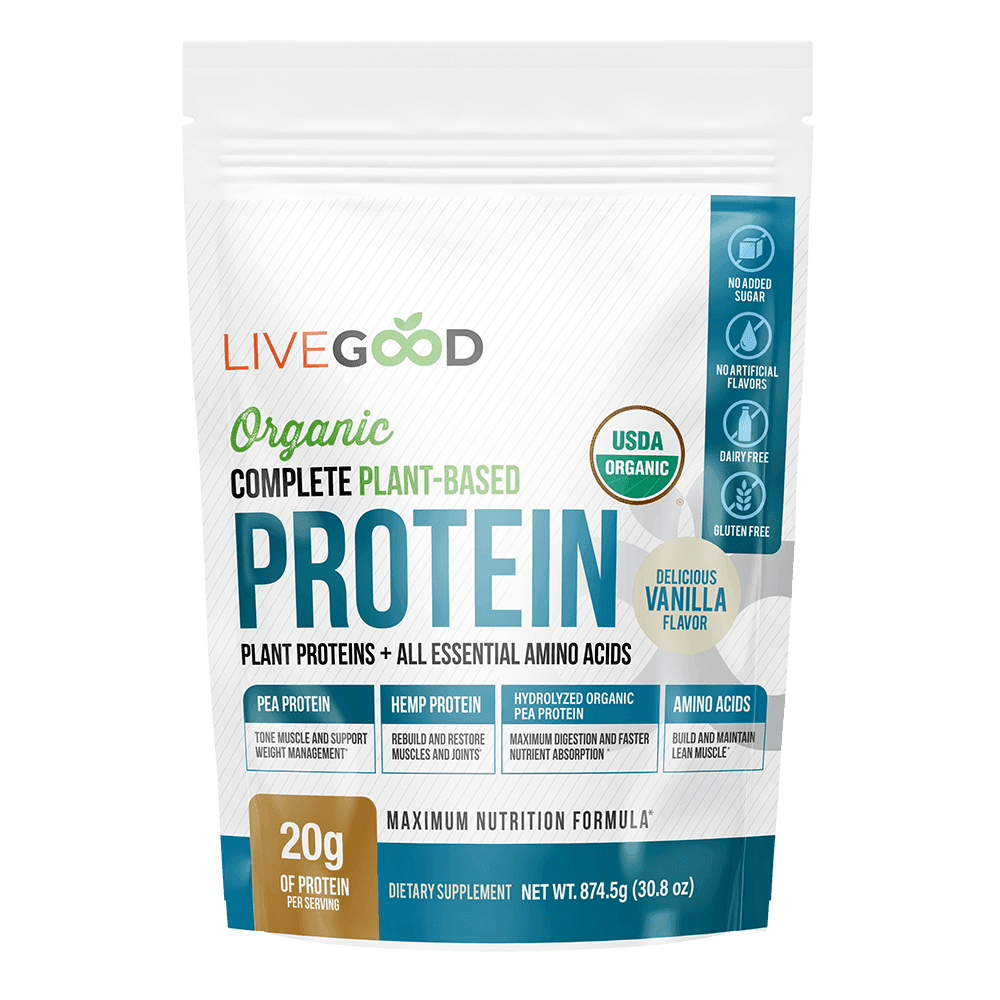
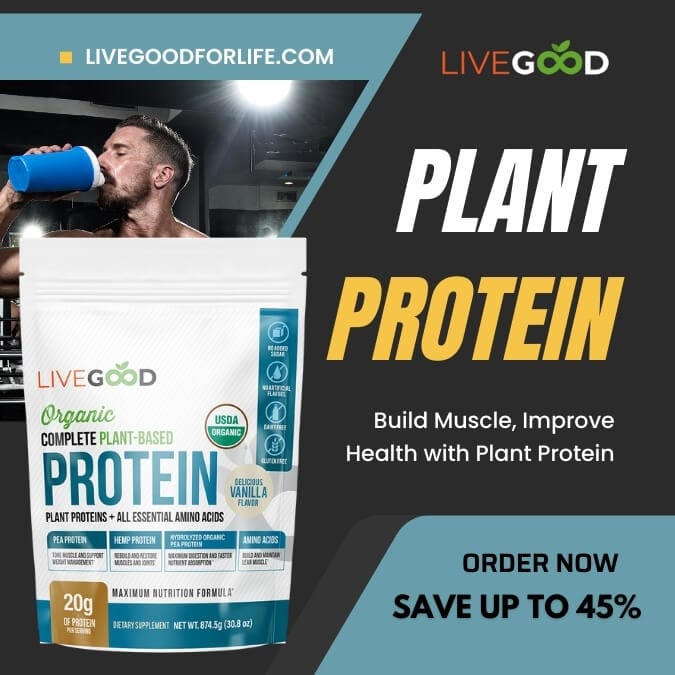
LiveGood Plant-Based Protein may be worth comparing if you want a dairy-free protein powder for smoothies, shakes, oatmeal, or simple daily use. A plant protein can be a practical choice for people who avoid dairy or want a vegan-friendly option.
Before buying, check the current label for protein grams, serving size, flavor, sweeteners, allergens, added vitamins and minerals, and testing information. Also check the current price and shipping before ordering.
Check Current LiveGood Plant-Based Protein Price
Recommended products
Whey Protein Isolate: The Dairy-Based Option
Whey protein isolate may be a good fit if you tolerate dairy and want a dairy-based protein powder. It is not the right choice for people with dairy allergy or people who avoid animal-derived products.
Before buying whey, check protein grams per serving, lactose sensitivity, added ingredients, flavor, sweeteners, serving count, and whether the product fits your stomach and routine.

View Whey Protein Isolate with Colostrum
How to Compare Protein Powder Value
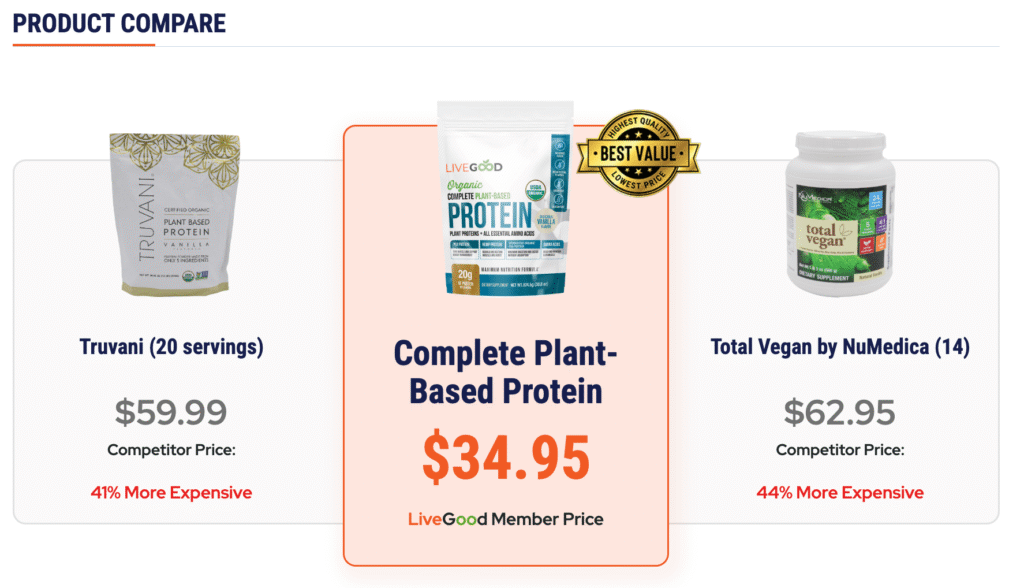
Protein powder value is not just about the cheapest tub. A lower price may not be a better deal if the serving size is smaller, the protein grams are lower, the texture is hard to use, or the ingredient list does not fit your needs.
| Value point | Why it matters before buying |
|---|---|
| Protein per serving | Shows how much protein you actually get |
| Servings per container | Helps estimate how long one tub lasts |
| Cost per serving | Gives a fairer comparison than tub price |
| Ingredients | Helps check sweeteners, allergens, fillers, and protein sources |
| Testing information | Helpful for checking product transparency |
| Taste and texture | A protein powder only helps if you will actually use it |
What to Check on the Label
Do not buy a protein powder based only on the front label. Turn the product around and check the details that affect daily use.
| Label detail | What to look for |
|---|---|
| Protein source | Pea, rice, hemp, whey isolate, or another clear source |
| Protein grams | A clear amount per serving |
| Sugar and sweeteners | Check whether the taste comes with added sugar or sweeteners you do not want |
| Allergens | Dairy, soy, nuts, gluten, or other ingredients that may not fit you |
| Serving size | Important for comparing cost and protein amount |
| Testing or COA details | Helpful when available for quality transparency |
How Much Protein Do You Need?
Protein needs vary based on body size, activity, goals, age, diet, and health history. Many adults use basic protein guidance as a starting point, while active people may need more depending on training and total food intake.
Protein powder is best viewed as a convenient add-on when food alone does not meet your needs. It should not replace balanced meals with whole foods, fiber, healthy fats, fruits, and vegetables.
Helpful neutral reading: Harvard Health on daily protein needs, ISSN position stand on protein and exercise, and FDA guidance on Daily Value labels.
Safety and Side Effects
Protein powders are usually easy to use, but they are not right for everyone. Check first if you have kidney disease, liver disease, digestive conditions, food allergies, are pregnant or nursing, take medication, or are unsure about changing your protein intake.
If you are sensitive to protein powders, start small and see how your body responds. Stop using a product if it does not agree with you, and ask a qualified professional if symptoms continue.
Simple Ways to Use Protein Powder
Protein powder is easiest to use when it fits meals you already enjoy. Common options include smoothies, oatmeal, yogurt bowls, simple shakes, or protein pancakes. Keep the full meal in mind, not just the scoop.
- Add a scoop to a smoothie with fruit and liquid.
- Mix it into oatmeal after cooking.
- Blend with milk, dairy-free milk, or water for a quick shake.
- Add fiber-rich foods like berries, oats, chia, or spinach when it fits your routine.
What the Research Actually Shows on Protein Powders
Here’s what the science says — without the supplement marketing filter. Most of this is well-established, which is actually more useful than it sounds.
- Total daily protein intake matters more than timing. The “anabolic window” — the idea that you must consume protein within 30 minutes of training — is a real but small effect. What consistently moves the needle in research is total daily protein spread across meals, not when you have your shake.
- Whey and pea protein produce similar muscle outcomes when matched for total protein. Multiple RCTs comparing pea protein to whey protein for muscle mass and strength gains have found comparable results when leucine content and total daily protein are equated. The gap between protein sources is smaller than supplement marketing suggests.
- Leucine is the key amino acid for muscle protein synthesis. It acts as the main molecular trigger for the mTOR pathway that drives muscle building. Whey protein is naturally high in leucine; plant-based products sometimes add it or blend proteins to achieve comparable leucine levels.
- Protein is the most satiating macronutrient. Multiple studies consistently show higher-protein diets produce better appetite control and body composition outcomes in weight management contexts — whether that protein comes from food or powder.
- Plant protein digestibility is lower — but the gap is closeable. The DIAAS (Digestible Indispensable Amino Acid Score) rates most plant proteins below animal proteins. Blending pea + rice, or fortifying plant proteins with limiting amino acids, substantially closes this gap in practice.
- Protein and kidneys: the concern is for people who already have kidney disease. In healthy adults, research including long-term studies at intakes up to 3g/kg/day has not shown adverse kidney effects. The restriction applies specifically to people with pre-existing chronic kidney disease.
- Label accuracy varies. Independent testing organizations have found protein content on labels to be overstated in some products, and undisclosed heavy metals in some plant protein powders. This is why third-party testing or COA availability is a useful quality indicator.
The short version: protein works, the source matters less than total intake and quality, and the most important thing is finding a product you’ll actually use consistently.
🏛️ What the Main Authorities Say
No major health body specifically endorses any brand of protein powder, but several provide clear, evidence-based guidance on protein needs and supplementation:
- International Society of Sports Nutrition (ISSN): recommends 1.4–2.0g protein per kg of body weight per day for active adults; identifies 20–40g per meal as a practical target for maximizing muscle protein synthesis; states that protein supplements are a convenient but not essential way to meet protein targets.
- Academy of Nutrition and Dietetics: both plant and animal protein sources can meet needs when chosen thoughtfully; no single “best” protein source for all people; adequacy depends on variety and total intake, not source alone.
- Harvard Health Publishing: most Americans already consume adequate protein from food; protein supplements fill genuine gaps for people with higher needs (athletes, older adults, people with low appetite or restricted diets), but are not necessary for the general population.
- FDA: protein is listed on the Nutrition Facts label as a Daily Value reference; protein powders fall under dietary supplement regulations (DSHEA), not food safety pre-approval requirements — meaning quality control is the manufacturer’s responsibility, not the FDA’s before sale.
No protein powder is FDA-approved for muscle building, weight loss, or any health condition. These are dietary supplements, not medicines.
FAQ: Best Protein Powders
What is the best protein powder for everyday use?
The best everyday protein powder is one that gives a clear amount of protein per serving, fits your diet, tastes good enough to use consistently, and does not upset your stomach. For dairy-free use, compare plant-based options. For dairy users, whey isolate may be worth comparing.
Is plant-based protein as good as whey?
Both can be useful. Plant-based protein may be better for people avoiding dairy, while whey may be preferred by people who tolerate dairy and like the texture or taste. The best choice depends on your diet and routine.
How do I know if a protein powder is a good value?
Compare protein grams per serving, servings per container, cost per serving, ingredient quality, testing information, shipping, and whether you will use it consistently.
Can protein powder replace a meal?
Most protein powders are better used as a protein add-on, not as a full meal replacement. A complete meal usually includes enough calories, protein, fiber, healthy fats, and micronutrients.
Which LiveGood protein should I choose?
Choose LiveGood Plant-Based Protein if you want a dairy-free option. Choose Whey Protein Isolate with Colostrum if you tolerate dairy and want a whey option. Check current labels and prices before ordering.
Final Buying Thoughts
The best protein powder for you is the one that fits your diet, budget, taste, stomach, and daily routine. For dairy-free buyers, a plant-based protein powder may be the better fit. For people who tolerate dairy, whey isolate may also be worth comparing.
Before ordering, check the current product label, price, serving count, protein grams, allergens, sweeteners, and shipping. Compare cost per serving and choose the product you are most likely to use consistently.
Check Current LiveGood Plant-Based Protein Price
Sources & References
- Morton RW, et al. A systematic review, meta-analysis and meta-regression of the effect of protein supplementation on resistance training-induced gains in muscle mass and strength. British Journal of Sports Medicine. 2018;52(6):376–384.
- Banaszek A, et al. The Effects of Whey vs. Pea Protein on Physical Adaptations Following 8 Weeks of High-Intensity Functional Training. Sports. 2019;7(1):12.
- Stokes T, et al. Recent Perspectives Regarding the Role of Dietary Protein for the Promotion of Muscle Hypertrophy. Nutrients. 2018;10(2):180.
- Jager R, et al. International Society of Sports Nutrition Position Stand: Protein and exercise. Journal of the International Society of Sports Nutrition. 2017;14:20.
- Harvard Health Publishing. How much protein do you need every day? health.harvard.edu
- FDA. Protein on the Nutrition Facts Label. fda.gov
- Phillips SM. The impact of protein quality on the promotion of resistance exercise-induced changes in muscle mass. Nutrition & Metabolism. 2016;13:64.
- MedlinePlus. Dietary Proteins. medlineplus.gov