Micronutrients Guide: Vitamins, Minerals, Food Sources, Safety & Testing Tips
Micronutrients Guide: Vitamins, Minerals, Food Sources, Safety & Testing Tips
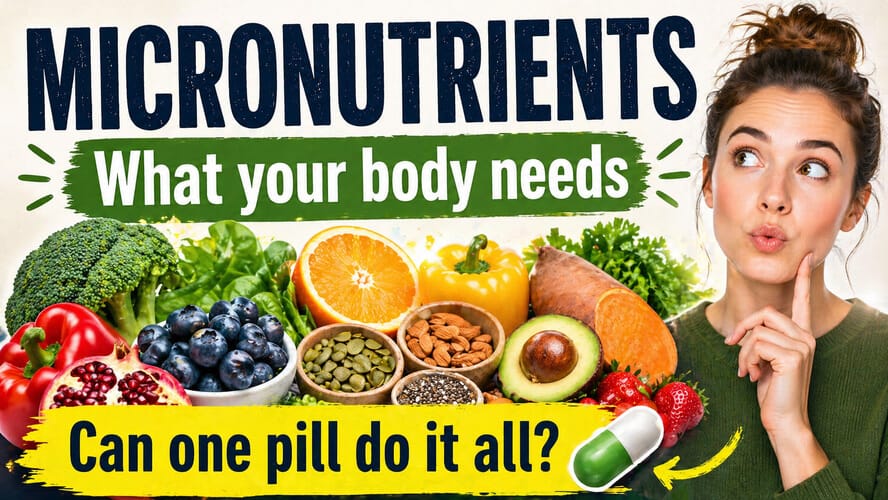
Micronutrients are vitamins and minerals the body needs in small amounts. They help normal body processes work, but they should not be treated like quick fixes for fatigue, immunity, thyroid concerns, brain fog, low energy, or any medical condition.
This page is part of the Nutrition Basics Course. The goal is to explain micronutrients in plain language: what they are, where they come from, why vitamin D and iodine deserve extra care, how multivitamins fit, and when testing or professional guidance may be useful.
Important: This content is educational only and is not medical advice. Micronutrient needs vary by age, diet, health status, medications, absorption, pregnancy, breastfeeding, sun exposure, and medical conditions. Speak with a qualified healthcare professional before starting, stopping, or changing supplements, especially if you suspect a deficiency or have ongoing symptoms.
⚡ Quick Answer
Micronutrients are the vitamins and minerals the body needs in small amounts to support normal function. They come from food first; supplements fill specific gaps when needed. Vitamin D, B12, iron, and iodine are the nutrients most commonly flagged for testing and professional monitoring.
📌 Key Facts at a Glance
- There are 13 essential vitamins: 4 fat-soluble (A, D, E, K) and 9 water-soluble (C and 8 B vitamins). Fat-soluble vitamins can accumulate in the body, which is why high-dose supplementation of A, D, E, and K requires more care than water-soluble ones.
- Essential minerals are split into macrominerals (calcium, magnesium, potassium, sodium, phosphorus) and trace minerals (iron, zinc, iodine, selenium, copper, manganese, and others). Both categories are needed, just in different amounts.
- Vitamin D deficiency is estimated to affect over 1 billion people worldwide — one of the most widespread nutritional insufficiencies tracked by public health bodies.
- Iodine deficiency remains the leading preventable cause of cognitive impairment globally, according to the WHO — which is why iodized salt programs exist in most countries.
- B12 is found almost exclusively in animal foods. People following vegan or vegetarian diets without fortified foods or supplements are consistently flagged as high-risk for deficiency by major nutrition bodies.
- The Recommended Dietary Allowance (RDA) for each micronutrient is set by the National Academies of Medicine and represents the intake level sufficient to meet the needs of ~97.5% of healthy people — it is not the same as the minimum needed to survive.
- No vitamin or mineral supplement is FDA-approved to treat, diagnose, or cure any disease or deficiency condition.
Watch the Video: Micronutrients Explained
Prefer to watch instead of read? This video explains micronutrients, food sources, vitamin D, iodine, multivitamins, and why testing may sometimes be helpful for understanding your personal nutrient status.
What Are Micronutrients?
Micronutrients are nutrients the body needs in small amounts. The two main groups are vitamins and minerals. They are called “micro” nutrients because the body needs them in smaller amounts than macronutrients such as protein, carbohydrates, and fats.
Small does not mean unimportant. Vitamins and minerals are involved in many normal body functions, including metabolism, bones, nerves, blood cells, thyroid hormone production, antioxidant systems, and immune function. The safest wording is that they help support normal body processes as part of a balanced diet.
Other compounds, such as flavonoids and phytonutrients, may also be part of a healthy diet, but they are not always classified as essential nutrients in the same way vitamins and minerals are.
Vitamins vs Minerals: What Is the Difference?
Vitamins are organic compounds. Minerals are inorganic elements. Both are needed in small amounts, but they behave differently in food, the body, and supplements.
| Type | Examples | What to know |
|---|---|---|
| Vitamins | Vitamin C, vitamin D, B vitamins, vitamin A, vitamin K | Some are water-soluble and some are fat-soluble. Fat-soluble vitamins can build up if taken in high amounts. |
| Minerals | Iron, zinc, magnesium, selenium, calcium, iodine | Some minerals can interact with medications or become unsafe at high intakes. |
Why Micronutrients Matter
Micronutrients help the body carry out normal functions. They do not work like instant switches, and taking more is not always better. A healthy micronutrient routine is about getting enough, avoiding unnecessary excess, and paying attention to personal context.
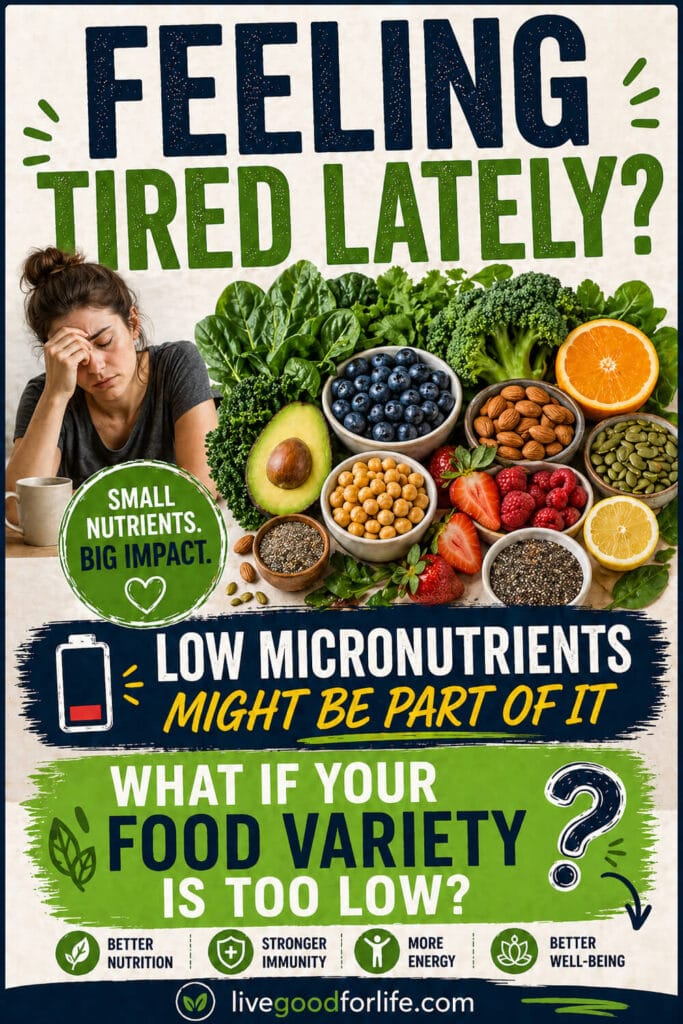
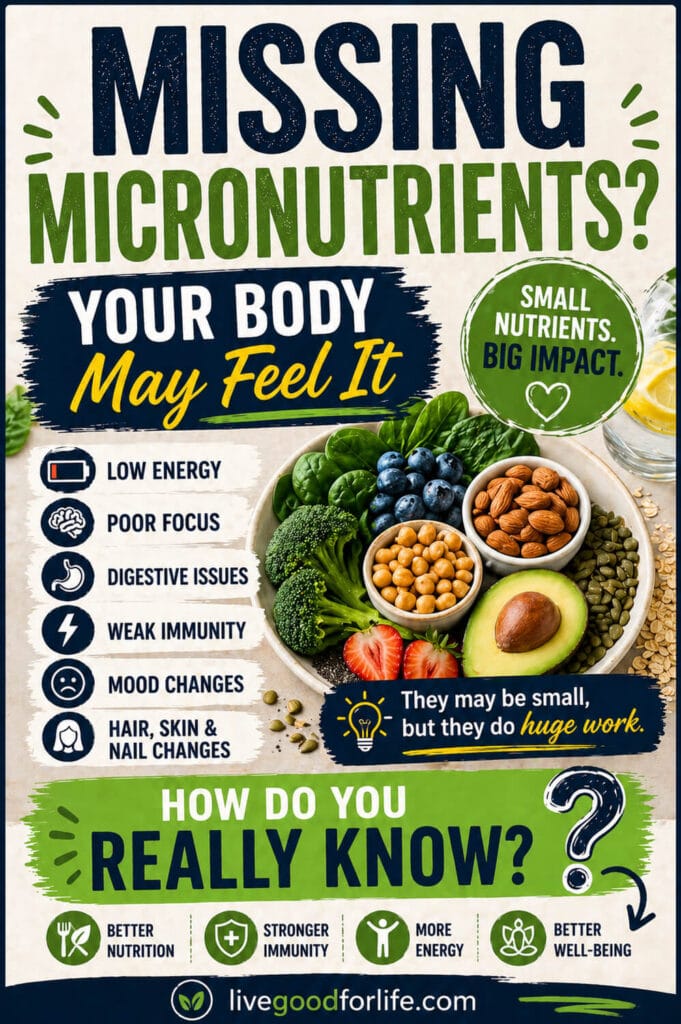
Low intake, poor absorption, restrictive diets, certain medications, digestive conditions, pregnancy, breastfeeding, and limited sun exposure can all change nutrient needs. Symptoms alone cannot confirm a deficiency because tiredness, poor focus, weakness, mood changes, hair changes, frequent illness, or slow recovery can have many possible causes.
The safest way to understand nutrient status is to work with a qualified healthcare professional and use appropriate testing when needed.
Eating Micronutrients vs Absorbing Micronutrients
Eating a nutrient and absorbing it are not always the same thing. The body still has to digest, absorb, transport, store, and use that nutrient.
For example, someone may consume vitamin B12 from food or supplements, but absorption can still be affected by certain medical conditions, digestive surgery, medications, or other health factors. Alcohol use, restrictive diets, and digestive disorders can also affect micronutrient status.
This is why a diet can look reasonable on paper while a person may still need professional guidance, testing, or a different nutrition plan.
How Do You Know If You Are Getting Enough Micronutrients?
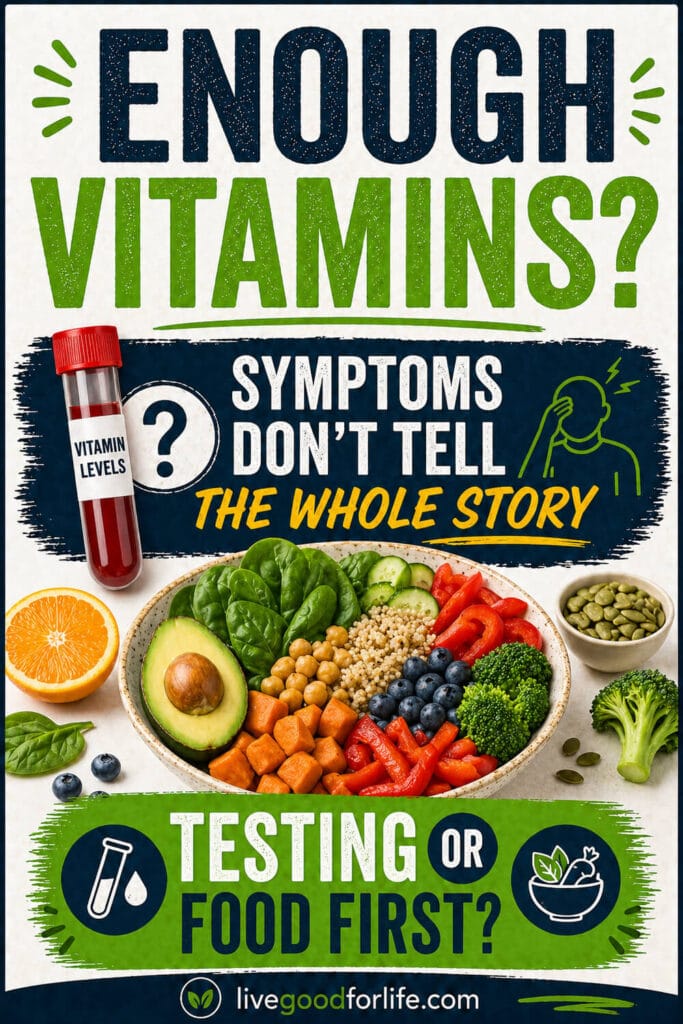
The clearest way to evaluate certain nutrients is with appropriate lab testing, interpreted by a qualified healthcare professional. Some nutrients are easier to measure than others, and not every test is useful for every person.
Testing can be expensive and may not always be covered by insurance. For many generally healthy people, a practical starting point is a varied eating pattern built around nutrient-rich foods. This does not guarantee perfect nutrient status, but it provides a strong foundation.
Best Food Sources of Micronutrients
A balanced diet with a variety of whole foods can provide many vitamins, minerals, and beneficial plant compounds. Different food groups provide different nutrients, so variety matters.
- Vegetables, fruits, and berries: provide vitamins, minerals, fiber, antioxidants, and phytonutrients.
- Fish and seafood: may provide omega-3 fats, iodine, selenium, vitamin D, and protein.
- Seeds and nuts: may provide magnesium, zinc, selenium, vitamin E, and healthy fats.
- Dairy foods, if tolerated: may provide calcium, phosphorus, protein, iodine, and other nutrients.
- Legumes and whole grains: may provide B vitamins, magnesium, iron, zinc, fiber, and plant compounds.
- Eggs and lean meats: may provide B vitamins, iron, zinc, selenium, choline, and protein.
The main point is not to rely on one “superfood.” A varied food pattern gives the body more opportunities to get a wider range of nutrients.
Can Food Cover Most Micronutrient Needs?
For many people, a balanced and varied diet can cover most daily micronutrient needs. Whole foods provide vitamins and minerals alongside protein, fiber, healthy fats, carbohydrates, and other compounds that work together in the diet.
However, “most” does not mean “all” for every person. Needs can change with age, pregnancy, breastfeeding, medical conditions, medications, digestive health, sun exposure, activity level, diet style, and absorption.
Two nutrients that often deserve extra attention are vitamin D and iodine.
Vitamin D: Why It May Need Testing
Vitamin D deserves attention because diet alone may not provide enough for some people. Sun exposure, skin tone, season, location, sunscreen use, time indoors, age, body composition, medications, and health conditions can all affect vitamin D status.
Vitamin D is involved in normal bone and muscle function and immune system function. Low vitamin D status has been associated with several health concerns, but testing and professional guidance are important before using high-dose supplements.
The best way to understand your vitamin D status is usually through a blood test. A qualified healthcare professional can help interpret your result and decide whether a supplement is appropriate.
Iodine: Why It Needs Balance
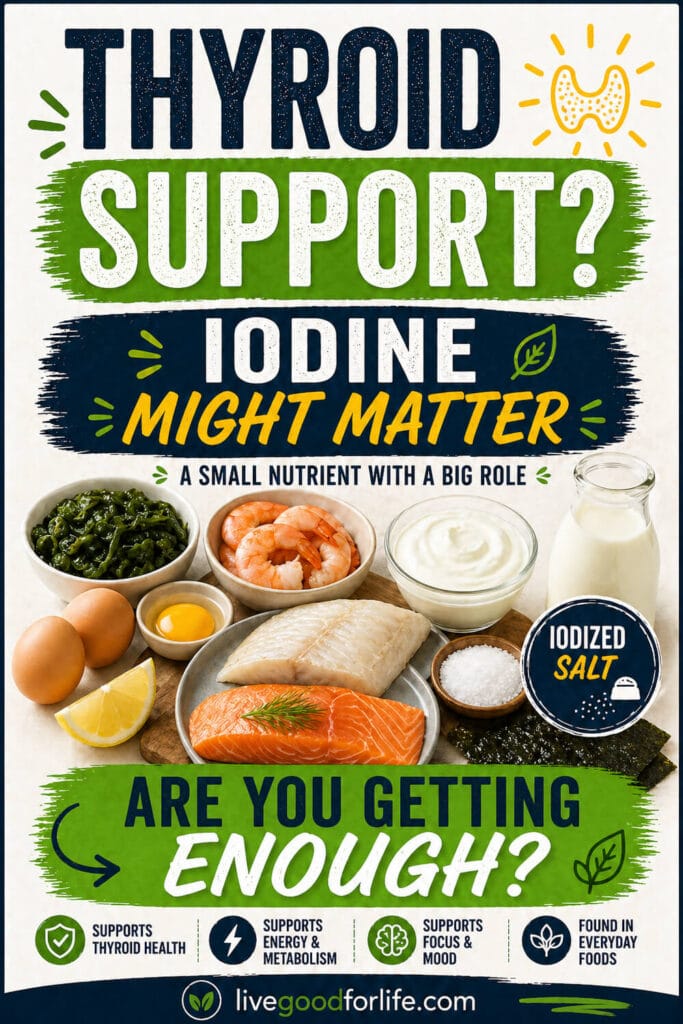
Iodine is a mineral the body uses to make thyroid hormones. Thyroid hormones are involved in growth, metabolism, development, and normal body function.
Some people may not get enough iodine from food and water alone, which is why iodine is added to iodized salt in many countries. Food sources can include iodized salt, seafood, seaweed, fish, dairy foods, and eggs, depending on the diet and region.
Iodine needs balance. Too little iodine can be a concern, but too much iodine can also be a problem, especially for people with thyroid conditions. If you suspect an iodine issue or have thyroid concerns, speak with a qualified healthcare professional before using iodine supplements or high-iodine seaweed products.
Are Multivitamins Enough?
Multivitamins can be useful for some people, but they are not a perfect solution for every nutrient gap. A multivitamin usually contains many vitamins and minerals in one formula, but the amount of each nutrient may be too low, too high, or not the right fit for a person’s situation.
For example, some multivitamins contain vitamin D, iron, iodine, calcium, or magnesium, but the amounts may not match what someone needs. If a true deficiency exists, a healthcare professional may recommend a specific nutrient, dose, and follow-up testing instead of relying only on a general multivitamin.
Multivitamins should be viewed as possible support, not a replacement for food quality, variety, testing when needed, or medical guidance.
Who May Need Testing or Extra Guidance?
Some people may benefit from testing or professional guidance instead of guessing. This is especially true when absorption, medical conditions, medications, or life stage may affect nutrient status.
Consider speaking with a qualified healthcare professional if you:
- have ongoing fatigue, weakness, dizziness, or unusual symptoms
- follow a vegan, vegetarian, restrictive, or very low-calorie diet
- have digestive conditions or a history of intestinal surgery
- take medications that may affect nutrient absorption or metabolism
- are pregnant, breastfeeding, or trying to conceive
- have thyroid concerns, anemia concerns, bone health concerns, or immune concerns
- have been told you may have low vitamin D, B12, iron, iodine, or other nutrients
- are considering high-dose supplements or multiple overlapping supplements
Testing can reduce guesswork. It may also help prevent unnecessary supplementation or unsafe high-dose use.
Micronutrients vs Macronutrients
Macronutrients and micronutrients are both important, but they do different jobs.
| Type | Examples | Main role |
|---|---|---|
| Macronutrients | Protein, carbohydrates, fats | Provide energy, structure, and building blocks |
| Micronutrients | Vitamins and minerals | Help support normal body processes in smaller amounts |
You need macronutrients in larger amounts and micronutrients in smaller amounts. A strong nutrition foundation includes both.
Simple Micronutrient Checklist
You do not need a complicated routine to start improving food quality. Begin with simple habits you can repeat consistently.
- Eat vegetables daily, especially leafy greens and colorful vegetables.
- Add fruits or berries regularly.
- Include fish or seafood if it fits your diet.
- Add nuts and seeds for minerals and healthy fats.
- Use dairy foods if tolerated, or choose fortified alternatives when appropriate.
- Consider vitamin D testing if you get little sunlight or have risk factors.
- Use iodized salt if appropriate for your diet and health status.
- Do not rely on a multivitamin to fix a suspected deficiency without guidance.
- Speak with a healthcare professional if symptoms persist or you suspect malabsorption.
What the Research Suggests
Here’s where the science is well-established, where it’s still developing, and where the honest answer is “it depends on the person.”
- Iron deficiency and anemia is the most well-documented micronutrient deficiency globally. The link between low iron intake, depleted stores, and anemia is firmly established across decades of clinical research and is the basis for widespread public health programs and clinical testing protocols.
- Folate/B9 in pregnancy is the clearest supplementation recommendation in nutrition medicine. The evidence linking folate deficiency to neural tube defects (like spina bifida) is strong enough that most health authorities recommend 400–800 mcg daily for all women of childbearing age, regardless of whether they are planning a pregnancy.
- Vitamin D has strong observational links to bone health, immune function, and inflammatory markers. However, large RCTs like the VITAL trial have shown that supplementing healthy adults who are already replete does not consistently produce the benefits that observational data suggested. The clinical recommendation that holds: correct deficiency, but don’t assume more is always better.
- Iodine and thyroid function is well-established mechanistically — the thyroid gland cannot produce hormones without iodine. Deficiency causes goiter and, in severe cases, developmental and cognitive impairment. But excess iodine can also trigger thyroid dysfunction, particularly in people with pre-existing thyroid conditions, which is why balance matters.
- Vitamin B12 absorption decreases with age, particularly after 50, due to reduced stomach acid production affecting intrinsic factor. This is why B12 monitoring is commonly recommended for older adults even when dietary intake looks adequate.
- Zinc and immune function is another well-documented relationship — zinc deficiency impairs normal immune cell development and function. However, routine high-dose zinc supplementation in otherwise zinc-replete adults is not generally recommended and can interfere with copper absorption.
- Antioxidant vitamins (C and E) play documented roles in cellular protection and oxidative stress management. Large RCTs testing supplementation for disease prevention have generally not shown benefits above adequate dietary intake — and some high-dose vitamin E trials raised safety questions in at-risk populations.
- Calcium and bone health is an established relationship for growth and maintenance, particularly in children and adolescents. For fracture prevention in otherwise healthy adults, calcium supplement evidence is more mixed, and excess calcium intake has been associated with cardiovascular concerns in some studies.
Most micronutrient research for supplementation in healthy adults with adequate status has produced weaker results than early observational data suggested. Correcting genuine deficiency is consistently well-supported; supplementing above adequacy is where the evidence gets complicated.
🏛️ What Major Health Authorities Say
The WHO, NIH Office of Dietary Supplements, National Academies of Medicine, USDA, and Harvard T.H. Chan School of Public Health all share a consistent core position on micronutrients:
- WHO estimates that micronutrient deficiencies affect over 2 billion people globally. The most prevalent are iron, iodine, vitamin A, and zinc — concentrated in lower-income populations with limited food diversity.
- NIH Office of Dietary Supplements publishes individual consumer and health professional fact sheets for each nutrient. Their consistent message: food is the best source; supplements help specific groups (pregnant women, vegans, the elderly, people with limited sun exposure), but are not appropriate as a replacement for food quality or medical care.
- National Academies of Medicine sets the Dietary Reference Intakes (DRIs) — including RDAs and Tolerable Upper Intake Levels (ULs) — for all essential micronutrients. The UL matters: it’s the maximum daily intake considered safe for most healthy adults, above which adverse effects become more likely.
- USDA Dietary Guidelines for Americans identifies vitamin D, calcium, potassium, and dietary fiber as nutrients of public health concern in the U.S. population — nutrients that most Americans don’t get enough of from food alone.
- Harvard T.H. Chan School of Public Health describes a daily multivitamin as a useful “nutritional safety net” — not a solution for poor diet quality, but a practical way to fill small gaps for people whose diets are inconsistent.
This reflects educational consensus from established authorities. It is not personalized medical advice. Individual micronutrient needs depend on age, diet, health status, medications, and lab results.
FAQ: Micronutrients
What are micronutrients?
Micronutrients are vitamins and minerals the body needs in small amounts. They help support normal body processes, but they should not be used to diagnose or treat symptoms without professional guidance.
Are vitamins and minerals micronutrients?
Yes. Vitamins and minerals are the main micronutrients. Vitamins include nutrients such as vitamin C, vitamin D, and B vitamins. Minerals include iron, zinc, magnesium, selenium, calcium, and iodine.
Can food provide enough micronutrients?
For many people, a varied diet can provide most micronutrients. However, some nutrients, such as vitamin D, iodine, B12, and iron, may need extra attention depending on diet, sun exposure, location, health status, medications, and lab results.
How do I know if I am deficient in a micronutrient?
Symptoms alone are not enough to confirm a deficiency because many symptoms can have multiple causes. Lab testing and professional guidance are the most accurate ways to understand personal nutrient status for many nutrients.
Are multivitamins enough?
Multivitamins may help some people, but they are not always enough to correct a true deficiency. If you are low in a specific nutrient, you may need targeted guidance, a specific dose, and follow-up testing from a qualified professional.
Should everyone take vitamin D?
Not everyone needs the same amount of vitamin D. Many people benefit from checking vitamin D status with a blood test and using professional guidance to choose an appropriate supplement amount if needed.
Is iodine important for thyroid function?
Yes. Iodine is needed to make thyroid hormones. However, both too little and too much iodine can be a concern, especially for people with thyroid conditions. Speak with a healthcare professional before supplementing iodine.
Final Takeaway
Micronutrients are small in amount but important for normal body function. Vitamins and minerals should be approached through food first, with supplements used thoughtfully when they fit the person and the situation.
For most people, the foundation is a varied diet with vegetables, fruits, berries, fish or seafood when appropriate, nuts, seeds, legumes, whole grains, eggs, lean proteins, and dairy or fortified alternatives if tolerated.
Vitamin D, iodine, B12, iron, and other nutrients may need extra attention for some people. Testing can reduce guesswork, and professional guidance matters when symptoms, deficiencies, medications, pregnancy, thyroid concerns, absorption issues, or high-dose supplements are involved.
Bottom line: Food comes first, testing can reduce guesswork, and supplements should be used thoughtfully.
Sources & References
- NIH Office of Dietary Supplements. Vitamin and Mineral Fact Sheets. ods.od.nih.gov
- World Health Organization. Micronutrients. who.int
- USDA. Dietary Guidelines for Americans 2020–2025. dietaryguidelines.gov
- National Academies of Medicine. Dietary Reference Intakes (DRIs). nationalacademies.org
- Harvard T.H. Chan School of Public Health. Vitamins and Minerals. hsph.harvard.edu
- MedlinePlus, U.S. National Library of Medicine. Vitamins. medlineplus.gov
- Holick MF. Vitamin D Deficiency. New England Journal of Medicine. 2007;357(3):266–281.
- Black RE, et al. Maternal and child undernutrition: global and regional exposures and health consequences. The Lancet. 2008;371(9608):243–260.
- Manson JE, et al. Vitamin D Supplements and Prevention of Cancer and Cardiovascular Disease (VITAL Trial). New England Journal of Medicine. 2019;380(1):33–44.
- Cleveland Clinic. Micronutrients. my.clevelandclinic.org
Medical and Safety Disclaimer
This content is for educational and informational purposes only and is not medical advice, diagnosis, or treatment. Micronutrient needs can vary based on diet, age, health status, medications, absorption, pregnancy, breastfeeding, sun exposure, and medical conditions. Always speak with a qualified healthcare professional before starting, stopping, or changing any supplement routine, especially if you suspect a deficiency, have a medical condition, take medication, are pregnant or nursing, or are considering high-dose supplements. Lab testing may be needed to understand your personal nutrient status.