Black Seed Oil Guide: Uses, Thymoquinone, Label Tips & Safety
⚡ Quick Answer
Black seed oil is extracted from the seeds of Nigella sativa, a plant with centuries of traditional use across the Middle East and South Asia. The key label quality marker is the thymoquinone (TQ) percentage — products standardized to 5% TQ contain measurably more of the main studied compound than generic, unstandardized oils. It’s a useful comparison tool, not a health guarantee.
📌 Things Worth Knowing Before You Read Further
- Nigella sativa is a real plant with a long history. It’s an annual flowering plant native to Southwest Asia and the Mediterranean. Its seeds have been used in cooking and traditional medicine across the Middle East, South Asia, and North Africa for centuries — which is why it shows up in so many wellness conversations.
- Black seed oil and black pepper oil are completely different things. It’s a common beginner mix-up. Black seed comes from Nigella sativa; black pepper comes from Piper nigrum. Different plant, different compound, different use.
- Thymoquinone (TQ) is what most researchers actually study when they look at black seed oil. Generic products often contain 0.4–2.5% TQ depending on origin and processing. A product standardized to 5% TQ contains measurably more of this compound.
- Cold-pressed extraction preserves more of the oil’s natural profile than heat-based methods — one reason extraction method comes up in quality comparisons.
- Black seed oil is fat-soluble, which means it absorbs better when taken with a meal that contains some fat. Most softgels handle this naturally.
- There are real medication interaction concerns. Nigella sativa may have additive effects with blood thinners (like warfarin), blood pressure medications, and blood sugar medications. Anyone on these should check with a healthcare professional before using it.
- The FDA has not approved any black seed oil product to diagnose, treat, cure, or prevent any disease.
Black Seed Oil Guide: Uses, Thymoquinone, Label Tips & Safety
Black seed oil is a traditional plant oil from Nigella sativa. This guide explains what it is, why thymoquinone is mentioned on labels, how to compare products, what safety cautions to know, and how LiveGood Black Seed Oil fits as one option to review.
A practical guide for clearer label understanding without hype.
Important safety note: This content is educational only and is not medical advice. Black seed oil supplements are not intended to diagnose, treat, cure, or prevent any disease. Ask a qualified healthcare professional before using black seed oil if you take medication, use blood sugar or blood pressure medication, take blood thinners, have a bleeding disorder, have liver or kidney disease, are pregnant or nursing, have upcoming surgery, have allergies, or are buying for a child or teen.
What Is Black Seed Oil?
Black seed oil is an oil made from the seeds of Nigella sativa, sometimes called black cumin or black seed. It has a long history of traditional use and is now common in modern supplement products.
The key point for beginners is simple: traditional use can make an ingredient interesting, but it does not automatically prove that every product is high quality or right for every person. Source, processing, standardization, serving size, testing, and safety context still matter.
Black seed oil is also a useful label-reading example because shoppers often see strong marketing around it. A better approach is to compare the full product label, not just the ingredient name.
Useful safety references: Start with NCCIH and MedlinePlus Dietary Supplements.
Why People Compare Black Seed Oil
Black seed oil gets attention because it connects traditional herbal use with modern supplement marketing. That makes education important. It is easy for an ingredient with a long history to become surrounded by unrealistic expectations.
A balanced way to think about it is this: black seed oil may be an ingredient worth comparing, but it should be evaluated by its label, quality markers, serving format, safety context, and how it fits into your routine.
Helpful angle: natural ingredients still need the same thoughtful label reading as vitamins, minerals, probiotics, greens powders, and other supplements.
Key Concepts You Need to Know
Traditional Use Is Not the Same as Proof
A long history of use can be interesting, but it does not replace careful product comparison, safety checks, or realistic expectations.
Thymoquinone Is a Label Marker
Thymoquinone is a compound people often look for when comparing black seed oil products. The percentage is useful, but it is not the only quality factor.
Context Beats Hype
A product with black seed oil is not automatically better. The amount, form, testing, other ingredients, and safety fit all matter.
Simple takeaway: black seed oil is easiest to evaluate when you read it as part of a complete supplement label instead of treating the ingredient name as enough.
What Is Thymoquinone?
Thymoquinone is a naturally occurring compound found in black seed oil. Some products mention thymoquinone percentage because it helps shoppers compare how the oil is standardized.
A higher thymoquinone percentage may be a useful comparison point, but it should not be interpreted as a guarantee of better results. Label clarity, third-party testing, serving size, capsule quality, freshness, and personal safety factors also matter.
Beginner note: use thymoquinone percentage as one label marker, not the only reason to buy a product.
Food, Seeds, and Traditional Use Context
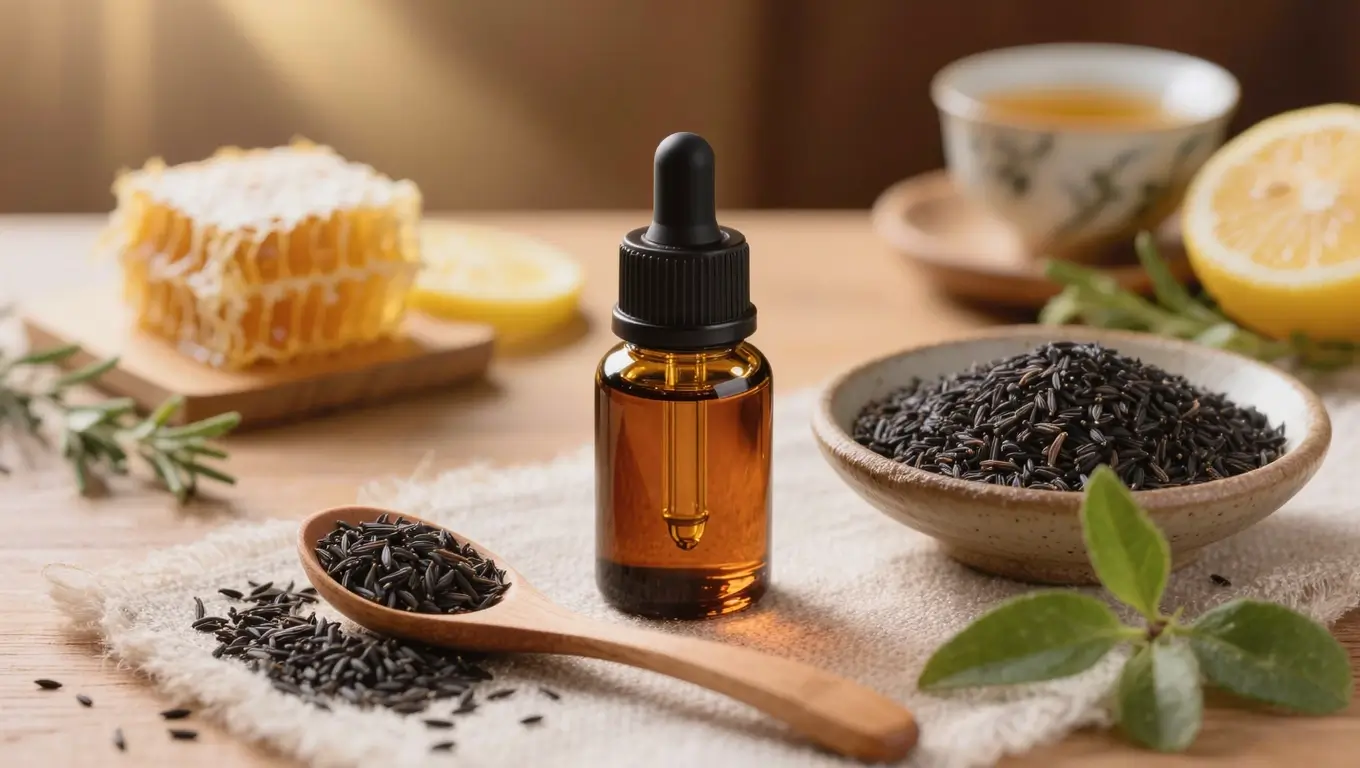
Black seed oil starts with the seed. Understanding the seed and oil source helps make the ingredient feel more practical and less like a vague wellness trend.
Traditional use is part of the story, but supplement labels still need careful reading. A good product should make it easy to understand what is inside, how much is provided, how to use it, and what cautions apply.
Want more simple wellness and nutrition help? Explore the Health Guides Hub.
How to Compare Black Seed Oil Labels
When comparing black seed oil products, look beyond the front label. A cleaner comparison checks the oil source, thymoquinone standardization, serving size, capsule type, other ingredients, testing, freshness, and safety cautions.
Label checklist:
- Does it list black seed oil or Nigella sativa clearly?
- Does it state a thymoquinone percentage?
- Does it show serving size and capsules per bottle?
- Does it include third-party testing or quality documentation?
- Does it list allergens, capsule material, and other ingredients?
- Does the label include cautions for medication use, pregnancy, surgery, or medical conditions?
Allergies and Tolerance
As with many supplements, the headline ingredient is only part of the picture. Capsule materials, oils, fillers, and other ingredients may matter for people with allergies or sensitivities.
Tolerance can vary. Stop use and seek medical advice if you experience symptoms that concern you, such as rash, swelling, breathing difficulty, severe stomach upset, dizziness, or unusual reactions.
How to Use Black Seed Oil Supplements
The simplest approach is to follow the current product label and avoid stacking multiple black seed oil products. Do not increase the amount because a product sounds natural or because a stronger amount seems better.
If you take medication or have medical conditions, ask a pharmacist or healthcare professional whether black seed oil is appropriate and whether timing matters.
Dosing and Serving Size
There is no single best black seed oil dose for everyone. Serving size depends on the product, oil concentration, thymoquinone standardization, capsule size, and personal safety context.
Use the product label as the starting point and ask for professional guidance if you take medication, have a medical condition, are pregnant or nursing, or are considering use before surgery.
Precautions Before Buying or Using
Black seed oil is a natural ingredient, but natural does not mean risk-free. Use extra caution if you take medications, manage blood sugar, manage blood pressure, have a bleeding disorder, take blood thinners, have surgery scheduled, or have liver or kidney concerns.
Before using: ask a qualified healthcare professional if you take prescriptions, have chronic conditions, are pregnant or nursing, are buying for a child or teen, or have an upcoming procedure. For broader supplement safety, review NCCIH and MedlinePlus.
Possible Side Effects
Some people may experience digestive discomfort, nausea, allergic-type reactions, or other tolerance issues. Side effects can depend on the person, product, amount, and other ingredients.
Stop use and seek professional advice if you notice unusual symptoms or reactions. Seek urgent help for severe allergic symptoms such as breathing difficulty, facial swelling, or throat tightness.
Did You Know?
Did you know? Black seed oil is a good example of why label details matter. Two products can both say “black seed oil,” but differ in thymoquinone percentage, testing, capsule type, oil quality, and serving size.
Getting Started: Your First Steps
Read the Full Label
Do not judge the product only by the ingredient name. Check thymoquinone, serving size, other ingredients, and safety notes.
Check Your Safety Fit
Medication use, blood sugar, blood pressure, surgery, pregnancy, and medical history can all affect whether black seed oil is appropriate.
Compare Quality Markers
Look for clear standardization, third-party testing, quality documentation, and transparent product information.
Resources for Learning More
Start here on the site:
For practical wellness and nutrition help beyond this article, explore the Health Guides Hub.
For supplement basics, visit the Supplement Education Hub.
To compare supplement labels more carefully, read How to Read Supplement Labels.
For product-quality context, review the Certificates of Analysis Guide.
Official reads:
What the Research Actually Shows
Here’s an honest summary of where the science stands on black seed oil — written for someone who’s just starting to learn about it. Knowing what research has and hasn’t found helps you read labels and product claims much more clearly.
- Traditional use sparked modern research interest. Centuries of use in traditional medicine across the Middle East, South Asia, and North Africa made Nigella sativa an early focus for modern phytochemistry. That’s why there’s actually a decent body of research on it — though much of it is still early-stage.
- Antioxidant activity is well-documented in the lab. Thymoquinone consistently shows free-radical scavenging activity in cell and animal studies. This is one of the most replicated findings in the Nigella sativa literature and forms the basis of most antioxidant-related label language.
- Human trials exist but are mostly small and short. Several RCTs have looked at black seed oil for blood pressure, blood glucose, and lipid profiles. Some found modest improvements; others didn’t. Most studies used small groups (often under 100 participants) over 8–16 weeks — not enough to establish firm clinical recommendations.
- The quality of the research varies a lot. Different studies use different oil preparations, different TQ concentrations, different doses, and different populations. That inconsistency makes it genuinely hard to compare results across studies — which is exactly why standardization matters when you’re buying a supplement.
- Anti-inflammatory pathways have been studied in pre-clinical settings. Thymoquinone has shown effects on NF-κB signaling and COX/LOX enzyme pathways in laboratory models. These are real mechanistic findings — but moving from a lab result to a human benefit is a longer journey than most supplement marketing suggests.
- Short-term safety looks reasonable for healthy adults. Most studies report black seed oil as well-tolerated at typical doses for the duration of the trial. Longer-term safety data is more limited, and safety can change with higher doses or medication interactions.
Short version: interesting ingredient, real research in progress, but not enough large-scale human evidence yet to make clinical recommendations. The TQ percentage helps you compare product quality — it doesn’t tell you what the supplement will do for you personally.
🏛️ What Health Authorities Say About Black Seed Oil
No major regulatory body has endorsed Nigella sativa for treating any condition. Here’s where the main authorities actually stand, in plain language:
- NCCIH (NIH): acknowledges that Nigella sativa has been studied for several conditions but states there is “not enough high-quality evidence to recommend it as a treatment for any health condition.” Research is ongoing.
- MedlinePlus (U.S. National Library of Medicine): categorizes black seed as a dietary supplement, notes it has “possibly effective” evidence for certain outcomes like blood pressure in early research, and flags interactions with medications including blood thinners and diabetes drugs.
- Memorial Sloan Kettering Cancer Center notes thymoquinone shows activity in lab studies, but human evidence remains limited and no clinical recommendations have been made based on current data.
- The FDA regulates black seed oil as a dietary supplement under DSHEA — meaning it doesn’t require pre-market safety or effectiveness approval and no product has been authorized as a medicine.
- The broader supplement education consensus is consistent: a stated TQ percentage is a more credible quality signal than no standardization at all, but it doesn’t substitute for the full label review, safety checks, and realistic expectations this guide covers.
This is educational context from established health authorities. If you have questions specific to your health situation, a doctor or pharmacist is the right person to ask.
FAQ
Is black seed oil the same as black pepper oil?
No. Black seed oil comes from Nigella sativa and is a different ingredient entirely.
Why do people compare thymoquinone percentage?
Thymoquinone is a naturally occurring compound in black seed oil. The percentage can help compare standardization, but it is not the only product-quality factor.
Does traditional use mean a product is automatically high quality?
No. Source, standardization, processing, testing, serving size, and the rest of the label still matter.
Do I need a standalone black seed oil product?
Not always. It depends on your goals, current routine, safety context, and whether the product is a good fit for you.
Who should ask a professional before using black seed oil?
Ask first if you take medication, use blood sugar or blood pressure medication, take blood thinners, have surgery scheduled, are pregnant or nursing, have liver or kidney disease, have a bleeding disorder, or are buying for a child or teen.
What should I check first on the label?
Check the Nigella sativa source, thymoquinone percentage, serving size, other ingredients, testing, capsule type, and safety notes.
Product Example: Black Seed Oil With 5% Thymoquinone
If you specifically want a black seed oil product to compare, look for clear labeling around thymoquinone standardization, serving size, capsule format, testing, and safety notes. LiveGood Black Seed Oil lists 5% thymoquinone, which makes it easier to compare against products that do not clearly state a percentage.
What To Check
Review the current label for 5% thymoquinone, serving size, capsule ingredients, testing information, allergy notes, and safety cautions before ordering.
Recommendation note: I include LiveGood Black Seed Oil because the thymoquinone percentage is clearly stated and the product is easy to compare. It should still be reviewed like any supplement, especially if you take medication or have medical considerations.
Sources & References
- NCCIH, National Center for Complementary and Integrative Health. Black Seed. nccih.nih.gov
- MedlinePlus, U.S. National Library of Medicine. Black Seed (Nigella sativa). medlineplus.gov
- NCCIH. Using Dietary Supplements Wisely. nccih.nih.gov
- MedlinePlus. Dietary Supplements. medlineplus.gov
- Memorial Sloan Kettering Cancer Center. Black Seed (Nigella sativa). mskcc.org
- Tavakkoli A, et al. Review on Clinical Trials of Black Seed (Nigella sativa) and Its Active Constituent, Thymoquinone. Journal of Pharmacopuncture. 2017;20(3):179–193.
- Ahmad A, et al. A review on therapeutic potential of Nigella sativa: A miracle herb. Asian Pacific Journal of Tropical Biomedicine. 2013;3(5):337–352.
- Darakhshan S, et al. Thymoquinone and its therapeutic potentials. Pharmacological Research. 2015;95–96:138–158.
This content is for general informational purposes only and is not medical advice. Dietary supplements are not intended to diagnose, treat, cure, or prevent any disease. Always read the current product label and speak with a qualified healthcare professional before use if you take medication, have a medical condition, are pregnant or nursing, are buying for a child or teen, or have an upcoming procedure. This post may contain affiliate links.