Fiber Guide: Foods, Digestion, Fullness, Safety & Organic Fiber Tips
Fiber Guide: Foods, Digestion, Fullness, Safety & Organic Fiber Tips
Fiber is one of the simplest nutrition basics, but many people do not think about it until digestion, meal satisfaction, or food quality becomes a focus.
This guide explains what fiber is, where to find it in food, how to add it gradually, and what to check before using a fiber supplement. After the guide section, I’ll also show you why LiveGood Organic Fiber is my recommended fiber option for people who want a simple supplement to compare.
Important: This article is educational only and is not medical advice. Fiber foods and fiber supplements are not intended to diagnose, treat, cure, or prevent any disease. Speak with a qualified healthcare professional before changing fiber intake or using fiber supplements if you have diabetes, IBS, IBD, bowel disease, swallowing difficulty, medication use, pregnancy/nursing, a history of bowel obstruction, recent surgery, or ongoing digestive symptoms.
⚡ Quick Answer
Fiber is a carbohydrate found in plant foods that the body can’t fully digest. It supports digestive regularity, meal fullness, and gut microbiome diversity. Adults need around 25g/day (women) to 38g/day (men), but most people get less than half that. Food comes first — beans, oats, vegetables, fruit, and seeds. Supplements fill gaps when food intake is consistently short.
📌 Key Facts at a Glance
- The Adequate Intake for dietary fiber is 25g/day for adult women and 38g/day for adult men (National Academies of Medicine). Most adults in the U.S. get only 10–15g per day — well under half the recommended amount.
- Soluble fiber (oats, beans, apples, chia seeds) dissolves in water and forms a gel. It slows digestion and is associated with post-meal blood glucose response and LDL cholesterol research. Insoluble fiber (wheat bran, vegetables, whole grains) adds bulk and supports transit time.
- Fiber feeds your gut bacteria. Fermentable fibers act as prebiotics — food for beneficial bacteria that ferment them into short-chain fatty acids (SCFAs) like butyrate, propionate, and acetate. Butyrate is the primary energy source for colon cells and has documented anti-inflammatory effects on gut epithelium.
- Increasing fiber too quickly causes problems. Gas, bloating, and cramping from rapid fiber increases are well-documented and consistently preventable by going gradually and drinking enough water.
- Most whole plant foods contain both types of fiber — which is why eating a variety of plants matters more than chasing one specific fiber source.
- The FDA allows a qualified health claim for oat beta-glucan and reduced risk of coronary heart disease — one of the few fiber-specific health claims with enough evidence to receive regulatory recognition.
- No fiber supplement is FDA-approved to diagnose, treat, cure, or prevent any disease or digestive condition.
Why Fiber Matters in a Daily Routine

Fiber is a type of carbohydrate found in plant foods. Unlike sugar and starch, fiber is not fully broken down by the body. Instead, it moves through the digestive system and can support regular eating patterns, digestive comfort, meal fullness, and a more plant-rich diet.
Fiber is found in foods such as fruits, vegetables, oats, beans, lentils, nuts, seeds, and whole grains. When those foods are missing from meals, fiber intake usually drops too.
A simple way to think about it: more whole plant foods usually means more fiber.
Watch the Video Below for a Simple Explanation
Many People May Not Get Enough Fiber
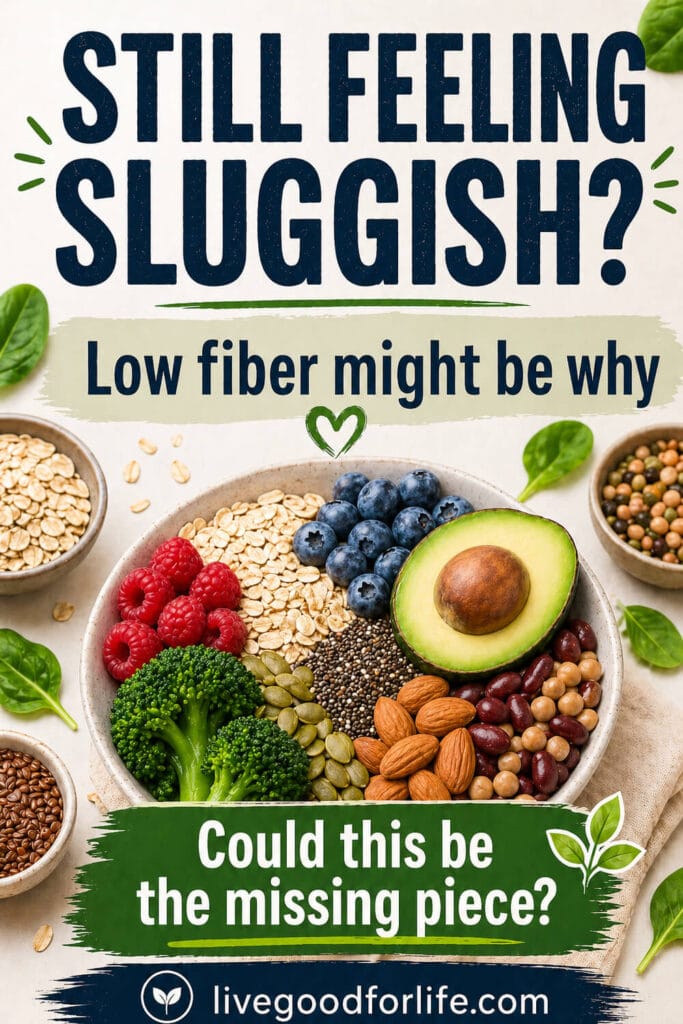
A lower-fiber eating pattern can happen when meals are built mostly around refined grains, convenience foods, snacks, or too few plant foods. That does not mean fiber is the only thing that matters, but it is a useful nutrition basic to review.
Possible clues that your meals may be lower in fiber include:
- You rarely eat fruits, vegetables, beans, lentils, oats, seeds, or whole grains
- Your meals are mostly refined or highly processed foods
- Your meals do not keep you satisfied for long
- You are trying to build a more balanced food routine
- You want more plant variety in your diet
These are not diagnostic signs. Hunger, bloating, sluggishness, constipation, diarrhea, or digestive discomfort can have many causes. If symptoms are ongoing, severe, new, or worsening, speak with a qualified healthcare professional.
What Fiber Does in the Body
Fiber moves through the digestive system and can support normal digestive function as part of a balanced eating pattern. Some types of fiber also act as food for beneficial gut bacteria.
Fiber may help support:
- Regular eating patterns
- Meal fullness and satisfaction
- A more plant-rich diet
- Normal digestive regularity
- A steadier post-meal routine when paired with balanced meals
- Daily wellness habits
Fiber should not be used as a treatment for blood sugar problems, gut disorders, constipation, diarrhea, cholesterol problems, weight loss, or any medical condition. It is one part of a broader food and lifestyle pattern.
How to Add More Fiber Safely
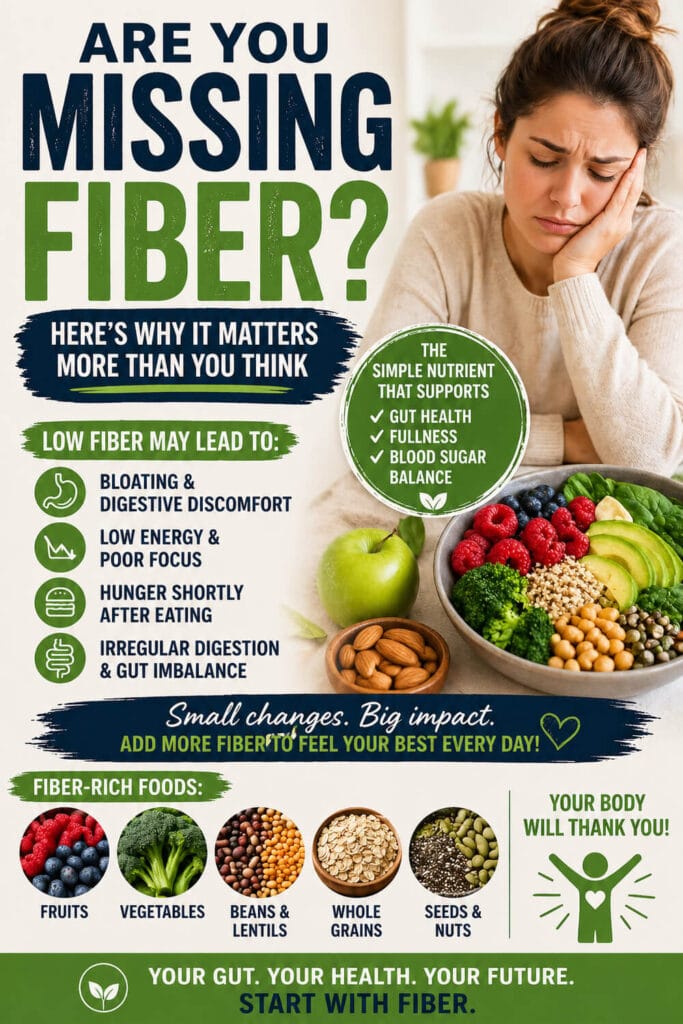
The best place to start is with simple food choices. You do not need to change everything overnight. In fact, adding too much fiber too quickly can cause gas, bloating, cramping, or digestive discomfort.
Start small and build gradually. Simple ways to add more fiber include:
- Add berries to breakfast
- Choose oats instead of low-fiber cereal
- Add beans or lentils to soups and salads
- Eat an apple or pear as a snack
- Add chia seeds or flaxseeds to smoothies
- Include vegetables with lunch and dinner
- Choose whole grains when they fit your routine
- Drink enough water throughout the day
Soluble vs. Insoluble Fiber
There are different types of fiber, but two common categories are soluble fiber and insoluble fiber. Most whole plant foods contain a mix, which is why variety matters.
Soluble Fiber
Soluble fiber dissolves in water and forms a gel-like texture. It is commonly discussed for meal fullness and post-meal response.
Common sources include oats, apples, beans, lentils, citrus fruits, chia seeds, and flaxseeds.
Insoluble Fiber
Insoluble fiber does not dissolve in water. It adds bulk to food patterns and is often discussed for regularity support.
Common sources include whole grains, vegetables, nuts, seeds, fruit skins, and wheat bran.
Fiber Food Breakdown
Here are simple fiber-rich foods to consider adding gradually.
Fruits
- Apples
- Pears
- Raspberries
- Blueberries
- Oranges
- Bananas
- Kiwi
Vegetables
- Broccoli
- Brussels sprouts
- Carrots
- Sweet potatoes
- Leafy greens
- Artichokes
- Peas
Beans and Lentils
- Black beans
- Chickpeas
- Lentils
- Kidney beans
- Pinto beans
- Split peas
Whole Grains
- Oats
- Brown rice
- Quinoa
- Whole-grain bread
- Barley
- Whole-grain pasta
Nuts and Seeds
- Chia seeds
- Flaxseeds
- Almonds
- Walnuts
- Pumpkin seeds
- Sunflower seeds
Comparison Table: Low-Fiber vs. Fiber-Rich Eating
| Feature | Lower-Fiber Eating Pattern | Fiber-Rich Eating Pattern |
|---|---|---|
| Food focus | More refined or processed foods | More whole plant foods |
| Fullness | May not feel satisfying for long | May support meal satisfaction |
| Digestion | May be lower in plant variety | May support regularity when increased gradually |
| Gut support | Less fermentable plant fiber | More food variety for gut bacteria |
| Meal balance | Often lower in fruits, vegetables, beans, and grains | Includes fruits, vegetables, beans, grains, nuts, and seeds |
Pros & Cons of Adding More Fiber
Pros
- Supports a more plant-rich eating pattern
- May help meals feel more satisfying
- Can support normal digestive regularity as part of a balanced routine
- Easy to start with small food changes
Cons
- Too much too quickly may cause bloating, gas, or discomfort
- Hydration matters when increasing fiber
- Some people with digestive conditions need individualized guidance
- Fiber does not replace protein, healthy fats, vitamins, minerals, or medical care
Safety Notes Before Increasing Fiber
Ask a qualified healthcare professional before significantly increasing fiber or using fiber supplements if you:
- have IBS, IBD, diverticular disease, bowel narrowing, bowel obstruction history, swallowing problems, or recent digestive surgery
- have diabetes or use blood sugar medication
- take prescription medication, because fiber can affect absorption timing for some medicines
- are pregnant or nursing
- have persistent constipation, diarrhea, pain, bleeding, unexplained weight loss, vomiting, or severe bloating
- are buying for a child or teen
Related Nutrition Guides
For more nutrition basics, you may also like these related guides:
- Carbohydrates: Types, Functions and Benefits
- Understanding Good vs Bad Fats for You
- Top 20 High-Protein Food Sources
- Protein: Essential Nutrient for Better Health
What the Research Actually Shows on Fiber
Fiber is one of the better-researched areas in nutrition science. Here’s where the evidence is solid, where it’s still developing, and what actually matters for everyday food choices.
- Fiber and heart health: strong evidence. Multiple large prospective studies — including data from the Nurses’ Health Study and the PREDIMED trial — consistently associate higher dietary fiber intake with lower cardiovascular risk. The effect is particularly well-documented for soluble fiber (especially oat beta-glucan) and LDL cholesterol reduction. Meta-analyses confirm this relationship across populations, which is why the FDA recognizes a health claim for oat beta-glucan and heart disease.
- Fiber and post-meal blood glucose: mechanistically clear. Soluble fiber slows the digestion and absorption of carbohydrates, producing a more gradual rise in blood glucose after meals. This is well-established in both mechanistic research and clinical trials. It’s a legitimate dietary tool alongside medical management — not a treatment for diabetes on its own.
- Fiber and digestive regularity: well-documented. Insoluble fiber adds stool bulk and supports normal transit time. Of supplemental fiber types, psyllium husk has the most clinical trial data for constipation and IBS-C (constipation-predominant IBS), with consistent results across multiple RCTs.
- Fiber and gut microbiome: an active area of research. Fermentable prebiotic fibers (inulin, FOS, resistant starch) selectively feed beneficial bacteria including Bifidobacterium and Lactobacillus species. The resulting SCFA production — especially butyrate — has documented roles in maintaining gut barrier integrity and modulating gut inflammation. This is one of the most active areas in nutrition science right now.
- Fiber and satiety: consistent findings. High-fiber foods take longer to digest, stimulate satiety hormones, and produce more stable post-meal energy levels. Multiple meta-analyses confirm fiber’s role in appetite regulation, though the effect size varies by fiber type and individual.
- Fiber and colorectal cancer: probable protection. WHO and the International Agency for Research on Cancer (IARC) classify high dietary fiber intake as probably protective against colorectal cancer based on large prospective cohort data. This is observational evidence, not a proven causal relationship, but the association is consistent enough across studies to inform dietary guidance.
- Food sources outperform isolated supplements in most research. Fiber in whole foods comes packaged with vitamins, minerals, polyphenols, and phytochemicals. Studies consistently show that whole-food fiber sources produce stronger health associations than isolated fiber supplements — which is why food first is the consistent recommendation across all major nutrition bodies.
The short version: fiber research is some of the most consistent in nutrition science. The benefits are real, the mechanisms are understood, and the main practical barrier is that most people simply don’t eat enough plant foods to meet their daily needs.
🏛️ What Health Authorities Consistently Say
The USDA, WHO, National Academies of Medicine, Harvard T.H. Chan, and the Academy of Nutrition and Dietetics are all on the same page about fiber:
- USDA Dietary Guidelines 2020–2025: lists dietary fiber as a “nutrient of public health concern” in the U.S. — meaning most Americans don’t get enough from food. Recommends shifting toward more whole grains, vegetables, fruits, beans, and legumes as the primary strategy.
- WHO: recommends a minimum of 25g of total dietary fiber per day for adults, based on evidence linking fiber intake to reduced risk of coronary heart disease, type 2 diabetes, and colorectal cancer.
- National Academies of Medicine: sets Adequate Intakes (AIs) at 25g/day for women and 38g/day for men; notes that dietary fiber intake in most developed countries falls well below these targets.
- Harvard T.H. Chan School of Public Health: emphasizes whole food fiber sources over supplements; notes that fiber from whole foods comes with additional beneficial compounds that isolated supplements don’t replicate; recommends eating a variety of plant foods daily rather than relying on a single fiber source.
- Academy of Nutrition and Dietetics: food first for fiber; supplements are appropriate when dietary fiber intake is consistently inadequate, but they should complement — not replace — whole plant foods in the diet.
All authorities agree: eat more plants, go gradually, drink enough water, and talk to a healthcare professional if you have a digestive condition before making significant changes.
FAQ: Fiber Basics
What is fiber used for?
Fiber supports normal digestion, meal fullness, and a plant-rich eating pattern. It is best viewed as part of a balanced nutrition routine.
Does fiber replace food?
No. Fiber does not replace food. It is best consumed through a variety of whole plant foods, with supplements used only when they fit your routine.
Can fiber help with hunger?
Fiber may help meals feel more satisfying because it adds bulk and can slow digestion. Hunger can also be affected by calories, protein, sleep, stress, hydration, medication, and health conditions.
Can fiber support blood sugar balance?
Fiber can slow carbohydrate digestion as part of balanced meals, but it should not be used to treat blood sugar problems or diabetes. If blood sugar is a concern, work with a qualified healthcare professional.
Should I increase fiber quickly?
No. It is usually better to increase fiber gradually over days or weeks. Adding too much too quickly may cause bloating, gas, or discomfort.
My Recommended Fiber Option: LiveGood Organic Fiber
Whole foods should always be the foundation. Fruits, vegetables, beans, lentils, oats, nuts, and seeds are still important. But for many people, staying consistent with fiber every day can be the hard part.
That is where a simple fiber supplement may help support the routine. If you want a fiber product to compare, my recommendation is LiveGood Organic Fiber.
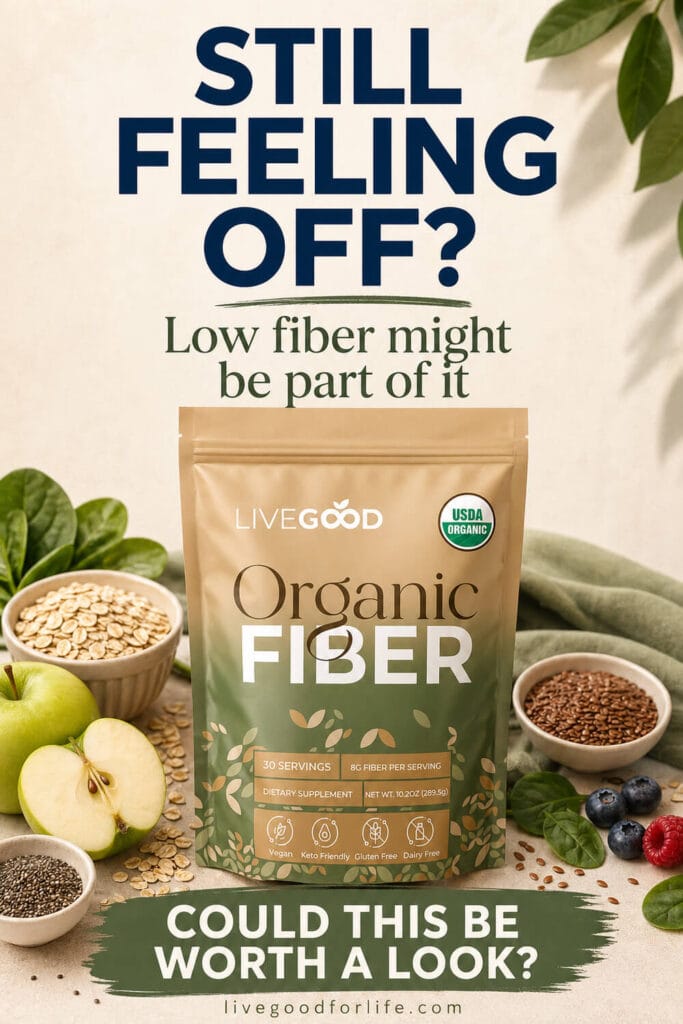
LiveGood Organic Fiber provides 30 servings per bag and 8 grams of fiber per serving. The product information also lists USDA Organic, vegan, gluten-free, soy-free, dairy-free, keto-friendly, and non-GMO. Always review the current label before ordering because product details can change.
Why I Recommend It
The reason I like this product is not just because it is a fiber supplement. It is because the product information makes it easier to compare the ingredient list, supplement facts, certifications, pricing, and Certificate of Analysis.
Many products use big claims, but they do not always make it easy to see what is inside or whether testing information is available. With LiveGood Organic Fiber, the product information shows a detailed ingredient breakdown, supplement facts, certifications, and a Certificate of Analysis.
The Certificate of Analysis lists ingredient amounts and includes microbial and heavy metal testing results. That helps shoppers compare more than just price.
You can also read more about how I evaluate LiveGood supplements here: Start Here: How We Evaluate LiveGood Supplements
What’s Inside LiveGood Organic Fiber?
LiveGood Organic Fiber includes a blend of plant-based fiber and wellness ingredients. The formula includes:
- Organic agave inulin
- Organic psyllium husk
- Organic pea fiber
- Organic baobab fruit
- Organic chia seed
- Organic apple cider vinegar
- Organic Ceylon cinnamon
- Organic lemon fruit
- Organic ginger root
- Organic turmeric root
These ingredients are commonly used in fiber and digestive-routine formulas. The safest way to describe them is that they may support a fiber-focused daily routine as part of a healthy lifestyle.
The Certificate of Analysis also lists ingredient amounts, including 5,250 mg of organic agave inulin powder, 1,500 mg of organic psyllium husk powder, 1,500 mg of organic pea fiber powder, 375 mg of organic baobab powder, and 375 mg of organic chia seed powder per serving.
Quality and Testing Transparency
The product information and quality documents list several quality points, including:
- USDA Organic
- Vegan
- Gluten free
- Soy free
- Dairy free
- Non-GMO
- Keto friendly
- Third-party lab tested
- GMP manufacturing practice
- No added sugar
- No artificial colors
- Preservative free
- Made in the USA
I removed “allergen free” as a headline claim because allergy wording should be handled carefully. If allergies matter for you, always review the current label and contact the company before using the product.
The Certificate of Analysis shows testing for microbial quality, including total plate count, yeast and mold, E. coli, and salmonella. It also shows heavy metal testing for arsenic, cadmium, lead, and mercury, with results marked as conforming to the listed specifications.
How to Use It
The product directions say to add one scoop to 6–8 oz of water, juice, or a smoothie, mix well, and drink promptly.
If you are new to fiber powder, consider starting with a smaller amount first and increasing gradually if it agrees with you. Drink enough fluids and separate fiber supplements from medications if a pharmacist or healthcare professional advises spacing.
Pros & Cons of LiveGood Organic Fiber
Pros
- 8 grams of fiber per serving
- 30 servings per bag
- USDA Organic, vegan, gluten free, soy free, dairy free, keto friendly, and non-GMO listed in product information
- Third-party lab testing and Certificate of Analysis information available
- Easy to mix into water, juice, or smoothies
- Includes multiple plant-based fiber sources
Cons
- Does not replace fruits, vegetables, beans, lentils, oats, nuts, or seeds
- Taking fiber too quickly may cause bloating or digestive discomfort
- You need to drink enough water with fiber
- Some people may prefer getting fiber only from food
- Membership pricing may not be for everyone
Price Comparison
When I compare fiber products, I do not only look at price. I also look at ingredients, transparency, testing, certifications, serving size, and whether the company makes important details easy to find.
LiveGood Organic Fiber is listed at $14.95 for members and $29.95 retail. The comparison information also shows Florasophy at $38.50 and Thorne FiberMend at $42.00. Prices can change, so always check the current product page before ordering.
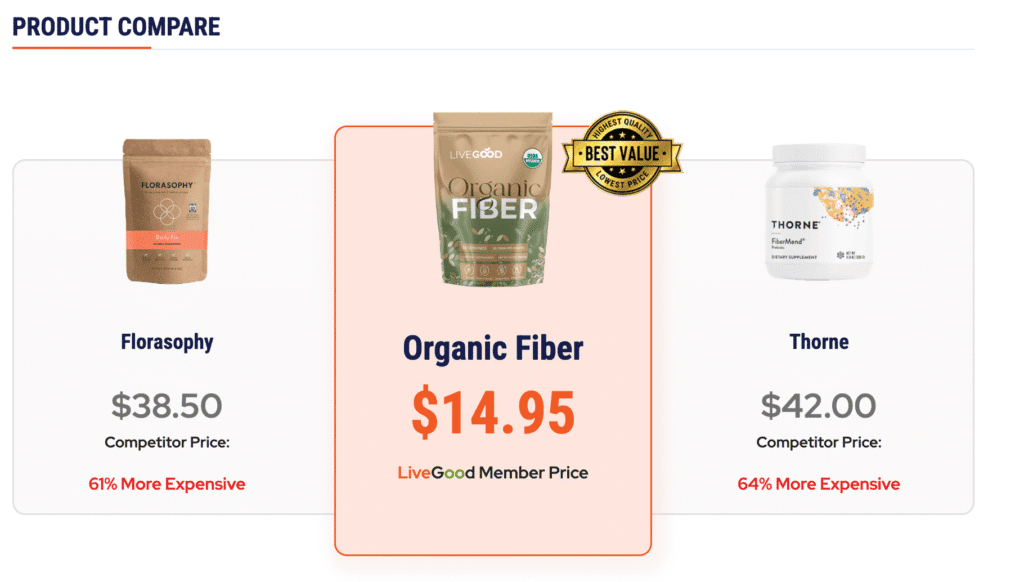
| Product | Listed Price | What to Consider |
|---|---|---|
| LiveGood Organic Fiber | $14.95 member price | 30 servings, 8g fiber per serving, organic, COA available |
| LiveGood Organic Fiber | $29.95 retail price | One-time retail option |
| Florasophy | $38.50 | Higher listed price |
| Thorne FiberMend | $42.00 | Higher listed price |
Who LiveGood Organic Fiber May Be For
This may be worth comparing if you:
- Want a simple fiber supplement option
- Find it hard to get enough fiber from food alone
- Want something easy to add to water or smoothies
- Prefer organic and plant-based ingredients
- Care about testing and transparency
- Want to compare member pricing
It may not be the best fit if you prefer to get all your fiber only from whole foods, if your healthcare professional has told you to limit fiber, or if you are sensitive to fiber supplements.
My Recommendation Summary
LiveGood Organic Fiber stands out because it combines convenience, plant-based ingredients, organic certification, 8 grams of fiber per serving, testing transparency, and a lower member price compared with the listed examples.
It is not a magic solution, and it should not replace a balanced diet. But paired with fruits, vegetables, whole grains, beans, lentils, nuts, seeds, and enough water, it may be a helpful option for supporting a consistent daily fiber routine.
Final Takeaway
Fiber is worth paying attention to because it is part of a balanced, plant-rich eating pattern. Start with food first, increase gradually, drink enough water, and pay attention to your tolerance.
For people who want a simple supplement option to compare, LiveGood Organic Fiber is my recommended choice because it is easy to review by serving size, ingredients, testing information, and price. The best option is the one that fits your body, routine, budget, and safety needs.
Sources & References
- USDA. Dietary Guidelines for Americans 2020–2025. dietaryguidelines.gov
- National Academies of Medicine. Dietary Reference Intakes for Energy, Carbohydrate, Fiber, Fat, Fatty Acids, Cholesterol, Protein, and Amino Acids. 2005. nationalacademies.org
- WHO. Healthy Diet. who.int
- Harvard T.H. Chan School of Public Health. Fiber. nutritionsource.hsph.harvard.edu
- MedlinePlus, U.S. National Library of Medicine. Dietary Fiber. medlineplus.gov
- FDA. Authorized Health Claims That Meet the Significant Scientific Agreement Standard — Oat Beta-Glucan and Coronary Heart Disease. fda.gov
- Brown L, et al. Cholesterol-lowering effects of dietary fiber: a meta-analysis. American Journal of Clinical Nutrition. 1999;69(1):30–42.
- Slavin JL. Dietary fiber and body weight. Nutrition. 2005;21(3):411–418.
- Sonnenburg JL, Bäckhed F. Diet–microbiota interactions as moderators of human metabolism. Nature. 2016;535(7610):56–64.
- Cleveland Clinic. Dietary Fiber. my.clevelandclinic.org
Disclaimer
This content is for informational and educational purposes only and is not medical advice. Results may vary. Fiber foods and supplements are not intended to diagnose, treat, cure, or prevent any disease. Consult a qualified healthcare professional before making changes to your diet, lifestyle, or supplement routine, especially if you have a medical condition, are pregnant or nursing, take medication, have diabetes, have digestive disease, have swallowing difficulty, or have ongoing digestive symptoms. This post may contain affiliate links.