Cranberry for Beginners: Benefits, Food Sources and Label Tips
⚡ Quick Answer
Cranberry (Vaccinium macrocarpon) is a tart North American berry best known for urinary tract health. Its key active compounds are Type-A proanthocyanidins (PACs), which help prevent certain bacteria from sticking to the urinary tract wall. A quality supplement should list PAC content or standardization — not just the fruit name. Cranberry does not treat active UTIs; it has been studied for prevention only.
📌 Things Worth Knowing Before You Read Further
- Cranberry’s bioactive compounds are called proanthocyanidins (PACs) — specifically Type-A PACs, which are structurally different from the Type-B PACs found in most other berries like grapes or blueberries. That distinction matters because Type-A PACs are the ones studied for anti-adhesion activity against E. coli.
- Cranberry juice cocktail is not the same as a cranberry supplement. The commercial juice is typically only 27–33% cranberry juice and high in added sugar. Supplement extracts concentrate the PAC content without the sugar load.
- 36 mg PAC per day is the amount most commonly associated with anti-adhesion activity in research. Products that don’t state a PAC level make it hard to know whether you’re getting a clinically relevant dose.
- Cranberry does not treat active UTIs. If you already have a UTI, you need medical treatment. Cranberry is studied only for reducing the frequency of recurrence in people prone to them — not for clearing an existing infection.
- The warfarin interaction is real and well-documented. Cranberry can increase the anticoagulant effect of warfarin (blood thinners), potentially raising bleeding risk. NCCIH, MedlinePlus, and clinical pharmacologists consistently flag this. Anyone on blood thinners should check with their doctor first.
- Evidence is strongest for premenopausal women with recurrent UTIs — less consistent for elderly populations, children, and catheterized patients.
- No cranberry product is FDA-approved to treat, prevent, or cure UTIs or any other condition.
Cranberry for Beginners: Benefits, Food Sources and Label Tips
Cranberry is one of those ingredients many people recognize right away, but often only in a very narrow way. This guide explains what cranberry is, why it matters, how it connects with everyday wellness, what to look for on labels, and why a more complete daily formula can often make more sense than buying one isolated ingredient on its own.
A practical ingredient guide for readers who want clearer label understanding without hype.
What Is Cranberry?
Cranberry is a tart red fruit that has been used in foods, drinks, and wellness products for a long time. In supplements, cranberry is usually included as a concentrated ingredient rather than as plain fruit juice. That is important because the supplement label is often trying to deliver the more useful parts of cranberry in a more practical form than a sweetened juice product would.
One reason cranberry is worth teaching clearly is that many readers only know it through one narrow association. They may think of cranberry as a holiday fruit, a sweet juice, or a single-purpose wellness product. The bigger picture is more useful. Cranberry is a good example of how an ingredient can move from food into supplement form, and how the real value often depends on the form, the concentration, and the overall formula.
Cranberry is also helpful from a label-reading point of view because it teaches readers not to stop at the ingredient name alone. It is more useful to ask what kind of cranberry ingredient is being used, how it fits into the broader formula, and whether the product is relying on the familiar fruit name more than the actual quality of the formula.
Why Cranberry Sounds Simple but Still Needs Context
Cranberry sounds familiar, which can make people assume they already understand it. But that is exactly why it is worth teaching more carefully. A supplement that contains cranberry is not automatically impressive just because the fruit name is easy to recognize. The smarter question is how the ingredient is used, how it fits into the formula, and whether the product is actually built with everyday value in mind.
A simple way to think about cranberry is this: it is a familiar fruit that becomes more useful when you understand the form, the context, and the formula around it. That mindset helps beginners read labels much better.
Want the science-backed basics in plain English? Start with the NCCIH cranberry overview.
Why Does Cranberry Matter?
Cranberry matters because it is one of those ingredients people already trust at a surface level, but rarely pause to understand properly. That makes it a strong teaching ingredient. It helps readers learn the difference between a recognizable name and a thoughtfully built formula.
It also matters because cranberry connects food, hydration, general wellness, and supplement design in a way many readers can understand quickly. That makes it easier to teach than some more technical nutrients, while still offering useful lessons about quality, form, and label reading.
Helpful angle: cranberry is a good reminder that familiar ingredients still deserve careful reading and thoughtful comparison.
Key Concepts You Need to Know
Familiar Name, Bigger Story
Cranberry is easy to recognize, but that does not mean every cranberry product offers the same value or quality story.
Food and Supplements Connect
Cranberry is a great example of an ingredient that makes more sense when you understand both the food version and the supplement version.
Context Beats Marketing
A product with cranberry on the label is not automatically better. The full formula still matters.
Simple takeaway: cranberry becomes much more useful as an ingredient once you stop seeing it as “just cranberry” and start reading it in context.
How Cranberry Works in a Formula
A simple way to think about cranberry in supplements is as a concentrated version of a familiar wellness food. Instead of drinking it as a sweet juice product, a supplement usually tries to include it in a more focused form that fits more easily into a daily routine. That does not automatically make every product strong, but it does explain why cranberry appears in so many wellness formulas.
A helpful analogy is that cranberry in a supplement is like a more compact version of a food-based idea. The real question is not just whether cranberry is there, but whether it is part of a better overall formula instead of being used as a familiar front-label hook.
Beginner note: this is why cranberry makes more sense when taught as part of label quality and formula design, not just as a fruit name readers already know.
Importance Of Diet
Diet still matters here because cranberry is first a real food before it becomes a supplement ingredient. That is useful for teaching because it reminds readers that supplements usually work best when they support a good foundation rather than replace one. Water intake, fruit choices, and overall nutrition habits still shape the bigger wellness picture.
For beginners, the smarter mindset is food first, supplements second. A complete multivitamin or broader wellness formula can still be useful, especially when cranberry is part of a thoughtful product, but it works best when the rest of the routine is already heading in a good direction.
Want more simple wellness and nutrition help? Explore the Health Guides Hub.
Before Using Cranberry Supplements
If you are taking a dietary supplement without a prescription, carefully read and follow any precautions on the label. With cranberry, the main teaching point is not to let the familiar name make you switch off your critical thinking. Readers still need to check the full label, the full formula, and the overall product purpose.
Before using: check the whole label, look past the familiar fruit name, and compare the full formula rather than reacting to one easy-to-recognize ingredient.
Allergies
As with many supplements, the cranberry itself may not be the only thing that matters. The rest of the formula can matter too, including capsule materials, fillers, oils, flavors, or other added ingredients. That is another reason it helps to read the full product instead of focusing on one highlighted ingredient.
Proper Use
The simplest way to use a supplement that contains cranberry is to follow the product label exactly and keep the routine practical. For many readers, a complete daily formula makes more sense than trying to build a supplement routine around one familiar fruit ingredient at a time.
Dosing
Beginners often compare products by one number alone or simply by ingredient presence. Cranberry is a good reminder that this can be too simplistic. It is usually smarter to look at the full formula, the product purpose, and whether the product feels thoughtfully built overall rather than using cranberry as a shortcut decision signal.
Precautions
Cranberry is one of those ingredients where familiarity can sometimes be misleading. This does not mean people should fear it. It means they should avoid letting a familiar name replace careful label reading. A better decision usually comes from understanding the whole formula, not just the easiest ingredient to recognize.
Want a clearer safety overview before you buy or use supplements? Start with NCCIH and MedlinePlus.
Side Effects
This is not a section to dramatize, but it should still be treated responsibly. Tolerance can vary depending on the person, the amount, and the full formula. For many readers, that is another reason a balanced daily product can feel more practical than chasing one fruit-based ingredient alone.
Recommended Amounts
This is one of those areas where reliable educational references matter more than marketing language. Instead of assuming all cranberry products are basically the same, readers usually get more value by comparing the full product structure and checking trustworthy wellness guidance before making assumptions based on a fruit name alone.
Need the official basics without the marketing spin? Read the NCCIH cranberry overview.
Food Sources
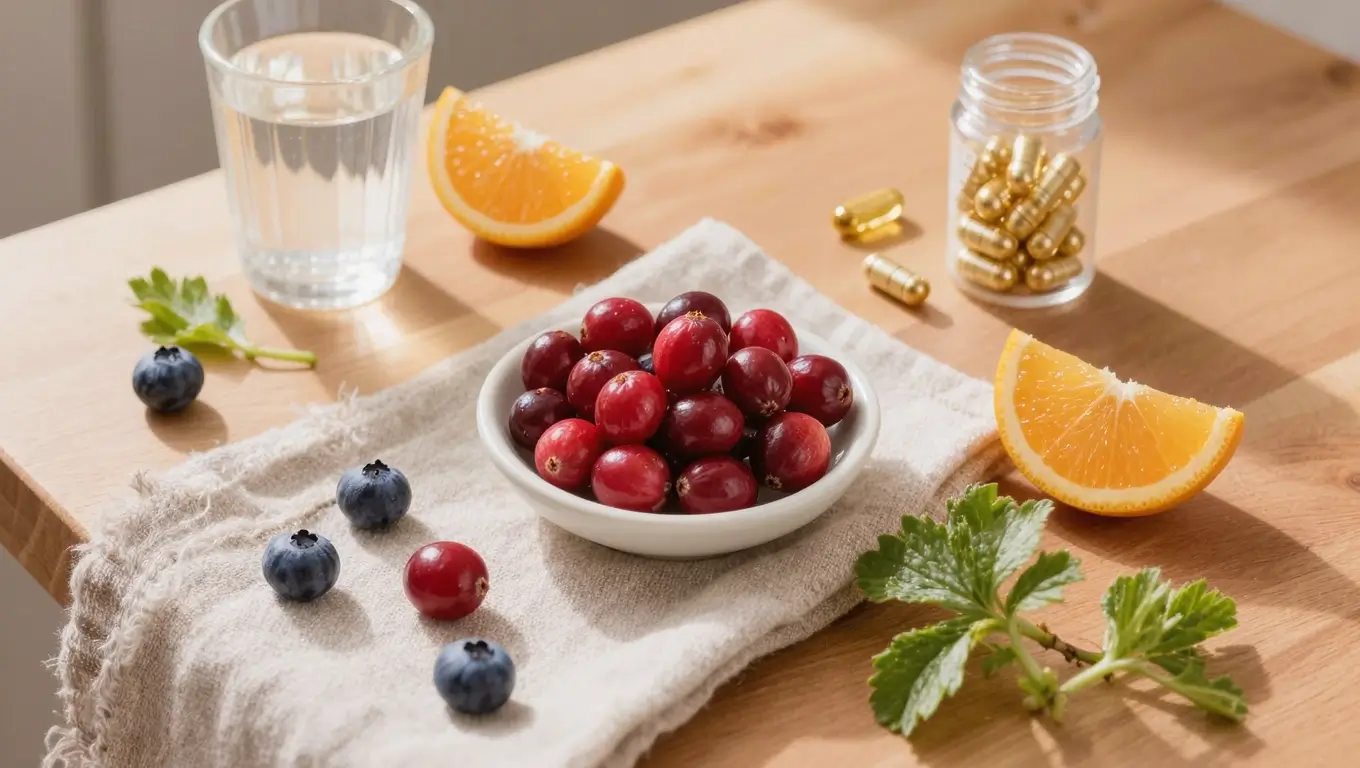
Fresh Cranberries
These help readers connect the supplement ingredient back to the actual fruit instead of treating it like an abstract wellness label.
Cranberry With Other Fruits
This helps show cranberry as part of a wider food-quality conversation, not just as a supplement keyword.
Hydration Context Matters Too
Water and broader daily habits are part of the bigger picture, which is why cranberry makes more sense inside a whole-routine mindset.
Want more easy-to-follow wellness reads after this? Visit the Health Guides Hub.
Did You Know?
Did you know? Cranberry is one of the easiest ingredients to assume you already understand, which is exactly why it is such a good teaching example for better label reading.
Getting Started: Your First Steps
Read One Label Carefully
Look at the whole formula instead of assuming the cranberry name alone tells you enough.
Connect Food With Supplements
Notice how cranberry works better as part of a bigger food and hydration conversation.
Choose a Smarter Formula
For many readers, a better multivitamin or broader daily formula is the easiest and most practical way to approach familiar ingredients like this.
Resources for Learning More
Want to keep learning without getting overwhelmed? Start with the basics, then build your knowledge step by step.
Start here on the site:
If you want practical wellness and nutrition help beyond this article, go explore our Health Guides Hub. It is a good next step when you want simple guides on food, wellness habits, digestion, skin, energy, and more.
Then take the next step into supplements with the Supplement Education Hub. This is where things start to connect if you want to understand what ingredients do, how formulas differ, and how to make smarter choices.
After that, read How to Read Supplement Labels. You will probably be surprised by how much you think you know about labels compared with what is actually easy to miss.
And when you want to go deeper into product quality, check the Certificates of Analysis Guide so you can better understand what lab and quality documents actually tell you.
Good official reads:
For a more official overview of cranberry, use the NCCIH cranberry overview.
And for a broader beginner-friendly look at supplements in general, visit MedlinePlus Dietary Supplements.
What the Research Actually Shows on Cranberry
Cranberry is actually one of the better-researched botanical supplements when it comes to a specific outcome. Here’s what the science genuinely supports — and where it stops.
- The anti-adhesion mechanism is real and well-characterized. Type-A PACs in cranberry have been shown in laboratory studies to interfere with the ability of P-fimbriated E. coli (the bacteria responsible for most UTIs) to adhere to the cells lining the urinary tract. Without adhesion, bacteria are flushed out rather than colonizing. This is one of the more clearly understood mechanisms in botanical supplement research.
- UTI prevention in women: evidence is positive but not uniform. Multiple systematic reviews and meta-analyses — including analyses published in the Journal of Nutrition and the American Journal of Clinical Nutrition — show statistically significant reductions in UTI recurrence in premenopausal women prone to recurrent infections. The 2012 Cochrane review found modest benefit; more recent meta-analyses using standardized PAC products have produced more consistent positive results.
- Cranberry does not treat active UTIs — this is important. Every study on cranberry looks at prevention of recurrence, not treatment of active infection. Once a UTI is established, antibiotics or other medical interventions are required. Cranberry cannot clear an existing infection.
- Standardization makes a real difference in study outcomes. Trials using products standardized to a PAC content (typically 36 mg/day) have produced more consistent results than trials using unstandardized dried powder or juice products. This is why PAC content on the label is the most useful quality signal for cranberry supplements.
- Evidence is weaker outside the recurrent UTI context. Proposed uses for cranberry in cardiovascular health, antioxidant status, and general immunity are based on in vitro and animal studies. Human clinical data for these applications is limited and not strong enough for recommendations.
- Warfarin interaction has clinical documentation. Case reports and pharmacokinetic studies have documented that cranberry can increase INR (a measure of blood clotting time) in people taking warfarin. The mechanism isn’t fully established, but the interaction is real enough that multiple clinical guidelines recommend caution.
Bottom line: cranberry has better human evidence than most botanical supplements — specifically for UTI prevention in women with recurrent infections. For everything else, the research is early. And it does not treat active infections.
🏛️ What Health Authorities Say About Cranberry
Here’s where major health bodies actually stand — in plain language:
- NCCIH (NIH): acknowledges that cranberry products may reduce the risk of repeat UTIs in some people, but notes the evidence is “not consistent” across all studies. Does not recommend cranberry as a treatment for active UTIs. Flags the warfarin interaction as a real safety concern.
- MedlinePlus (U.S. National Library of Medicine): rates cranberry as “likely effective” for reducing UTI recurrence in women prone to them, and “possibly effective” for a small number of other applications. Flags multiple drug interactions including warfarin, and notes safety concerns for people with kidney stones (due to oxalate content).
- American Urological Association (AUA): does not currently include cranberry as a first-line clinical recommendation for UTI prevention but acknowledges it as a low-risk option patients commonly choose. Recommends discussing with a clinician rather than self-managing recurrent UTIs with supplements alone.
- The general clinical consensus is that cranberry is a reasonable, low-risk supportive option for people who experience recurrent UTIs and want a non-antibiotic approach — but it should complement, not replace, medical care for active infections or complex cases.
- For everyone on warfarin or other anticoagulants: check with your doctor or pharmacist before using cranberry supplements. This interaction is consistently flagged across all major sources.
This is educational context, not medical advice. If you have recurrent UTIs, kidney stones, or take blood thinners, get professional guidance before using cranberry supplements.
FAQ
Is cranberry better as juice or as a supplement?
They serve different purposes, but supplement forms are usually trying to provide cranberry in a more concentrated and practical routine-friendly format.
Why is cranberry so common in wellness products?
Because it is familiar, easy to recognize, and already connected in many people’s minds with broader wellness habits.
Can cranberry come from food too?
Yes. It starts as a real fruit, which is why it is useful to connect the supplement ingredient back to food and routine habits.
Do I need a standalone cranberry product?
Not always. For many readers, a more complete daily product can be a simpler and more balanced option.
What should I check first on the label?
Look at the whole formula and the overall product quality rather than using cranberry as a shortcut decision signal.
Recommended Next Step: Choose a Better Formula That Includes Cranberry in a More Thoughtful Way
If you want to go beyond the basics, a complete multivitamin is often a smarter recommendation than buying a basic cranberry-only product without broader nutritional context. That is because you get cranberry as part of a more complete formula with more premium supporting ingredients, a more practical daily-use structure, and better overall value than buying isolated ingredients one by one.
For Women
The Bio-Active Complete Multi-Vitamin for Women with Iron is a practical example because it includes cranberry as part of a broader premium formula instead of forcing you to chase one familiar fruit ingredient at a time. That can make it feel more complete, more useful, and easier to stick with.
For Men
The Bio-Active Complete Multi-Vitamin for Men works in a similar way. Instead of buying a separate cranberry product, you get a more complete formula with a wider ingredient profile and a stronger overall daily-use value story.
Why this recommendation makes sense: for many beginners, a multivitamin that includes cranberry alongside other well-chosen nutrients is more useful, more balanced, and often more premium than buying one familiar fruit ingredient in isolation.
Sources & References
- NCCIH, National Center for Complementary and Integrative Health. Cranberry. nccih.nih.gov
- MedlinePlus, U.S. National Library of Medicine. Cranberry. medlineplus.gov
- NCCIH. Using Dietary Supplements Wisely. nccih.nih.gov
- Fu Z, et al. Cranberry reduces the risk of urinary tract infection recurrence in otherwise healthy women: a systematic review and meta-analysis. Journal of Nutrition. 2017;147(12):2282–2288.
- Jepson RG, Williams G, Craig JC. Cranberries for preventing urinary tract infections. Cochrane Database of Systematic Reviews. 2012;(10):CD001321.
- Maki KC, et al. Consumption of a cranberry juice beverage lowered the number of clinical urinary tract infection episodes in women with a recent history of urinary tract infection. American Journal of Clinical Nutrition. 2016;103(6):1434–1442.
- Howell AB. Bioactive compounds in cranberries and their role in prevention of urinary tract infections. Molecular Nutrition & Food Research. 2007;51(6):732–737.
- MedlinePlus. Dietary Supplements. medlineplus.gov
This content is for general informational purposes only and is not medical advice. Dietary supplements are not intended to diagnose, treat, cure, or prevent any disease. Always read the label and speak with a qualified healthcare professional before use if needed.