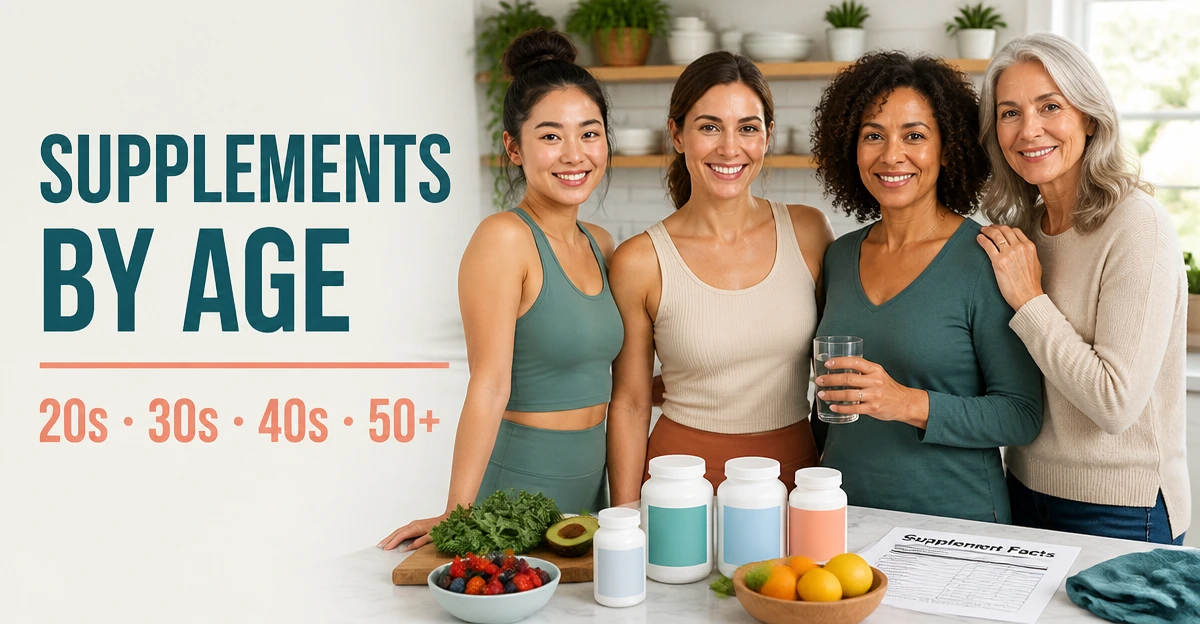
Women’s Supplements by Age: Your 20s, 30s, 40s and Beyond
Written by Daniel Popa for LiveGoodForLife.com
Women’s supplement considerations can change through their 20s, 30s, 40s, and later life, but age is only one part of the picture.
Diet, menstrual status, pregnancy, breastfeeding, menopause, medication, health history and confirmed nutrient gaps can all matter more than the number on a birthday cake.
The short answer: there is no universal supplement list for each decade. The most useful approach is to start with food, identify a genuine need and compare the latest labels before adding anything to your routine.
For a broader introduction, begin with my complete women’s wellness supplements buying guide. This supporting guide focuses specifically on how the conversation may shift through different decades.
Affiliate disclosure: This article may contain affiliate links. If you purchase through one of these links, I may earn a commission at no additional cost to you. This does not affect how I explain evidence, suitability or product limitations.
Key Takeaways
- Age alone does not determine which supplements a woman needs.
- Most nutrients should come from a varied, balanced diet.
- Folic acid deserves particular attention for women who could become pregnant.
- Menstruation can affect iron requirements, but supplemental iron is not suitable for everyone.
- After age 50, vitamin B12 absorption and calcium intake may deserve closer attention.
- Pregnancy, breastfeeding and menopause can change the discussion at any age.
- Always compare your complete routine for overlapping ingredients.
Do Women Need Different Supplements at Different Ages?
Answer: Women’s needs change with age and life stage, but choose supplements based on individual need rather than age alone.
A woman in her 20s who could become pregnant may need to pay particular attention to folic acid. A menstruating woman may want to discuss iron intake with a healthcare professional. After menopause, calcium and vitamin D may receive more attention, while adults over 50 should consider how they obtain vitamin B12.
These are starting points for evaluation, not automatic prescriptions.
The U.S. Office on Women’s Health states that most women don’t need a vitamin or mineral supplement and should get nutrients from a variety of foods whenever possible.
Verified fact: Life stage can influence nutrient needs, but a decade-based guide cannot diagnose a deficiency or determine whether someone needs a supplement.
Food First, Then Fill a Verified Gap
Answer: A food-first approach means obtaining nutrients from varied foods and using supplements only when food intake, life stage or professional guidance provides a clear reason.
Possible reasons to investigate a supplement include:
- Pregnancy or the possibility of becoming pregnant
- A vegetarian or vegan diet
- Limited intake of a major food group
- Heavy menstrual bleeding
- Problems absorbing particular nutrients
- Changes after menopause
- A deficiency identified through appropriate testing
- Advice from a qualified healthcare professional
My practical recommendation: Before buying anything, write down what you eat during an ordinary week and list every supplement or fortified product you already use. This creates a more reliable starting point than choosing from marketing claims.
Nutrition Considerations by Decade
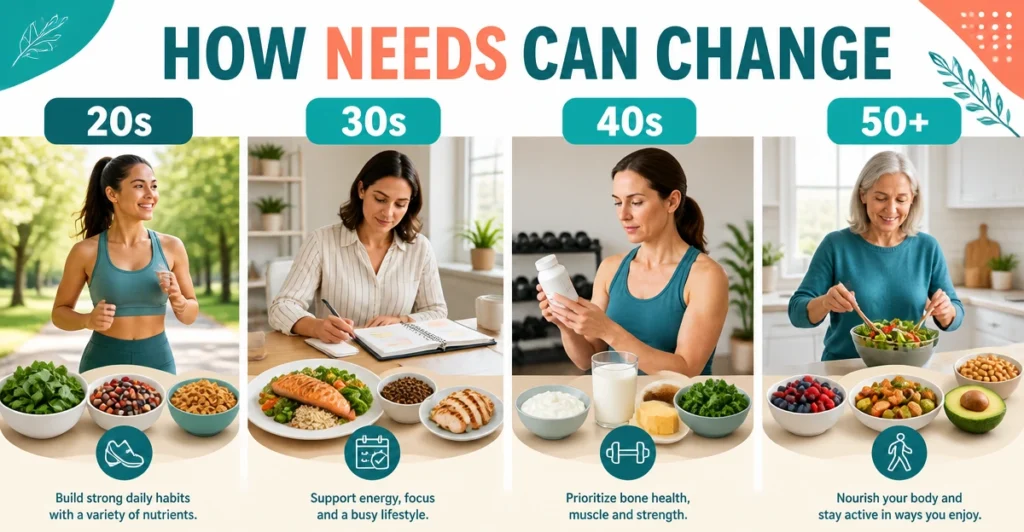
The following table summarises common topics to investigate. It does not mean every woman needs supplements from each category.
| Life stage | Common topics to review | Questions to ask |
|---|---|---|
| 20s | Folic acid, iron, calcium, vitamin D, vitamin B12 and overall diet quality | Could pregnancy occur? Do I menstruate? Do I avoid animal products or dairy? |
| 30s | Pregnancy or breastfeeding needs, iron, calcium, vitamin D, protein and routine simplicity | Has my life stage changed? Am I replacing meals with convenience products? |
| 40s | Perimenopause, bone-supporting nutrients, protein, ingredient overlap and medication use | Are symptoms being properly assessed? Has my diet or medication changed? |
| 50s and beyond | Calcium, vitamin D, vitamin B12, protein, appetite, absorption and medication interactions | Am I meeting my needs through food? Do I need a professional review of my routine? |
Women’s Supplements in Your 20s
Answer: Women in their 20s should focus on a varied diet and consider whether folic acid, iron, vitamin B12, calcium or vitamin D deserve individual attention.
Folic acid when pregnancy is possible
The Office on Women’s Health advises women who might become pregnant to obtain 400–800 micrograms of folic acid each day from supplements or fortified foods.
This advice is linked to early fetal development and applies before many people know they are pregnant. Anyone planning pregnancy should discuss prenatal nutrition and supplement use with a qualified healthcare professional.
Iron and menstruation
Women who menstruate generally have higher iron requirements than women over 50 because iron is lost through menstrual blood.
That does not mean every menstruating woman should take an iron supplement. Iron requirements, food intake and iron status vary. Unnecessary iron should be avoided.
Women comparing an iron-containing multivitamin can read my LiveGood Bio-Active Complete Multi-Vitamin for Women with Iron review. The inclusion of iron is an important suitability question, not proof that the formula is appropriate for everyone.
Vitamin B12 and plant-based diets
Vitamin B12 occurs naturally mainly in animal-derived foods, although fortified foods are also available. Women following vegan or some vegetarian diets may need to pay closer attention to their intake.
Calcium and vitamin D
Calcium and vitamin D both contribute to normal bone health. Check food sources and fortified products before assuming a standalone supplement is necessary.
Women’s Supplements in Your 30s
Answer: Supplement decisions in your 30s often depend more on pregnancy, breastfeeding, diet and lifestyle than on the decade itself.
A busy schedule can make diet quality less consistent, but a supplement should not become a substitute for regular meals.
Useful questions include:
- Am I pregnant, breastfeeding or planning pregnancy?
- Have I removed any major food groups?
- Do I regularly skip meals?
- Am I already using fortified drinks or protein products?
- Does my multivitamin repeat ingredients from another supplement?
Pregnancy and breastfeeding
Pregnancy changes nutrient requirements and requires more individual guidance than a general decade-based article can provide.
The NIH Office of Dietary Supplements identifies folate, iron, iodine, vitamin D and other nutrients as important considerations during pregnancy. Discuss prenatal supplementation with an appropriate healthcare professional.
Protein products
Protein powder can be a convenient food product when normal meals do not provide enough protein, but it is not automatically necessary.
Compare the serving size, protein amount, sweeteners and other ingredients. Consider how the powder fits into your overall diet rather than treating it as a replacement for balanced meals.
Keep the routine understandable
My practical recommendation: Start with one clearly relevant product rather than several specialist supplements. Add another only when you can explain its role and check it for overlap.
Women’s Supplements in Your 40s
Answer: In your 40s, the discussion may begin to include perimenopause, bone health, protein intake, sleep and changes in medication, but supplements should not be used to self-diagnose symptoms.
Perimenopause is not the same for everyone
Perimenopause can begin at different ages and may involve changes in menstrual patterns and other symptoms.
Products marketed for hormonal balance or menopause can contain several vitamins, minerals or botanical ingredients. The life-stage wording on the front does not confirm that every ingredient is suitable.
Persistent or disruptive symptoms should be discussed with a qualified healthcare professional.
Calcium and vitamin D
Calcium and vitamin D remain important nutritional considerations, but food sources and fortified foods should be included when assessing total intake.
A large amount in one supplement is not automatically better. Check your complete routine and avoid assuming that more is always beneficial.
Protein and physical activity
Protein provides amino acids used throughout the body, while resistance and weight-bearing activities are also important parts of maintaining strength.
A supplement cannot replace regular movement, sleep or an adequate diet.
What about collagen?
Collagen products are popular, but they should be treated as optional rather than essential women’s supplements.
Check the amount per serving, source, other ingredients and cost. Keep expectations realistic and discuss suitability if you have allergies, dietary restrictions or medical concerns.
Women’s Supplements in Your 50s and Beyond
Answer: After age 50, calcium, vitamin D, vitamin B12, adequate protein and medication interactions often deserve closer review.
Calcium after menopause
The NIH lists a recommended calcium intake of 1,200 milligrams per day for women aged 51–70, compared with 1,000 milligrams for adults aged 19–50.
That figure represents total intake from food and supplements, not an automatic supplement dose. Review dairy products, fortified alternatives, certain vegetables and other calcium-containing foods first.
Vitamin B12 after 50
The NIH notes that adults over 50 should obtain recommended vitamin B12 amounts from fortified foods or supplements because absorption of naturally occurring food-bound B12 can become less efficient.
This does not mean every person needs a high-dose standalone B12 product. A multivitamin, fortified foods or another approach may already provide it.
Protein and healthy ageing
The National Institute on Aging recommends a variety of nutrient-dense protein foods for older adults. Examples include seafood, eggs, beans, lentils, nuts, seeds, dairy products and fortified soy foods.
A protein powder may be convenient when normal intake is difficult, but food variety remains important.
Medication and supplement combinations
Medication use may increase with age, making professional review more valuable. Bring a complete list of supplements, medicines and doses to appointments rather than discussing one product at a time.
How to Choose Women’s Supplements at Any Age
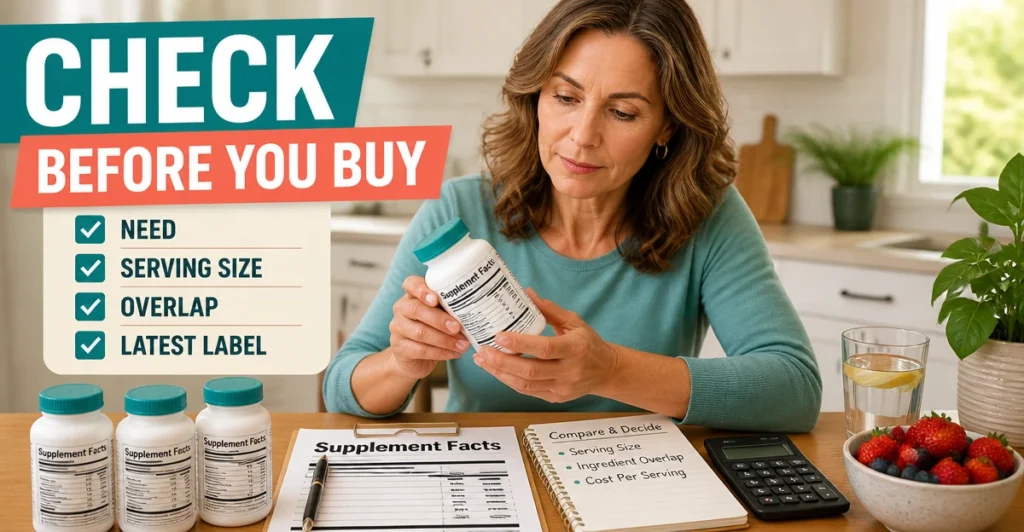
Answer: Identify the intended purpose, check the complete serving, compare nutrient amounts and forms, calculate ingredient overlap and confirm that the product suits your circumstances.
1. Define the reason
Write down what the product is intended to add. If the answer is vague, delay the purchase until you have clearer information.
2. Check the serving size
One serving may require more than one capsule. Always calculate how many complete servings the bottle contains.
3. Compare your complete routine
Check multivitamins, individual nutrients, drink powders and fortified foods together. For a step-by-step process, read my guide on how to compare supplement ingredients before buying.
4. Review combinations
Several products may repeat vitamins and minerals. If you use more than one LiveGood product, my guide to taking LiveGood supplements together explains what to check.
5. Calculate the real value
Divide the product price by the number of complete servings. Then decide whether the ingredients and format fit your needs.
Check current prices, membership terms and labels directly before purchasing because these details can change.
My Decade-by-Decade Checklist
- Has my diet changed?
- Has my menstrual status changed?
- Am I pregnant, breastfeeding or planning pregnancy?
- Am I entering or past menopause?
- Have I started a new medicine?
- Do I avoid animal products, dairy or another major food group?
- Has a professional identified a deficiency?
- Do my supplements repeat any ingredients?
- Am I following the latest product label?
- Does every product have a clear role?
Final Answer
Women’s supplement needs should be reviewed as life changes, but age alone is not enough to determine the right routine.
In your 20s, folic acid, iron and dietary patterns may deserve attention. In your 30s, pregnancy, breastfeeding and routine consistency may become more relevant. In your 40s, perimenopause and changes in diet or medication may shift the conversation. From your 50s onward, calcium, vitamin D, vitamin B12, protein intake and medication interactions often deserve closer review.
Start with food, identify a genuine gap and use the latest label. A short, understandable routine is usually easier to evaluate than a large supplement stack assembled from age-based marketing.
Frequently Asked Questions
Which supplements should a woman in her 20s take?
There is no universal list. Folic acid deserves attention for women who could become pregnant, while menstruation, dietary restrictions and food intake may influence whether iron, vitamin B12, calcium or vitamin D should be reviewed.
Do women need different multivitamins at different ages?
Not automatically, but formulas marketed for different ages may contain different amounts of iron, calcium, vitamin D or vitamin B12. Compare the actual Supplement Facts panels rather than relying on the age wording.
What supplements should women consider in their 30s?
The answer depends heavily on pregnancy, breastfeeding, diet and identified gaps. A basic multivitamin or protein product may be convenient for some women, but neither is universally required.
What supplements should women over 40 consider?
Calcium, vitamin D, protein and overall diet quality may deserve review, particularly as menopause approaches. Do not use supplements to self-diagnose hormonal symptoms.
What vitamins should women over 50 review?
Calcium, vitamin D and vitamin B12 commonly deserve closer attention after 50. Adequate protein and possible medicine-supplement interactions should also be considered.
Should every menstruating woman take iron?
No. Menstruation affects iron requirements, but the need for an iron supplement depends on diet, blood loss, iron status and professional guidance.
Do all women need a daily multivitamin?
No. The Office on Women’s Health states that most women can obtain the nutrients they need through healthy foods. Multivitamins may be useful in particular circumstances but are not universally required.
How often should I review my supplement routine?
Review it whenever your diet, medication, menstrual status, pregnancy status or stage of menopause changes. Check the latest label whenever you open a new bottle.
How This Guide Was Prepared
This guide organizes prioritization considerations by decade for convenience, while recognizing that life stage and individual circumstances are more important than age alone.
It prioritises information readers can verify through:
- Current Supplement Facts panels
- The U.S. Office on Women’s Health
- NIH article presents personal recommendations sheets
- National Institute on Aging nutrition guidance
No personal supplement test results are claimed in this article. Personal recommendations are identified as practical buying suggestions rather than medical conclusions.
Sources
- Office on Women’s Health: Vitamins and Minerals for Women
- Office on Women’s Health: Healthy Eating and Women
- NIH Office of Dietary Supplements: Multivitamin and Mineral Supplements
- NIH Office of Dietary Supplements: Calcium Fact Sheet
- National Institute on Aging: Healthy Eating as You Age
Medical Disclaimer
This article is for general educational and informational purposes only. It is not medical advice and is not intended to diagnose, treat, cure or prevent any disease.
Speak with a physician, pharmacist, registered dietitian or another qualified healthcare professional before starting a supplement, particularly if you are pregnant, breastfeeding, taking medication, managing a medical condition, preparing for surgery or considering an iron-containing or hormone-focused product.
Stop using a product and seek appropriate medical advice if you experience an unwanted reaction. Always read and follow the latest product label.