Women’s Wellness Supplements in 2026: What to Look For Before You Buy
Last fact-checked: 18 October 2026
Written by Daniel Popa for LiveGoodForLife.com
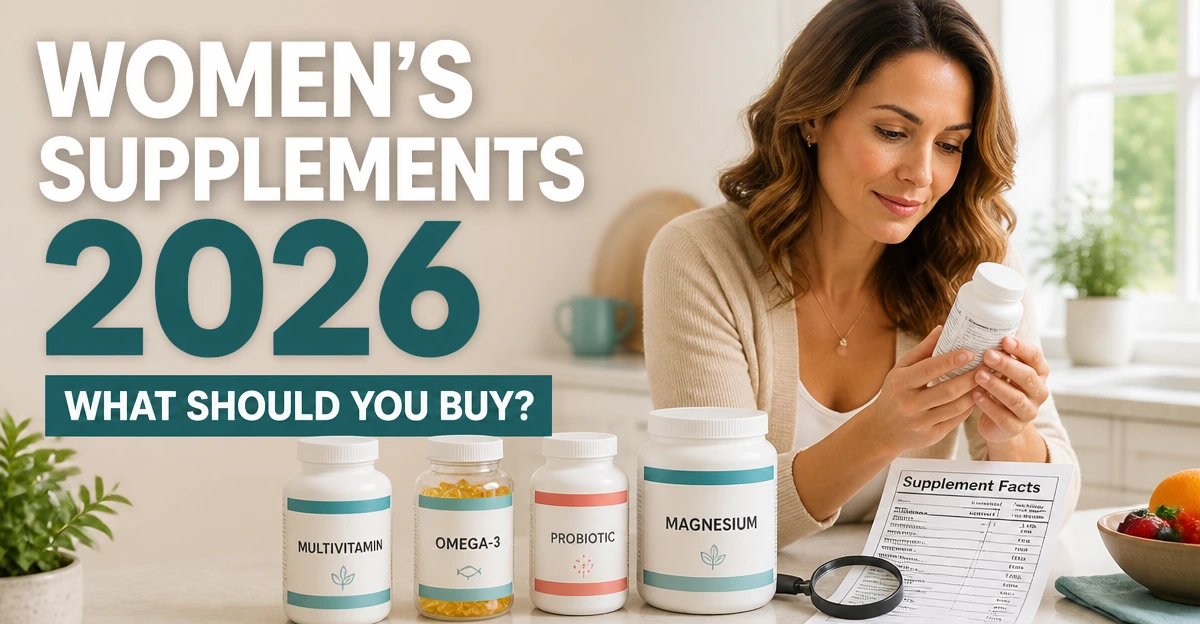
Women’s wellness supplements include multivitamins, individual vitamins and minerals, omega-3 products, probiotics and life-stage formulas marketed for needs such as pregnancy or menopause.
The short answer: there is no single supplement routine that every woman should follow. A sensible buying process starts with your diet, current supplements, life stage and individual needs. You can then compare labels for serving size, ingredient amounts, nutrient forms, overlap, warnings and cost per serving.
Affiliate disclosure: This article may contain affiliate links. If you purchase through one of these links, I may earn a commission at no additional cost to you. My explanations include relevant limitations, and readers should always verify the latest product label before buying.
Key Takeaways
- No supplement plan is suitable for every woman.
- Start by identifying a genuine need rather than choosing the product with the longest ingredient list.
- Compare amounts per complete serving, not capsule counts or front-label claims.
- Check your entire routine for repeated vitamins and minerals.
- Pay particular attention to iron because an iron-containing formula is not appropriate for everyone.
- Add new supplements one at a time so your routine remains understandable.
- Always check the newest label because ingredients, directions and serving sizes can change.
What Are Women’s Wellness Supplements?
Answer: Women’s wellness supplements are dietary supplements marketed for general nutrition or particular stages and concerns in a woman’s life. They can include multivitamins, omega-3 products, probiotics, prenatal formulas, menopause formulas and individual nutrients such as iron, vitamin D, calcium or magnesium.
The word “women’s” does not automatically establish that a product is appropriate for every woman. The useful information is found in the Supplement Facts panel, ingredient list, directions and warnings.
The FDA explains that a Supplement Facts panel identifies the serving size, servings per container, dietary ingredients and amounts per serving. Dietary supplements are not approved by the FDA for safety and effectiveness before they reach the market.
Verified fact: The FDA requires dietary supplement labels to disclose key information, but that requirement does not mean the FDA has approved the product before sale.
Readers can find additional information in the FDA’s consumer guide to dietary supplements.
Which Supplements Should Women Consider?
Answer: Women should consider supplements based on their diet, life stage, existing routine and advice from an appropriate healthcare professional. A multivitamin, omega-3 product and probiotic are common categories to compare, but they are not automatically required.
Some women may have a specific reason to investigate iron, vitamin D, calcium or magnesium. Others may already obtain enough from food, fortified products or an existing supplement.
Pregnancy, breastfeeding, perimenopause and menopause can affect which products people consider. Medication, dietary restrictions, health conditions and laboratory results may also influence the decision.
My practical recommendation: Begin with the smallest sensible routine. Do not buy a large supplement stack simply because several products are marketed together.
A Simple Supplement Decision Framework
| Question | Why it matters | What to do |
|---|---|---|
| What am I trying to add? | A clear purpose helps exclude irrelevant products. | Write down the exact category or nutrient you are considering. |
| Do I already take it? | Multivitamins and specialist formulas can contain the same nutrients. | Compare every Supplement Facts panel in your routine. |
| What is one complete serving? | One serving may require several capsules. | Use the label serving size rather than assuming one capsule. |
| Does the formula match my life stage? | Standard, prenatal and menopause formulas can differ. | Choose for your present circumstances and seek guidance when needed. |
| Can I follow the directions? | An inconvenient product may not fit your routine. | Check format, frequency, storage and food-related directions. |
| What does it cost per serving? | Bottle price alone can create a misleading comparison. | Divide the total price by the number of complete servings. |
Common Women’s Supplement Categories
Answer: Common categories include multivitamins, omega-3 products, probiotics, vitamin D, iron, calcium, magnesium, prenatal formulas and menopause formulas. Each category should be evaluated separately.
| Category | Why shoppers consider it | Important label checks |
|---|---|---|
| Women’s multivitamin | Combines several vitamins and minerals in one routine | Serving size, iron, nutrient amounts, forms and overlap |
| Omega-3 | Provides omega-3 fatty acids in a concentrated format | EPA and DHA amounts per serving, source and capsule count |
| Probiotic | Provides specific live microorganisms | Named organisms or strains, quantity, storage and expiry details |
| Vitamin D | Appears in both multivitamins and standalone products | Amount per serving and duplication with existing products |
| Iron | Appears in some women’s and prenatal formulas | Elemental amount, form and whether supplementation is appropriate |
| Calcium | May be considered alongside normal dietary intake | Total intake, serving size and presence in other formulas |
| Magnesium | Available as a standalone product or part of a blend | Form, amount per serving and number of capsules required |
| Prenatal formula | Designed as a distinct life-stage category | Complete nutrient profile, directions and professional advice |
| Menopause formula | May combine vitamins, minerals and botanical ingredients | Every active ingredient, medication considerations and overlap |
The NIH Office of Dietary Supplements maintains a searchable collection of dietary supplement fact sheets covering individual vitamins, minerals and other ingredients.
How Do You Read a Supplement Label?
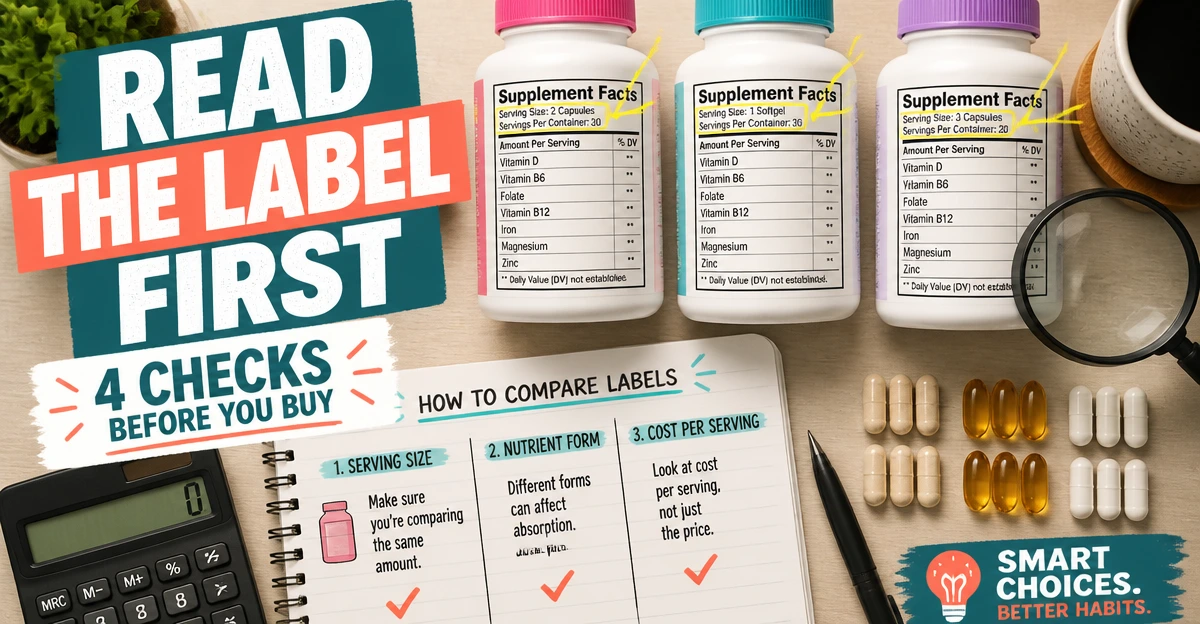
Answer: Begin with the serving size and servings per container. Then compare the amount and percentage Daily Value of each ingredient, identify nutrient forms, examine the Other Ingredients list and read all directions and warnings.
1. Confirm the complete serving size
A bottle containing 60 capsules does not necessarily provide 60 servings.
- One capsule per serving provides 60 servings.
- Two capsules per serving provide 30 servings.
- Three capsules per serving provide 20 servings.
Verified fact: Ingredient quantities in the Supplement Facts panel are normally presented for the stated serving. That makes the serving size essential when comparing products.
2. Calculate cost per serving
Use the following calculation:
Number of capsules ÷ capsules per serving = total servings
Then calculate:
Product price ÷ total servings = cost per serving
This is more useful than comparing bottle prices when products require different numbers of capsules.
3. Identify repeated nutrients
Compare the combined amounts of nutrients that appear in more than one product.
Common examples include:
- Vitamin A
- Vitamin D
- Vitamin B6
- Vitamin B12
- Folate
- Iron
- Calcium
- Magnesium
- Zinc
A repeated nutrient is not automatically inappropriate, but the total amount is more informative than examining each bottle alone.
My detailed guide on how to compare supplement ingredients before you buy explains this process step by step.
4. Record the nutrient forms
Iron, magnesium and other nutrients can appear in different forms. Two labels can therefore list the same general nutrient while using different ingredient forms.
My practical recommendation: Write down the complete ingredient name exactly as it appears on the latest label. Avoid assuming two formulas are identical because their front labels mention the same nutrient.
5. Read the Other Ingredients list
This section may identify capsule materials, flavours, colours, sweeteners and other components not shown as dietary ingredients in the Supplement Facts panel.
Check this list if you have dietary restrictions or preferences regarding particular ingredients.
6. Check directions, warnings and storage
Some products have specific storage directions. Labels may also include guidance about age, pregnancy, medication or existing health conditions.
Follow the directions on the product in your possession rather than relying solely on an old screenshot, retailer listing or review.
How Can a Beginner Build a Supplement Routine?
Answer: A beginner can build a supplement routine by reviewing existing intake, choosing one clearly relevant product and adding any additional products gradually. Every addition should have a defined purpose.
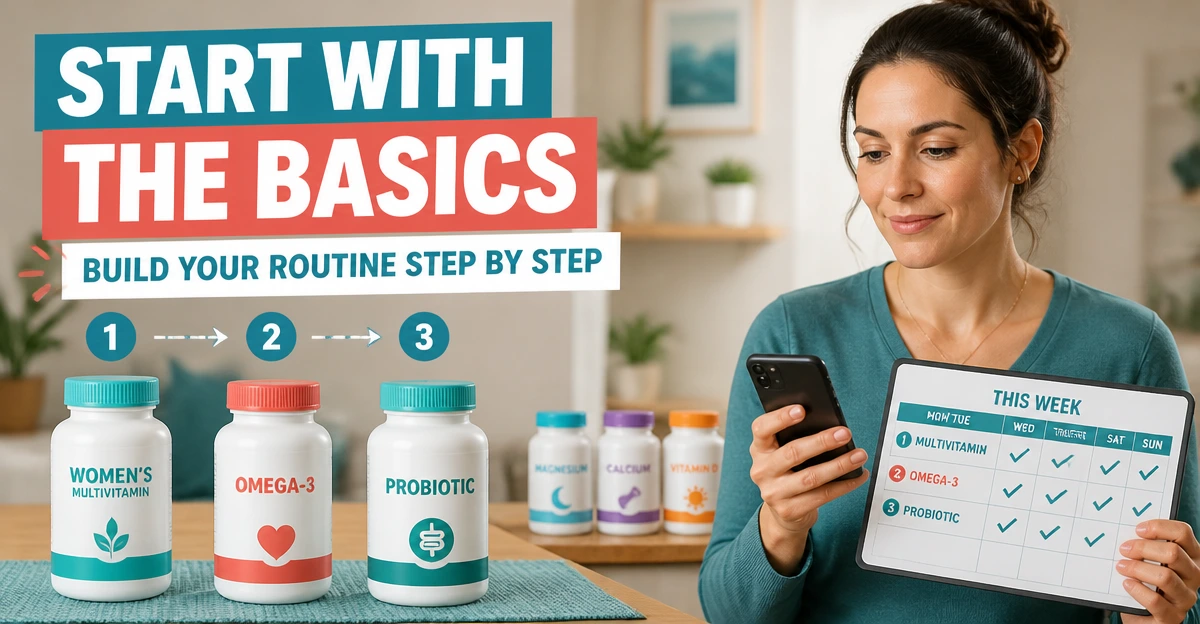
Step 1: Record your current intake
Make a list of:
- Every supplement you use
- The complete serving size of each product
- Fortified foods and drinks you consume regularly
- Your normal dietary patterns
- Medicines you take
- Relevant professional recommendations or test results
Step 2: Compare multivitamins carefully
A multivitamin may offer a convenient foundation, but formulas vary considerably.
Compare:
- Whether the formula contains iron
- The amounts provided per complete serving
- The number of capsules required
- Potential overlap with other products
- Dietary suitability
- Directions and warnings
For a specific example, see my LiveGood Bio-Active Complete Multi-Vitamin for Women with Iron review.
Important limitation: That review describes an iron-containing product. It is not a recommendation that every woman should take supplemental iron.
Step 3: Evaluate omega-3 in the context of your diet
Check how often oily fish appears in your normal diet. When comparing supplements, look for the EPA and DHA amounts per complete serving where the manufacturer provides them.
Do not assume the total quantity of fish oil is the same as the combined EPA and DHA amount.
Step 4: Compare probiotic products individually
Probiotic products are not interchangeable. Their labels can differ in the organisms or strains listed, quantity, storage instructions and serving format.
A larger number or longer list on the front of a bottle does not automatically establish that one product is more suitable for you.
Step 5: Add targeted products only when justified
Products containing vitamin D, magnesium, calcium or iron should have a defined place in the routine.
My practical recommendation: If you cannot explain why you are adding a product or which gap it is intended to address, pause before buying it.
Step 6: Review the complete combination
If you are considering several LiveGood products, read my guide to taking LiveGood supplements together. It explains why serving sizes and repeated ingredients should be checked across the entire routine.
Do Women Need Different Supplements at Different Life Stages?
Answer: Supplement considerations can change with life stage, but age or life-stage marketing alone does not determine individual need. Diet, medication, health history and professional guidance remain important.
General adult wellness
A general women’s multivitamin may appeal to someone seeking a broad formula in one product. Check whether it contains iron and whether its ingredients duplicate other supplements.
Pregnancy and breastfeeding
Prenatal products are a distinct category rather than simply stronger versions of regular multivitamins.
Pregnancy and breastfeeding are appropriate times to ask a qualified healthcare professional for individual guidance instead of constructing a routine through trial and error.
Perimenopause and menopause
Life-stage products may combine vitamins, minerals and botanical ingredients. Evaluate every active ingredient rather than assuming that the word “menopause” makes the entire formula suitable.
Persistent symptoms require proper professional assessment and should not be self-diagnosed from supplement marketing.
Women considering iron
Some women specifically seek a multivitamin with iron, while others may need to avoid unnecessary supplemental iron.
Verified fact: The NIH explains that iron supplements come in different forms and that women’s multivitamin and mineral supplements often contain iron. The elemental amount appears in the Supplement Facts panel.
See the NIH iron fact sheet for more detailed information.
How Should You Compare Supplement Value?
Answer: Compare the cost per complete serving, serving frequency, ingredient profile and practical usefulness—not simply the bottle price.
I consider:
- Number of complete servings
- Cost per serving
- Number of capsules required each day
- Ingredients relevant to the intended purpose
- Unnecessary duplication
- Format and convenience
- Membership or subscription requirements
- Shipping costs and recurring-order terms
A lower-priced product is not better value if its formula does not fit your needs or you are unlikely to use it consistently.
Prices, membership terms and product formulas can change. Verify current details directly with the seller before ordering.
Common Mistakes to Avoid
Choosing the product with the longest label
More ingredients do not automatically mean a product is more suitable or better value.
Comparing capsules instead of servings
A bottle containing more capsules can still provide fewer days of use when several capsules are required per serving.
Taking multiple multivitamin-style products
A standard multivitamin, prenatal product and specialist blend may provide many of the same nutrients.
Assuming natural means risk-free
Natural origin does not establish safety, suitability or compatibility with medicines.
Using old product information
Manufacturers can change ingredients, serving sizes, directions and prices. Always check the latest label.
Expecting an immediate transformation
Supplements should not be presented as substitutes for a balanced diet, sleep, movement or appropriate medical care.
My Women’s Supplement Buying Checklist
- What specific purpose would this product serve?
- Does the formula match my current life stage?
- What is one complete serving?
- How many servings are in the container?
- What is the cost per serving?
- Does it repeat nutrients in another product?
- Does it contain iron?
- Which nutrient forms are used?
- Have I read the Other Ingredients list?
- Are there relevant warnings or storage directions?
- Can I realistically follow the directions?
- Am I reading the newest version of the label?
- Should I discuss this product with a healthcare professional?
What I Recommend Reading Next
If you want to continue your research, these guides provide the most relevant next steps:
- How to Compare Supplement Ingredients Before You Buy — use this when two labels look similar but contain different amounts, forms or serving sizes.
- Can You Take LiveGood Supplements Together? — use this before combining several LiveGood products.
- Bio-Active Complete Multi-Vitamin for Women with Iron Review — use this when comparing a women’s multivitamin that includes iron.
These articles answer different questions. The ingredient-comparison guide is the best general starting point, while the multivitamin review is relevant only when an iron-containing women’s formula fits your comparison.
Final Answer
The best way to choose women’s wellness supplements in 2026 is to begin with a defined need, compare complete servings and check the entire routine for ingredient overlap.
A multivitamin, omega-3 or probiotic may be worth comparing, but no category is automatically required for every woman. Targeted nutrients such as iron, vitamin D, calcium and magnesium should have a clear reason for being included.
Use the current Supplement Facts panel as your main product reference. Consider cost per serving, suitability and convenience, but do not let price or marketing replace individual guidance.
Frequently Asked Questions
What are the most common women’s wellness supplements?
Common categories include women’s multivitamins, omega-3 products, probiotics, vitamin D, iron, calcium and magnesium. Prenatal and menopause products are separate life-stage categories.
What supplements should every woman take?
There is no supplement list suitable for every woman. Individual needs vary according to diet, age, life stage, medication, medical history and other factors.
What should I look for in a women’s multivitamin?
Check the complete serving size, iron content, nutrient amounts, ingredient forms, dietary suitability, warnings and potential overlap with other supplements.
Should every woman take iron?
No. Some women may have a reason to consider supplemental iron, while others may not need it. Discuss iron with a qualified healthcare professional rather than assuming it belongs in every routine.
How do I calculate the number of servings in a bottle?
Divide the total number of capsules or tablets by the number required for one serving. For example, 60 capsules with a two-capsule serving provide 30 servings.
Can women take several supplements together?
Sometimes, but products can repeat ingredients or interact with medicines. Compare all labels together and seek professional advice when appropriate.
Are prenatal vitamins only for pregnancy?
Prenatal supplements are designed as a distinct life-stage category. Whether a prenatal product is suitable outside pregnancy requires individual evaluation and professional guidance.
Are menopause supplements suitable during perimenopause?
Not automatically. Formulas vary, and every active ingredient should be evaluated. Discuss persistent symptoms and personal suitability with a qualified healthcare professional.
How often should I review my supplement routine?
Review it whenever your diet, medication, health circumstances or life stage changes. Also check the label when starting a new bottle because manufacturers can update formulas and directions.
How This Guide Was Prepared
This guide compares general supplement categories rather than ranking products. It prioritises information that consumers can verify directly:
- Supplement Facts panels
- Serving sizes and servings per container
- Ingredient amounts and forms
- Other Ingredients lists
- Directions, warnings and storage information
- FDA consumer information
- NIH Office of Dietary Supplements fact sheets
No personal test results have been claimed in this guide. Personal recommendations are identified as practical buying suggestions rather than medical conclusions.
Sources
- U.S. Food and Drug Administration: FDA 101 Dietary Supplements
- FDA Dietary Supplement Labeling Guide: Nutrition Labeling
- NIH Office of Dietary Supplements: Dietary Supplement Fact Sheets
- NIH Office of Dietary Supplements: Iron Fact Sheet
Medical Disclaimer
This article is for general educational and informational purposes only. It is not medical advice and is not intended to diagnose, treat, cure or prevent any disease.
Dietary supplement needs vary between individuals. Speak with a physician, pharmacist, registered dietitian or another qualified healthcare professional before starting a supplement, especially if you are pregnant, breastfeeding, taking medication, managing a medical condition, preparing for surgery or considering an iron-containing or hormone-focused product.
Stop using a product and seek appropriate medical advice if you experience an unwanted reaction. Always read and follow the latest product label.