Protein Powder Calculator: Daily Protein Estimate, Safety & Cost Tips
Protein Powder Calculator: Daily Protein Estimate, Safety & Cost Tips
Protein powder can be convenient, but it is not always clear how much you actually need, how much should come from food, and whether your current powder is a good value. This page keeps the calculator tool and turns the surrounding guide into a safer, practical protein-routine resource.
Use the calculator below as an educational starting point, not a medical prescription. Protein needs vary by body size, activity, age, goals, calorie intake, health history, kidney function, digestion, pregnancy/nursing status, and diet pattern.
Important: This calculator does not diagnose protein deficiency, eating disorders, kidney disease, digestive issues, muscle loss, or any medical condition. If you have kidney disease, diabetes, liver disease, pregnancy/nursing, a history of disordered eating, unexplained weight changes, or medical nutrition needs, speak with a qualified healthcare professional or registered dietitian before changing your protein intake.
Interactive Protein Powder Calculator
Use this calculator to estimate a daily protein range based on your body weight, activity level, and routine goal. Then compare how much protein you already get from food before deciding whether powder is useful.
🏋 Find Your Perfect Protein Target
What This Calculator Can Help With
It can help estimate: a practical daily protein range based on basic inputs.
It can help compare: food protein, protein powder servings, cost per gram, and daily powder use.
It can help you avoid: guessing, overbuying powder, relying too heavily on shakes, or ignoring whole-food protein sources.
It cannot do: diagnose nutrition problems, guarantee muscle gain or weight loss, replace a dietitian, or tell you what is safe for your personal medical history.
Why Protein Needs Are Not One-Size-Fits-All
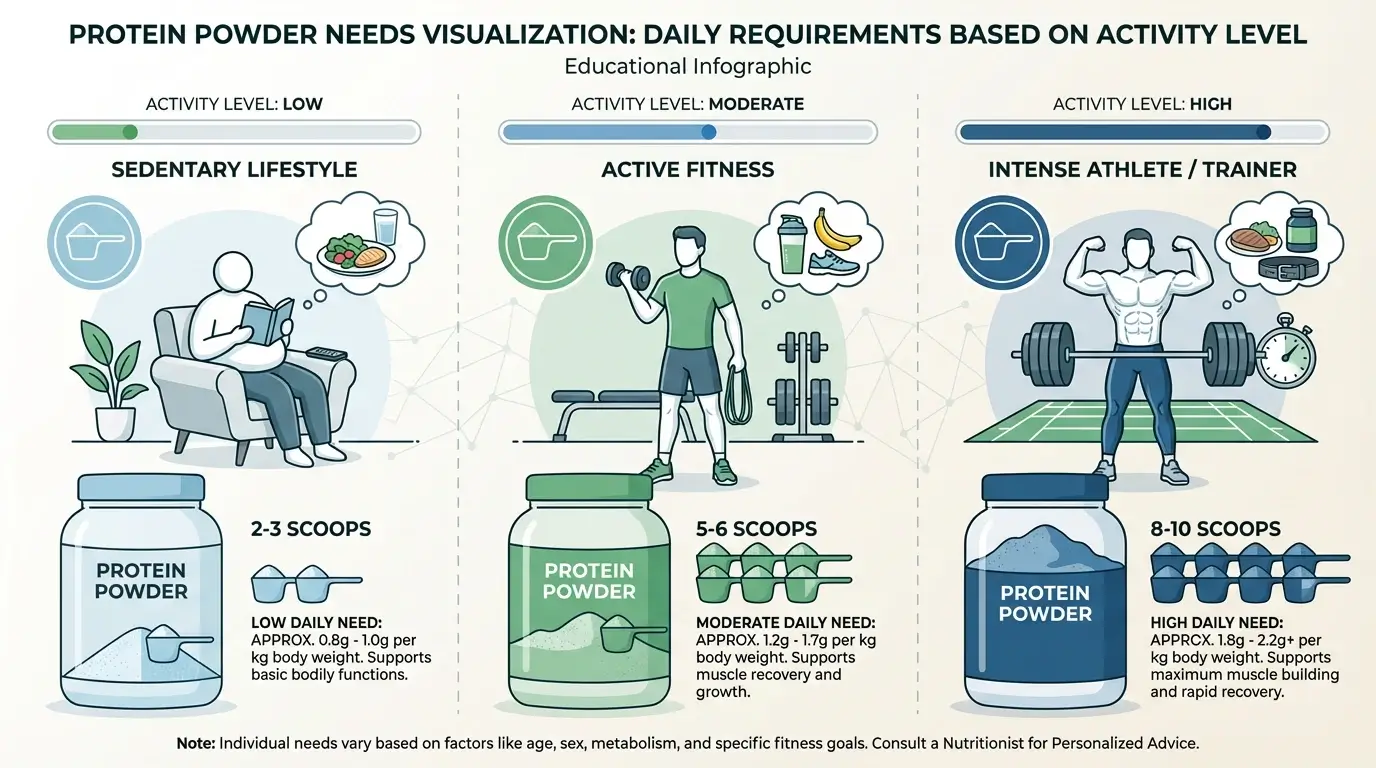
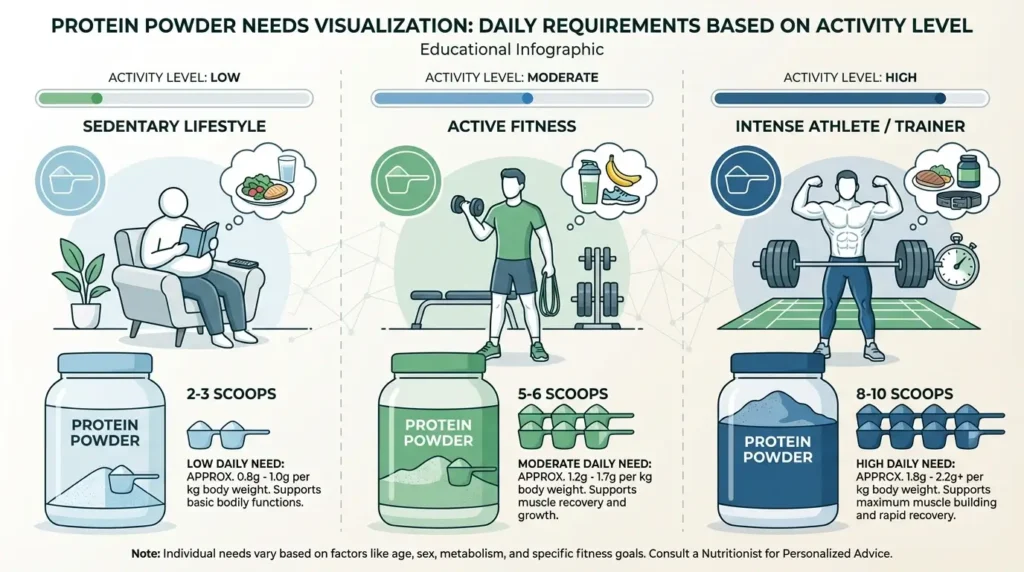
Protein needs vary from person to person. A smaller adult with light activity has a different protein target than a larger adult doing frequent resistance training. Someone trying to build meals around whole foods may use protein powder differently than someone who travels often or struggles to hit protein through food alone.
The goal is not to force the highest possible number. A better goal is to find a sustainable range that supports your routine without overspending, causing digestive discomfort, replacing too many meals with shakes, or ignoring your overall diet quality.
Helpful educational reference: the International Society of Sports Nutrition publishes sports nutrition position stands and research summaries. Use these resources as general education, not personal medical advice.
Food First, Powder When Useful
Protein powder is a tool, not a requirement. Many people can meet their protein needs with foods such as eggs, Greek yogurt, cottage cheese, poultry, fish, lean meats, tofu, tempeh, beans, lentils, soy foods, nuts, seeds, and balanced meals.
Whole foods bring more than protein. They may also provide fiber, vitamins, minerals, fats, carbohydrates, texture, and fullness. Protein powder can still be useful when convenience, appetite, travel, budget, or schedule makes food-only protein difficult.
When protein powder may make sense
- You need a convenient protein option during a busy day
- You are short on protein after reviewing your normal food intake
- You want an easy snack option between meals
- You travel often and need something shelf-stable
- You prefer a shake after training because it is convenient, not because there is a magic window
A practical approach is to get most protein from food and use powder to fill gaps when needed. The exact split depends on your diet, schedule, digestion, budget, and preferences.
Protein Goals: Keep the Wording Realistic
Protein is important for normal body function and for active people, but it should not be framed as a guaranteed fix for body composition, muscle gain, recovery, appetite, or energy. Training, sleep, total calories, meal quality, consistency, genetics, medical conditions, and stress all matter too.
| Goal people often select | Safer way to think about protein |
|---|---|
| General wellness | Meet a reasonable daily protein range from balanced meals and optional powder |
| Resistance training | Support a training routine with enough total protein, calories, sleep, and recovery habits |
| Weight management | Protein may help meals feel more satisfying, but total diet pattern and calories still matter |
| Busy schedule | Use powder as a convenience tool when food is not practical |
How to Compare Protein Powder Cost
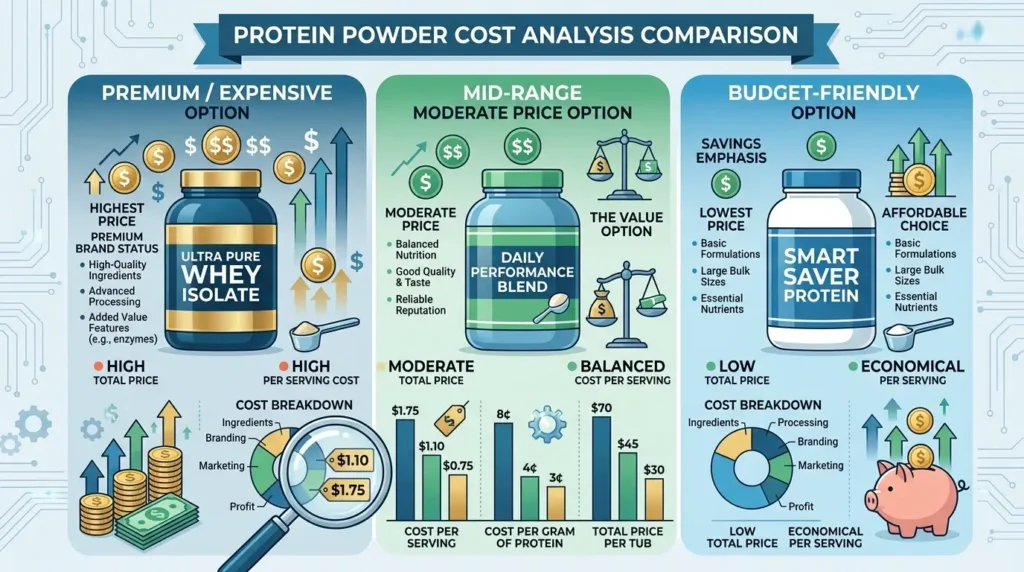
Protein powder pricing can be confusing because serving sizes and protein grams differ by brand. The bottle price is not enough. Compare cost per gram of protein, servings per container, protein per serving, and whether the formula fits your diet.
Cost per serving: container price ÷ servings per container
Cost per gram of protein: container price ÷ total grams of protein in the container
Protein percentage: grams of protein ÷ serving size in grams
Value check: compare price, taste, mixability, testing, ingredient quality, and digestive tolerance together.
Protein Timing Without the Hype
You do not need to panic about a tiny post-workout window. For most people, total daily protein and consistent meals matter more than drinking a shake immediately after training.
That said, timing can still be practical. A shake after training may be useful if you will not eat a meal soon. A protein snack at breakfast may help some people build a more balanced morning routine. Use timing to make your day easier, not because your progress depends on one perfect moment.
Choosing a Protein Powder
Different protein powders fit different people. Choose based on tolerance, diet, allergies, taste, cost, label clarity, and how you plan to use it.
| Type | What to check |
|---|---|
| Whey protein | Dairy tolerance, lactose level, protein grams, sweeteners, testing |
| Whey isolate | Often lower in lactose, usually higher cost, check serving details |
| Casein | Dairy-based, thicker texture, may fit some evening snack routines |
| Plant protein | Protein source, amino acid blend, taste, texture, allergens such as soy or pea |
| Collagen protein | Not a complete protein; do not use as your main protein powder unless advised |
| Meal replacement shake | Different from protein powder; check calories, fiber, vitamins, minerals, and use case |
Label Red Flags to Check
- Unclear protein grams per serving
- Serving size that looks small compared with the scoop size
- Large proprietary blends that hide amounts
- Strong claims around fat loss, muscle gain, recovery, metabolism, or medical outcomes
- Allergens or sweeteners that do not fit your body
- No testing, quality, or manufacturing information
Using the Calculator Results
After using the calculator, treat the result as a starting estimate. Then compare it with your normal meals for a few days. You may find you already get enough protein from food, or you may find a small protein powder serving fills the gap conveniently.
- Estimate your range: Use the calculator as a starting point.
- Check your food intake: Track a few normal days if you want a clearer picture.
- Fill gaps only if needed: Add powder where food is not practical.
- Watch digestion: Bloating, gas, nausea, or discomfort may mean the type, amount, sweetener, or timing does not fit you.
- Adjust gradually: Do not force a high intake if it does not fit your diet or body.
High-Protein Snack Guide
If you want simple snack ideas that are easier to fit into real life, the High-Protein Snack Guide can help you compare food-first options, store-bought snacks, and easy planning tips for a balanced routine.
Related Supplement Tools
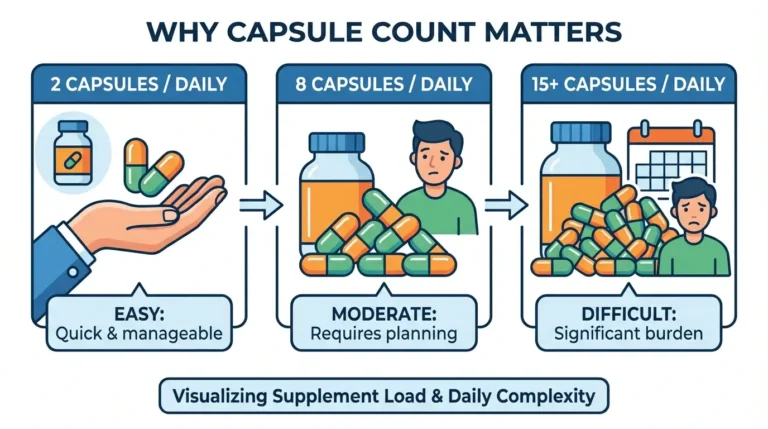
If you are comparing protein powder cost, you may also want to review your overall supplement routine. The Supplement Capsule Count Calculator can help you review daily pill burden, while the Supplement Cost Per Day Calculator can help you compare total monthly spending.
For more context on supplement comparison tools, see How the LiveGood Supplement Calculator Works.
Safety Notes Before Increasing Protein
Ask a qualified healthcare professional or registered dietitian before significantly increasing protein intake or using protein powder regularly if you:
- have kidney disease, reduced kidney function, kidney stones, liver disease, diabetes, gout, or metabolic concerns
- are pregnant or nursing
- are buying for a child or teen
- have a history of disordered eating or restrictive dieting
- have unexplained weight loss, appetite changes, digestive symptoms, or fatigue
- take medications or have medical nutrition needs
- follow a medically prescribed diet or fluid restriction
Frequently Asked Questions
Can you drink too much protein powder?
Yes. Too much protein powder can crowd out whole foods, increase cost, and cause digestive discomfort for some people. Use powder to fill practical gaps, not as the foundation of your diet unless guided by a qualified professional.
Is whey protein better than plant-based protein?
Not automatically. Whey may fit people who tolerate dairy and want a complete protein powder. Plant protein may fit people avoiding dairy or choosing vegan options. The better choice depends on tolerance, allergens, taste, cost, protein amount, and label quality.
Can protein powder replace a meal?
A basic protein shake is not the same as a balanced meal. If you use a shake in place of a meal, consider whether it includes enough calories, fiber, vitamins, minerals, and fullness for your needs. Meal replacement products are different from protein powders.
How soon after a workout should I take protein?
For most people, total daily protein and consistent meals matter more than exact timing. A shake after training can be convenient if your next meal is far away, but you do not need to panic about a short window.
How long does protein powder last after opening?
Follow the product’s expiration date and storage instructions. Keep the tub sealed, dry, and away from heat. Discard it if it smells off, changes texture badly, or looks contaminated.
Should I track protein every day?
You do not have to track forever. Tracking a few normal days can help you understand your baseline. After that, many people use simple meal patterns instead of daily tracking.
Authority Resources for Protein Research
Final Takeaway
The Protein Powder Calculator can help you estimate a practical protein range and compare whether powder is useful for your routine. The best next step is simple: use the calculator, compare the result with your normal food intake, then decide whether a protein powder serving makes sense for convenience or cost.
Use protein powder as a tool, not a guarantee. Food quality, training consistency, sleep, total calories, digestion, medical context, and long-term habits all matter.
Disclaimer
This calculator and article are for educational purposes only and do not provide medical or nutritional advice, diagnosis, or treatment. Protein needs vary based on individual factors, including age, body size, activity, diet, health conditions, medications, pregnancy/nursing, kidney function, and goals. Before making significant changes to your diet or supplement routine, consult a qualified healthcare professional or registered dietitian, especially if you have kidney disease, diabetes, liver disease, gout, kidney stones, digestive issues, a history of disordered eating, or other medical concerns.