Turmeric & Curcumin Benefits: Uses, Dose, Safety Guide
Turmeric and curcumin have gained significant attention for their potential health benefits. This article examines the science-backed benefits of incorporating turmeric and curcumin into your daily routine.
Turmeric vs Curcumin: Quick Answer
If you’re confused about turmeric vs curcumin, here’s the simplest way to think about it: turmeric is the whole root used in food, while curcumin is the most-researched active compound inside turmeric. Most supplements use concentrated curcumin extracts because turmeric powder naturally contains only small amounts of curcumin.
Food-first? Use turmeric in meals to support overall wellness. Supplement-first? Curcumin extracts are typically used when people want more targeted support, mainly because curcumin absorption is naturally low unless the formula is designed for better uptake.
If you want a broader daily routine (not just one ingredient), many people prefer combination formulas that include turmeric alongside other wellness nutrients, making it easier to stick to over the long term.
Why Curcumin Absorption Matters
Curcumin is the most-studied compound in turmeric, but it has one big limitation: it’s naturally hard for the body to absorb. That’s why many curcumin supplements include an absorption helper like piperine (black pepper extract) or use special delivery systems.
Research published in PubMed reported that combining curcumin with piperine can significantly improve bioavailability by slowing its breakdown in the body. Many people also tolerate curcumin better when taken with food, especially meals that contain fat.
Understanding Turmeric and Curcumin
What is Turmeric?
Turmeric is a spice derived from the root of the Curcuma longa plant, and turmeric has been used for centuries in traditional medicine.
The turmeric root is typically dried and ground into turmeric powder, which is known for its vibrant yellow color and distinctive flavor. You can use turmeric to add color and flavor to many dishes.
Beyond its culinary use, turmeric’s potential health benefits stem from its active compounds, primarily curcumin. Incorporate turmeric into your diet to explore its potential benefits. If you’re new to LiveGood wellness routines, start with our What Is LiveGood guide, then explore more research-based breakdowns in our LiveGood Supplement Reviews.
The Role of Curcumin in Turmeric
Curcumin is the best-known and most extensively studied active compound in turmeric. It is responsible for many of turmeric’s purported anti-inflammatory and antioxidant properties.
Although turmeric contains curcumin, its concentration is relatively low, typically around 3% by weight.
This means that to experience the potential health benefits of curcumin, a concentrated curcumin supplement or a turmeric supplement is often recommended to achieve a higher dose.
Health Benefits of Turmeric and Curcumin
Turmeric vs Curcumin vs Combination Formulas
Turmeric and curcumin are most often used for their antioxidant activity and for supporting the body’s healthy inflammatory response. That’s why they’re popular in routines focused on everyday comfort, mobility, and long-term wellness.
In practical terms, turmeric in food supports overall health, while concentrated curcumin extracts are more commonly used when someone wants a higher, more consistent intake from a supplement.
| Feature | Turmeric Powder | Curcumin Supplement | Blend (e.g. turmeric + omega-3) |
|---|---|---|---|
| Curcumin content | Low (~3%) | High (concentrated) | High + complementary nutrients |
| Absorption support | Rare | Often includes black pepper | Often enhanced by fats/other ingredients |
| Best for | Food & general wellness | Targeted support | All-in-one routines |
The potential benefits of turmeric and curcumin are wide-ranging and are often linked to their antioxidant and anti-inflammatory activity. Research suggests curcumin may help support a healthy inflammatory response, which is one reason many people use it for joint comfort and everyday mobility support.
For people with ongoing joint symptoms or diagnosed inflammatory conditions, turmeric or curcumin may be used as a complement to a clinician-guided plan, rather than a replacement for medical care.
People take curcumin for joint pain and overall wellness. The effects of turmeric are amplified when combined with black pepper.
Benefits of Turmeric and Curcumin
Anti-inflammatory Properties
The anti-inflammatory properties of turmeric and curcumin are among their most celebrated health benefits.
Curcumin is widely studied for how it interacts with pathways involved in the body’s normal inflammatory response, which is why many people use it for general wellness and joint comfort support
Adding turmeric to meals or taking turmeric supplements can support overall wellness through its anti-inflammatory effects.
Antioxidant Effects
Beyond its anti-inflammatory properties, turmeric and curcumin exhibit potent antioxidant effects. These antioxidant effects play a crucial role in neutralizing free radicals, unstable molecules that can damage cells and contribute to aging and various diseases.
The antioxidant properties of turmeric and curcumin help protect the body from oxidative stress, supporting overall health.
Incorporate turmeric into your daily diet, or consider taking a curcumin supplement, to harness its antioxidant effects. This can be particularly beneficial for individuals looking to support their body’s natural defenses against cellular damage and promote long-term wellness.
Turmeric for Joint Pain Relief
One of the best-known benefits of turmeric is its potential for relieving joint pain. The anti-inflammatory properties of curcumin may help reduce joint inflammation, alleviating discomfort and improving mobility. A clinical review published in PubMed Central reports that curcumin has been widely studied for its role in supporting joint comfort and inflammatory balance, particularly in people with osteoarthritis.
People take curcumin for joint pain and to improve their overall quality of life. Turmeric or curcumin supplements are often explored as a complementary option for supporting joint comfort and mobility, alongside clinician-guided care when appropriate.
Combining turmeric with black pepper enhances curcumin absorption, increasing its effectiveness. Consider adding turmeric powder to your diet or exploring turmeric supplements to experience these potential health benefits.
For a broader approach beyond supplements, you may also like our anti-inflammatory lifestyle guide, which covers food, movement, sleep, and daily habits that support long-term wellness.
Pros & Cons of Turmeric and Curcumin
Pros
- Supports a healthy inflammatory response
- Provides antioxidant protection
- Well-studied natural ingredient
- Available in food and supplement forms
Cons
- Curcumin absorption is naturally low
- Results require consistent use
- High doses may cause stomach upset in some people
Incorporating Turmeric into Your Diet
Best Ways to Use Turmeric
There are many ways to use turmeric, from culinary applications to concentrated turmeric supplements. In cooking, turmeric powder can add a warm, earthy flavor and vibrant color to dishes. For those seeking specific health benefits, turmeric supplements or curcumin supplements are often preferred.
One can incorporate turmeric into smoothies, soups, and stir-fries, or create a soothing turmeric tea by steeping ground turmeric in hot water. Remember that the benefits of turmeric are enhanced when combined with black pepper, which improves curcumin absorption.
The versatility of turmeric makes it easy to incorporate into your daily routine and explore its anti-inflammatory and antioxidant properties.
Turmeric Supplements: Do They Work?
Turmeric supplements, particularly those containing curcumin, have gained popularity for their potential health benefits. Studies suggest curcumin may support the body’s normal inflammatory response and joint comfort, which is why it’s commonly used in wellness-focused supplement routines.
While turmeric root naturally contains curcumin, its concentration is relatively low, making turmeric supplements a more potent option. To enhance absorption, look for turmeric supplements that include black pepper or are formulated with improved delivery systems.
While individual results may vary, many users report experiencing comfort and support from turmeric supplements in managing conditions like arthritis and reducing inflammation.
Before starting any supplement regimen, it is best to consult with a healthcare professional to determine the appropriate dosage and ensure it’s suitable for your specific health needs.
Comparing products is also important, as it helps you choose a turmeric or curcumin supplement with the optimal ingredient blend that delivers the most turmeric benefits.
Daily Turmeric Intake Recommendations
Determining the appropriate daily turmeric intake depends on several factors, including the form of turmeric being consumed and the individual’s health goals. To give you an idea, here are some general guidelines:
- For culinary use, many people add around ½ to 1 teaspoon daily to meals or drinks as part of a balanced diet.
- For supplements, common curcumin doses used in studies and products typically range from 500–1,000 mg/day, and some studies use higher doses (up to approximately 2,000 mg/day), depending on the formulation and tolerance.
- The NIH Office of Dietary Supplements explains that there is no official daily recommended intake for curcumin, and supplement doses used in studies vary widely depending on formulation and absorption method.
It’s crucial to consider that curcumin’s bioavailability is relatively low, which is why it’s often paired with black pepper to enhance absorption.
Consulting with a healthcare professional or registered dietitian is always best to establish a safe and adequate daily turmeric intake that aligns with your specific health needs and goals. They can provide personalized guidance based on your individual circumstances.
Safety, Side Effects & Interactions
Turmeric and curcumin are generally well tolerated when used appropriately, but higher doses may cause stomach upset, reflux, or nausea in some people.
People taking blood thinners, those with gallbladder conditions, a history of kidney stones, or those preparing for surgery should consult a healthcare professional before using high-dose curcumin supplements. The Cleveland Clinic notes that while turmeric and curcumin are generally safe for most people, higher supplemental doses may cause digestive upset and can interact with blood-thinning medications or gallbladder conditions.
Turmeric and Curcumin for Wellness
Supporting Overall Health
The combination of turmeric and curcumin offers a range of potential health benefits that can contribute to overall wellness. Studies have shown that turmeric and curcumin may support various bodily functions, thanks to their anti-inflammatory and antioxidant properties.
Incorporating turmeric into your daily routine can promote overall health, with its benefits extending beyond managing specific conditions. Taking turmeric or using turmeric powder in cooking allows you to harness its potential benefits and the active compound.
Whether through diet or turmeric supplements, turmeric can be a valuable component of a holistic approach to well-being. Many people take curcumin to support their health.
Turmeric for Joint Comfort & Mobility Support
Turmeric has been used for centuries in traditional medicine, and turmeric or curcumin supplements are often explored for their potential in arthritis management. The anti-inflammatory properties of curcumin may help reduce inflammation and discomfort associated with arthritis and joint pain, improving quality of life.
Adding turmeric to your daily routine can be a complementary approach to managing arthritis symptoms, alongside conventional treatments. Incorporating turmeric into your diet or taking turmeric supplements can provide support and comfort for those seeking natural ways to address joint pain.
Potential Benefits of Curcumin Supplements
Curcumin supplements offer a concentrated source of this active compound, providing several potential health benefits. The concentration of curcumin in turmeric root is relatively low, making curcumin supplements a more efficient way to harness its anti-inflammatory and antioxidant properties. Some of the potential health benefits include:
- Reducing inflammation
- Supporting joint health
- Neutralizing free radicals
When selecting curcumin supplements, look for formulations that include black pepper or enhanced delivery systems to improve absorption.
People take curcumin, and some clinical studies have shown that it may reduce inflammation, offering a potential natural alternative for managing various health conditions. Taking turmeric and/or curcumin helps to improve overall wellness.
My Personal Insight
Based on my review of turmeric and curcumin supplements across various formulations, the most significant differences I see are in consistency and absorption. People tend to stick with simple, well-learned routines longer than with managing multiple separate products.
⭐ Why Turmeric Alone Isn’t Always Enough
While turmeric and curcumin are popular for supporting comfort and overall wellness, they work best as part of a broader blend of complementary nutrients.
Curcumin’s natural absorption is low, and many people pair it with omega-3s, CoQ10, or garlic to support overall wellness.
Instead of buying separate supplements, some individuals prefer a formula that brings these well-known ingredients together.
That’s where Factor4 becomes a stronger, more convenient option.
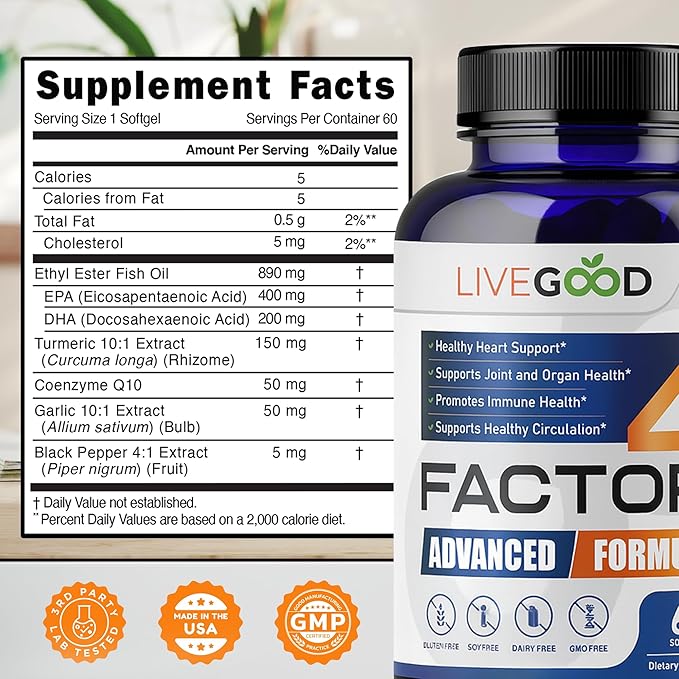
⭐ Factor4: A More Complete Wellness Solution
Factor4 combines four complementary ingredients—Fish Oil (EPA/DHA), Turmeric Extract, CoQ10, and Garlic Extract—designed to support overall wellness and help maintain a healthy inflammatory response.
This creates a more comprehensive supplement compared to turmeric or curcumin alone. If you’re comparing options, you can also read our detailed breakdown here: Factor4 price, features & ingredients and how it fits into a routine here: reducing inflammation with Factor4.
How Factor4 Supports Your Wellness Routine
- Includes turmeric extract plus three additional supportive nutrients
- Helps the body maintain a balanced inflammatory response
- Provides omega-3s, which play a role in heart, joint, and cellular wellness
- Offers CoQ10, known for supporting cellular energy production
- Includes garlic extract, traditionally used for circulation and general well-being
- Eliminates the need to purchase several separate supplements
- Convenient daily routine with two softgels instead of multiple products
⭐ Turmeric Alone vs. Factor4: Comparison Table
| Feature | Turmeric / Curcumin Alone | Factor4 (Turmeric + 3 More Ingredients) |
|---|---|---|
| Turmeric Extract | ✔ Yes | ✔ Included |
| Curcumin Absorption Support | Sometimes (usually black pepper) | ✔ Fish Oil & Garlic help complement turmeric |
| Omega-3 (EPA/DHA) | ✖ No | ✔ Included |
| CoQ10 | ✖ No | ✔ Included |
| Garlic Extract | ✖ No | ✔ Included |
| Multi-Pathway Support | Limited | ✔ Broad wellness support |
| Convenience | Requires additional supplements | ✔ All-in-one formula |
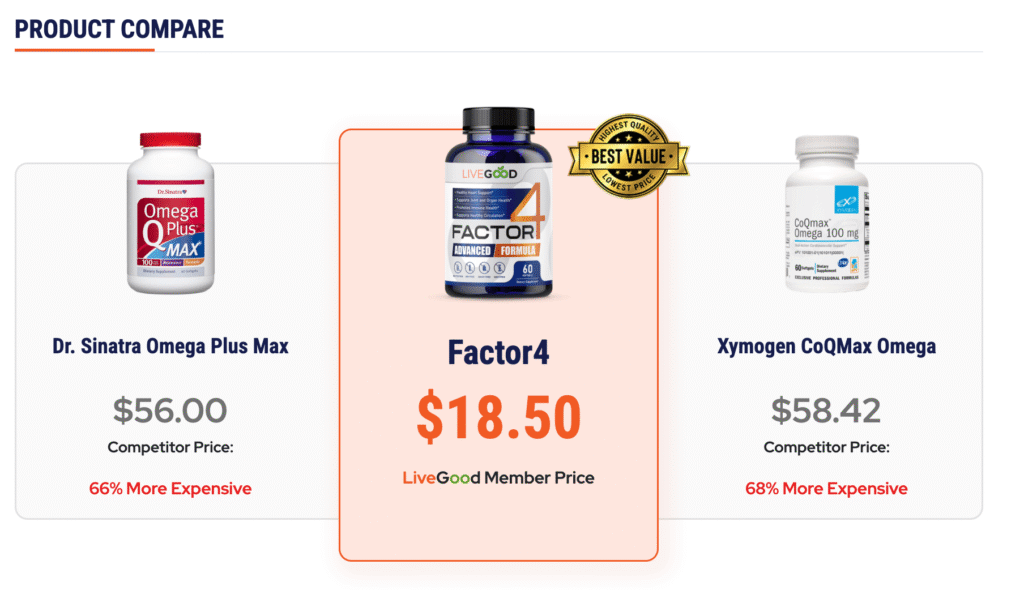
| Cost Efficiency | Must buy multiple products | ✔ One bottle replaces 3–4 supplements |
| Wellness Focus | Antioxidant + comfort | Antioxidant + omega-3 + circulation + cellular support |
⭐ When to Choose Factor4 Over a Standard Turmeric Supplement
You may prefer Factor4 if:
- You want turmeric plus additional supportive nutrients in one formula
- You already take fish oil, CoQ10, or garlic and want a simplified routine
- You prefer a more balanced supplement for overall wellness support
- You want to avoid buying multiple separate products
- You want a formula designed to help maintain a healthy inflammatory response naturally
Factor4 brings four well-known wellness ingredients together for a more complete approach you won’t typically find in a single turmeric supplement. If you’re also exploring the membership side of LiveGood (for discounts and product access), you can start here: LiveGood Tour, and browse updates in our LiveGood category.
⭐ Where to Learn More or Compare Factor4
👉 See Factor4 Benefits & Pricing:
Factor4 is:
- Third-party tested
- Non-GMO
- Gluten-free
- Soy-free
- Cruelty-free
- Backed by a 90-day guarantee
⭐ FAQ: Factor4 and Turmeric
1. What makes Factor4 different from a standard turmeric supplement?
Factor4 includes turmeric plus three additional supportive ingredients: fish oil (EPA/DHA), CoQ10, and garlic extract. This creates a more complete wellness formula than turmeric alone, which supports only one pathway.
2. Can I take Factor4 if I already take turmeric?
Most people use Factor4 instead of separate turmeric supplements, since it already includes turmeric extract within a broader supportive blend. However, individuals with unique needs should consult a healthcare professional before combining supplements.
3. Does Factor4 replace fish oil or CoQ10?
Factor4 contains both omega-3 fish oil and CoQ10, so many people use it as their primary source of these nutrients. Always check your current routine to avoid unnecessary duplication.
4. Is Factor4 safe for daily use?
Factor4 is designed for daily wellness support and is third-party tested, non-GMO, gluten-free, soy-free, and made under GMP standards. As always, people with medical conditions or those taking medication should speak with a healthcare provider.
5. Why does Factor4 include garlic extract?
Garlic has traditionally been used to support circulation and overall cardiovascular health. It complements fish oil and turmeric by providing an additional layer of supportive nutrition.
6. Can Factor4 help with inflammation?
Factor4 contains ingredients commonly associated with supporting the body’s healthy inflammatory response. It is not intended to diagnose, treat, cure, or prevent any disease.
7. How many capsules should I take daily?
The recommended use is typically two softgels per day with food. Some individuals adjust based on personal preference, but following the product label is always best.
8. Where can I buy Factor4?
👉 You can view the product, compare pricing, and see reviews here.
9) Turmeric vs curcumin: what’s the difference?
Turmeric is the yellow root/spice. Curcumin is the most-studied active compound inside turmeric. Supplements often use concentrated curcumin because turmeric powder contains only a small percentage of curcumin.
10) How much curcumin should I take per day?
Common supplement ranges are 500–1,000 mg curcumin per day, often split into 1–2 doses. Higher amounts (up to around 2,000 mg/day) are used in some studies, but tolerance varies. If you take medicines or have a condition, check with a clinician first.
11) How much turmeric powder per day is “normal” in food?
For food use, many people use ½ to 1 teaspoon daily in cooking/drinks. This is a culinary amount (not the same as a concentrated curcumin dose).
12) Why add black pepper (piperine) to turmeric/curcumin?
Curcumin absorption is naturally low. Black pepper extract (piperine) can improve absorption. Taking curcumin with a meal that contains fat may also help tolerance and absorption. Research published in PubMed shows that combining curcumin with piperine (black pepper extract) can significantly improve bioavailability by slowing its breakdown in the body. Taking curcumin with dietary fat may also help absorption.
13) What’s the best time to take turmeric or curcumin?
Most people do best taking it with food, especially if they get stomach upset. Morning vs night matters less than consistency.
14) How long does curcumin take to work?
Some people notice comfort changes in 2–4 weeks, but results depend on dose, absorption, and the reason you’re taking it. Consistent daily use tends to matter more than taking it “sometimes.”
15) Can turmeric/curcumin help joint pain or arthritis?
Curcumin is widely studied for supporting a healthy inflammatory response, and many people use it for joint comfort. It’s not a replacement for medical treatment, but it can be a helpful add-on for some.
16) What are the common side effects?
The most common are stomach upset, nausea, reflux, or diarrhea, especially on an empty stomach or at higher doses. If that happens, reduce the dose and always take with food.
17) Who should avoid turmeric/curcumin or ask a doctor first?
Ask first if you:
take blood thinners (warfarin, clopidogrel, high-dose aspirin)
have gallbladder disease or bile duct issues
have a history of kidney stones (curcumin/turmeric can be high in oxalates depending on form)
have upcoming surgery (often stop supplements 1–2 weeks before—follow clinician advice)
18) Can I take turmeric/curcumin while pregnant or breastfeeding?
Food amounts are usually fine. For high-dose supplements, it’s best to check with your clinician before using, because dosing and individual risk factors matter.
19) Does curcumin interact with medications?
It can. The biggest concern people ask about is blood-thinner/bleeding risk. Also ask a clinician if you take diabetes meds, acid reflux meds, or have complex prescriptions.
20) What should I look for in a good curcumin supplement?
Look for:
clear curcumin amount per serving (not just “turmeric blend”)
an absorption helper (like piperine) or an enhanced delivery form
third-party testing or strong quality transparency
a dose you can tolerate daily
21) Turmeric alone vs a blend (like Factor4): which makes sense?
Turmeric/curcumin alone is great if your goal is mainly antioxidant + comfort support. A blend can make sense if you prefer an all-in-one routine that combines turmeric with other popular wellness nutrients (like omega-3s and CoQ10) so you don’t manage multiple bottles.
⭐ Conclusion: Turmeric Alone vs. Turmeric in Factor4
Turmeric is a well-known natural ingredient with a long history of supporting wellness, comfort, and antioxidant protection. Curcumin—the active component—offers meaningful benefits when used consistently, especially when paired with ingredients that improve absorption.
However, turmeric works best as part of a broader, multi-ingredient approach. Modern wellness routines often pair turmeric with omega-3s, CoQ10, or garlic to support different aspects of the body’s natural processes.
Factor4 brings all of these supportive ingredients together in one formula.
Instead of managing several separate supplements, you get a complete blend designed to complement the body’s inflammatory response, energy production, and everyday wellness needs.
If you’re looking for a simple, cost-effective way to gain the benefits of turmeric and the synergy of proven complementary nutrients, Factor4 offers a convenient all-in-one option.
Note: This article is for educational purposes only and does not replace medical advice. If you are pregnant, breastfeeding, have a medical condition, or take medication, speak with a qualified healthcare professional before using supplements. Some links in this article may be affiliate links.