Vitamin E for Beginners: Benefits and Food Sources
Vitamin E for Beginners: Benefits and Food Sources
Vitamin E shows up in many multivitamins, wellness blends, and daily health formulas, but most people do not stop to think about what it actually does or why it is included. This guide explains Vitamin E in beginner-friendly language, including what it is, why it matters, how to read it on a label, and why a more complete formula often makes more sense than buying a standalone product.
A practical ingredient guide for readers who want clear information without hype.
What Is Vitamin E?
Vitamin E is a fat-soluble nutrient best known for its antioxidant role in the body. In simple terms, it helps protect cells from oxidative stress, which is one reason it is often included in daily wellness formulas and multivitamins. Many people recognize the name from skincare conversations, but Vitamin E is not just a beauty ingredient. It also has a broader role in overall nutritional support.
On supplement labels, Vitamin E may appear in different forms, and that matters more than most beginners realize. Two products can both say “Vitamin E,” but the form and context inside the formula can still be different. That is why it helps to look beyond the nutrient name and start paying attention to the full supplement facts panel instead of only the front of the bottle.
Want the science-backed basics in plain English? Read the NIH Vitamin E Fact Sheet.
Why Does Vitamin E Matter?
Vitamin E matters because it plays a supportive role in protecting cells and is one of the nutrients people often get through a combination of food and supplements. It is also common in broader daily formulas, which makes it a good example of why ingredient education matters. Instead of treating every nutrient like a separate product to buy, it often makes more sense to understand where it fits inside a complete formula.
For beginners, Vitamin E is useful to learn because it teaches a bigger lesson: one nutrient alone rarely tells the whole story. The quality of the full formula, the ingredient forms, the serving size, and the supporting nutrients around it often matter just as much as the nutrient name itself.
Helpful angle: understanding Vitamin E helps you compare multivitamins more clearly and decide whether a full formula is a smarter choice than chasing isolated nutrients one by one.
Key Concepts You Need to Know
Fat-Soluble Vitamin
Vitamin E is fat-soluble, which means it behaves differently from water-soluble vitamins like Vitamin C. That is one reason label context and use instructions matter.
Antioxidant Role
Vitamin E is often discussed because of its antioxidant function. In simple terms, it helps support the body’s ability to deal with oxidative stress.
Label Form Matters
A product can list Vitamin E in different forms or amounts, which is why reading the supplement facts panel is more useful than relying on the front label alone.
Simple takeaway: when you see Vitamin E on a label, the smart next step is not just asking “is it there?” but “how is it included, how much is there, and what else is around it in the formula?”
How Vitamin E Works
A simple way to think about Vitamin E is as part of the body’s protection system. It is often described as an antioxidant because it helps protect cells from oxidative damage. Beginners do not need to memorize chemistry to understand the big picture. The useful point is that Vitamin E is one of those nutrients often included in formulas designed for daily support rather than dramatic short-term effects.
A helpful analogy is that Vitamin E works a bit like a background support player. It may not always be the headline ingredient people talk about first, but it still plays an important role inside a complete team. That is why it often makes more sense inside a balanced multivitamin than as the only reason to buy a product.
Beginner note: this is another reason complete multivitamin formulas often make more practical sense than trying to buy a separate product for every single nutrient you come across.
Importance Of Diet
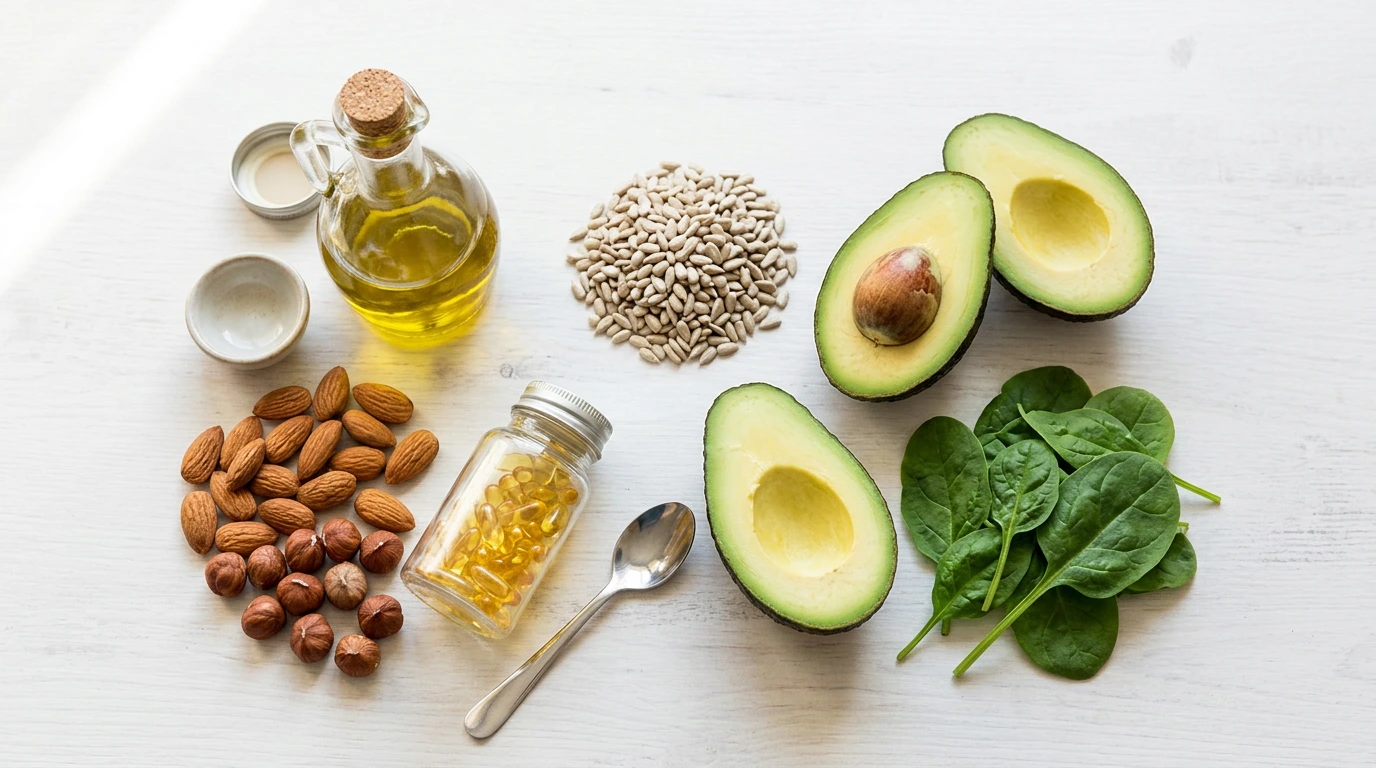
Diet matters a lot with Vitamin E because many people can get meaningful amounts from food. Nuts, seeds, certain oils, avocado, and leafy greens are all part of the conversation here. That makes Vitamin E a great example of a nutrient where food and supplements should be viewed together, not as completely separate worlds.
For beginners, the smartest mindset is usually food first, supplements second. A supplement can still be useful, especially inside a practical daily multivitamin, but it makes more sense as support for an overall routine rather than as a replacement for poor eating habits.
Want more simple wellness and nutrition help? Explore the Health Guides Hub.
Before Using Vitamin E Supplements
If you are taking a dietary supplement without a prescription, carefully read and follow any precautions on the label. For Vitamin E, the useful beginner step is to check the serving size, the amount listed, and whether the nutrient is already included in another product you take. This matters because overlap across multiple products is one of the easiest ways to make a routine more confusing than it needs to be.
Before using: check the label, look for overlapping nutrients in other products, and make sure you are not comparing formulas only by the front-label marketing.
Allergies
Vitamin E itself is not usually the main allergy issue. The bigger concern is the rest of the product: carrier oils, capsule materials, softgel ingredients, or other added ingredients. This is one more reason reading the full label matters more than just spotting the nutrient name.
Proper Use
The simplest way to use a Vitamin E-containing supplement is to follow the product label and keep the routine consistent. For most beginners, a daily multivitamin is a more practical way to get Vitamin E than trying to manage separate single-ingredient products.
Dosing
Beginners often confuse serving size with nutrient amount. A label may say one capsule, two capsules, or one serving, but that is not the same as the actual amount of Vitamin E listed in the supplement facts panel. Always separate the serving format from the nutrient amount itself.
Precautions
As with many nutrients, it is smart to be cautious when using multiple supplements at the same time, especially if more than one includes Vitamin E. This is less about fear and more about keeping your routine clear and intentional instead of layered and confusing.
Want a clearer safety overview before you buy or use supplements? Start with NCCIH and MedlinePlus.
Side Effects
This is not a section to dramatize, but it should not be ignored either. Tolerance can vary depending on the formula, the dose, and the person. For beginners, this is another reason a balanced daily formula may be a more practical entry point than a stronger standalone supplement used without much context.
Recommended Amounts
Recommended amounts can vary depending on context, which is why beginners are better off using reliable educational references instead of guessing from marketing claims. It also helps explain why a complete formula can often be easier to judge than an isolated nutrient product with little broader context.
Need the official numbers without the marketing spin? Check the NIH Vitamin E Fact Sheet.
Food Sources
Almonds and Sunflower Seeds
These are two of the most common foods people associate with Vitamin E and an easy place for beginners to start.
Avocado and Olive Oil
These foods help show that Vitamin E is part of a broader food-quality conversation, not just a supplement conversation.
Leafy Greens
Greens may not be the first thing people think of, but they still fit naturally into the Vitamin E discussion.
Want more easy-to-follow wellness reads after this? Visit the Health Guides Hub.
Did You Know?
Did you know? Two products can both say “Vitamin E” on the label and still feel very different in practice because the formula around the nutrient, the serving size, and the ingredient context can change how useful the product really is.
Getting Started: Your First Steps
Read One Label Carefully
Find one supplement facts panel and see how Vitamin E appears inside the formula instead of only reading the front label.
Compare Context, Not Just One Nutrient
Look at the whole formula, the serving size, and the supporting nutrients instead of focusing only on Vitamin E by itself.
Choose a Smarter Formula
For many people, a good multivitamin is the simplest and most practical way to include Vitamin E in a daily routine.
Resources for Learning More
Want to keep learning without getting overwhelmed? Start with the basics, then build your knowledge step by step.
Start here on the site:
If you want practical wellness and nutrition help beyond this article, go explore our Health Guides Hub. It is a good next step when you want simple guides on food, wellness habits, digestion, skin, energy, and more.
Then take the next step into supplements with the Supplement Education Hub. This is where things start to connect if you want to understand what ingredients do, how formulas differ, and how to make smarter choices.
After that, read How to Read Supplement Labels. You will probably be surprised by how much you think you know about labels compared with what is actually easy to miss.
And when you want to go deeper into product quality, check the Certificates of Analysis Guide so you can better understand what lab and quality documents actually tell you.
Good external reads:
For a more official overview of this specific nutrient, read the NIH Vitamin E Fact Sheet. It is one of the best places to double-check the basics, especially if you want a more science-based consumer reference.
And for a broader beginner-friendly look at supplements in general, visit MedlinePlus Dietary Supplements. It is helpful when you want to understand the bigger picture, not just Vitamin E by itself.
FAQ
What is Vitamin E best known for?
It is best known for its antioxidant role and its place in broader daily wellness support.
Can I get Vitamin E from food?
Yes. Foods like almonds, sunflower seeds, avocado, olive oil, and leafy greens are commonly discussed sources.
Do I need a standalone Vitamin E supplement?
Not always. For many beginners, a complete multivitamin can be a simpler and more balanced option.
What should I check first on the label?
Check the amount, the serving size, and how Vitamin E fits into the wider formula.
Why does formula context matter?
Because one nutrient by itself rarely tells the whole story. The full formula often matters just as much.
Recommended Next Step: Choose a Better Formula That Includes Vitamin E
If you want to go beyond the basics, a complete multivitamin is often a smarter recommendation than a basic standalone Vitamin E product. That is because it gives you Vitamin E as part of a broader formula with more premium supporting ingredients, a more practical daily-use structure, and better overall value than buying isolated nutrients one by one.
For Women
The Bio-Active Complete Multi-Vitamin for Women with Iron is a practical example because it includes Vitamin E as part of a broader formula instead of forcing you to chase one ingredient at a time. It may feel more premium because the formula goes beyond one isolated nutrient and includes a fuller daily support profile.
For Men
The Bio-Active Complete Multi-Vitamin for Men works in a similar way. Instead of buying a separate Vitamin E product, you get Vitamin E as part of a more complete formula with a wider ingredient profile and a stronger overall daily-use value story.
Why this recommendation makes sense: for many beginners, a multivitamin that includes Vitamin E alongside other well-chosen nutrients is more useful, more balanced, and often more premium than buying one simple ingredient in isolation.
This content is for general informational purposes only and is not medical advice. Dietary supplements are not intended to diagnose, treat, cure, or prevent any disease. Always read the label and speak with a qualified healthcare professional before use if needed.