Vitamin D3 and K2 Guide: Food Sources, Safety, Uses & Label Tips
Vitamin D3 and K2: The Simple Version
Vitamin D3 and vitamin K2 are two nutrients often used together in daily wellness routines. Vitamin D helps maintain normal bones and supports normal immune function. Vitamin K helps maintain normal bones and supports normal blood clotting.
A D3 + K2 supplement may be useful for people who get limited sun exposure or want both nutrients in one capsule. It should be used as general wellness support, not as a replacement for balanced meals, sunlight habits, lab testing, or professional guidance.
Affiliate disclosure: This page may contain affiliate links. If you purchase through my links, I may earn a commission at no extra cost to you.
Important disclaimer: This article is for educational purposes only and is not medical advice. Dietary supplements are not intended to diagnose, treat, cure, or prevent any disease. Check with a qualified professional before starting a supplement if you use medication or have personal health questions.
Check Current LiveGood D3-K2 Details
What Vitamin D3 Does
Vitamin D3 is a form of vitamin D. Your body can make vitamin D after sun exposure, and you can also get some from foods such as fatty fish, egg yolks, and fortified foods.
Some people compare vitamin D supplements because they spend a lot of time indoors, live in places with less sun during parts of the year, or want a simple way to support daily nutrient intake.
What Vitamin K2 Does
Vitamin K2 is a form of vitamin K found in foods such as natto, some cheeses, egg yolks, and other fermented or animal-based foods. In supplements, K2 is often paired with D3 because both nutrients are commonly discussed in bone-support routines.
If your healthcare professional has told you to watch vitamin K intake, check first before using a K2 supplement.
Why People Pair D3 and K2
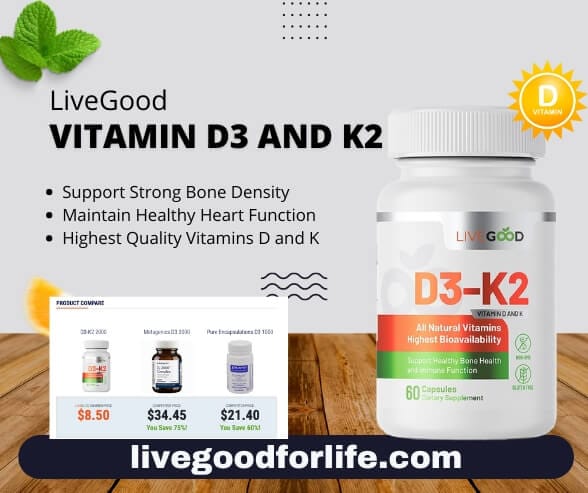
People often pair D3 and K2 because vitamin D supports calcium absorption, while vitamin K helps maintain normal bones. The simple idea is not to chase quick results, but to build a steady daily routine that fits your needs.

Check Current Price for LiveGood D3-K2
Food Sources to Know
| Nutrient | Food sources | Simple note |
|---|---|---|
| Vitamin D3 | Salmon, sardines, mackerel, egg yolks, fortified foods | Sunlight and food both matter |
| Vitamin K2 | Natto, some cheeses, egg yolks, butter, fermented foods | Amounts vary by food and diet |
| Calcium | Dairy foods, fortified plant milks, tofu, leafy greens | Not everyone needs a calcium supplement |
| Magnesium | Pumpkin seeds, nuts, beans, spinach, whole grains | Useful in a broader nutrient routine |
Who May Want to Compare a D3 + K2 Supplement?
| May be a good fit if | Check first if |
|---|---|
| You get limited sun exposure | You use medication |
| You want D3 and K2 in one capsule | You already take vitamin D, vitamin K, calcium, or a multivitamin |
| You want a simple supplement with food | You have personal health questions |
| You are reviewing your daily nutrient routine | You are buying for a child or teenager |
How to Take D3 and K2
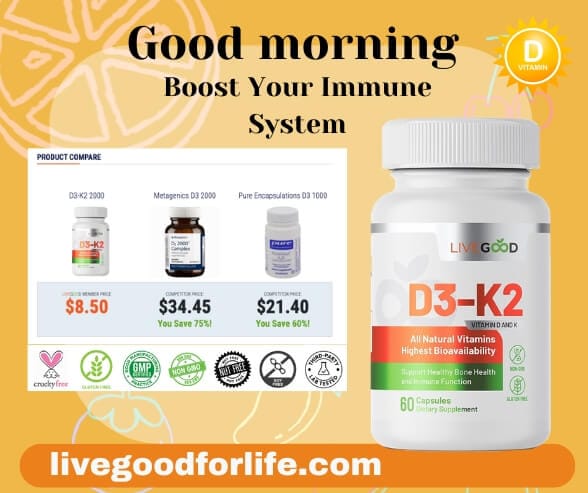
Follow the current product label. Since D3 and K2 are fat-soluble nutrients, many people take them with a meal that contains some fat, such as eggs, yogurt, nuts, avocado, olive oil, or another balanced meal.
If you track your health with lab work, ask your healthcare professional whether checking vitamin D levels makes sense for you.
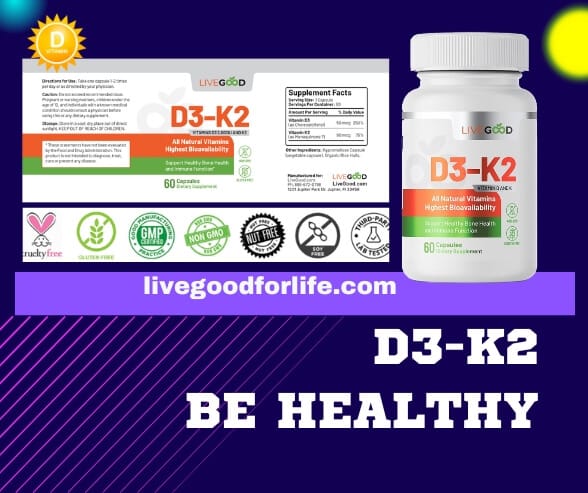
What to Check on a D3 + K2 Label
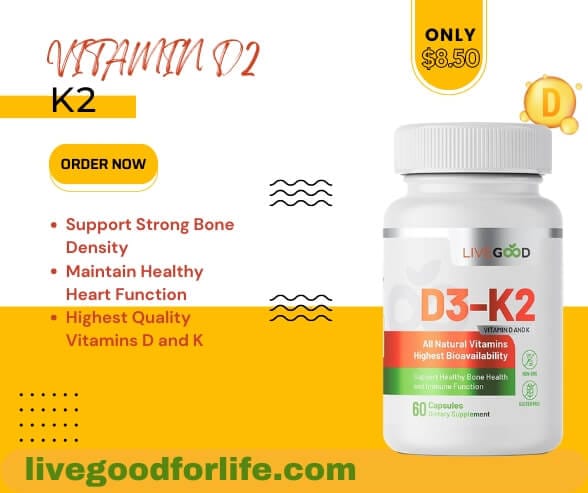
| Check first | Why it matters |
|---|---|
| Vitamin D3 amount | Helps compare total daily intake |
| Vitamin K2 amount and form | Useful when comparing labels |
| Serving size | Helps estimate cost and daily routine fit |
| Other products you use | Helps avoid doubling up |
| Warnings | Important if you use medication |
| Testing and quality details | Helpful when comparing brands |
LiveGood D3-K2 2000: Product Context
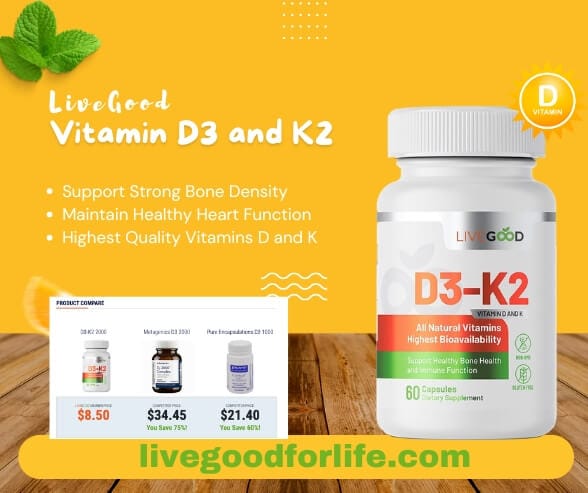
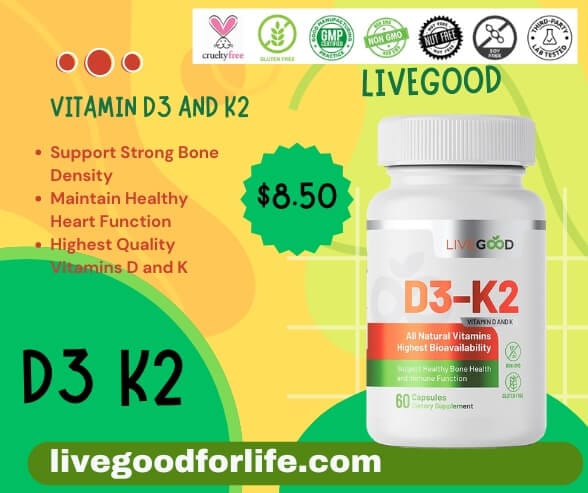
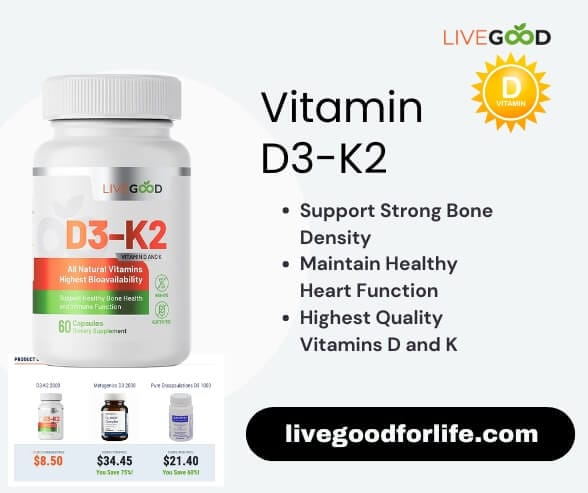
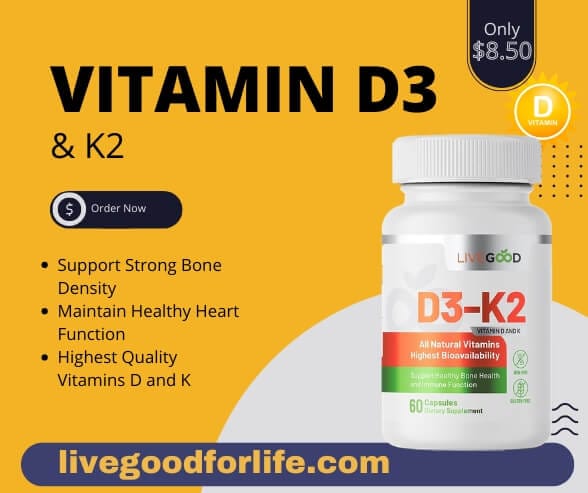
LiveGood D3-K2 2000 is a capsule supplement that combines vitamin D3 and vitamin K2. Product details, serving size, pricing, and availability can change, so check the current LiveGood product page before ordering.
Use it as part of a simple nutrient-support routine. It is not meant to replace meals, healthy habits, lab testing, or professional guidance.
View LiveGood D3-K2 Product Page
Simple Habits That Matter Too
Supplements work best when the basics are already in place. A simple routine can include balanced meals, daily movement, outdoor time when appropriate, good sleep habits, and regular checkups.
Customer Stories and Expectations
Customer experiences can be interesting, but they should not be treated as guaranteed results. Individual needs and responses vary.
Common Questions About Vitamin D3 and K2
What is the difference between vitamin D2 and D3?
Vitamin D2 and D3 are different forms of vitamin D. D3 is commonly used in supplements and is also made by the body after sunlight exposure.
Why do people take vitamin D3 with K2?
People often pair them because vitamin D supports calcium absorption and vitamin K helps maintain normal bones. It is best viewed as nutrient support.
How much vitamin D3 should I take?
Needs vary. Follow the product label and ask a healthcare professional about blood testing if you are unsure what amount fits you.
Can food and sunlight be enough?
Sometimes, but it depends on diet, sun exposure, season, location, skin tone, health history, and lab results.
Trusted Reading
For more background on vitamin D and vitamin K, these resources may help:
- NIH Office of Dietary Supplements: Vitamin D Fact Sheet
- NIH Office of Dietary Supplements: Vitamin K Fact Sheet
- Vitamin D and K review article
- Vitamin D3 and K2 supplementation research
Final Thoughts
Vitamin D3 and K2 can be useful nutrients to understand if you are building a simple daily wellness routine. They may fit into a nutrient-support routine when the label, dose, price, and safety notes make sense for you.
Before ordering a D3-K2 supplement, check the current label, compare it with what you already take, and ask a qualified healthcare professional if you use medication or have personal health questions.