7 Signs Women Should Track: Hormone Health, Safety & When to Get Checked
Last updated: April 27, 2026
7 Signs Women Should Track: The Simple Version
Many women start searching for hormone imbalance signs when they notice changes in their cycle, sleep, energy, mood, weight, skin, libido, or digestion. These patterns can feel confusing, especially when they happen slowly or seem to come and go around the menstrual cycle.
The important thing to know: symptoms alone cannot diagnose hormone imbalance. Fatigue, weight changes, mood shifts, acne, low libido, sleep disruption, irregular cycles, and brain-fog-type feelings can have many causes, including stress, thyroid issues, iron deficiency, perimenopause, PCOS, medication effects, blood sugar changes, depression, anxiety, sleep disorders, and other medical conditions.
Affiliate disclosure: This page may contain affiliate links. If you purchase through my links, I may earn a commission at no extra cost to you.
Important disclaimer: This article is for educational purposes only and is not medical advice. Dietary supplements are not intended to diagnose, treat, cure, or prevent any disease.
How Do You Know If Hormones Might Be Involved?
You cannot know from symptoms alone, but you can track patterns. Timing matters: symptoms that repeat before your period, change during perimenopause, appear after major stress, or persist for months may be worth discussing with a qualified healthcare professional.
Use this guide as a tracking tool, not a diagnosis. If you want a broader supplement and wellness overview, read the updated 10 Supplements for Hormone Health guide.
| What to track | Helpful notes | Why it matters |
|---|---|---|
| Cycle timing | Cycle length, flow, missed periods, spotting | Helps show whether changes are new or recurring |
| Sleep | Bedtime, wake time, night waking, caffeine timing | Sleep affects energy, appetite, mood, and recovery |
| Energy | Morning and afternoon energy, 1 to 10 | Shows patterns across the month |
| Mood | Irritability, sadness, anxiety, overwhelm, cycle timing | Helps separate recurring patterns from urgent concerns |
| Food and movement | Protein, fiber, alcohol, activity, strength training | Daily habits can affect how you feel |
1. Irregular Periods or Cycle Changes
Your menstrual cycle can provide useful information, but changes do not automatically mean a hormone imbalance. Cycle patterns can shift because of stress, travel, sleep disruption, weight change, medication, thyroid issues, PCOS, perimenopause, pregnancy, breastfeeding, intense exercise, or other health factors.
Track changes such as heavier or lighter flow, shorter or longer cycles, skipped periods, spotting between periods, or new pain. This information can help your clinician decide whether testing or evaluation is appropriate.
| Track this | When to get checked |
|---|---|
| Cycle length and flow | If periods become very heavy, very painful, unpredictable, or disruptive |
| Spotting between periods | If it is new, repeated, or occurs after sex |
| Missed periods | If pregnancy is possible, periods stop unexpectedly, or cycles remain irregular |
| New pelvic pain | If pain is severe, one-sided, worsening, or paired with fever, dizziness, or fainting |
2. Persistent Fatigue or Low Energy
Fatigue is common, but it is not specific. It can be related to sleep quality, stress, low iron, low B12, vitamin D status, thyroid issues, medication effects, depression, anxiety, sleep apnea, blood sugar patterns, infection, pregnancy, overtraining, or other medical conditions.
Do not assume fatigue is hormonal. Track sleep, caffeine, meals, cycle timing, stress, exercise, and any symptoms such as dizziness, shortness of breath, weakness, or heavy bleeding. Persistent fatigue deserves proper evaluation.
3. Weight Changes or Body Composition Changes
Weight changes can feel frustrating, especially after 35 or 40, but they are rarely caused by one factor. Sleep, activity, strength training, protein intake, total calorie intake, medication, thyroid function, perimenopause, stress, alcohol, insulin resistance, and medical conditions can all play a role.
A safer first step is to track routine factors without blaming hormones immediately. Focus on protein, fiber, strength training, walking, sleep consistency, and professional evaluation when weight changes are rapid, unexplained, or paired with other symptoms.
4. Mood Changes, Anxiety-Like Feelings, or Irritability
Mood changes can overlap with cycle timing, perimenopause, stress, poor sleep, blood sugar swings, medication effects, thyroid changes, depression, anxiety, trauma, and life circumstances. Hormones may be part of the picture, but symptoms should not be dismissed or self-treated.
If mood symptoms are intense, persistent, worsening, or affecting relationships, work, sleep, or safety, speak with a qualified healthcare professional. Seek urgent help if you have thoughts of harming yourself or feel unsafe.
5. Adult Acne or Skin Changes
Adult acne, jawline breakouts, oily skin, dry skin, hair shedding, or skin changes can have many causes. Hormones may be one factor, but skincare products, stress, sleep, diet patterns, medications, PCOS, thyroid issues, and dermatology conditions can also contribute.
Track timing, cycle phase, new products, supplements, medications, and whether breakouts are painful or worsening. A dermatologist or healthcare professional can help when skin changes are persistent, severe, scarring, or paired with cycle changes or excess hair growth.
6. Low Libido or Sexual Wellness Changes
Low libido can be influenced by stress, sleep, relationship factors, pain, mood, medication, breastfeeding, perimenopause, menopause, thyroid issues, trauma, body image, alcohol, and overall health. It should not automatically be labelled a hormone problem.
If libido changes are distressing, sudden, paired with pain, or affecting your wellbeing, it is worth speaking with a healthcare professional. This is a valid health topic and not something to be embarrassed about.
7. Sleep Disruption
Difficulty falling asleep, waking during the night, early waking, night sweats, or feeling unrefreshed can have many causes. Stress, caffeine, alcohol, screen timing, perimenopause, hot flashes, thyroid changes, sleep apnea, mood concerns, medication, and pain can all affect sleep.
Track sleep timing, caffeine, alcohol, evening meals, night sweats, cycle phase, and stress. Persistent insomnia, snoring with daytime sleepiness, night sweats, severe anxiety, or sleep disruption that affects daily life should be discussed with a qualified healthcare professional.
Why Symptoms Often Overlap
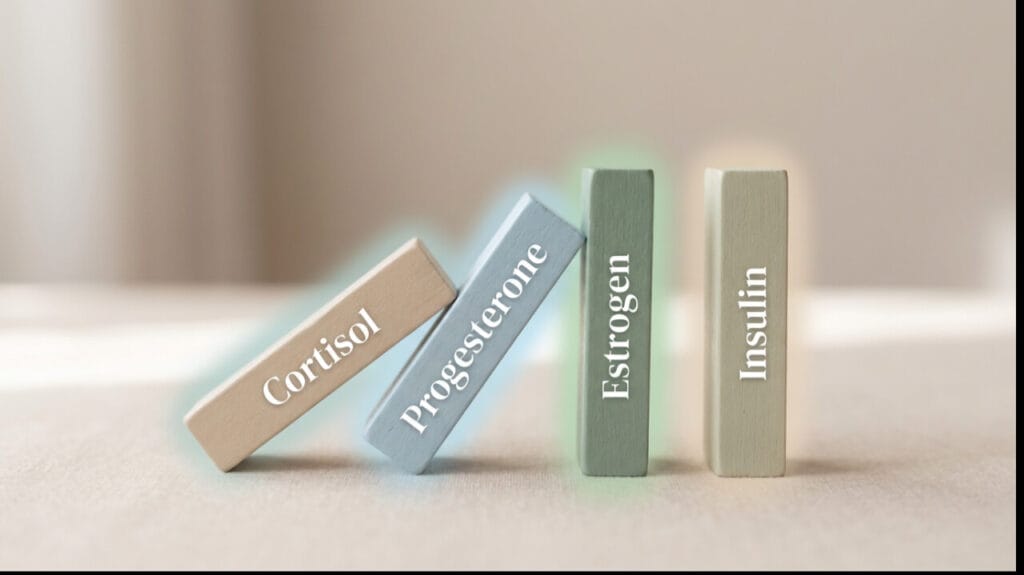
Hormones, sleep, stress, blood sugar, thyroid function, nutrition, medication, digestion, and mental health are connected. That is why the same symptom can point to different causes in different people.
For example, fatigue may be related to sleep, iron status, thyroid function, depression, medication, or perimenopause. Weight changes may involve food intake, muscle mass, sleep, activity, medication, thyroid function, or insulin resistance. This is why tracking and professional guidance matter.
Common Lifestyle Factors Worth Reviewing
Daily habits can influence how you feel, even when they are not the full cause. Reviewing the basics is a practical starting point before adding supplements or assuming one hormone is the problem.
| Habit area | Simple support idea | Why it may help |
|---|---|---|
| Meals | Include protein, fiber, and healthy fats | Supports fullness and healthy energy habits |
| Sleep | Keep a consistent sleep and wake window | Supports recovery and daily routine |
| Movement | Walk regularly and add strength training if appropriate | Supports muscle, bone, and metabolic wellness |
| Stress recovery | Use short calming habits such as breathing, walking, stretching, prayer, or journaling | Supports a steadier routine |
| Alcohol and caffeine | Track timing and amount | Can affect sleep, mood, and energy for some people |
Thyroid, Iron, Blood Sugar, and Perimenopause: Common Look-Alikes
Many symptoms people label as hormone imbalance can overlap with other common health topics. A clinician may consider thyroid testing, iron studies, B12, vitamin D, blood sugar markers, reproductive hormones, medication effects, or other evaluations depending on your symptoms and history.
| Possible area | Symptoms that may overlap | What to ask about |
|---|---|---|
| Thyroid | Fatigue, weight changes, constipation, hair changes, mood changes, cycle changes | Whether thyroid testing is appropriate |
| Iron or B12 | Fatigue, weakness, dizziness, shortness of breath, hair shedding, low stamina | Whether iron studies, CBC, or B12 testing are appropriate |
| Blood sugar | Cravings, energy dips, shakiness, weight changes, sleep disruption | Whether blood sugar markers should be checked |
| Perimenopause | Cycle changes, sleep disruption, mood changes, hot flashes, night sweats | Whether symptoms fit the menopause transition |
| PCOS | Irregular cycles, acne, excess hair growth, weight changes | Whether PCOS evaluation is appropriate |

How to Support Hormone Health Naturally
Supporting hormone health naturally does not mean treating hormone imbalance yourself. It means building daily habits that support normal body function and knowing when symptoms deserve professional evaluation.
Start with the basics: regular meals, protein, fiber, sleep consistency, strength training, walking, stress recovery, hydration, and reducing habits that clearly worsen your sleep or symptoms.
1. Build Balanced Meals
Protein, fiber, and healthy fats can help meals feel more satisfying and support healthy energy habits. This can be as simple as Greek yogurt with berries and chia, eggs with vegetables, or beans with greens and olive oil.
2. Prioritize Sleep Consistency
Try keeping a steady sleep and wake window, getting morning light, reducing late caffeine, and creating a calmer evening routine. Sleep does not fix every symptom, but it supports overall wellness.
3. Add Movement You Can Repeat
Walking, stretching, and strength training may help support metabolic wellness, bone health, muscle maintenance, and daily stress recovery. Choose movement that fits your current ability and health situation.
4. Review Nutritional Gaps Carefully
Some women compare supplements such as multivitamins, magnesium, vitamin D, omega-3s, probiotics, black seed oil, and amino acids as part of a general wellness routine. Supplements should not be used to treat hormone imbalance or symptoms.
If you compare LiveGood products, check the full label, serving size, ingredient amounts, cautions, medication considerations, and cost per serving. Helpful related guides include the 10 Supplements for Hormone Health guide, Bioactive Complete Multivitamin guide, and Essential Aminos review.
When Should You Get Hormone Testing or Professional Evaluation?
Testing decisions should be based on your symptoms, age, cycle stage, medical history, medications, and clinician guidance. It is reasonable to ask a healthcare professional about evaluation if symptoms persist, worsen, or interfere with daily life.
Get checked promptly for very heavy bleeding, bleeding between periods, severe pelvic pain, fainting, dizziness, chest pain, shortness of breath, heart palpitations, sudden severe headache, neurological symptoms, rapid unexplained weight changes, missed periods not explained by pregnancy or menopause, severe depression, severe anxiety, or thoughts of self-harm.
Frequently Asked Questions
What are common signs women track for hormone health?
Common patterns include cycle changes, fatigue, weight changes, mood changes, acne, libido changes, and sleep disruption. These are tracking clues, not a diagnosis.
Can stress cause hormone imbalance?
Stress can affect sleep, appetite, mood, cycle experience, and daily energy habits. It should not be assumed to be the only cause of symptoms, especially if symptoms are persistent or severe.
At what age do hormonal changes begin?
Some women notice changes in their 30s or 40s, especially as perimenopause approaches, but symptoms vary widely. Sudden or disruptive changes should be discussed with a healthcare professional.
Can lifestyle changes support hormone health?
Yes, healthy habits may support normal body function and overall wellness. Sleep, balanced meals, movement, protein, fiber, and stress recovery can be useful foundations, but they do not replace medical care for symptoms.
Can supplements fix hormone imbalance?
No. Supplements should not be used to fix, treat, or diagnose hormone imbalance. They may help support normal wellness routines when appropriate, but symptoms need proper evaluation if they persist or worsen.
Personalized Health Assessment

If you recognize several patterns in this guide, clarity should come before action. A structured health assessment can help you think through areas such as stress load, sleep, nutrition, recovery, and overall wellness habits.
This assessment is informational and not a medical diagnosis. Use it as a general wellness snapshot, not as a way to treat symptoms or replace professional care.
Take the free health assessment and review your personalized report today.
Final Thoughts
Cycle changes, fatigue, weight changes, mood shifts, acne, libido changes, and sleep disruption are worth tracking, but they do not prove hormone imbalance by themselves. Many conditions and lifestyle factors can create similar patterns.
The safest approach is to track what you notice, strengthen the basics, avoid self-diagnosis, and seek professional guidance when symptoms are persistent, severe, worsening, or unusual for you. Supplements and wellness habits can support a healthy routine, but they should not replace proper care.