Iron Guide: Food Sources, Label Tips, Safety & Multivitamin Comparison
Iron Guide: Food Sources, Label Tips, Safety & Multivitamin Comparison
Iron is an essential mineral, but it is not a nutrient to treat casually. This guide explains what iron does, where it comes from in food, why men’s and women’s formulas may differ, and what to check before using iron-containing supplements.
Educational guide only — not medical advice or iron deficiency treatment guidance.
Important safety note: Iron supplements should not be used to self-treat fatigue, anemia, low ferritin, heavy periods, pregnancy needs, restless legs, weakness, dizziness, shortness of breath, or any medical condition. Too much iron can be harmful. Ask a qualified healthcare professional before taking iron supplements, especially if you are pregnant or nursing, buying for a child, have hemochromatosis, liver disease, inflammatory bowel disease, ulcers, kidney disease, infection concerns, take medication, or already use a multivitamin with iron.
What Is Iron?
Iron is an essential mineral involved in oxygen transport and normal body function. It is found in foods and also appears in some multivitamins and standalone supplements.
For beginners, iron is a good example of why label context matters. A product with iron is not automatically better for everyone. The amount, form, serving size, audience, diet, health history, and supplement overlap all matter.
Useful official reference: Start with the NIH Iron Fact Sheet.
Why Iron Needs Context
Iron is familiar, but it is also easy to misunderstand. Many people assume more is better, but iron is one of the nutrients where unnecessary supplementation can create safety concerns.
Some multivitamins include iron and others leave it out. That can be intentional. For example, a women’s formula may include iron while a men’s formula may not, depending on the product’s intended audience. This does not mean one is universally better. It means the formula should be matched to the person using it.
Simple takeaway: when you see iron on a label, do not stop at the name. Look at who the product is for, how much iron it contains, whether you already get iron elsewhere, and whether a healthcare professional has recommended iron for your situation.
Key Concepts You Need to Know
Iron Is Not One-Size-Fits-All
What makes sense for one person may not fit another person. Age, sex, diet, labs, medical history, pregnancy status, and medication use all matter.
Food and Labels Both Matter
Iron comes from food and supplements. The food pattern, iron form, supplement amount, and total daily intake should be considered together.
More Is Not Always Better
Iron is not a “just in case” supplement for everyone. Too much iron can be harmful, especially for children and people with certain conditions.
How Iron Works in the Body
A simple way to think about iron is that it plays a role in oxygen transport and normal energy-related body processes. This does not mean taking iron will fix tiredness or low energy. Fatigue can have many causes, including sleep, stress, diet, thyroid issues, anemia, infection, medication effects, depression, chronic disease, and more.
That is why iron concerns are best handled with proper evaluation and, when needed, lab-guided care. Do not use iron supplements to guess your way through symptoms.
Beginner note: iron can be important, but symptoms alone cannot tell you whether you need more iron.
Iron From Food
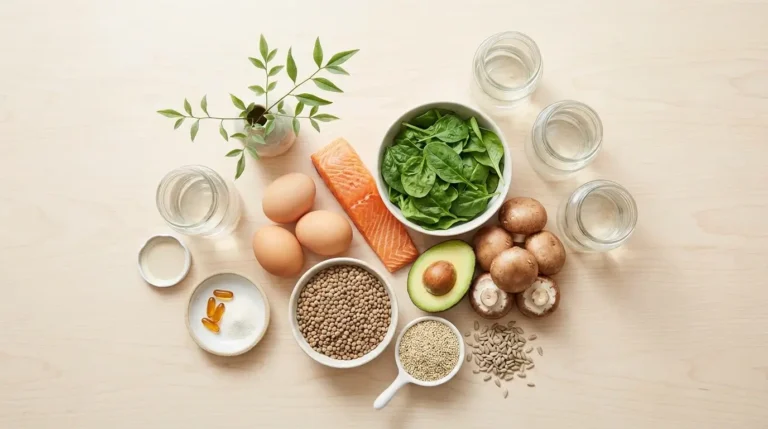
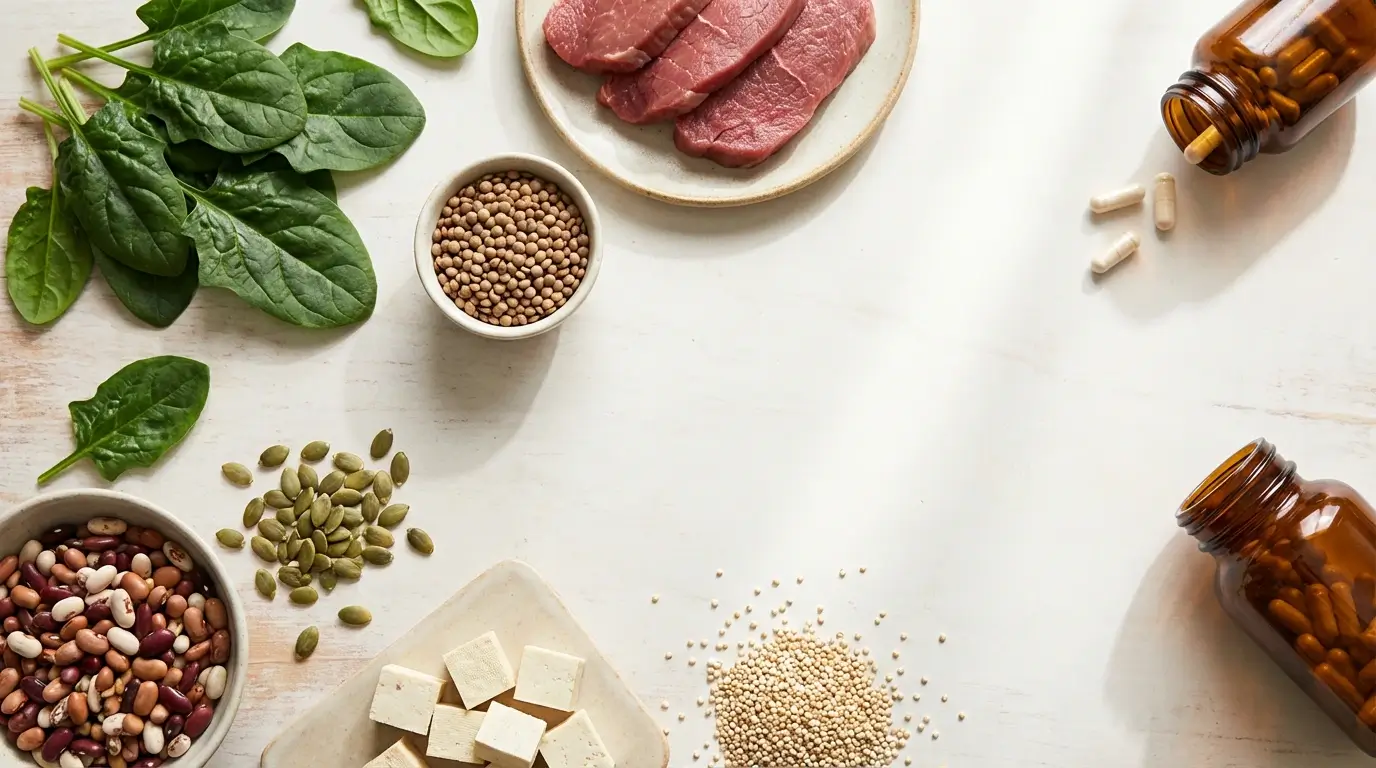
Food is usually the best starting point for understanding iron. Red meat, poultry, seafood, lentils, beans, pumpkin seeds, spinach, tofu, fortified foods, and quinoa are all part of the iron conversation.
There are two broad food categories to know: heme iron, found in animal foods, and non-heme iron, found in plant foods and fortified foods. Non-heme iron absorption can be affected by the overall meal. Vitamin C-rich foods can improve absorption from plant sources, while some compounds in tea, coffee, calcium, and certain grains or legumes can reduce absorption when consumed at the same time.
Want more nutrition basics? Explore the Health Guides Hub.
Food Sources
Animal Sources
Red meat, poultry, seafood, and organ meats contain heme iron. Serving size and overall diet still matter.
Plant Sources
Lentils, beans, tofu, spinach, pumpkin seeds, quinoa, and fortified foods provide non-heme iron.
Absorption Tips
Pair plant iron with vitamin C foods like citrus, bell peppers, strawberries, or tomatoes. Ask for guidance if you have medical nutrition needs.
Before Using Iron Supplements
If you are considering an iron-containing supplement, read the label carefully and check whether iron is appropriate for you. Iron is one of the clearest examples of a nutrient where “just in case” use is not always smart.
Check first if: you are pregnant or nursing, buying for a child, have hemochromatosis, high ferritin, liver disease, kidney disease, inflammatory bowel disease, ulcers, frequent transfusions, infection concerns, unexplained symptoms, or take medication.
Label Tips for Iron
Amount Per Serving
Check the iron amount and percent Daily Value per serving. Do not compare products by the front label only.
Iron Form
Labels may list ferrous sulfate, ferrous fumarate, ferrous gluconate, iron bisglycinate, or other forms. Tolerance can vary.
Formula Context
Look at whether it is a standalone iron product, a prenatal, a women’s multivitamin, a men’s multivitamin, or a broader formula.
Dosage and Recommended Amounts
Do not guess your iron dose based on symptoms or marketing. Iron needs vary by age, sex, life stage, diet, lab results, pregnancy status, and medical history. Use the product label for general directions, but use clinician guidance for deficiency, anemia, pregnancy, high-dose iron, or lab-related goals.
Need official numbers? Check the NIH Iron Fact Sheet.
Precautions and Interactions
Iron can interact with medication timing and other nutrients. Calcium, antacids, thyroid medication, certain antibiotics, levodopa, and some other medicines may require spacing from iron. Ask a pharmacist or prescriber before combining iron with medication.
Safety overview: For broader supplement safety, review NCCIH and MedlinePlus.
Side Effects and Overlap
Iron can cause side effects such as constipation, nausea, stomach upset, dark stools, or discomfort. Serious problems are possible with too much iron, especially in children. Keep iron-containing supplements out of reach of children.
Also check overlap. You may already get iron from a multivitamin, prenatal, fortified foods, meal replacements, or other supplements. Stacking multiple iron-containing products can increase risk.
Did You Know?
Did you know? Iron is one of the easiest nutrients to recognize on a label, but also one of the easiest to misunderstand because product audience, amount, form, and safety context matter so much.
Getting Started: Your First Steps
Read One Label Carefully
Look at whether the product includes iron, how much it provides, and whether the full product fits your situation.
Check Food and Supplement Overlap
Consider iron from food, fortified foods, multivitamins, prenatal products, and standalone supplements together.
Ask Before Treating Symptoms
Do not use iron to self-treat fatigue, weakness, anemia concerns, or lab results without qualified guidance.
Resources for Learning More
Start here on the site:
For practical wellness and nutrition help beyond this article, explore the Health Guides Hub.
For supplement basics, visit the Supplement Education Hub.
To compare supplement labels more carefully, read How to Read Supplement Labels.
For product-quality context, review the Certificates of Analysis Guide.
Official reads:
FAQ
Why is iron included in some multivitamins but not others?
Because formulas are often built for different audiences. Some women’s formulas include iron, while many men’s formulas do not. That does not make one universally better. It means the formula should match the person.
Can I get iron from food?
Yes. Red meat, poultry, seafood, lentils, beans, tofu, spinach, quinoa, pumpkin seeds, and fortified foods are all part of the iron food conversation.
Do I need a standalone iron supplement?
Not unless it fits your situation and, ideally, has been recommended based on appropriate context. Do not self-treat symptoms or lab concerns with iron.
Why should I be careful with iron?
Too much iron can be harmful, and iron can interact with medication timing. Children are especially vulnerable to accidental iron overdose, so iron products should be kept out of reach.
What should I check first on the label?
Check the amount per serving, percent Daily Value, form of iron, who the product is designed for, and whether you already use another iron-containing product.
Multivitamin Comparison: Men’s vs Women’s Formulas
If you are comparing iron on supplement labels, men’s and women’s multivitamins can be useful examples because they may be formulated differently. A women’s formula may include iron, while a men’s formula may leave iron out. The safer takeaway is not “one is better.” The takeaway is that formula design should match the intended user.
For Women
The Bio-Active Complete Multi-Vitamin for Women with Iron is an example of a broader daily formula that includes iron. It may be worth comparing if you are specifically looking for a women’s multivitamin with iron, but it should still be reviewed for your personal needs, medication use, and iron safety context.
For Men
The Bio-Active Complete Multi-Vitamin for Men is useful as a comparison point because many men’s multivitamins are designed differently around iron. This can help readers understand why the presence or absence of iron should be read in context.
Recommendation note: compare the full label, not just whether iron is included. Check serving size, percent Daily Value, other nutrients, medication cautions, and whether the formula matches your personal situation.
This content is for general informational purposes only and is not medical advice. Dietary supplements are not intended to diagnose, treat, cure, or prevent any disease. Iron supplements should not be used to self-treat symptoms or medical conditions. Always read the label and speak with a qualified healthcare professional before use if you take medication, are pregnant or nursing, have a medical condition, are buying for a child, or already use other supplements. This post may contain affiliate links.