12 Benefits of Sleep Patches and How to Use Them
Sleep Patches Benefits: 12 Reasons People Use Them Before Bed
Sleep patches are becoming popular because they are simple, discreet, and easy to add to a nighttime routine. Instead of swallowing a capsule or mixing a powder, you apply a patch to clean, dry skin and allow the ingredients to be delivered gradually while you wind down.
They are not magic, and they should not replace healthy sleep habits or medical care for serious sleep problems. But for people who want a convenient sleep-support option, patches can be easier to use consistently than many other supplement formats.
This guide explains 12 sleep patches benefits, how they work, common ingredients, when to use them, safety tips, and what to check before buying.
Health note: This article is educational and is not medical advice. Sleep patches and sleep supplements are not intended to diagnose, treat, cure, or prevent disease. Speak with a qualified healthcare professional if you have chronic insomnia, sleep apnea symptoms, restless legs, depression, anxiety, pregnancy, nursing, medication use, liver disease, seizure disorder, autoimmune disease, or ongoing sleep problems.

Quick Answer: What Are Sleep Patches Used For?
Sleep patches are used to support a better bedtime routine. Depending on the formula, they may include ingredients such as melatonin, GABA, L-theanine, L-tryptophan, valerian, chamomile, lavender, or other calming botanicals.
The main benefit is convenience. A patch can be applied before bed and removed later, which may help people stay consistent with their nighttime routine.
Sleep patches should not be used as a shortcut around poor sleep habits. They work best when paired with a dark room, less screen time, a regular bedtime, lower evening caffeine intake, and a wind-down routine.
Sleep Patches at a Glance
| Feature | What It Means | Why It Helps |
|---|---|---|
| Patch format | Applied to clean, dry skin | No capsules or mixing required |
| Nighttime routine | Used before bed | Creates a clear sleep cue |
| Calming ingredients | May include melatonin, herbs, amino acids, or botanicals | Supports relaxation and sleep preparation |
| Easy removal | Patch is discarded after use | Simple one-night routine |
| Travel-friendly | Small and portable | Helpful for routine disruption |
If you want to understand your sleep habits better, you can also use the Sleep Support Calculator.
1. Sleep Patches Are Easy to Use
One of the biggest benefits of sleep patches is simplicity. You apply the patch to a clean, dry area of skin with little to no hair, then remove it after the recommended time.
That can be easier than remembering capsules, mixing drinks, or preparing a complicated nighttime routine.
2. They Can Create a Strong Bedtime Cue
Good sleep often depends on repeated cues. A dark room, quiet routine, consistent bedtime, and the same wind-down habits can all tell your brain that it is time to rest.
Applying a sleep patch can become part of that pattern. The patch itself is not the whole routine, but it can reinforce the routine.
3. They Avoid Extra Liquid Before Bed
Some sleep products come as teas, powders, or drink mixes. Those can be helpful, but not everyone wants extra liquid before bed, especially if nighttime bathroom trips already interrupt sleep.
A patch format avoids that issue because there is nothing to drink.
4. They May Support Relaxation Before Sleep
Many sleep patches include ingredients commonly used for relaxation and sleep preparation, such as lavender, chamomile, valerian, GABA, L-theanine, or melatonin.
Ingredient quality and amounts matter. Always read the label instead of assuming all sleep patches are the same.
5. They Can Be Convenient for Travel
Travel can disrupt sleep because of time-zone changes, hotel rooms, late meals, unusual schedules, and light exposure. A small patch is easy to pack and use when your routine changes.
If jet lag or shift work is a major issue, speak with a qualified professional about timing, light exposure, and whether melatonin is appropriate for you.
6. They May Help People Who Dislike Capsules
Some people avoid supplements because they do not like swallowing pills. Sleep patches offer a different format that may feel easier.
This does not mean patches are automatically better than capsules. It simply means they may be more practical for certain people.
7. They Can Fit a Screen-Free Wind-Down Routine
A sleep patch can be used as a reminder to put away the phone, dim the lights, and move into a calmer part of the evening.
For best results, use the patch with habits that support sleep:
- Reduce bright screens before bed
- Keep the room cool and dark
- Avoid caffeine late in the day
- Keep a consistent bedtime
- Give yourself time to relax before trying to sleep
8. They May Support a More Consistent Routine
The best sleep routine is the one you actually follow. Patches can make sleep support feel simple and repeatable.
Consistency matters because sleep timing, light exposure, meals, stress, and evening habits all influence how quickly you fall asleep and how rested you feel.
9. They Can Combine Multiple Sleep-Support Ingredients
Many sleep patches use a blend of ingredients rather than only one. This can be useful, but it also means you should check the full label carefully.
For example, the LiveGood Healthy Sleep Patches label shown in your product image lists ingredients such as melatonin, inositol, skullcap herb powder, 5-HTP, GABA, L-theanine, L-tryptophan, valerian root powder, chamomile flower extract, lavender essential oil, and Cosmoperine.
Because formulas vary, compare the ingredient list and serving amounts before choosing a patch.
10. They May Be Useful for Occasional Sleep Disruption
Some people consider sleep patches when sleep is disrupted by travel, schedule changes, late nights, or occasional stress. In those situations, a patch may be easier to use than changing the whole supplement routine.
Sleep patches should not be used to ignore ongoing sleep problems. If you struggle with sleep for weeks, wake gasping, snore heavily, feel exhausted during the day, or depend on sleep aids every night, get proper advice.
11. They Help You Avoid Overcomplicating Sleep Support
It is easy to build a sleep routine with too many products. A patch can keep the routine simple, especially if it already includes several sleep-support ingredients.
Do not combine sleep patches with multiple other sleep supplements unless you understand ingredient overlap. Melatonin, 5-HTP, GABA, herbs, medications, alcohol, and sedating products can interact or increase next-day drowsiness.
12. They Make Label Reading More Important
A sleep patch is only as useful as its formula and directions. The label should explain how to apply it, how long to wear it, whether it can be reused, and what ingredients are included.
This is a benefit because it encourages smarter supplement buying. Instead of chasing claims, you can compare the actual formula.
How to Use Sleep Patches
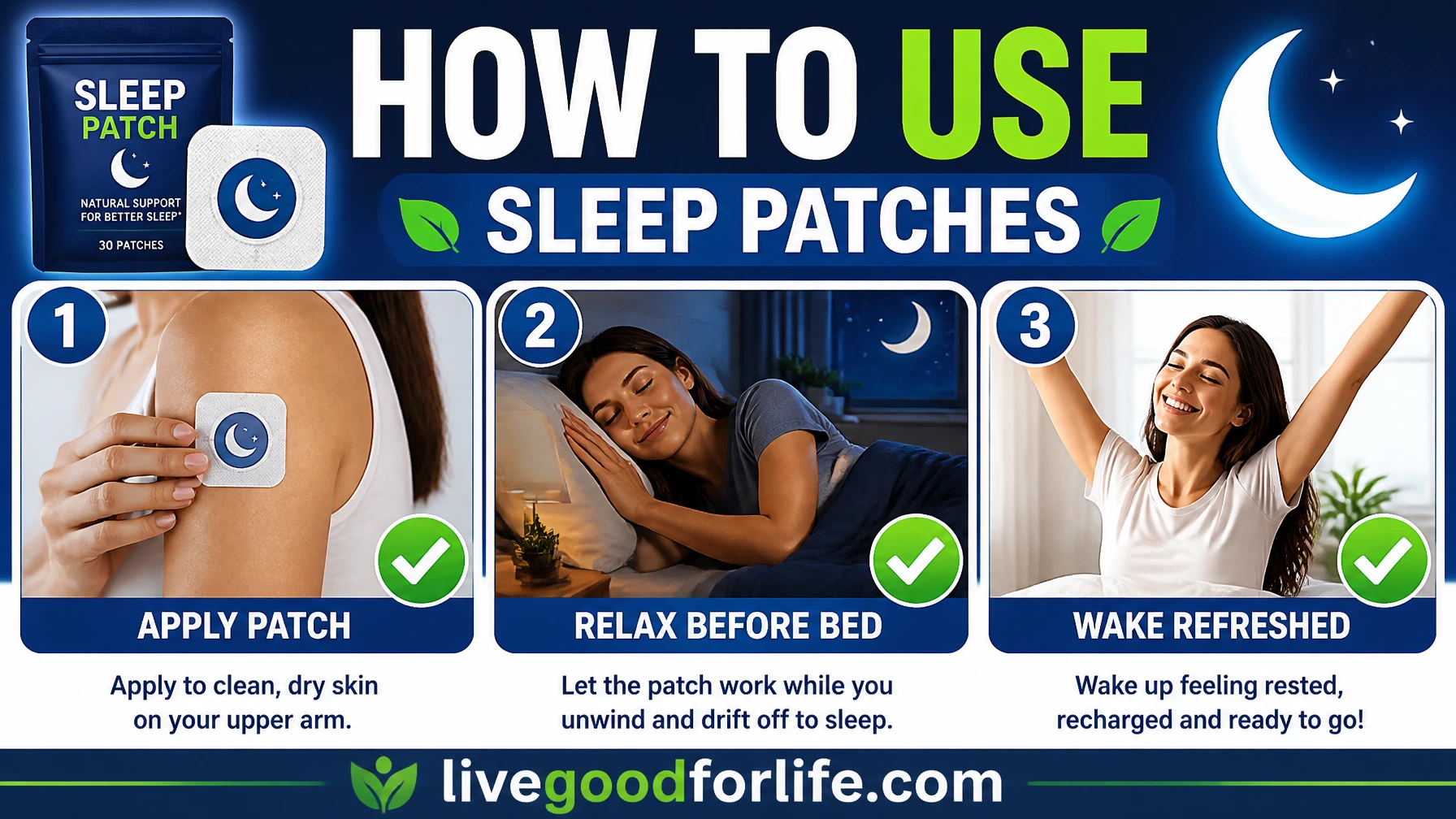
Always follow the directions on the specific product you buy. Based on the LiveGood Healthy Sleep Patches label you provided, the basic instructions are:
- Remove the patch from the backing.
- Apply it directly onto clean, dry skin.
- Choose an area with little to no hair, such as inside the wrist, hip, shoulder, or ankle.
- Avoid oils, creams, or lotions before applying because they may affect adhesion.
- Remove and discard the patch after the recommended wear time.
- Do not reuse a patch.
Common Sleep Patch Ingredients
Ingredients vary by brand, but sleep patches often include a mix of sleep-support nutrients, amino acids, botanicals, and calming aromas.
| Ingredient | Why It Is Used | Important Note |
|---|---|---|
| Melatonin | Supports sleep-wake timing | Best used carefully, especially with medication, children, pregnancy, or chronic use |
| L-theanine | Often used for calm focus and relaxation | May not suit everyone |
| GABA | Commonly used in relaxation formulas | Do not combine carelessly with sedating products |
| L-tryptophan | Amino acid involved in serotonin and melatonin pathways | Ask first if using antidepressants or mood-related medication |
| 5-HTP | Used in some mood and sleep-support formulas | Can interact with serotonin-related medications |
| Valerian | Herbal sleep-support ingredient | May cause drowsiness or interact with sedatives |
| Chamomile | Traditional calming botanical | Avoid if allergic to related plants |
| Lavender | Used for a calming scent | Can irritate sensitive skin in some people |
What the LiveGood Healthy Sleep Patches Label Shows
The label image you provided lists a blend of sleep-support ingredients and gives clear use directions. It says to apply the patch to clean, dry skin, avoid oils and lotions before applying, remove and discard after 8 hours, and not reuse a used patch.
| Ingredient on Label | Amount Listed |
|---|---|
| Melatonin | 6.00 mg |
| Inositol | 6.00 mg |
| Skullcap Herb Powder | 5.00 mg |
| 5-HTP | 3.00 mg |
| GABA | 2.00 mg |
| L-Theanine | 1.00 mg |
| L-Tryptophan | 1.00 mg |
| Valerian Root Powder | 15.00 mg |
| Chamomile Flower Extract | 1.00 mg |
| Lavender Essential Oil | 0.70 mg |
| Cosmoperine | 0.35 mg |
These details are useful because they let readers compare the patch against other sleep products instead of relying only on marketing claims.
Who Should Be Careful With Sleep Patches?
Sleep patches may not be suitable for everyone. Ask a qualified healthcare professional first if you:
- Are you pregnant or nursing
- Are you buying for a child or a teenager
- Take antidepressants, anxiety medication, sedatives, sleep medication, blood thinners, seizure medication, or other regular medication
- Have liver disease, autoimmune disease, epilepsy, dementia, depression, bipolar disorder, or a serious medical condition
- Have chronic insomnia or suspected sleep apnea
- Use alcohol or other sedating products at night
- Have sensitive skin or adhesive allergies
Do not drive, operate machinery, or do anything requiring alertness if you feel drowsy after using a sleep product.
How to Compare Sleep Patches Before Buying
| Check | Why It Matters | Reader Tip |
|---|---|---|
| Ingredient list | Shows what you are actually using | Avoid unknown blends with no clear label |
| Melatonin amount | Too much may cause next-day drowsiness for some people | Start only as directed |
| Use directions | Patch placement and wear time matter | Follow the label exactly |
| Skin tolerance | Adhesives and essential oils can irritate skin | Stop use if redness or itching occurs |
| Claims | Sleep products should not promise cures | Choose realistic sleep support |
| Price per patch | Daily cost matters | Compare by use, not only by package price |
For a broader label-reading method, read How to Compare Supplement Ingredients Before You Buy.
LiveGood Healthy Sleep Patches
LiveGood Healthy Sleep Patches may be a practical option if you want a patch format instead of capsules or powders. The label shows a blend that includes melatonin, amino acids, botanicals, and lavender essential oil, with instructions to apply the patch to clean, dry skin and remove it after 8 hours.
If you already use other sleep products, compare the ingredients first so you do not accidentally stack too many calming or melatonin-related ingredients.
Shop LiveGood Healthy Sleep Patches
Sleep Patches FAQs
Do sleep patches really work?
Sleep patches may support a bedtime routine, especially if the formula includes ingredients commonly used for sleep support. Results vary by person, sleep habits, ingredient tolerance, and the cause of poor sleep.
Are sleep patches better than sleep capsules?
Not always. Patches may be more convenient for people who dislike capsules or powders, but the formula, dose, directions, and safety considerations matter more than the format alone.
How long do you wear a sleep patch?
Follow the directions on the product label. The LiveGood label you provided says to remove and discard the patch after 8 hours and not reuse it.
Where do you put a sleep patch?
Sleep patches are usually applied to clean, dry skin with little to no hair. The LiveGood label mentions areas such as the inside of the wrist, hip, shoulder, or ankle.
Can sleep patches cause side effects?
Possible side effects may include skin irritation, next-day drowsiness, headache, dizziness, nausea, vivid dreams, or reactions to ingredients. Stop using the product and ask a professional if the symptoms concern you.
Can I use sleep patches every night?
Do not assume nightly use is right for everyone. Melatonin and other sleep-support ingredients should be used carefully, especially long term. If you need sleep support every night, speak with a qualified healthcare professional.
Are sleep patches safe for children?
Do not use sleep patches for children unless a qualified pediatric professional says it is appropriate. Melatonin use in children should be supervised by a healthcare provider.
Can I use sleep patches with alcohol?
It is best not to combine sleep patches with alcohol. Alcohol can worsen sleep quality and may increase drowsiness or safety concerns when combined with sleep-support ingredients.
Use Sleep Patches as Part of a Better Night Routine
Sleep patches can be useful because they are simple, convenient, and easy to fit into a wind-down routine. The best results usually come when they are paired with healthy sleep habits, not used as a shortcut around them.
Read the label, check the ingredients, avoid unnecessary stacking, and get professional advice if sleep problems are frequent, severe, or linked with a health condition.
Reminder: Sleep supplements can support a routine, but they do not replace diagnosis or care for chronic insomnia, sleep apnea, mood conditions, medication issues, or persistent fatigue.
Affiliate disclosure: I am an independent LiveGood affiliate. If you choose to buy through my links, I may earn a commission at no extra cost to you.