How to Compare Supplement Ingredients Before You Buy
How to Compare Supplement Ingredients
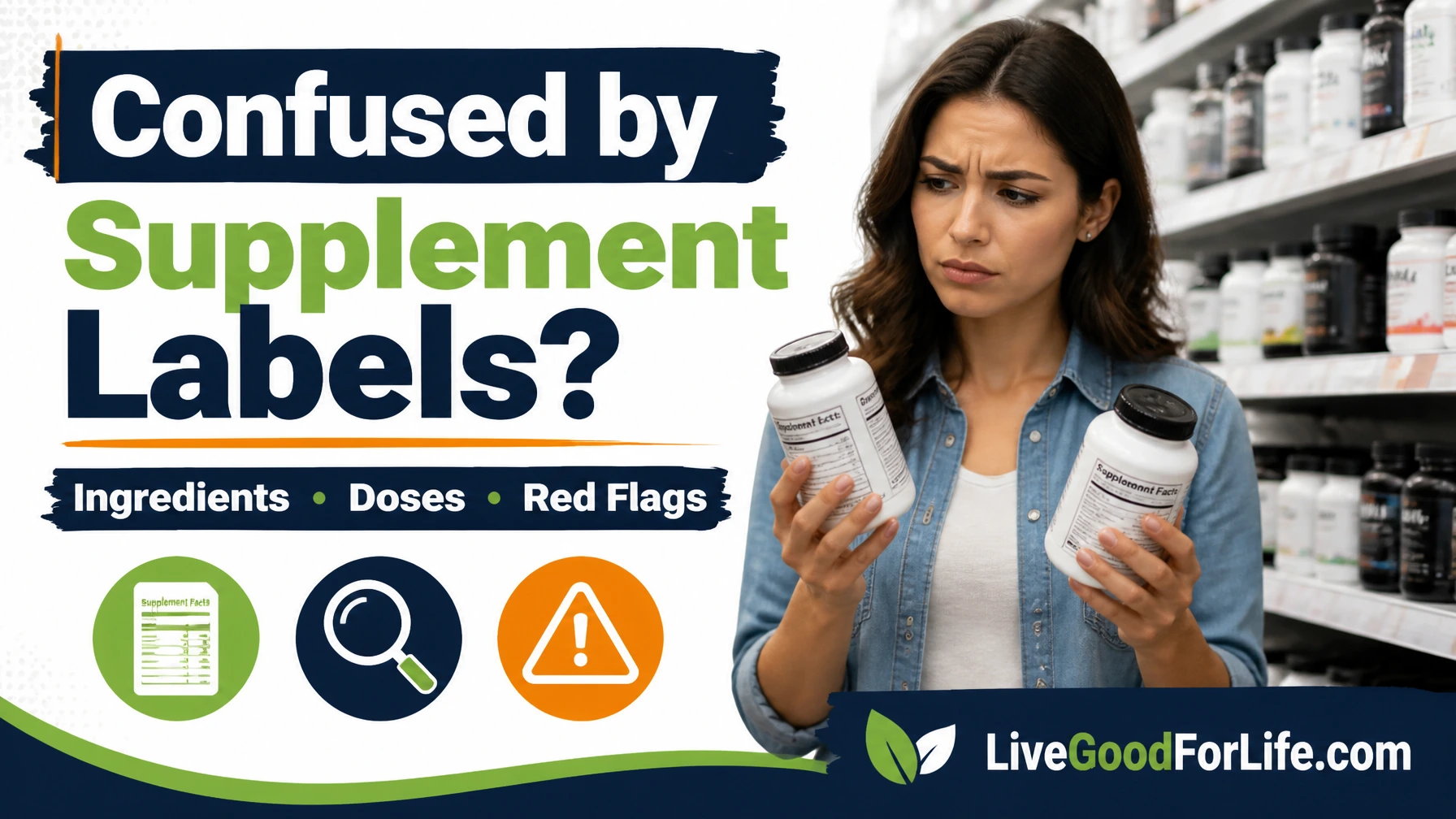
Supplement labels can look impressive at first glance. A bottle may mention premium herbs, clinical research, superfoods, high potency, advanced absorption, or a long list of benefits. But the front of the bottle is not where the real comparison happens.
The real value is usually found in the Supplement Facts panel, the serving size, the ingredient amounts, the testing standards, the directions, and the price per serving. Once you learn how to check those details, it becomes much easier to spot the difference between a serious formula and a product built mostly around marketing words.
This guide shows you how to compare supplement ingredients before you buy, how to understand clinically studied ingredients, when proprietary blends are a concern, how to check price per serving, and how to avoid paying for hype instead of real value.
Quick Answer: How Do You Compare Supplement Ingredients?
To compare supplement ingredients properly, start with the Supplement Facts panel, not the front label. Check the full serving size, the amount of each active ingredient, the ingredient form, whether anything is hidden inside a proprietary blend, whether testing information is available, and the real price per serving.
A supplement with a longer ingredient list is not automatically better. A good supplement should make it easy to understand what you are taking, how much you are taking, why the ingredients are included, and what the product actually costs per daily serving.
The fastest way to compare two supplements is to ask these five questions:
- How many capsules, scoops, or servings do I need per day?
- Are the main ingredients clearly listed with real amounts?
- Are the ingredient forms explained clearly?
- Is there third-party testing or quality information available?
- What is the true cost per serving or per month?
If a product hides key amounts, makes extreme claims, or costs much more without showing better ingredient quality, it may not be the best value.
Quick Supplement Comparison Checklist
If you only remember one thing, remember this: compare the full serving, not the biggest claim on the bottle.
| What to Check | Why It Matters | Good Sign |
|---|---|---|
| Serving size | The amount listed may require 2 capsules, 4 capsules, 1 scoop, or more. | The label makes the full daily serving clear. |
| Amount per serving | Ingredients can appear impressive even when the actual amount is tiny. | Important ingredients show clear amounts. |
| Ingredient form | Different forms may have different absorption, tolerance, or use cases. | The label names the form, not just the nutrient. |
| Proprietary blends | A blend may hide how much of each ingredient is included. | Individual ingredient amounts are listed where possible. |
| Third-party testing | Testing helps confirm quality, purity, and label accuracy. | The brand provides testing information or certificates where available. |
| Price per serving | A cheaper bottle may cost more per actual daily serving. | The monthly cost is easy to calculate. |
You can use this checklist for vitamins, minerals, greens powders, reds powders, protein powders, collagen, magnesium, probiotics, coffee blends, weight-management formulas, and general wellness supplements.
Step 1: Ignore the Front Label First
The front label is designed to get attention. It may highlight the most exciting ingredient, the biggest number, a trendy phrase, or a benefit people are already searching for. That does not automatically make the product bad, but it does mean you should move past the front quickly.
Instead of starting with the promise, start with these questions:
- What is the full serving size?
- How many servings are in the bottle?
- How much of each active ingredient is included?
- Are the ingredient forms clearly named?
- Are any important ingredients hidden inside a blend?
- Is there testing, sourcing, or quality information available?
- What is the real cost per serving?
This is the difference between buying based on a claim and buying based on evidence you can actually compare.
Step 2: Check the Serving Size
Serving size is one of the most overlooked details on a supplement label. A product may advertise 60 capsules, but the serving size may be 2 capsules. That means the bottle provides 30 servings, not 60 days.
For powders, the serving size may be one scoop, two scoops, or a specific gram amount. For liquids, it may be a teaspoon, dropper, or measured amount. Always compare the recommended daily serving rather than the container size alone.
| Bottle Claim | Serving Size | Real Supply |
|---|---|---|
| 60 capsules | 1 capsule daily | 60 servings |
| 60 capsules | 2 capsules daily | 30 servings |
| 30 scoops | 1 scoop daily | 30 servings |
| 30 scoops | 2 scoops daily | 15 servings |
This is also why price comparisons can be misleading. A bottle with a lower price tag may not be cheaper if the serving size is larger or the number of real servings is smaller.
Step 3: Compare Amounts Per Serving
The amount per serving tells you how much of each nutrient or ingredient is included when you take the full serving. This is where many supplement comparisons become clearer.
A label may list a popular ingredient, but if the amount is extremely small, the product may be using that ingredient more for marketing than for meaningful formula design. This is sometimes called “fairy dusting.”
For a deeper explanation, read the guide on how to read supplement labels and spot fairy dusting.
When comparing amounts, look for:
- The amount of each ingredient per serving
- Whether the label lists the active nutrient or only the compound weight
- Whether the amount matches the product’s main promise
- Whether repeated nutrients appear in other supplements you already take
- Whether the total daily amount stays within a sensible range for you
More is not always better. Some nutrients have upper limits, some ingredients interact with medication, and some products may be inappropriate for certain health conditions.
Step 4: Understand Clinically Studied Ingredients
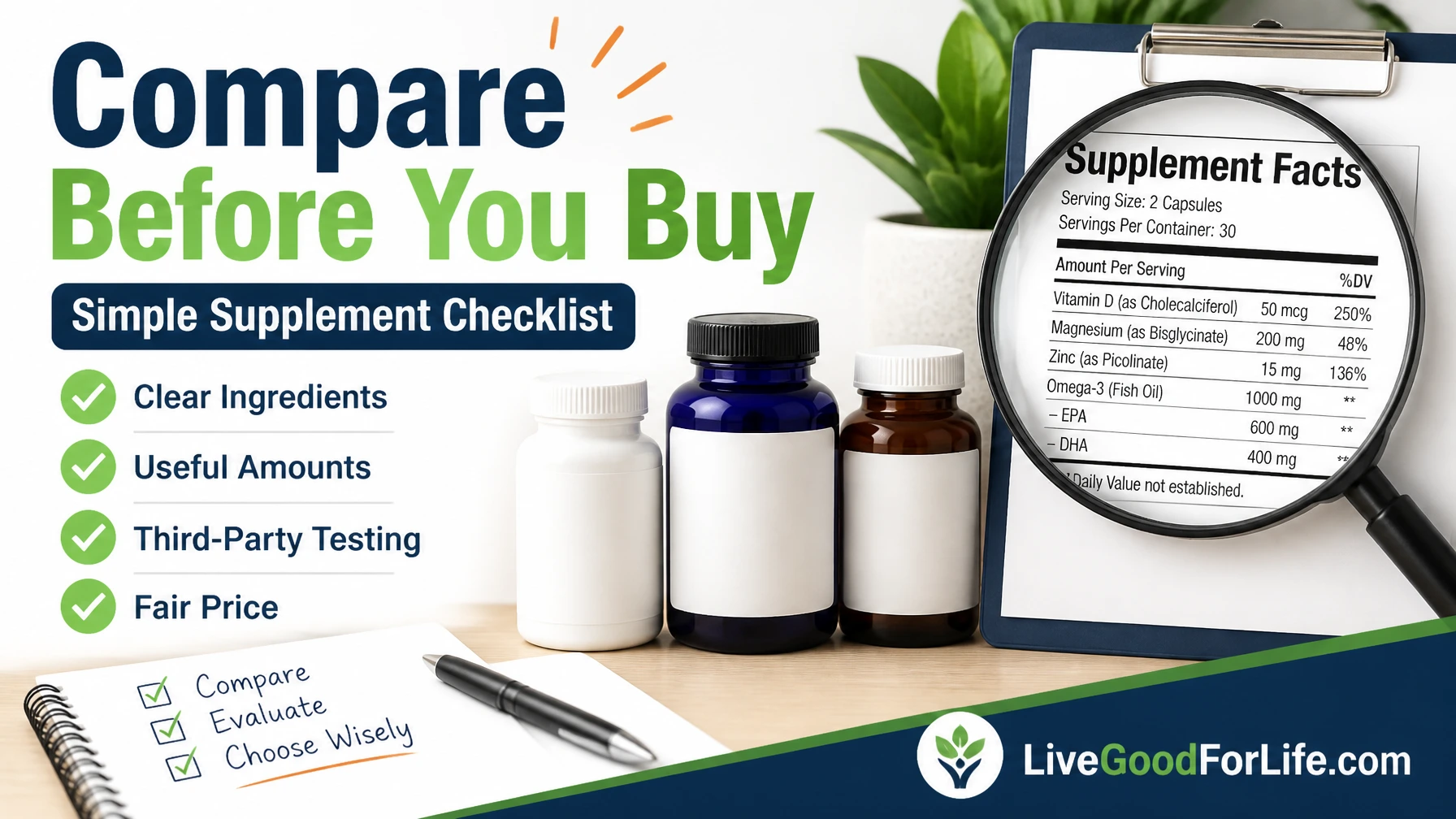
“Clinically studied” can be useful wording, but it needs context. An ingredient may have clinical research behind it, but that does not automatically mean every product containing that ingredient uses the same amount, form, or quality used in the study.
When a supplement mentions clinical research, ask:
- Was the exact ingredient form studied?
- Was the same amount used in the research?
- Was the study done in humans or only in cells or animals?
- Was the outcome relevant to the product’s claim?
- Does the product provide enough detail to compare the formula?
For example, a product can say it contains a clinically studied ingredient, but if the label uses a tiny amount or hides the amount in a blend, the phrase becomes much less useful for comparison.
| Marketing Phrase | What to Ask |
|---|---|
| Clinically studied ingredient | Is the amount and form similar to what was studied? |
| Research-backed formula | Is the full formula studied, or only one ingredient? |
| Advanced absorption | What specific form or technology supports this? |
| High potency | High compared with what, and is that amount appropriate? |
This is why ingredient transparency matters. A clear label helps you compare the product instead of guessing.
Step 5: Be Careful With Proprietary Blends
A proprietary blend is a group of ingredients listed together under one total amount. The label may tell you the total blend weight, but not the individual amount of each ingredient inside that blend.
Proprietary blends are not always bad. Some companies use them to protect formula details. The problem is that they can make it difficult to know whether the most important ingredients are present in useful amounts.
Read more here: are proprietary blends acceptable?
| Label Style | What You Can Tell | Main Concern |
|---|---|---|
| Fully transparent label | Each main ingredient amount is listed. | Easier to compare, but still check forms and serving size. |
| Proprietary blend | Total blend amount is listed. | You may not know how much of each ingredient is included. |
| Front-label ingredient only | The ingredient is mentioned for attention. | The meaningful amount may be unclear or very small. |
If a product’s main selling point depends on a specific ingredient, but the amount is hidden, that is worth questioning before you buy.
Step 6: Check Third-Party Testing and Transparency
Third-party testing means a product or ingredient has been checked by an outside lab or testing provider. In supplement buying, testing can help support quality, identity, purity, and label confidence.
Useful testing and transparency signals include:
- Certificates of Analysis where available
- Batch or lot-related testing information
- Clear ingredient labels
- GMP manufacturing standards
- Allergen and warning information
- Realistic product language without cure claims
You can review the LiveGood product Certificates of Analysis page to see why testing documents are useful when comparing supplement quality.
Testing does not mean a supplement is right for every person. It also does not replace medical advice. But it is a strong quality signal when compared with brands that ask you to trust marketing claims without showing meaningful documentation.
Step 7: Compare Price Per Serving
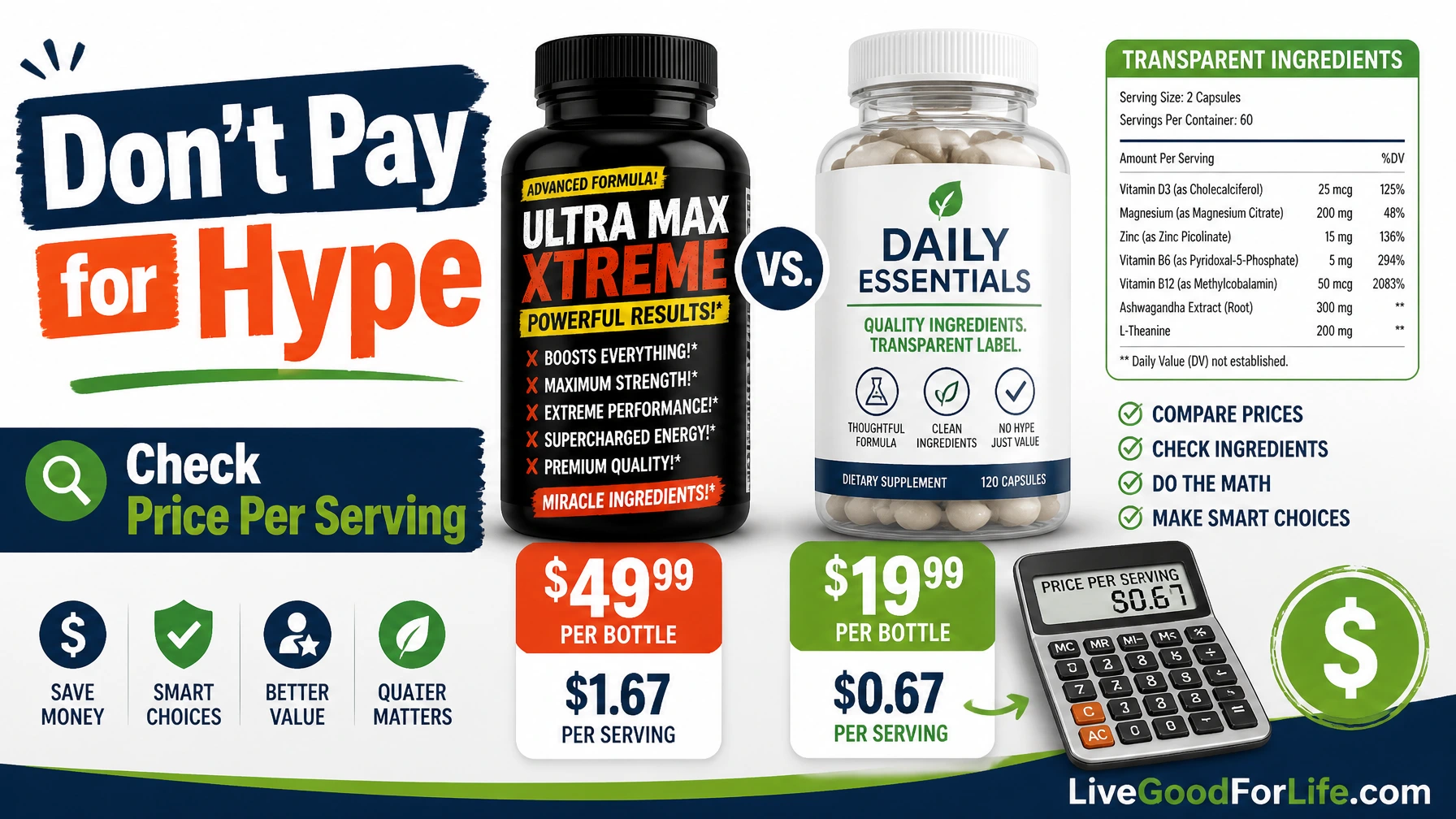
The bottle price is only the starting point. The better comparison is price per serving and price per month.
Use this simple formula:
Price per serving = bottle price divided by number of servings
Then ask whether that serving provides the ingredient amounts, quality, testing, and convenience you want.
| Product | Bottle Price | Servings | Price Per Serving |
|---|---|---|---|
| Product A | $39.95 | 30 | About $1.33 |
| Product B | $29.95 | 15 | About $2.00 |
| Product C | $49.95 | 60 | About $0.83 |
Product B looks cheaper at the bottle level, but it is more expensive per serving in this example. This is why serving count matters.
Common Supplement Red Flags
A supplement does not need to be perfect to be useful, but some signs should make you slow down before buying.
| Red Flag | Why It Matters | Better Standard |
|---|---|---|
| Miracle claims | No supplement should promise to cure, reverse, or guarantee results. | Realistic support language and proper disclaimers. |
| No clear serving size | You cannot compare cost or ingredient amounts properly. | Clear servings per container and directions. |
| Hidden key amounts | Important ingredients may be underdosed. | Transparent ingredient amounts where possible. |
| Heavy celebrity or influencer focus | Marketing cost can inflate price without improving the formula. | Product quality and label clarity come first. |
| No testing information | You have less evidence for quality and purity. | Testing, manufacturing, or quality documentation. |
| Too many overlapping products | Repeated nutrients may push intake higher than intended. | A simple routine with a clear purpose. |
How LiveGood Fits Into This Comparison
LiveGood is worth comparing because its model focuses on premium ingredients, direct pricing, third-party testing, and lower member prices instead of heavy retail markups. That does not mean every product is right for every person, but it does give shoppers a clear framework to evaluate value.
When comparing LiveGood products, use the same process:
- Read the Supplement Facts panel.
- Check the serving size and servings per bottle.
- Compare retail price, member price, and Subscribe and Save where available.
- Review ingredient overlap if you already use other products.
- Check available testing and product documentation.
- Choose the fewest products that match your actual goal.
If you want to compare products and prices, start with the LiveGood products guide, the LiveGood supplement reviews directory, and the LiveGood supplement savings calculator.
Retail Price vs Member Price
One reason supplement shoppers compare LiveGood is the pricing model. Many supplement brands sell through retail stores, practitioner markups, influencer campaigns, or large advertising budgets. Those costs can affect the final price the customer pays.
LiveGood uses retail pricing for one-time customers and lower member pricing for people who order regularly. Whether membership makes sense depends on how often you buy and which products you use.
| Buying Style | Best For | Useful Link |
|---|---|---|
| Retail customer | Trying one product without membership | Buying LiveGood without membership |
| Member | Ordering products regularly at lower member prices | LiveGood membership costs and savings |
| Affiliate | People who also want to refer others or build a business | How the LiveGood affiliate option works |
For a full comparison, read LiveGood customer vs member vs affiliate.
See LiveGood Membership Options
A Simple Buying Framework
Before buying any supplement, use this quick decision process:
- Name the goal. Do you want daily nutrition support, protein convenience, sleep routine support, gut support, or something else?
- Check the food first. Supplements can support a routine, but they do not replace a balanced diet.
- Compare labels. Look at serving size, amounts, forms, testing, and warnings.
- Check overlap. Avoid doubling up on vitamins, minerals, stimulants, or herbs without realizing it.
- Calculate cost. Compare price per serving and monthly cost, not just bottle price.
- Start simple. Add one product at a time so you can understand tolerance and usefulness.
- Ask for help when needed. Medication, pregnancy, chronic conditions, surgery, and child use deserve professional guidance.
If you are unsure where to begin, the free LiveGood health report can help you think through your immediate goal. Use it as an educational tool, not as a diagnosis or medical replacement.
Example: Comparing Two Magnesium Supplements
Magnesium is a useful example because labels can vary widely. One product may use magnesium oxide, another may use glycinate or gluconate, and another may combine multiple forms. Some products list the elemental magnesium amount clearly, while others make the label harder to compare.
| Comparison Point | Question to Ask |
|---|---|
| Form | Which magnesium form is used? |
| Amount | How much elemental magnesium is provided per serving? |
| Serving size | How many capsules are required? |
| Tolerance | Is this form likely to suit your digestion? |
| Medication spacing | Could magnesium affect your medication schedule? |
| Price per serving | What does one full serving actually cost? |
This type of comparison is more useful than asking which bottle has the louder claim.
Example: Comparing Greens or Reds Powders
Superfood powders can be harder to compare because they often include many plant ingredients. A long ingredient list may look impressive, but the serving size and total blend amount still matter.
When comparing greens or reds powders, check:
- Whether the formula uses organic ingredients
- Whether the serving size is realistic for daily use
- Whether caffeine or stimulants are included
- Whether sweeteners, flavors, or allergens matter for you
- Whether the price per serving is reasonable
- Whether the product fits your routine without replacing real food
For product-specific reading, compare the LiveGood Organic Super Greens review and the LiveGood Organic Super Reds review.
Example: Comparing Multivitamins
Multivitamins can look similar until you compare the details. You want to check the nutrient forms, iron content, vitamin D amount, B vitamin levels, mineral balance, serving size, and whether the product is designed for men, women, children, or another group.
Important questions include:
- Does the formula include iron, and is that appropriate for you?
- How much vitamin D is included if you also take D3-K2?
- Are the B vitamins at reasonable daily amounts?
- Are the mineral forms clear?
- Does the product overlap with fortified drinks, powders, or other supplements?
Helpful internal guides include the LiveGood men’s multivitamin guide and the LiveGood women’s multivitamin with iron review.
What to Do Before You Buy
Before placing an order, take 5 minutes to compare the product like a buyer, not a marketing fan.
- Screenshot or save the Supplement Facts panel.
- Write down the full serving size.
- Calculate the price per serving.
- Check whether the main ingredients are clearly dosed.
- Look for information on testing, quality, and refunds.
- Review all current warnings and directions.
- Make sure the product does not duplicate something you already take.
This simple process protects you from overbuying, overpaying, and stacking products that do not serve a clear purpose.
Frequently Asked Questions
What is the most important thing to check on a supplement label?
The most important thing to check is the full serving size and the amount per serving. A bottle may look like it lasts longer than it really does if the serving size is 2, 4, or multiple capsules per day.
Are proprietary blends bad?
Proprietary blends are not always bad, but they make supplements harder to compare because the label may not show how much of each ingredient is included. If the main selling point of a product is hidden inside a blend, that is a reason to look more carefully before buying. Avoid them is recommended.
What does a clinically studied ingredient mean?
A clinically studied ingredient is one that has been used in research. However, you still need to check whether the supplement uses the same form, a similar amount, and a realistic serving size. The phrase is useful only when the label gives enough detail to compare.
How do I know if a supplement is good quality?
Look for clear ingredient amounts, named ingredient forms, realistic directions, third-party testing where available, quality manufacturing standards, allergen information, and no extreme cure-style claims. A good label should help you understand the product instead of forcing you to guess.
How do I compare supplement prices?
Do not compare only the bottle price. Divide the price by the number of servings to calculate price per serving. Then compare that cost with the ingredient amounts, serving size, testing, and product quality.
Is a supplement with more ingredients better?
No. More ingredients do not automatically mean better results or better value. A smaller formula with clear amounts and a specific purpose can be more useful than a long ingredient list with tiny or hidden amounts.
Should I buy supplements at retail price or member price?
If you only want to try one product, retail may be enough. If you order regularly, member pricing may reduce your monthly cost. Always compare the retail price, member price, shipping, tax, and how often you will actually use the product.
Can I take several supplements together?
Sometimes, but you should check for overlapping vitamins, minerals, herbs, caffeine, and other active ingredients. If you take medication, have a health condition, are pregnant or nursing, or are unsure, ask a qualified healthcare professional or pharmacist before combining products.
Create a Smarter Supplement Routine
The best supplement is not always the one with the most ingredients. It is the one that fits a real need, has a clear label, uses sensible amounts, comes from a transparent company, and fits your budget without pretending to replace food, sleep, movement, or medical care.
If you want to compare LiveGood products using this framework, start with product labels, testing information, price per serving, and whether retail or member pricing makes sense for your routine.
Compare LiveGood Products and Prices
You can also read these helpful guides next:
- Can you take LiveGood supplements together?
- LiveGood Daily Essentials Pack review
- LiveGood Subscribe and Save explained
- LiveGood Certificates of Analysis
Reminder: Supplement labels, prices, formulas, testing documents, and policies can change. Always confirm the current information on the product page before ordering.
Affiliate and medical disclosure: This article is educational and is not personal medical advice. I am an independent LiveGood affiliate and may earn a commission if you use an affiliate link, at no extra cost to you. Supplements are not intended to diagnose, treat, cure, or prevent disease. Speak with a qualified healthcare professional before using supplements if you take medication, have a medical condition, are pregnant or nursing, are buying for a child, or are unsure what is appropriate for you.