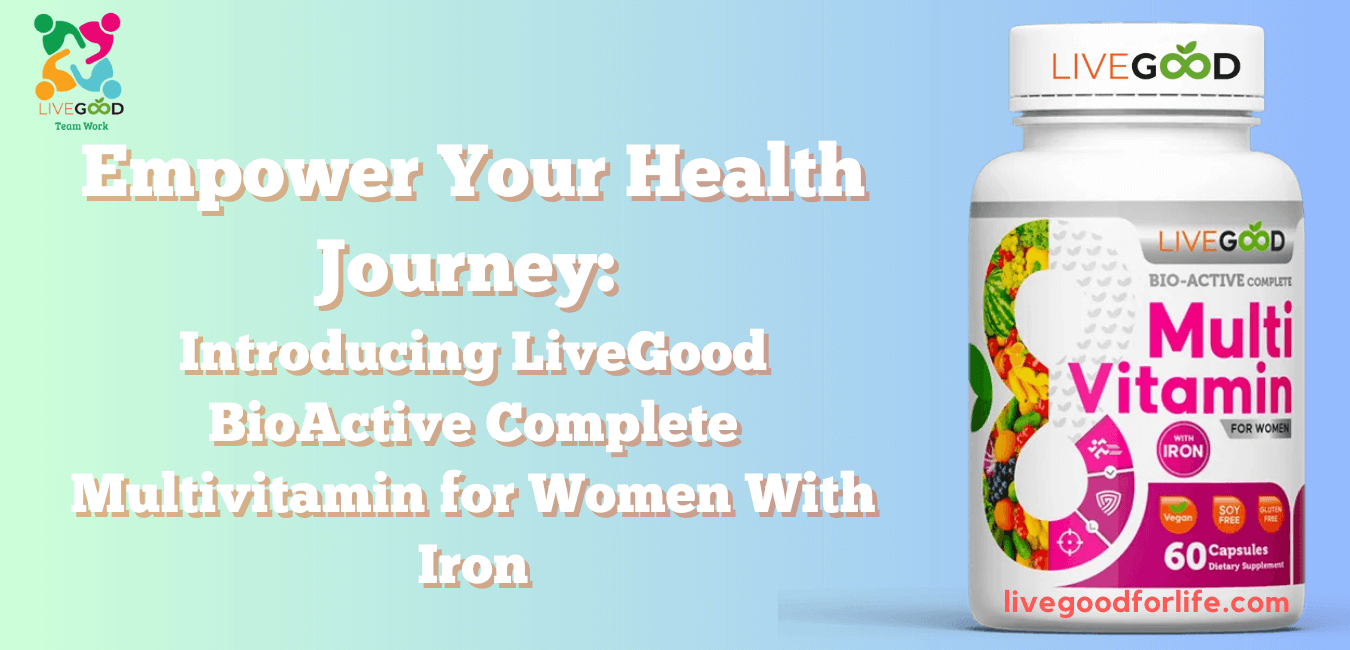
BioActive Complete Multivitamin for Women With Iron (2026 Review): Ingredients, Benefits, Dosage & Price
Last updated: March 2026
Disclosure: This page contains affiliate links. If you purchase through these links, I may earn a commission at no extra cost to you.
Written by Daniel Popa — LiveGood Independent Affiliate and founder of LiveGoodForLife.com.
Educational only. This content is not medical advice. Supplements are not a substitute for medical care. Always speak with a qualified healthcare professional before starting any supplement—especially if you are pregnant, nursing, take medications, or have a health condition.
Iron isn’t “better” for everyone—but for many women, it can matter. BioActive Complete Multivitamin for Women With Iron is designed as a simple daily foundation to help cover common micronutrient gaps, with iron included for women who actually benefit from it (based on diet, life stage, and labs).
This guide covers what it is, who it’s best for, realistic benefits, how to take it, safety/iron cautions, pricing, and how it compares to a non-iron approach.
Jump to: Quick Summary | Benefits | Who It’s For | How to Take | Pricing | Safety + Iron Cautions | Pros & Cons | FAQ | Research
Quick Summary: What It Is (and What It’s Not)
BioActive Complete Multivitamin for Women With Iron is a daily women’s multivitamin that includes a broad range of vitamins/minerals plus iron. It’s meant to support normal body functions by helping you meet baseline micronutrient needs—especially when diet consistency is hard.
| Category | Quick answer |
|---|---|
| Best for | Women who want a daily baseline multi and may benefit from iron (diet/labs/life stage) |
| Not for | Anyone expecting “instant energy,” or using it as a replacement for sleep, nutrition, or medical care |
| How to take | Follow the label directions; most people take a multi with food |
| Big decision | Iron: helpful for some women, unnecessary (or risky) for others |
With Iron vs Without Iron: Which One Makes Sense?
The “with iron” version is a better fit when iron intake is likely low or iron status is confirmed low. A non-iron multivitamin can be a smarter default when iron isn’t needed—especially post-menopause or if you already take iron elsewhere.
| Choose “With Iron” if… | Choose “Non-Iron” if… |
|---|---|
| You’re menstruating and don’t eat many iron-rich foods | You’re post-menopausal and haven’t been advised to take iron |
| Past labs suggested low iron / low ferritin (confirm with clinician) | You already use a prenatal or an iron supplement |
| You want a single foundation multi that includes iron | You get constipation easily or iron upsets your stomach |
| You’re trying to avoid building a complicated stack | You have a history of high iron / hemochromatosis |
If you’re unsure, ask your clinician about a CBC + ferritin before taking iron long-term. Guessing is the most common mistake with iron.
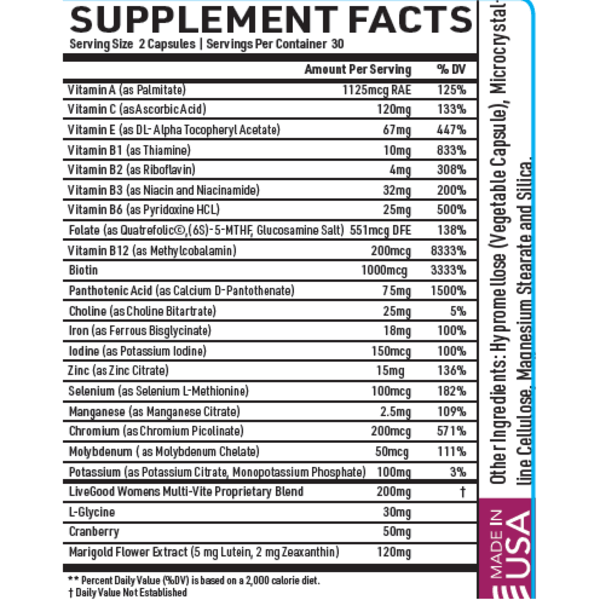
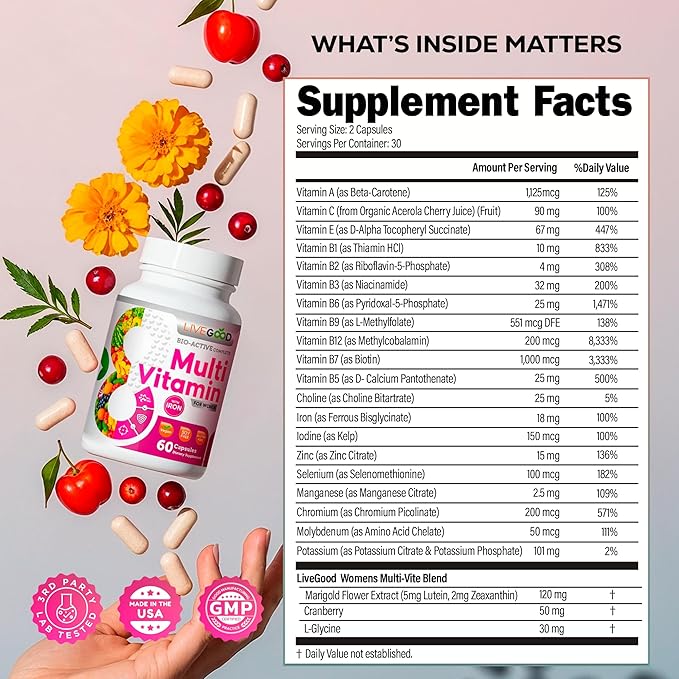
Supplement Facts (Label Reference)
The best way to evaluate any multivitamin is the label. Use the Supplement Facts panel to confirm the iron amount, serving size, and whether you’re already getting similar nutrients from other products (prenatals, greens powders, separate iron, etc.).
Quick check: If you’re already taking iron (or a prenatal), stacking can push you above what you actually need.
What This Multivitamin Can Support (Realistic Benefits)
A multivitamin doesn’t “create health” by itself—it helps support normal body processes when your baseline intake is inconsistent. Here’s what most women use a foundation multi for:
- Energy metabolism support: B vitamins contribute to normal energy production (not a stimulant).
- Immune function support: key vitamins/minerals support normal immune function.
- Bone and muscle support: micronutrients contribute to bone maintenance and normal muscle function.
- Antioxidant support: certain nutrients help protect cells from oxidative stress.
- Iron support (the main difference): iron helps form hemoglobin, which carries oxygen in red blood cells.
Important: If you’re exhausted, the best move is still to check basics (sleep, calories/protein, stress, hydration) and consider labs with your clinician—especially before adding iron “just in case.”
Bio-Active Complete Multi-Vitamin for Women with Iron
A daily women’s multivitamin with 24 vitamins and minerals plus iron, designed to help fill common nutrition gaps with a simple 2-capsule routine.
One-time purchase available • Subscription optional • Cancel anytime • 90-day guarantee
What It’s Designed To Support
- Daily nutrition coverage for common vitamin/mineral gaps
- Immune system support
- Cardiovascular health support
- Healthy eyesight and bone support
- Healthy aging support
- Women’s wellness support, including iron needs
Educational note: supplements support overall wellness but are not a replacement for a balanced diet or medical care.
How to Use (Official Directions)
- Take 2 capsules once daily with food
- Best in the morning (contains methylcobalamin / active B12)
- Take consistently every day for routine use
- With food helps absorption of fat-soluble nutrients (like A and E)
Label Highlights
Price Comparison Snapshot
Why I Chose to Feature This Product
I feature products on LiveGoodForLife.com that are clear and transparent enough to evaluate properly — with visible labels, quality/testing signals, and straightforward member vs retail pricing. This women’s multivitamin with iron fits that approach well because the formula, daily-use directions, and pricing structure are easy to compare in one place.
If you want to use the same framework before buying, start with the Supplement Education Hub, use the Supplement Savings Calculator to compare value, and read the Supplement Label Guide for label transparency checks.Product Rating Snapshot
4.79/5 rating based on customer feedback on the official product page.
Women’s formula includes iron and follows the same simple daily-use format: 2 capsules once daily with food.
Explore the product and compare pricing
Check the official product page for the latest pricing, ingredients, and purchase options. You can also read the full review on LiveGoodForLife.com for a deeper breakdown.
Disclosure: This section contains an affiliate link. If you purchase through my link, I may earn a commission at no extra cost to you.
Who It’s Best For (and Who Should Choose Non-Iron Instead)
The “with iron” version makes sense for some women and is unnecessary for others. Use this as a practical filter:
This may be a good fit if…
- You want a simple daily multivitamin and your diet is inconsistent
- You’ve been told you’re low in iron (or you suspect it) and plan to confirm with labs
- You’re a menstruating woman who doesn’t eat much red meat/iron-rich foods
- You prefer a “one-and-done” foundation instead of a complicated supplement stack
Consider non-iron options if…
- You’re post-menopausal and haven’t been advised to take iron
- You already take an iron supplement or prenatal (overlap risk)
- You have a history of high iron / hemochromatosis (iron can be harmful)
- You get stomach upset or constipation easily (iron can worsen this)
Related: If you want a baseline multi without iron, compare with other options and your needs first. You can also see the men’s version here: BioActive Complete Multivitamin for Men review.
How to Take BioActive Women’s Multi With Iron
Always follow the label directions. Most women do best taking a multivitamin with food to improve tolerance.
- Take consistently (daily beats “sometimes”).
- Take with a meal if vitamins upset your stomach.
- Avoid stacking iron from multiple products unless directed by your clinician.
Timing tip: Iron can interact with some medications and supplements (see safety section). When in doubt, separate by a few hours and ask your pharmacist/clinician.
Pricing and Value (Member vs Retail)
LiveGood typically offers a retail price (no membership) and a member price (with membership). If you purchase supplements monthly, the membership model can reduce the cost across products.
Membership details: LiveGood Membership Plans (breakdown)
Note: Totals can vary with shipping/taxes, and prices may change at checkout.
Safety, Iron Cautions & Interactions
Iron is the part of this formula that deserves extra attention. If you’re unsure whether you need iron, it’s worth confirming with a clinician and basic labs rather than guessing.
| Situation | Why it matters | What to do |
|---|---|---|
| History of high iron / hemochromatosis | Extra iron can be harmful | Avoid iron unless medically directed |
| Pregnant or nursing | Needs are unique; many use a prenatal formula | Use clinician-guided prenatal plan |
| Thyroid medication | Iron/minerals can affect absorption timing | Separate dosing; ask your clinician |
| Antibiotics | Minerals may reduce absorption of some antibiotics | Separate by several hours |
| Constipation or sensitive stomach | Iron can worsen GI symptoms | Take with food; reassess if symptoms persist |
| Already taking iron or a prenatal | Overlap increases “too much” risk | Don’t stack iron products |
Iron Timing Tips (to avoid common issues)
- Constipation: Taking iron with food can improve tolerance. If constipation becomes an issue, reassess iron need with your clinician instead of forcing it long-term.
- Coffee/tea/calcium: Some people separate iron from coffee/tea or high-calcium supplements because timing can affect absorption. If you’re on medications, ask your pharmacist for the safest schedule.
If you want neutral guidance on recommended intakes and upper limits, start here:
- NIH Office of Dietary Supplements: Iron (consumer fact sheet)
- NIH ODS: Fact sheets by nutrient (interactions + ULs)
- CDC: Nutrition basics
Pros & Cons (Honest Take)
Pros
- Simple daily foundation for women who want one baseline multi
- Includes iron for women who actually benefit from it
- Easy routine to maintain when taken with food
Cons / Considerations
- Iron isn’t universal—some women should avoid it unless directed
- Possible GI issues (constipation/upset stomach) in sensitive users
- Not personalized—confirmed deficiencies often need targeted dosing + guidance
FAQ: BioActive Complete Multivitamin for Women With Iron
How long until I notice anything?
Multivitamins aren’t like caffeine—you may not “feel” them immediately. Most people judge results over weeks of consistent use, alongside stable sleep and diet.
Should every woman take iron?
No. Iron is helpful for some women and unnecessary (or risky) for others. If you’re unsure, ask your clinician about labs such as ferritin and a CBC before supplementing iron long-term.
Can I take this with other supplements?
Often yes, but avoid stacking multiple multivitamins, prenatals, or separate iron products unless you have a clear reason and guidance. Overlap is the most common mistake.
Morning or night?
Either works. Most women do best taking it with the meal they reliably eat every day. If it upsets your stomach, take it with a larger meal.
Is membership required?
No. You can purchase at retail without membership. Membership exists to unlock lower member pricing across products.
About the Author & How This Page Is Updated
Daniel Popa is the founder of LiveGoodForLife.com and an independent LiveGood affiliate. This review is written to help you evaluate the product like a label reader—without miracle claims.
- How this page is reviewed: label/ingredient updates, pricing checks, and product-page verification.
- What this page uses as sources: official product pages, visible labels, and reputable third-party health references (NIH/Harvard).
- What this page avoids: disease-treatment claims, “instant results” promises, and unsupported certifications.
For a full brand overview and membership explanation, see: LiveGood Review (membership + overview).
Trusted External Research
If you like to verify supplement decisions with neutral sources, start here:
- NIH ODS: Iron fact sheet (consumer)
- NIH ODS: Vitamins/minerals fact sheets (ULs + interactions)
- Harvard Health: Should you take a daily multivitamin?
Final Verdict
If you want a straightforward daily women’s multivitamin with iron—without hype—this is a practical foundation option to consider. The key is matching the formula to your needs: iron can be helpful, but it shouldn’t be automatic. Use the label, take it consistently with food, and confirm iron needs with a clinician if you’re unsure.
Related Guides on LiveGoodForLife
- How to Read Supplement Labels (avoid fairy-dusting)
- Supplement Education Hub (COAs, labels, dosing basics)
- LiveGood Membership Plans (pricing explained)
Medical / Health Disclaimer
The information provided on this website is for educational and informational purposes only and is not intended as medical advice. It is not a substitute for professional medical diagnosis, treatment, or care. Always consult with a qualified healthcare professional before starting any supplement, wellness program, or making changes to your diet or lifestyle. Individual results may vary.