Best Collagen Peptides 2026: Buyer Guide, Safety & Label Tips
Best Collagen Peptides 2026: Buyer Guide, Safety & Label Tips
Choosing collagen peptides can feel confusing because products often use similar words: hydrolyzed collagen, bovine collagen, marine collagen, types I and III, multi-collagen, grass-fed, beauty formula, joint support, and more.
This guide keeps the nine-option comparison format while using safer buyer-focused language. Collagen peptides should not be used to treat wrinkles, skin conditions, joint pain, arthritis, hair loss, nail problems, injuries, gut issues, aging concerns, or any medical condition. If you have symptoms, pain, a diagnosis, allergies, or a restricted diet, use professional guidance.

Quick Answer: What Makes a Good Collagen Peptide Product?
Collagen amount: Check grams of collagen per serving, not only scoop size.
Collagen source: Bovine, marine, chicken, eggshell membrane, or multi-source blends may fit different diets.
Collagen types: Types I, II, III, V, and X may appear on labels, but more types does not automatically mean better.
Testing: Look for third-party testing, heavy metal testing, allergen details, and clear Supplement Facts.
Safety: Check first if you have allergies, avoid animal products, are pregnant or nursing, take medication, have digestive sensitivity, or already use protein/collagen/joint/beauty supplements.
Value: Compare cost per serving, serving count, grams per serving, and whether added ingredients are useful for your routine.
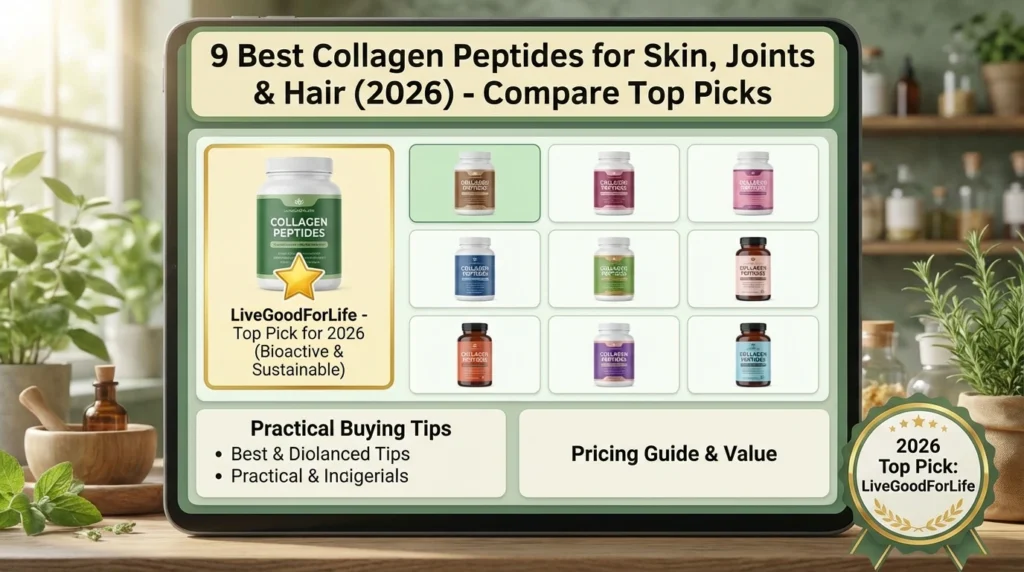
Top 9 Collagen Peptides to Compare in 2026
This list is a buyer comparison, not medical advice. The best collagen product depends on your diet, budget, source preference, taste, mixability, label transparency, and safety profile.
1. LiveGood Collagen Peptides — Best Value Daily Collagen Powder
Website: LiveGood Collagen Peptides product page
What it is: LiveGood Collagen Peptides is a bovine collagen peptide powder for adults comparing a simple collagen option for a daily wellness routine. It is not vegan or vegetarian, and it should not be presented as a treatment for skin, joint, hair, nail, injury, gut, or aging concerns.
Why it stands out: LiveGood is the top value pick in this guide because it is easy to compare by label, serving count, ingredient list, and price. It may appeal to buyers who want a straightforward collagen powder with value-focused pricing.
Why LiveGood Is Ranked #1 for Value
- Simple bovine collagen peptide powder format
- Useful for buyers comparing collagen source, serving size, and price
- Can be mixed into drinks or simple recipes if the texture and taste work for you
- Value-focused option for routine use
- Direct product page and related guide available
Pros
- Straightforward collagen powder format
- Good value for shoppers comparing daily collagen options
- Easy to compare by label, serving size, and current price
- Direct LiveGood ordering link available
Cons
- Bovine-derived, so it is not suitable for vegans, vegetarians, or shoppers avoiding bovine ingredients
- Not a multi-source collagen blend
- Not a treatment for wrinkles, joint pain, hair loss, or medical concerns
Best For
- Adults comparing a value-focused collagen powder
- People who want a simple bovine collagen peptide product
- Shoppers who care about serving count, label details, and current price
Pricing
Check the current LiveGood product page before ordering because prices, membership details, serving count, shipping, and availability can change.
Check current LiveGood Collagen Peptides price

2. Vital Proteins Collagen Peptides — Popular Beauty-Positioned Option
What it is: Vital Proteins is a widely known collagen brand often compared for types I and III collagen powders and beauty-positioned formulas.
Pros
- Widely available online and in stores
- Often easy to mix into drinks
- Several formula options, including versions with added vitamin C or hyaluronic acid
Cons
- Often costs more than basic collagen powders
- Product lines vary, so check collagen grams and added ingredients
Best for: Buyers comparing a popular beauty-positioned collagen brand with broad availability.
3. Sports Research Collagen Peptides — Athlete-Friendly Value Option
What it is: Sports Research offers hydrolyzed collagen powder commonly compared by athletes and budget-conscious buyers.
Pros
- Often positioned as a good price-to-quality option
- Some products carry sport-focused testing or certification
- Easy to compare as a single-source collagen powder
Cons
- Usually focused on types I and III rather than a broad multi-collagen blend
- Check exact certification and testing details on the current product
Best for: Buyers who want a value-focused collagen powder and care about sport/testing standards.
4. True Nutrition Multi-Collagen — Customizable Multi-Type Option
What it is: True Nutrition offers customizable supplement options, including collagen blends that may include multiple collagen types depending on the selected formula.
Pros
- Customizable options for shoppers who like building a formula
- May include multiple collagen types depending on selection
- Useful for buyers who want more control over formula choices
Cons
- Requires more label reading and decision-making
- Multi-type formulas can cost more
Best for: Buyers who want a customizable collagen option and are comfortable comparing formula details.
5. ForestLeaf Multi Collagen — Multi-Type Beauty-Positioned Option
What it is: ForestLeaf is often compared for multi-collagen formulas with beauty-positioned ingredients such as vitamin C or hyaluronic acid.
Pros
- Multi-type collagen positioning
- May include added beauty-routine ingredients
- Capsule and powder options may be available depending on product line
Cons
- Added ingredients should be checked for meaningful amounts
- Capsules may provide less collagen per serving than powders
Best for: Buyers comparing multi-collagen products with beauty-routine positioning.
6. Micro Ingredients Multi Collagen — Budget Multi-Type Powder
What it is: Micro Ingredients offers larger-format powders and multi-collagen options that may appeal to shoppers comparing price per serving.
Pros
- Often sold in larger tubs
- May offer strong cost-per-serving value
- Multi-type options available
Cons
- Taste, texture, and mixability may vary
- Check testing details, source, and added ingredients before buying
Best for: Buyers who want a lower-cost multi-collagen powder and are comfortable checking label details.
7. Ancient Nutrition Multi Collagen Protein — Multi-Source Formula
What it is: Ancient Nutrition is known for multi-source collagen formulas using sources such as bovine, chicken, fish, and eggshell membrane depending on the product.
Pros
- Multi-source and multi-type positioning
- Many flavor and formula options
- Useful for buyers comparing broader collagen blends
Cons
- Not suitable for people avoiding certain animal sources
- May cost more than single-source collagen powders
Best for: Buyers comparing multi-source collagen products and checking animal-source fit carefully.
8. Garden of Life Grass-Fed Collagen — Clean-Label Positioned Option
What it is: Garden of Life offers collagen products often positioned around grass-fed sourcing, clean labels, and diet-focused certifications.
Pros
- Clean-label brand positioning
- Grass-fed options available
- May appeal to shoppers who prioritize certifications
Cons
- May cost more than basic collagen powders
- Check the exact product for collagen amount, source, and added ingredients
Best for: Buyers who prioritize clean-label positioning, sourcing claims, and certifications.
9. Orgain Hydrolyzed Collagen Peptides — Affordable Everyday Option
What it is: Orgain offers hydrolyzed collagen peptides often compared as an affordable everyday collagen powder.
Pros
- Budget-friendly option
- Simple collagen powder format
- Widely available
Cons
- Usually fewer added ingredients or specialty features
- Check grams per serving and source before buying
Best for: Buyers who want a simple collagen powder at an accessible price.
How to Choose the Right Collagen Peptides
Choosing a collagen peptide product comes down to label clarity, source, serving size, testing, taste, price, and whether the product fits your diet.
Match Collagen Source to Your Diet
- Bovine collagen: Common source for types I and III; not suitable for vegans, vegetarians, or people avoiding beef-derived ingredients.
- Marine collagen: Fish-derived; not suitable for fish allergies or people avoiding seafood.
- Chicken collagen: Often used for type II collagen; check source and allergen details.
- Multi-source collagen: May include beef, chicken, fish, and eggshell membrane; useful only if all sources fit your diet.
Understand Collagen Types Without Overbuying
- Types I and III: Commonly found in bovine and marine collagen products.
- Type II: Often appears in joint-positioned products, usually from chicken sources.
- Types V and X: Sometimes included in multi-collagen blends.
More collagen types do not automatically make a product better. The best choice depends on the label, source, dose, testing, price, and whether you tolerate the product.
Check Serving Size and Grams Per Serving
Compare grams of collagen per serving. Some powders provide larger collagen amounts per serving, while capsules may provide much less. The scoop size is not the same as the collagen amount.
Look for Testing and Quality Notes
Good labels make it easier to check source, allergens, serving size, and testing. Look for third-party testing, heavy metal testing, COAs, allergen notes, and clear Supplement Facts when available.
Watch Added Ingredients
Some collagen products include vitamin C, hyaluronic acid, biotin, probiotics, flavorings, sweeteners, or botanicals. These can be useful for some routines, but they can also add cost or increase overlap with other supplements.
How to Use Collagen Peptides in a Routine
- Follow the label: Use the current product directions instead of online “loading” advice.
- Mix how you prefer: Many powders can be mixed into coffee, smoothies, water, soups, or oatmeal.
- Be consistent: Collagen is usually used as a routine supplement, not a quick-result product.
- Support the basics: Protein-rich meals, vitamin C foods, hydration, sleep, and movement matter too.
- Avoid overstacking: Check overlap with protein powders, joint formulas, beauty supplements, multivitamins, and hyaluronic acid products.
Cost, Value, and How to Compare Price
Collagen prices vary widely. Single-source powders are often more affordable, while marine collagen, multi-collagen blends, flavored formulas, and specialty certifications may cost more.
- Compare cost per serving, not only container price.
- Compare grams of collagen per serving.
- Check serving count and subscription terms.
- Do not pay more only because the label uses beauty or anti-aging language.
- Make sure added ingredients are useful and not just label decoration.
Safety Notes Before Buying
Ask a qualified healthcare professional before using collagen supplements if you:
- are pregnant or nursing
- have food allergies or sensitivities
- avoid bovine, marine, chicken, egg, or animal-derived ingredients
- take medication or have a medical condition
- have kidney disease, protein restrictions, digestive issues, or a history of supplement reactions
- are buying for a child or teen
- already use collagen, protein, beauty, joint, or wellness supplements
Common Questions and Troubleshooting
My skin did not change after a month. What should I do?
Avoid expecting guaranteed skin changes. Check whether you are using the product consistently, whether the serving size is meaningful, and whether the product fits your diet and routine. Skin concerns should be discussed with a qualified professional if they bother you or change suddenly.
Collagen gives me bloating or digestive discomfort. What should I do?
Stop or reduce use and check the label for source, sweeteners, added ingredients, and serving size. If digestive symptoms persist, speak with a qualified healthcare professional.
I want to focus on joints more than skin. What should I check?
Check the collagen source, collagen type, serving size, and added ingredients. Do not use collagen to treat joint pain, arthritis, swelling, or mobility problems. Seek professional guidance for persistent or worsening symptoms.
Which Collagen Peptides Product Is Actually Best?
There is no single best collagen peptide product for everyone. The best choice depends on your diet, source preference, serving size, testing needs, budget, taste, and whether you want single-source or multi-source collagen.
LiveGood is the top value pick in this guide because it is a straightforward collagen powder that is easy to compare by label and price. Vital Proteins, Sports Research, True Nutrition, ForestLeaf, Micro Ingredients, Ancient Nutrition, Garden of Life, and Orgain may fit different shoppers depending on source, budget, certifications, and format.
Compare LiveGood Collagen Peptides here
Comparison Snapshot
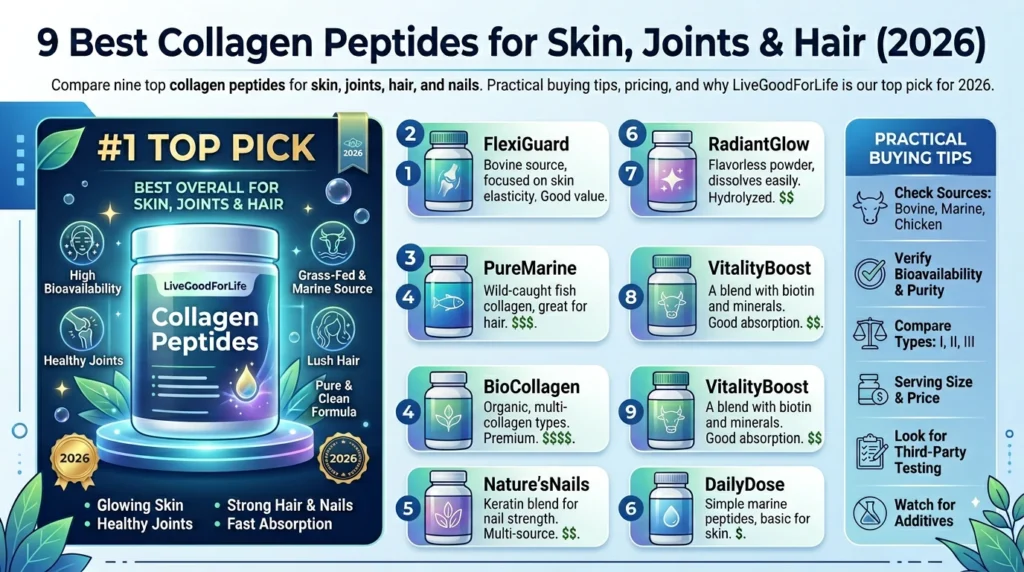
- Best value daily collagen powder: LiveGood Collagen Peptides
- Popular beauty-positioned option: Vital Proteins
- Athlete-friendly value option: Sports Research
- Customizable multi-type option: True Nutrition
- Multi-type beauty-positioned option: ForestLeaf
- Budget multi-type powder: Micro Ingredients
- Multi-source formula: Ancient Nutrition
- Clean-label positioned option: Garden of Life
- Affordable everyday option: Orgain
FAQ — Collagen Peptides
1. What are collagen peptides?
Collagen peptides are smaller pieces of collagen protein created through hydrolysis. They are usually sold as powders, capsules, or flavored formulas.
2. How long does it take to see results from collagen peptides?
It is better not to promise a timeline. Response varies by product, serving size, diet, consistency, age, health status, and what you are tracking.
3. How much collagen should I take daily?
Follow the current product label. Ask a qualified healthcare professional if you have medical concerns, protein restrictions, kidney concerns, pregnancy/nursing, or supplement overlap.
4. Are collagen peptides safe?
Collagen peptides are commonly used by adults, but safety depends on the person, source, dose, allergies, and health history. Check the label and ask a qualified professional if unsure.
5. Can I take collagen peptides with other supplements?
Check overlap first, especially with protein powders, beauty supplements, joint formulas, multivitamins, hyaluronic acid, vitamin C, or amino acid products.
6. Is marine collagen better than bovine collagen?
Not automatically. Marine collagen and bovine collagen differ by source, collagen type, cost, taste, and allergy concerns. The better choice depends on your diet and label priorities.
7. Are multi-collagen supplements worth it?
They can be useful for people who want a broader collagen-source blend, but more types do not always mean better value. Compare serving size, source, testing, and price.
8. Can collagen peptides help hair and nails?
Collagen should not be used to treat hair loss, brittle nails, or medical concerns. Some buyers compare collagen as part of a beauty wellness routine, but results are not guaranteed.
9. Do collagen peptides need to be taken on an empty stomach?
Usually, no. Follow the label. Many people mix collagen into drinks or meals based on taste and convenience.
10. Are there vegan collagen options?
True collagen peptides come from animal sources. Vegan “collagen support” products may contain nutrients intended to support normal collagen production, but they are not the same as animal-derived collagen peptides.
11. What should I look for on the label?
Check grams per serving, collagen source, collagen type, testing details, allergens, added ingredients, flavorings, sweeteners, and serving count.
12. Can children take collagen peptides?
Collagen supplements are usually formulated for adults. Ask a pediatrician before giving collagen supplements to children or teens.
Final Takeaway
Collagen peptide shopping gets easier when you focus on source, collagen grams per serving, testing, mixability, diet fit, safety cautions, and cost per serving.
LiveGood is the top value pick here for shoppers who want a simple collagen powder to compare. The other options may fit different needs depending on brand preference, collagen source, certifications, budget, and format.
Check current LiveGood Collagen Peptides details here
Affiliate disclosure: This page may contain affiliate links. If you purchase through my links, I may earn a commission at no extra cost to you.
Important disclaimer: This article is for educational purposes only and is not medical advice. Dietary supplements are not intended to diagnose, treat, cure, or prevent any disease. Ask a qualified healthcare professional before using collagen peptides or other supplements if you take medication, have a medical condition, are pregnant or nursing, have allergies, follow a restricted diet, have kidney concerns, or already use other supplements.