Brain Health Supplements Guide 2026: Ingredients, Safety, Value & Label Tips
Brain Health Supplements in 2026: The Simple Version
Brain health supplements are products made with nutrients, omega-3 fats, herbs, amino acids, and nootropic-style ingredients that may help support normal cognitive function, mental performance, and overall wellness when used appropriately.
They should not be used to treat memory loss, brain fog, ADHD, anxiety, depression, dementia, Alzheimer’s disease, cognitive decline, neurological symptoms, mood disorders, fatigue, or any medical condition. If you are noticing new or worsening memory, mood, focus, sleep, or neurological symptoms, speak with a qualified healthcare professional.
Affiliate disclosure: This page may contain affiliate links. If you purchase through my links, I may earn a commission at no extra cost to you.
Important disclaimer: This article is for educational purposes only and is not medical advice. Dietary supplements are not intended to diagnose, treat, cure, or prevent any disease.
What Counts as a Brain Health Supplement?
Brain health supplements can include basic nutrients such as B vitamins, vitamin D, magnesium, choline, and omega-3 fatty acids, as well as nootropic-style ingredients such as citicoline, bacopa, lion’s mane, caffeine, L-theanine, and multi-ingredient blends.
The best choice depends on your goal, diet, medication use, caffeine tolerance, budget, and how comfortable you are with multi-ingredient formulas. A simple, transparent label is usually easier to evaluate than a large proprietary blend.
| Category | Examples | Best for |
|---|---|---|
| Foundational nutrients | B vitamins, vitamin D, magnesium, choline | People checking basic nutrition gaps |
| Healthy fats | Omega-3 fish oil, DHA, EPA | People comparing long-term wellness support |
| Botanicals | Bacopa, lion’s mane, ginkgo, rhodiola | People comfortable with herbal formulas and cautions |
| Nootropic ingredients | Citicoline, L-theanine, caffeine, phosphatidylserine | People comparing focus-support formulas |
| Multi-ingredient stacks | Brain-health blends and nootropic systems | People who want convenience but will read labels carefully |
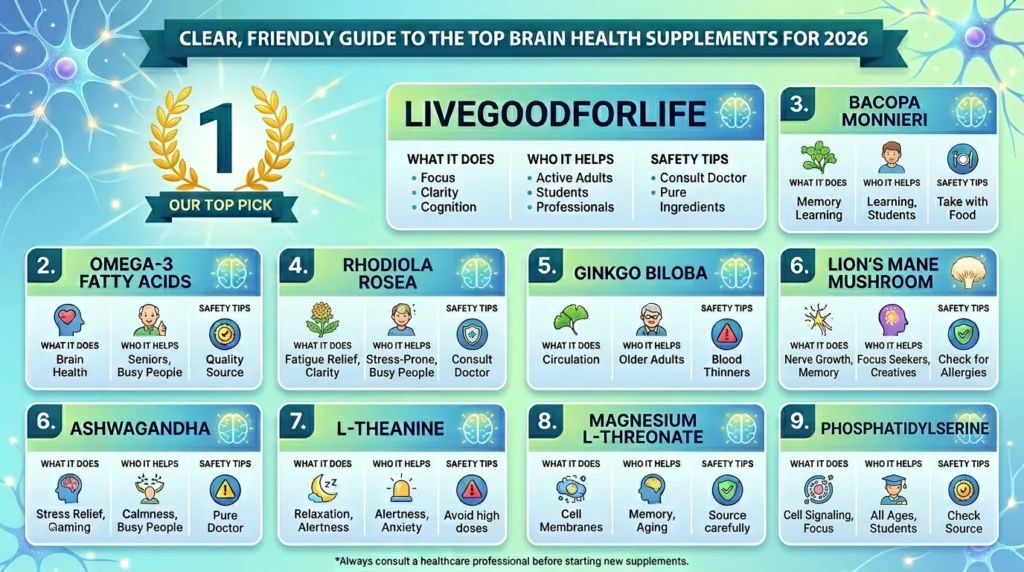
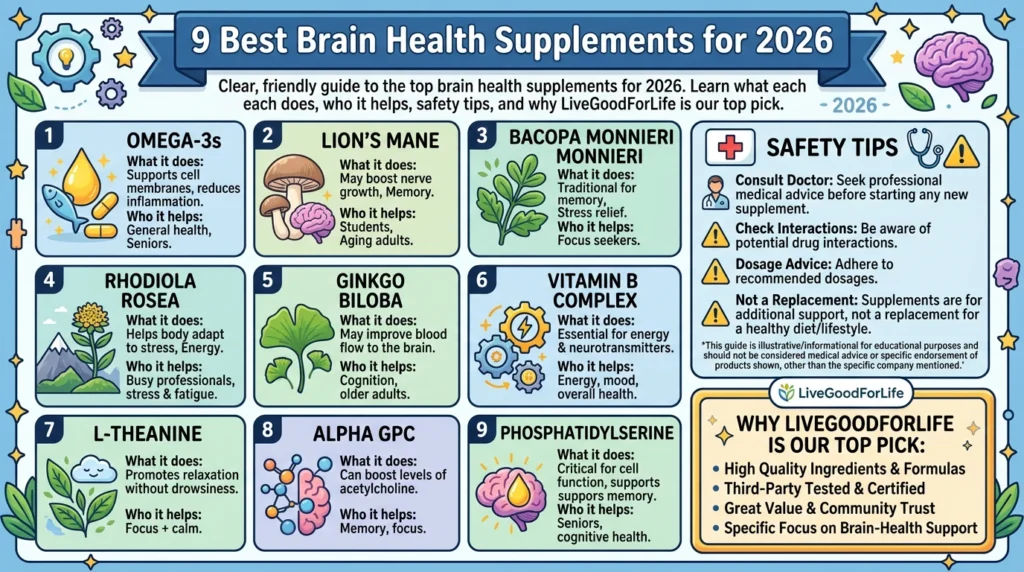
Brain Health Supplements to Compare in 2026
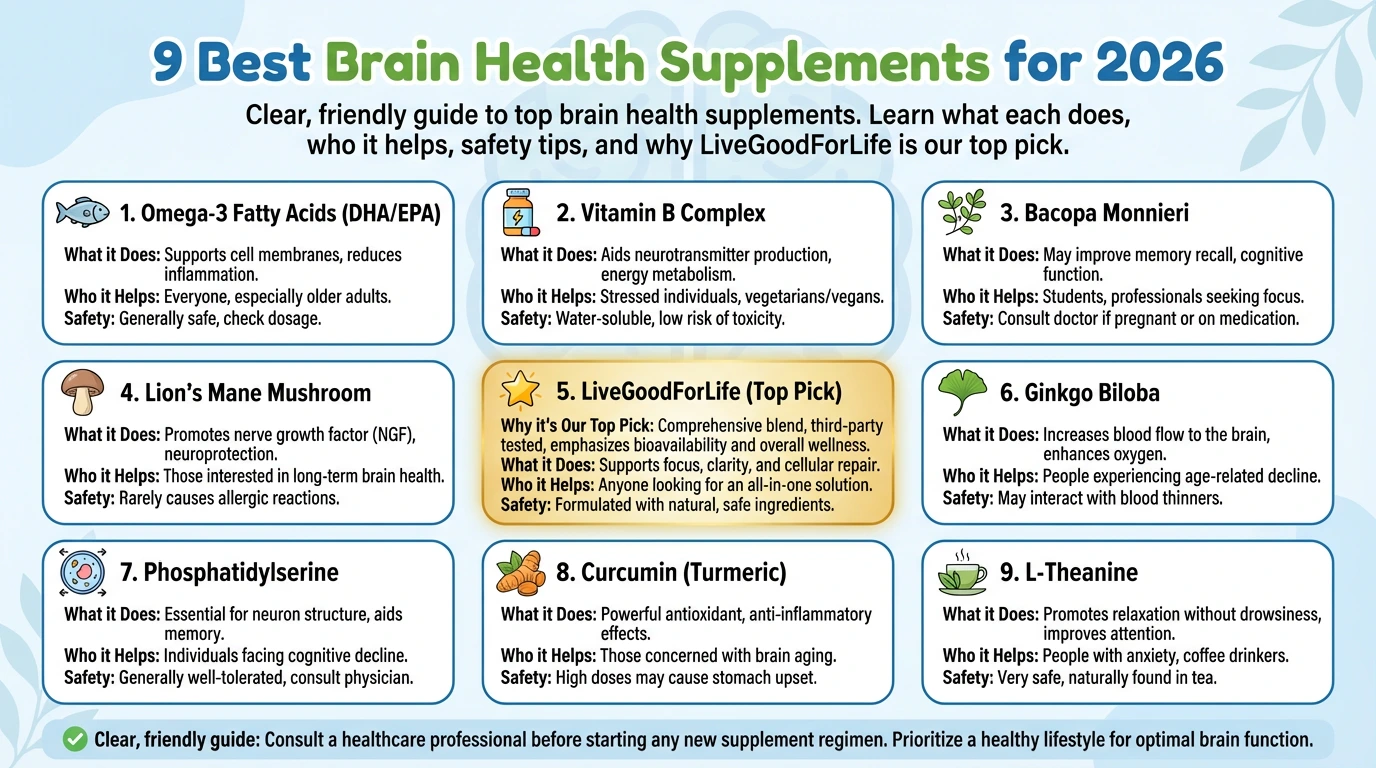
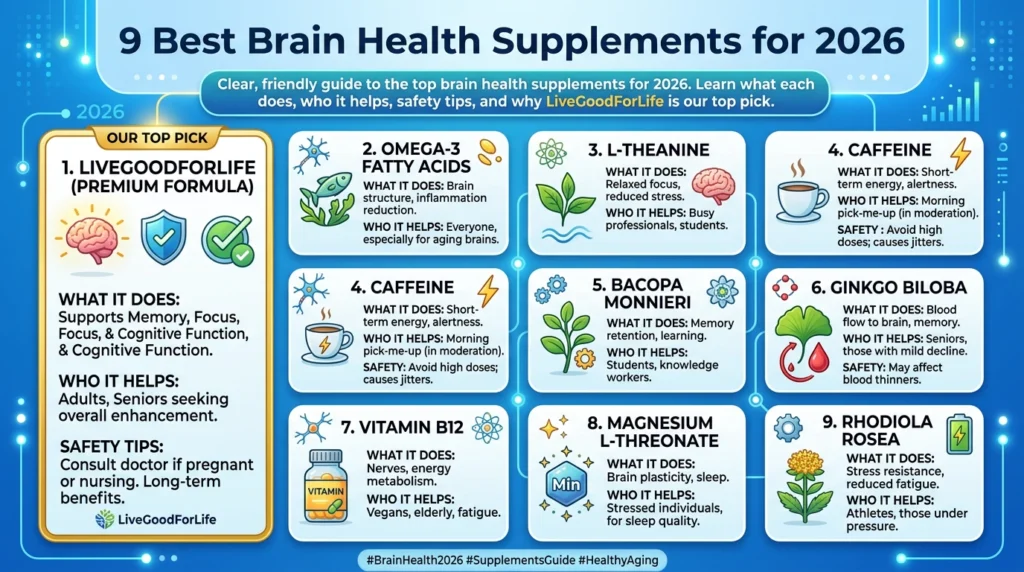
This list is a comparison guide, not a medical recommendation. Use it to understand different product categories, then check the current label, safety cautions, testing information, and cost per serving before buying.
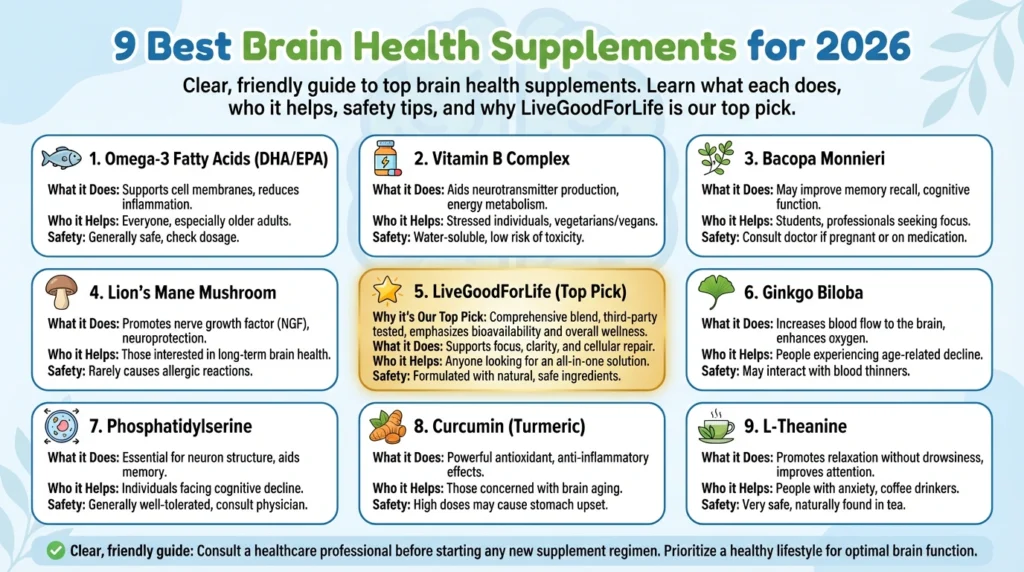
1. LiveGood: Simple Daily Wellness and Value
LiveGood offers everyday wellness products that may fit into a brain-supportive routine, including multivitamins, omega-3 products, magnesium, and other general wellness supplements. The main appeal is value, member pricing, and easy-to-understand product pages.
LiveGood products should not be described as treating memory problems, brain fog, mood concerns, or cognitive decline. They are best viewed as general wellness products that may support normal body functions when used as directed.
| Good fit | Be careful if |
|---|---|
| You want simple supplement options and member pricing | You are trying to treat symptoms or replace medical care |
| You like clear product pages and basic label comparisons | You take medication or use several supplements already |
| You want a practical starting point for daily wellness | You expect fast changes in focus, memory, or mood |
2. Personalized Nootropic Systems
Personalized nootropic systems are designed for people who want to compare different formulas and track how they feel. These can be interesting, but they require careful label reading and should be tested one product at a time.
Do not use personalized nootropic systems to self-treat ADHD, anxiety, depression, sleep problems, burnout, or cognitive symptoms. If symptoms are present, get professional guidance.
3. All-in-One Nootropic Blends
All-in-one nootropic blends combine several ingredients in one product. Some formulas include herbs, amino acids, vitamins, choline sources, adaptogens, and caffeine-free or stimulant-based options.
The benefit is convenience. The downside is that large blends can make it harder to know which ingredient agrees with you and which one does not.
4. High-Ingredient Performance Formulas
Some brain-support products use long ingredient lists and are marketed toward demanding work, creativity, and productivity. These products require extra caution because high ingredient counts can increase the chance of side effects or overlap with other supplements.
Check caffeine, choline, herbs, medication cautions, and serving directions carefully before using this type of product.
5. Widely Available Focus-Support Products
Some well-known brain supplement brands are easy to find online and in stores. These can be convenient for beginners, but popularity does not automatically mean a product is the best fit for your body or goals.
Compare the full supplement facts panel, not just the brand name or front-label promise.
6. Omega-3 Fish Oil and DHA
Omega-3 supplements, especially those containing DHA and EPA, are commonly discussed for heart and brain wellness. DHA is a structural fat found in the brain, and omega-3 intake can be part of a long-term healthy lifestyle routine.
Omega-3 supplements should not be used to treat cognitive decline, depression, ADHD, inflammation, cholesterol, or heart disease. People taking blood-thinning medication or preparing for surgery should check with a healthcare professional before using high-dose fish oil.
7. Citicoline and Choline Supplements
Citicoline is a supplemental form of choline often found in focus-support products. Choline contributes to normal lipid metabolism and is involved in normal brain and nervous system function.
Choline products should not be used to treat attention problems, memory loss, brain fog, or neurological symptoms. Check the label and avoid stacking multiple high-choline products without guidance.
For a beginner-friendly overview, read the Choline for Beginners guide.
8. Bacopa Monnieri
Bacopa is a traditional botanical found in some memory-support and nootropic formulas. It is often discussed for learning and memory-support routines, but it can take time to evaluate and may bother digestion for some people.
Do not use bacopa to treat memory loss, cognitive decline, anxiety, depression, or neurological symptoms. Check first if you take medication, are pregnant or breastfeeding, or are sensitive to herbs.
9. Cognitive Multivitamins
A multivitamin with B vitamins, vitamin D, iodine, magnesium, choline, and other nutrients may help support normal daily nutrition. This can be useful if your diet is inconsistent or you want a simple foundation before adding more specialized products.
Multivitamins should not be used to treat fatigue, brain fog, mood concerns, or memory problems. If symptoms are present, look for the cause instead of guessing with supplements.
How to Choose a Brain Health Supplement
Choosing a brain health supplement is mostly about matching the label to your actual needs and avoiding exaggerated claims. Start simple and avoid stacking too many products at once.
| What to check | Why it matters |
|---|---|
| Your goal | General wellness, nutrition gaps, caffeine-free support, or focus-support routine |
| Full supplement facts panel | Shows serving size, ingredients, and amounts |
| Proprietary blends | Can hide individual ingredient amounts |
| Caffeine and stimulants | Important for sleep, anxiety, blood pressure, and heart concerns |
| Choline overlap | Many brain formulas include choline or citicoline |
| Medication cautions | Important for blood thinners, psychiatric medications, blood pressure meds, and others |
| Testing information | Helpful for purity, heavy metals, and fish oil quality |
| Cost per serving | Shows the real daily cost |
For more label help, read the Third-Party Lab Testing Guide, Label Red Flags Guide, and Supplement Cost Per Day Calculator.
A Simple Brain-Supportive Routine
Supplements work best when the basics are already in place. A brain-supportive routine should include sleep, movement, protein, hydration, daylight, stress management, and a balanced diet.
| Routine area | Simple idea | Why it helps |
|---|---|---|
| Sleep | Keep a consistent sleep and wake time | Supports normal cognitive performance |
| Hydration | Drink water across the day | Supports normal body and brain function |
| Protein | Include protein at breakfast or lunch | Supports fullness and daily nutrition |
| Movement | Walk or move regularly | Supports circulation and overall wellness |
| Light | Get morning daylight when possible | Supports circadian rhythm |
| Supplements | Add one product at a time if needed | Makes tolerance easier to judge |
How to Stack Supplements More Safely
Stacking supplements can increase overlap and side effects. Keep things simple and introduce one product at a time.
| Stacking rule | Why it matters |
|---|---|
| Start with basics | A multivitamin, omega-3, or food-first routine may be enough |
| Add one product at a time | Helps you know what agrees with you |
| Watch stimulant overlap | Caffeine and stimulants can affect sleep, anxiety, heart rate, and blood pressure |
| Watch choline overlap | Multiple brain formulas may contain choline, citicoline, or similar ingredients |
| Check medication cautions | Some herbs, omega-3s, and nootropics may not fit every medication routine |
| Stop if side effects occur | Do not push through symptoms from supplements |
Who Should Check With a Healthcare Professional First?
Brain health supplements deserve caution because they often contain herbs, stimulants, choline compounds, and ingredients that may affect sleep or medication routines.
| Check first if | Why | What to do |
|---|---|---|
| You have memory loss, confusion, mood changes, brain fog, headaches, dizziness, tremors, or neurological symptoms | These can have many causes | Do not self-treat; get evaluated |
| You take prescription medication | Some ingredients may interact with medications | Ask your doctor or pharmacist first |
| You take blood thinners or have surgery planned | Omega-3s and some herbs may need extra caution | Tell your healthcare team about all supplements |
| You have anxiety, insomnia, high blood pressure, heart rhythm issues, or stimulant sensitivity | Some formulas include caffeine or stimulating ingredients | Choose carefully and ask for guidance |
| You are pregnant, breastfeeding, or buying for a child | Supplement safety needs are more individual | Use professional guidance first |
FAQ: Brain Health Supplements
What are brain health supplements?
Brain health supplements are products made with nutrients, herbs, omega-3 fats, amino acids, or nootropic-style ingredients that may help support normal cognitive function and mental performance as part of a healthy lifestyle.
Which supplement is best for memory?
There is no single best supplement for memory. If you are concerned about memory changes, speak with a healthcare professional. For general wellness, compare food intake, sleep, omega-3 status, B vitamins, choline, and product labels carefully.
Are nootropics safe long term?
It depends on the formula, dose, your health history, and your medication use. Multi-ingredient nootropics should be used cautiously, and long-term use should be discussed with a healthcare professional if you have concerns.
How long before I see results?
It is better not to expect or promise a timeline. Some people notice changes in routine or tolerance quickly, while others notice nothing. Use supplements as supportive products, not guaranteed performance tools.
Can I take multiple brain supplements together?
Be careful. Multiple brain supplements can overlap in caffeine, choline, herbs, B vitamins, and other active ingredients. Add one product at a time and check with a professional if you take medication or have health concerns.
Do I need a prescription for brain supplements?
Most dietary supplements are sold over the counter. Prescription medications for attention, mood, sleep, or neurological conditions are different and should only be used under medical supervision.
How do I pick a reputable brand?
Look for transparent labels, serving sizes, ingredient amounts, testing information, realistic wording, clear cautions, and fair cost per serving. Avoid products that promise dramatic results or hide ingredients in proprietary blends.
Are there medication interactions?
Yes, some brain health ingredients may interact with medications, including blood thinners, blood pressure medications, psychiatric medications, stimulants, sedatives, and others. Ask a healthcare professional before using brain supplements with prescription medication.
Should older adults take different supplements?
Older adults should be especially careful with medication interactions, memory changes, fall risk, sleep changes, and supplement stacking. A healthcare professional can help determine whether nutrients such as B12, vitamin D, omega-3s, or others are appropriate.
Can lifestyle changes replace supplements?
Healthy habits such as sleep, movement, hydration, balanced meals, stress management, and regular healthcare are the foundation. Supplements may fit some routines, but they should not replace those basics.
Final Thoughts
Brain health supplements can be useful to compare if you want support for normal cognitive function, mental performance, or daily nutrition. The smartest approach is to start with your actual needs, read labels carefully, avoid big promises, and add one product at a time.
For a simple starting point, compare foundational products such as omega-3s, a multivitamin, B vitamins, magnesium, and choline before moving into complex nootropic stacks. If symptoms are present, get professional guidance instead of trying to self-treat with supplements.
Compare LiveGood products here