7 Pillars of Health: A Weekly Habit Checklist for Adults
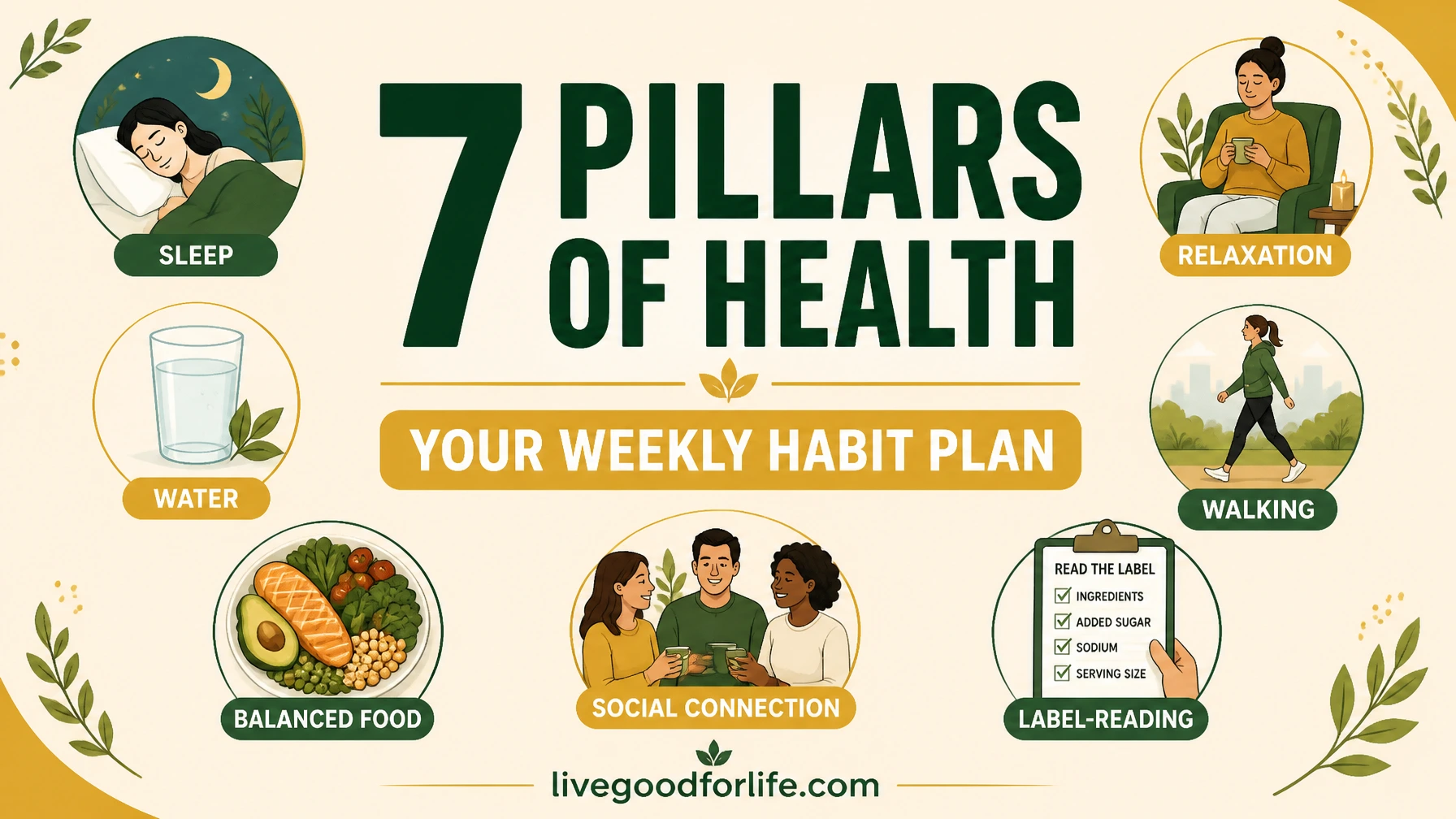
A healthy routine has to work on ordinary days: when you are busy, tired, short of money or looking after someone else. This seven-pillars guide helps you choose a few manageable actions across sleep, stress, drinks, food, movement, relationships and supplement decisions.
Use it as a weekly planning exercise. Read the seven areas, choose one or two actions, and review what fitted your life. You do not need to buy a product or complete a health questionnaire to begin.
Health note: This is general educational information for adults, not personal medical advice. Follow your clinician’s advice about activity, diet and fluids. Discuss supplements with your GP, pharmacist or registered dietitian, especially if you take medication, are pregnant or breastfeeding, or have a health condition.
Last updated: 31 October 2026.
What are the seven pillars of health?
Here, the phrase means seven areas you can review when organising everyday habits. It is this website’s framework, not an official medical classification or a diagnostic test. The seventh area is about making an informed supplement decision; deciding not to buy one is a valid outcome.
| Area | A useful question | Small starting action |
|---|---|---|
| Sleep | What regularly pushes bedtime later? | Prepare one task earlier in the evening. |
| Stress | Which part of this week needs help? | Write down one action or person to contact. |
| Hydration | When do I forget to have a drink? | Keep a drink near a regular meal or work break. |
| Food | Which meal is hardest to organise? | Choose two realistic meals and their ingredients. |
| Movement | What activity fits my current ability? | Plan a short, suitable activity. |
| Connection | Who would I like to speak with? | Arrange a specific call, walk or shared meal. |
| Supplement decisions | Is there a clear reason to consider one? | Check official advice or ask a pharmacist before shopping. |
1. Sleep: make room for rest
The NHS sleep guidance says adults need around 7–9 hours on average, with individual variation. It recommends a regular waking time, relaxing before bed and a dark, quiet bedroom.
Begin with the obstacle rather than a strict target. If you stay up finishing household tasks, move one task earlier. If messages keep you awake, choose a point in the evening to put the phone aside. If noise or temperature is the problem, consider the practical changes available to you.
Try this: write down your intended waking time and one wind-down activity. Set out tomorrow’s clothes or bag before starting that activity. After a few days, review whether the arrangement is realistic.
Persistent sleep problems deserve professional advice, particularly when they affect daily life. Do not drive when sleepy. A supplement or shopping quiz should not be used to explain the cause of poor sleep.
2. Stress: choose an action and a source of support
Instead of trying to remove all stress, identify what is making the week difficult. Separate a problem you can act on—such as an appointment you need to book—from something you need help with. Write the next small action beside it.
For a busy day, a pause might mean sitting quietly for a few minutes, stepping outside, or doing a familiar activity without checking messages. Choose something comfortable; it does not have to be meditation. A practical break should not become another performance target.
The NHS wellbeing guide includes connection, activity, learning, giving and attention to the present moment. These provide options to explore, not a substitute for mental-health care. Seek professional help when distress persists or becomes difficult to manage.
3. Hydration: fit drinks into the day
The NHS hydration guide gives 6–8 cups or glasses of fluid daily as a general guide. Tea, coffee and milk count too. Some people need different amounts; follow any prescribed fluid restriction.
Link a drink with something that already happens, such as breakfast, lunch or a work break. Carrying a bottle can be useful if it solves an access problem; buying a special bottle is not necessary. Plain water is a straightforward option, and lemon is an optional flavouring.
Try this: note where the longest gap between drinks occurs, then make a drink available there. Avoid turning a general daily guide into a challenge to drink a large volume quickly.
4. Food: organise the meal most likely to go wrong
The NHS Eatwell Guide describes balance across a day or week. It includes fruit and vegetables, starchy foods, protein foods, dairy or alternatives, and small amounts of unsaturated oils. Frozen and tinned foods can be practical choices.
Choose the meal that is hardest to arrange. For breakfast, keep oats, fruit and a suitable milk or yogurt available. For lunch, plan a sandwich, leftovers or a simple combination of beans, vegetables and a starchy food. Adjust ingredients for allergies, dietary preferences and clinical advice.
Try this: plan two meals using some of the same ingredients, then write the quantities you need. For example, vegetables can go into both a rice dish and a soup, making shopping and preparation simpler.
For a quick breakfast idea, see the yogurt and berries recipe. The beginner’s digestion guide also explains gradual food changes and when symptoms need advice.

5. Movement: start from what you can do
For adults aged 19–64, NHS activity guidance recommends at least 150 minutes of moderate activity or 75 minutes of vigorous activity weekly, plus strengthening activities on at least two days. It also advises breaking up long periods of sitting.
Those are general targets, not a first-day prescription. If you have been inactive, choose a manageable starting point. Walking, dancing, cycling, swimming and adapted activities offer different ways to build a routine. Ask your GP first if you have not exercised for some time or have medical concerns.
Try this: put a short activity in your calendar with a backup option. For example: “A suitable walk after lunch; if that is not possible, use the accessible indoor activity I already know.” Choose the duration and intensity to fit your ability.

6. Connection: make the invitation specific
A connection plan can be simple: a call with a relative, lunch with a colleague, a local group or time with someone you trust. Choose contact that feels comfortable and accessible. You do not need a large social circle or a crowded event.
A specific invitation is easier to act on than “We should meet sometime.” Suggest a day, a short activity and a realistic place. If you live far apart, a scheduled call may work better than trying to arrange a visit.
Try this: contact one person and offer a clear option. If you feel isolated, ask a trusted person or local organisation about suitable groups. Connection is one part of a routine, not an obligation to socialise when you need rest.
7. Supplements: check the reason before the label
The NHS vitamins and minerals guide says most people should get the nutrients they need from a varied, balanced diet, although some people may need supplements. A list of lifestyle habits does not establish that you have a nutrient deficiency.
Before shopping, write down why you are considering the product. Is it based on public-health advice, advice for your circumstances, or simply a sales headline? If you are worried about ongoing tiredness or another symptom, seek appropriate advice rather than selecting a supplement from the symptom alone.
| Check before buying | What to look for |
|---|---|
| Purpose | A clear reason and appropriate advice, rather than a promised transformation. |
| Label | Ingredient quantities, serving size, allergens, directions and warnings. |
| Overlap | Ingredients already present in other products you use. |
| Suitability | Medication, pregnancy, breastfeeding and relevant health conditions. |
| Cost | Delivered price, servings and any membership fee needed to obtain the offer. |
Do not exceed label directions or change prescribed treatment. Keep supplements away from children. A larger number of ingredients, a high price or a laboratory badge does not by itself establish that a product is right for you.
Your weekly habit review
Copy the following structure into a notebook or notes app. Choose at most two actions to work on first. The review is about making a plan easier to follow; it is not a clinical health score.
| Write down | Example |
|---|---|
| One priority | Lunch is difficult to organise on workdays. |
| One specific action | Prepare tomorrow’s lunch while clearing dinner. |
| When and where | In the kitchen after the evening meal. |
| A smaller backup | Keep ingredients for a simple sandwich available. |
| What I noticed | Which days the plan fitted, and what got in the way. |
| Next review | Keep it, make it smaller, or ask for help. |
If a step keeps failing, look for a practical obstacle: time, cost, access, childcare, pain, fatigue or an unrealistic target. Buying a product is not automatically the solution. Ask what would make the action easier in your actual circumstances.
Common questions
Should I work on all seven areas every day?
You can use the list to spot priorities without doing seven tasks daily. Choose one or two manageable changes. Some areas may already fit your life well; others may require support rather than more willpower.
Will this change my health in seven days?
No timeline is promised. A week is a convenient planning and review interval. It does not establish a deadline for symptom improvement, weight change or a medical result.
Does the questionnaire diagnose what I need?
A general wellness or shopping questionnaire cannot establish a diagnosis, measure a deficiency or replace an assessment by a qualified professional. This article uses a self-written habit checklist instead of presenting a questionnaire as a health assessment.
What if symptoms keep interrupting my routine?
Seek advice from your GP or another appropriate professional if symptoms persist, worsen or worry you. Do not assume poor sleep, fatigue or digestive discomfort simply means you need more supplements.
Optional product information
Disclosure: I’m an independent LiveGood affiliate. If you buy through links on this page, I may earn a commission at no extra cost to you.
If you are already comparing products, you can browse LiveGood through my affiliate link. This is a commercial catalogue. The checklist above does not recommend a product, a pack or a medical dose.
For a practical example of comparing quantities and cost, see the plant protein versus whey label guide. Read the current manufacturer information before paying, and check suitability separately.
Sources and author
NHS: Insomnia — sleep habits and when to seek advice.
NHS: Five Steps to Mental Wellbeing — connection and everyday wellbeing options.
NHS: Water, Drinks and Hydration — fluid guidance.
NHS: The Eatwell Guide — overall food balance.
NHS: Adult Activity Guidelines — activity targets and precautions.
NHS: Vitamins and Minerals — supplements and dietary context.
Daniel Popa, founder of LiveGoodForLife and independent LiveGood affiliate. This is general educational information and a planning framework, not a clinical assessment. See the About page and Editorial Policy.
Affiliate disclosure: This article contains affiliate-related links. I may receive a commission when you buy through my referral, at no extra cost to you. LiveGoodForLife is independently operated and is not owned or operated by LiveGood Inc.