Gut Health for Beginners: Food, Daily Habits and Supplement Basics
If you are new to gut health, start with the things you do every day: what you eat, what you drink, your activity and whether you give yourself time for meals and the toilet. You do not need to begin by buying a collection of supplements.
This guide explains the basics, gives practical food and routine ideas, and shows where optional product-comparison tools fit. It is a starting point for adults, not a diagnosis or a personalised nutrition plan.
Health disclaimer: General information only, not medical advice. Follow any dietary or fluid restrictions your clinical team has given you. Speak with your GP, pharmacist or registered dietitian before adding supplements, especially if you take medication, are pregnant or breastfeeding, or have a health condition.
Last updated: 31 October 2026.

What does gut health mean?
“Gut” is an everyday term for the digestive tract. Digestion involves breaking down food, absorbing nutrients and moving waste through the bowel. The NIDDK explanation of the digestive system describes how organs, nerves, hormones and microorganisms work together.
Feeling bloated after a meal does not identify a particular cause or prove you need a supplement. Likewise, a product quiz cannot measure your microbiome or assess your digestive health. Separate learning about daily habits from investigating persistent symptoms.
Start with food you can actually use
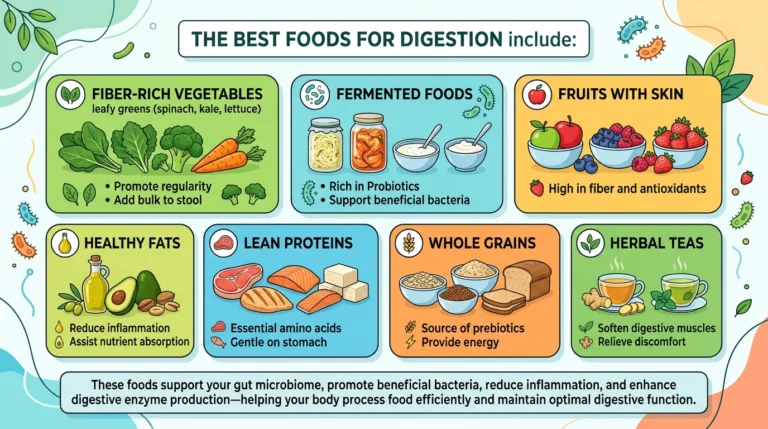
The NHS digestion guide recommends varied fibre sources and a general adult target of 30 g per day. Oats, wholemeal bread, fruit, vegetables and beans are examples. Increase gradually rather than making several large changes at once.
| Meal | A practical option | How to keep it manageable |
|---|---|---|
| Breakfast | Oats with berries, or wholemeal toast with a topping you enjoy | Change one familiar breakfast rather than buying a cupboard of new ingredients. |
| Lunch | Add a small portion of beans or vegetables to a familiar meal | Use portions you tolerate and avoid suddenly doubling everything. |
| Dinner | Include vegetables and an appropriate starchy food alongside your usual protein | Plan around your preferences, budget and any clinical dietary advice. |
| Snack | Fruit or another suitable food you enjoy | Check allergens and personal restrictions. |
These are meal-planning examples, not a prescribed menu. If certain foods regularly cause discomfort, record the pattern and ask for advice instead of assuming every food on a general list will suit you.
Make drinks part of the day
The NHS hydration guide gives 6–8 cups or glasses daily as a general guide; tea, coffee and milk also count. Your needs and any prescribed fluid restriction may differ. Put a drink near where you work or have one with meals rather than trying to drink a large amount all at once.
You do not need a special morning drink or a promise to “reset” your body. Choose drinks that fit your taste and dietary needs.
Build a routine around your real schedule
The NHS constipation advice includes gradual fibre changes, adequate fluids, daily activity and enough toilet time. Do not ignore the urge to poo. A low footstool can help with positioning. These suggestions are general measures, not an explanation for every digestive complaint.
Choose a walk or another movement opportunity that suits your mobility. For an example of organising breakfast, drinks and toilet time around work, see the morning habits guide. You do not have to complete a perfect checklist.

A simple plan for getting started
| Stage | What to do | What to record |
|---|---|---|
| Before changing anything | Write down a normal day of meals, drinks and routine | Times and approximate portions; no health score is needed. |
| Choose one change | For example, add a familiar fibre-containing breakfast or make drinks easier to reach | Whether the change is realistic and comfortable. |
| Keep the rest steady | Avoid starting several products and a restrictive diet together | Any symptoms and when they occur. |
| Review | Keep a practical habit; seek advice if symptoms persist | Questions to bring to your GP, pharmacist or dietitian. |
This is a planning sequence, not a promised recovery timeline. If a change clearly makes you feel worse, do not keep increasing it to reach an arbitrary target.
Keep a useful food-and-symptom note
Record the meal or drink, approximate amount, time and what you noticed. You can also note medication changes or an unusually disrupted day. A note such as “large lunch at 2 pm; bloating at 4 pm” is more useful than labelling a food “bad” after one occasion.
A diary cannot diagnose an intolerance or another condition. Avoid removing several food groups without suitable advice; bring recurring patterns to a professional.
Do fermented foods or supplements belong in every routine?
No product is a required first step in this guide. The NHS probiotics information explains that results for one type cannot be assumed for another. If you have an existing condition or weakened immune system, discuss these supplements with a doctor first.
Choose foods for their suitability and enjoyment rather than assuming every fermented food delivers a particular health outcome. A capsule, a yogurt and a fermented vegetable are different products. A larger number printed on a supplement label does not by itself tell you which is suitable.
When to seek medical advice
The NHS bloating guidance advises seeing a GP when bloating is frequent or does not go away, including when it occurs with unintentional weight loss or blood in your poo. Do not assume recurring symptoms simply mean you need more “support.”
For bloating with vomiting, fever, a tummy lump or inability to poo or pass wind, seek urgent medical advice through an urgent GP appointment or NHS 111. Sudden severe abdominal pain, vomiting blood or severe difficulty breathing requires emergency help. Follow the NHS guidance linked above.
Optional product browsing: understand the limits
Disclosure: I’m an independent LiveGood affiliate. If you buy through links on this page or its product tool, I may earn a commission at no extra cost to you.

The tool below browses the LiveGood products available in its catalogue. It is not an independent comparison of the whole supplement market. Its matches do not diagnose a problem, establish a deficiency or prove you need a particular product. Use it only as an optional shopping aid after reading the basics.
Personalizing your gut-health picks...
If you are already comparing a product, read its exact ingredients, quantities, allergens, directions and storage requirements. Check the delivered price and membership costs. Do not exceed label directions or use a calculator to increase a dose. Ask your pharmacist or GP about suitability and medication interactions.
Existing tools and related guides
These links are optional reading and shopping resources. Calculator outputs are estimates from their stated inputs, not measurements of what your body needs. This article does not validate every output or recommend taking a supplement because a tool suggests one.
| Resource | Use it for |
|---|---|
| LiveGood product browser | Browsing its available catalogue, with the same limitations as the tool above. |
| Hydration calculator | Reviewing an estimated fluid figure alongside its assumptions and any clinical restrictions. |
| Sleep-related tool | Exploring its information; it cannot determine a nutrient deficiency or diagnose sleep problems. |
| Protein calculator | Checking an estimate and the inputs used, rather than an exact personal requirement. |
| Capsule count calculator | Adding up a routine you enter; a count does not establish safety or suitability. |
| Omega-3 label calculator | Comparing label quantities, rather than choosing a medical dose. |
| Cost-per-day calculator | Comparing costs using the prices, serving counts and fees you enter. |
| Calculator explanation | Reading the stated approach before relying on a result. |
Sources and author
NIDDK: Your Digestive System & How It Works
NHS: Good Foods to Help Your Digestion
NHS: Water, Drinks and Hydration
NHS: Constipation
NHS: Probiotics
NHS: Bloating
Daniel Popa, founder of LiveGoodForLife and independent LiveGood affiliate. This is general educational information, not a clinical assessment. See the About page and Editorial Policy.
Affiliate disclosure: This page contains affiliate-related product links and a product-browsing tool. I may receive a commission if you buy through my referral, at no extra cost to you. LiveGoodForLife is independently operated and is not owned or operated by LiveGood Inc.