10 Morning Habits for Better Gut Health: Simple Digestion-Friendly Routine
10 Morning Habits for Better Gut Health: The Simple Version
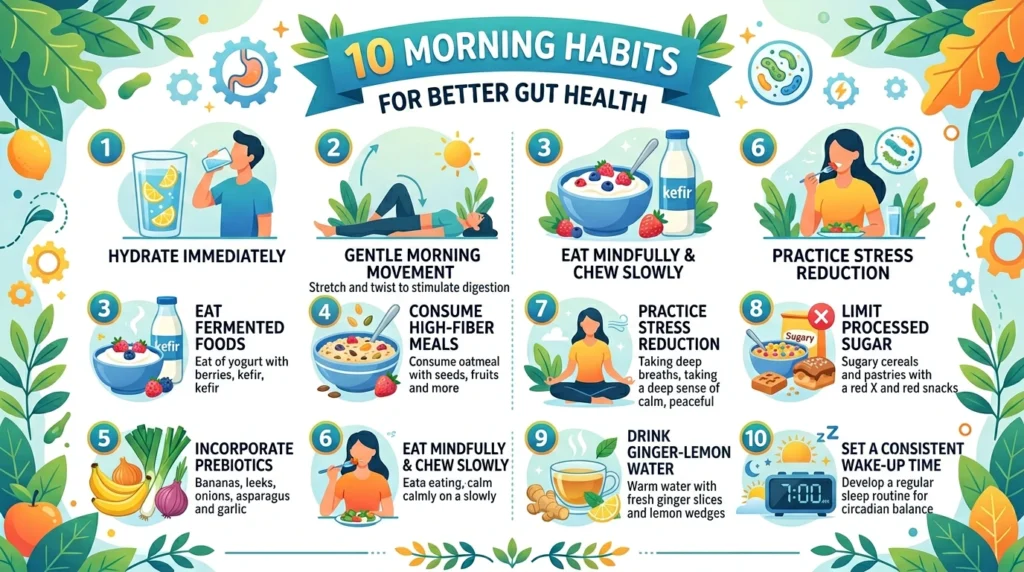
Your morning routine can set the tone for how your digestion feels throughout the day. Small habits like hydration, fiber, mindful eating, gentle movement, and consistent meal timing may help support normal digestive wellness and a healthier daily rhythm.
If you are new to this topic, start with the Beginner’s Guide to Gut Health. It explains the basics in a simple way before you build a full morning routine.
Affiliate disclosure: This page may contain affiliate links. If you purchase through my links, I may earn a commission at no extra cost to you.
Important disclaimer: This article is for educational purposes only and is not medical advice. Always read product labels carefully and speak with a qualified professional when you need personal guidance.
Why Morning Habits Matter for Gut Health
Your digestive system works best with consistency. Sleep, meal timing, hydration, stress, movement, and food choices all influence how your gut feels day to day. Morning is a practical time to build habits because it gives you a clean starting point before the day gets busy.
A good gut-health routine does not need to be complicated. The goal is to support normal digestion with simple, repeatable habits rather than trying to force quick results. If hydration is one of your weak spots, the Water & Hydration Guide can help you understand how fluids fit into the bigger digestion picture.
| Morning habit area | Simple explanation | Best way to use it |
|---|---|---|
| Hydration | Water supports normal body functions and digestion | Drink water before relying on coffee |
| Fiber | Fiber helps support regularity and feeds beneficial gut bacteria | Add fiber gradually and drink enough water |
| Fermented foods | Some fermented foods contain live cultures | Use small servings if tolerated |
| Movement | Gentle activity can support a healthy daily rhythm | Walk, stretch, or do light mobility |
| Mindful eating | Eating slowly can make meals easier to enjoy and tolerate | Sit down and chew well |
📌 Key Facts at a Glance
- Hydration comes first. Water is one of the simplest morning habits for daily digestive support.
- Fiber is a foundation. Fiber-rich breakfast foods help support fullness and regularity. For more detail, read the Fiber Guide.
- Movement helps your rhythm. A short walk or gentle stretch is enough to make the habit count.
- Slow meals matter. Eating calmly can make breakfast easier to enjoy and easier to tolerate.
- Start small. Pick two habits first, then build from there.
Habit #1: Start With Water
Before coffee or breakfast, drink a glass of water. After a night of sleep, your body has gone several hours without fluids, so rehydrating first thing is a simple way to support your morning routine.
Warm water with lemon is fine if you enjoy it, but it is not required. Plain water works well too.
If you are not sure how much fluid you need, use the Hydration Calculator Guide as an educational starting point. For a deeper explanation of fluids and electrolytes, see the Water & Hydration Guide.
Simple idea: drink 8–12 ounces of water after waking, then eat breakfast when it fits your schedule.
Habit #2: Practice Calm Breathing Before Breakfast
Stress can affect how your stomach feels. A few minutes of slow breathing in the morning may help you start the day in a calmer state, which can support a more comfortable meal routine.
Try this simple pattern: inhale slowly, pause briefly, exhale slowly, and repeat for a few minutes. You do not need a long meditation session to benefit from slowing down.
For a broader beginner-friendly routine, pair this habit with the simple steps in the Beginner’s Guide to Gut Health.
Habit #3: Choose Probiotics Carefully If You Use Them
Some people like taking a probiotic in the morning. Probiotics may help support digestive wellness for certain people, but they are not necessary for everyone and not every product is the same.
When comparing probiotic supplements, check the label for the strains, serving directions, storage instructions, expiration date, and quality information. A supplement with a clear label is easier to evaluate than one that only makes broad promises.
If you want to compare a product option, read the LiveGood Probiotic Gut Support Review. You can also view the Probiotic Gut Support product page for label and buying details.
| What to check | Why it matters |
|---|---|
| Strain names | Different strains can have different uses |
| CFU count | Shows the amount listed on the label |
| Storage directions | Some products need refrigeration, others do not |
| Other ingredients | Important for allergens, sweeteners, and prebiotic fibers |
| Quality information | Helps you compare products more carefully |
Habit #4: Eat a Fiber-Rich Breakfast
Fiber can help support normal bowel habits and feed beneficial gut bacteria. Many people do not get enough fiber, so breakfast is a helpful place to start.
Good options include oatmeal with berries, chia pudding, whole grain toast with avocado, Greek yogurt with fruit and ground flaxseed, or a smoothie with leafy greens and berries.
If you want more food ideas, read 17 Foods That Support Better Digestion Naturally. For a deeper fiber breakdown, use the Fiber Guide, and if you are comparing supplements, see the Fiber Supplements Guide 2026.
Start slowly if you are not used to fiber. Adding too much too fast can cause gas, bloating, or discomfort. If you want a product option to compare, visit the LiveGood Organic Fiber product page.
Habit #5: Add Fermented Foods If You Tolerate Them
Fermented foods can be a helpful addition to a gut-friendly routine. Options include plain yogurt, kefir, sauerkraut, kimchi, miso, and kombucha.
Not everyone tolerates fermented foods well, especially people with sensitive digestion. Start with a small serving and pay attention to how you feel.
If drinks are easier for your morning routine than foods, the guide to 11 Drinks for Gut Health and Digestion gives beginner-friendly options like kefir, smoothies, ginger tea, and other digestion-friendly drinks.
| Fermented food | Simple way to use it | Note |
|---|---|---|
| Plain yogurt | Add berries or oats | Choose live active cultures if possible |
| Kefir | Use as a smoothie base | Can be tangy and may contain dairy |
| Sauerkraut | Add a small spoonful with eggs or toast | Check sodium if that matters for you |
| Miso | Use in a warm broth | A savory option for breakfast |
| Kombucha | Drink a small amount | Check sugar and caffeine content |
Habit #6: Move Your Body Gently
Light movement in the morning can support a healthy routine and help you feel more awake. You do not need an intense workout for this habit to count.
Good options include a short walk, gentle stretching, yoga, mobility work, or light bodyweight movement. The goal is consistency, not intensity.
Movement also connects well with hydration. If you walk, train, work outdoors, or sweat early in the day, the Water & Hydration Guide can help you think through fluids and electrolytes more clearly.
Habit #7: Do Not Rely on Coffee Alone
Coffee can fit into a healthy morning routine for many people, but drinking coffee before water or food may not feel good for everyone. Some people notice stomach discomfort, jitters, or urgency when they drink coffee on an empty stomach.
A simple approach is to drink water first, then have coffee with or after breakfast if that feels better for you. If you want more morning drink ideas, read 11 Drinks for Gut Health and Digestion.
Habit #8: Be Thoughtful With Digestive Enzymes
Digestive enzyme supplements are popular, but they are not needed by everyone. If you use them, follow the label and choose products with clear ingredient information.
For supplement quality basics, read the Third-Party Lab Testing Guide and the Label Red Flags Guide. If you are comparing gut-focused supplements, the LiveGood Probiotic Gut Support Review is a helpful related read.
Habit #9: Eat Without Rushing
How you eat matters. Rushed meals can make it harder to notice fullness and may lead to swallowing more air, eating too quickly, or choosing foods that do not sit well.
Try sitting down, putting your phone away, chewing well, and taking a few slow breaths before eating. This does not need to be perfect. Even one calmer meal per day can be a helpful start.
If you need simple food ideas to make calm eating easier, start with 17 Foods That Support Better Digestion Naturally.
Habit #10: Get Morning Light
Morning light can support your normal circadian rhythm, which influences sleep, appetite, meal timing, and daily energy habits. A short walk outside or breakfast near a bright window can be enough to make this habit simple.
For a simple way to connect light, food, water, and movement into one daily plan, see the Beginner’s Guide to Gut Health.
Find Your Best Gut-Health Support
Answer a few quick questions to see gut-focused product matches, optional add-ons, pricing, and simple next-step ideas for your routine.
Personalizing your gut-health picks...
Putting It All Together: A Simple Gut-Friendly Morning Routine
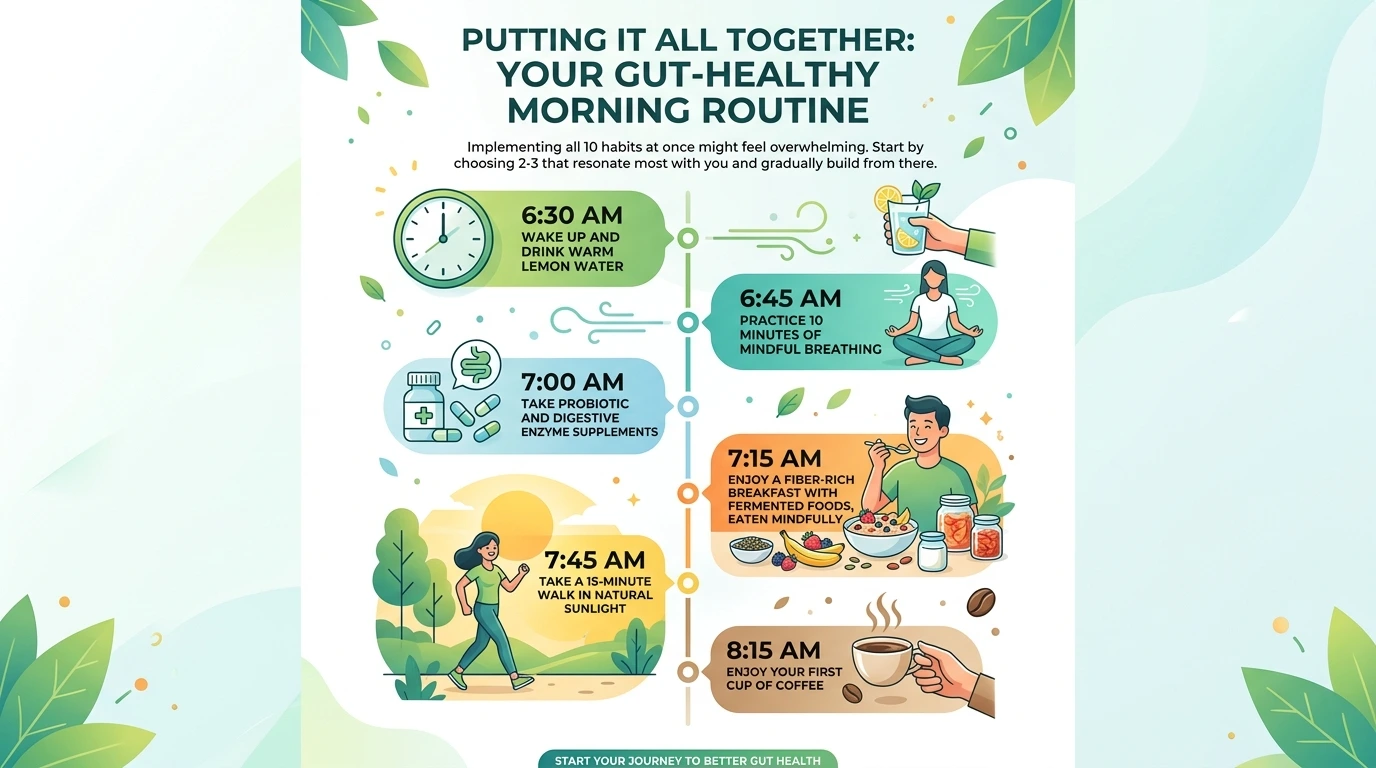
You do not need to do all 10 habits at once. Choose two or three that feel realistic, then build from there.
| Time | Simple habit | Why it helps |
|---|---|---|
| Wake up | Drink water | Supports hydration |
| Before breakfast | Take a few calm breaths | Helps you slow down before eating |
| Breakfast | Choose fiber and protein | Supports fullness and regularity |
| After breakfast | Take a short walk or stretch | Supports a consistent morning rhythm |
| Before work | Get natural light | Supports circadian rhythm |
Consistency matters more than perfection. A small routine you can repeat is better than a complicated routine you abandon after a few days.
Related Gut Health & Morning Routine Guides
If you want to build a simple gut-friendly morning routine, these related guides can help you go deeper into hydration, fiber, probiotics, digestion-friendly foods, and supplement label tips.
- Beginner’s Guide to Gut Health — start here if you want the simple basics of gut health, daily habits, and product support.
- 11 Drinks for Gut Health and Digestion — helpful if you want morning drink ideas beyond coffee.
- 17 Foods That Support Better Digestion Naturally — simple food ideas to pair with a gut-friendly breakfast.
- Fiber Guide — explains why fiber matters and how to add it gradually.
- Fiber Supplements Guide 2026 — useful if you are comparing different fiber supplement options.
- LiveGood Probiotic Gut Support Review — a closer look at probiotic support, label details, and safety notes.
- Probiotic Gut Support — product page for readers who want to compare LiveGood’s probiotic option.
- LiveGood Organic Fiber — product page for readers who want a simple daily fiber powder option.
- Water & Hydration Guide — explains hydration, fluids, and electrolyte basics in a beginner-friendly way.
- Hydration Calculator Guide — helpful if you want to estimate daily water needs and build a better hydration routine.
Simple next step: Start with water, fiber, and one small food habit. Then use the guides above to build the rest of your routine slowly.

What the Research Shows on Morning Habits and Gut Health
Most gut-health lifestyle research is mechanistic or observational. The habits in this guide are evidence-informed, not a guaranteed treatment or medical plan.
Circadian rhythms and the gut: Consistent morning routines may help support a healthier daily rhythm.
Morning light: Light exposure helps set your body clock, which connects with sleep, appetite, and meal timing.
Movement: Physical activity is one of the better-studied lifestyle habits for digestive regularity.
Fermented foods: Fermented foods may be helpful for some people, but tolerance is individual.
Probiotics: Probiotic evidence is strain-specific and individual. Not everyone needs a probiotic supplement.
🏛️ What Health Authorities Consistently Recommend
- Adequate dietary fiber from whole plant foods is one of the most evidence-supported dietary factors for digestive regularity and gut microbiome diversity.
- Consistent hydration supports normal gut transit. Water remains the best daily fluid foundation.
- Regular physical activity supports digestive regularity and overall metabolic health.
- Consistent sleep and meal timing supports circadian regulation and daily rhythm.
- No supplement replaces dietary foundations. Food-first habits come first, with supplements filling specific gaps rather than anchoring the routine.
- Ongoing, unexplained, or worsening digestive symptoms should be evaluated by a healthcare professional.
Educational context only. Morning habits support general wellness and are not a replacement for medical evaluation of digestive symptoms.
Frequently Asked Questions
How long does it take to support gut health with morning habits?
It is better not to expect a guaranteed timeline. Some people feel better quickly when they hydrate, eat more fiber, and slow down at meals, while others need more time or professional guidance.
Can I take probiotics and digestive enzymes at the same time?
Some people use both, but it depends on the product and your health situation. Check labels and ask a healthcare professional if you take medication, have digestive symptoms, are pregnant or breastfeeding, or manage a medical condition.
What if I do not have time for a long morning routine?
Keep it simple. Drink water, eat a fiber-containing breakfast, and take a short walk or stretch. A realistic routine is more useful than a complicated one.
Are there foods I should avoid in the morning for gut health?
There is no single rule for everyone. Some people feel better limiting large amounts of added sugar, greasy foods, alcohol, or foods they personally do not tolerate.
How do I choose quality supplements for gut health?
Look for clear supplement facts, serving size, ingredient amounts, allergen information, storage directions, and testing or quality information. Compare cost per serving instead of only looking at the bottle price.
Do I need supplements if I eat a healthy diet?
Not always. A balanced diet is the foundation. Supplements may help fill specific gaps or support a routine, but they should not replace food or be used to treat symptoms.
Can stress affect digestion?
Yes, stress can influence appetite, meal timing, stomach comfort, and bowel habits. Calm breathing, regular meals, sleep, and movement may help support a healthier routine.
Sources & References
- Lotti S, et al. Circadian rhythms, gut microbiota, and diet: Possible implications for health. Nutrition, Metabolism and Cardiovascular Diseases. 2023;33(8):1490-1500.
- Wastyk HC, et al. Gut-microbiota-targeted diets modulate human immune status. Cell. 2021;184(16):4137-4153.
- Monda V, et al. Exercise modifies the gut microbiota with positive health effects. Oxidative Medicine and Cellular Longevity. 2017.
- NCCIH. Probiotics: Usefulness and Safety. nccih.nih.gov
- Harvard T.H. Chan School of Public Health. The Gut-Brain Connection. nutritionsource.hsph.harvard.edu
- Harvard T.H. Chan School of Public Health. Fiber. nutritionsource.hsph.harvard.edu
- NIH National Institute of General Medical Sciences. Circadian Rhythms. nigms.nih.gov
- MedlinePlus. Digestive Diseases. medlineplus.gov