Is Plant Protein as Good as Whey for Weight Loss?
⚡ Quick Answer
Plant protein can be as useful as whey for weight loss when calories, protein, fullness, and consistency are in place. Whey may fit dairy-tolerant users; plant protein may fit dairy-free routines. Compare both labels, calories, ingredients, and price before choosing.
📌 Safety First
- Protein powder does not cause weight loss by itself.
- Weight loss depends on overall calorie balance, food choices, activity, sleep, and consistency.
- Ask a healthcare professional before increasing protein intake if you have kidney disease, liver disease, digestive conditions, food allergies, pregnancy or breastfeeding considerations, or a medically restricted diet.
- Whey protein is dairy-based and is not suitable for people with milk allergy or people avoiding animal-derived foods.
- Dietary supplements are not FDA-approved to diagnose, treat, cure, or prevent disease.
Is Plant Protein as Good as Whey
for Weight Loss?
The best protein powder for weight loss is not always the one with the strongest marketing. The real comparison is calories, protein per serving, fullness, ingredients, digestion, diet preference, and whether you will use it consistently.
Affiliate disclosure: I may earn a commission if you purchase through my links, at no extra cost to you.
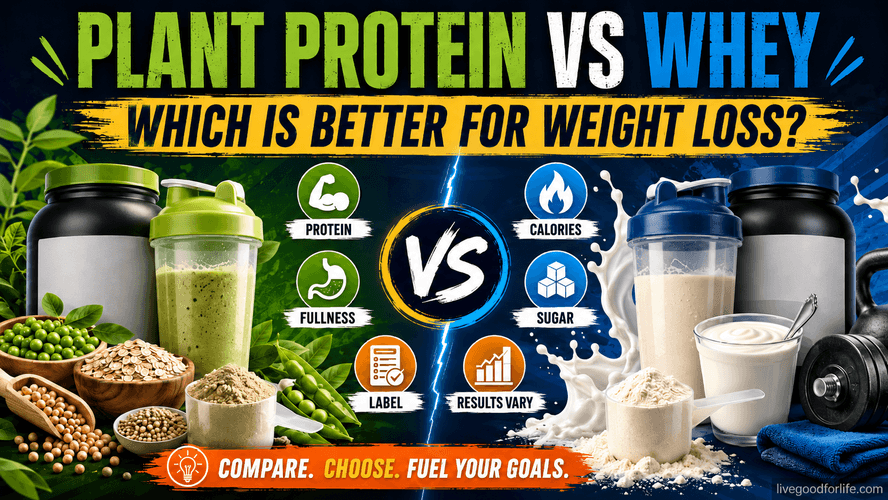
Quick Answer: Plant Protein vs Whey for Weight Loss
Plant protein and whey protein can both fit a weight-loss routine if they help you stay within calories while getting enough protein. The better choice depends on diet preference, digestion, ingredients, calories per serving, sugar, taste, and how consistently you use it.
🌱 Plant Protein May Fit If
- you avoid dairy
- you follow a vegan or mostly plant-based routine
- you like smoothies, oats, and whole-food add-ins
- you want a dairy-free protein option
🥛 Whey May Fit If
- you tolerate dairy
- you prefer a creamy shake texture
- you want a whey isolate option
- you want a simple post-workout protein shake
⚖️ The Real Weight-Loss Rule
Protein can help make meals more satisfying, but it does not override calories. Weight loss still depends on your overall routine.
What Really Matters for Weight Loss?
Protein may help with fullness and preserving lean mass during weight loss, but the protein source is only one part of the picture. The bigger questions are whether the shake fits your calorie target, keeps you satisfied, agrees with your digestion, and supports a routine you can maintain.
Plain English: A protein powder can help fill a protein gap, but it should not be treated as a fat-loss product. Compare the whole label: calories, protein, sugar, fiber, ingredients, serving size, allergens, and cost per serving.
Calories, Fullness, Protein, and Ingredients
For weight loss, protein source matters less than the full nutrition picture. A lower-calorie protein powder that leaves you hungry may not be helpful. A slightly higher-calorie shake that helps you stick to a balanced plan may fit better. The label tells the story.
Protein Per Serving
Check grams of protein per serving first. Both LiveGood Plant-Based Protein and LiveGood Whey Protein Isolate are listed as 20g protein per serving. Confirm on the current label before buying.
Calories and Sugar
A protein powder used for weight loss should fit your daily calories. Check calories, added sugar, sweeteners, and what you mix it with.
Fullness and Meal Fit
Some people feel fuller with plant-based shakes, especially when blended with fiber-rich foods. Others prefer whey because it is smooth and easy to drink. Your real-world routine matters.
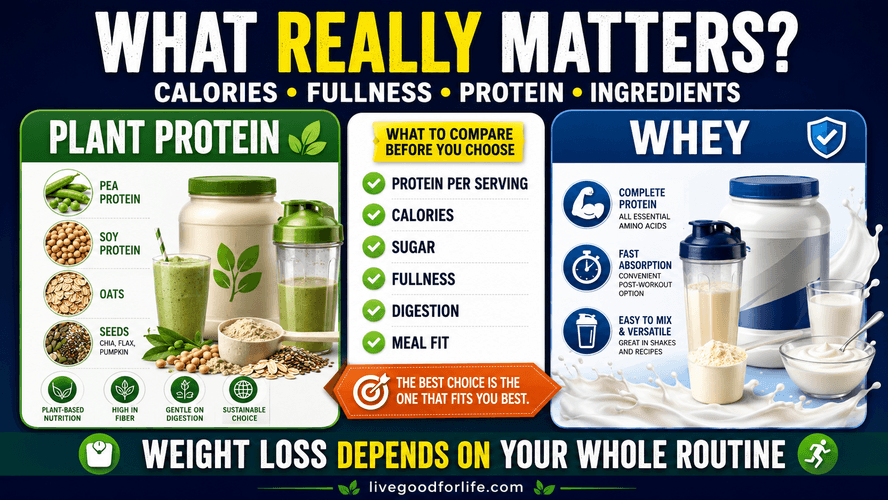
Plant Protein vs Whey: Weight-Loss Comparison
What Research Says — Without Weight-Loss Hype
Higher-protein diets are often studied for satiety, body composition, and weight-management routines. But research does not mean a protein powder automatically causes weight loss. The overall calorie pattern and diet quality still matter.
What research supports
- Protein can help some people feel fuller than lower-protein meals.
- Protein intake can help support lean mass during calorie reduction when combined with exercise.
- Total daily calories still drive weight change.
- Whole-diet pattern, fiber, sleep, activity, and consistency matter more than one shake.
What research does not prove
- that plant protein or whey automatically causes weight loss
- that protein powder replaces a balanced eating plan
- that more protein is always better
- that one protein type is best for every person
- that any protein product treats obesity or a medical condition
For deeper reading, review this PubMed-indexed review on protein, weight loss, and maintenance, the ISSN position stand on protein and exercise, and MedlinePlus guidance on protein in the diet. These references are educational and do not prove that any specific protein powder causes weight loss.
Why I Would Compare LiveGood Plant-Based Protein and Whey
When I compare protein powders for a weight-loss routine, I look for protein per serving, calories, sugar, ingredients, allergens, digestion, price, testing access, and whether the product is easy to use without turning the shake into a high-calorie dessert.
Important: This is a product comparison, not medical advice or a weight-loss promise. Protein powders can help fill protein gaps, but weight loss still depends on total routine and calorie balance.
Plant-Based Protein Option
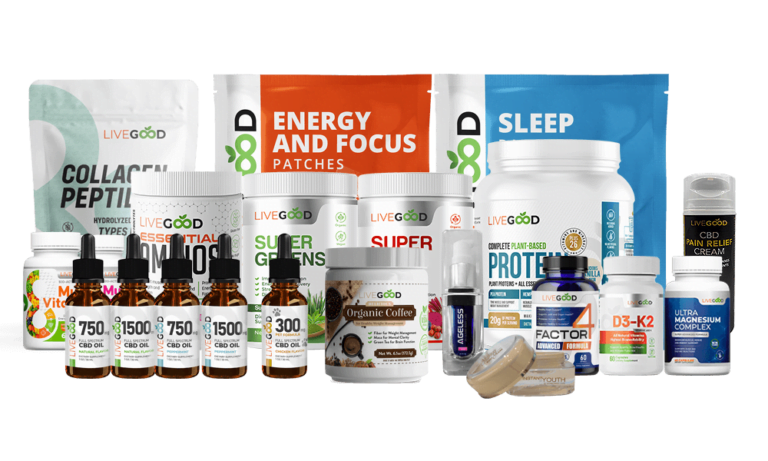
LiveGood Plant-Based Protein may fit adults who want a dairy-free, vegan-friendly protein powder with 20g protein per serving. It may be useful for smoothies, shakes, oats, or protein-focused snacks. Learn more here: LiveGood Plant-Based Protein Review.
Whey Protein Option
LiveGood Whey Protein Isolate with Colostrum may fit adults who tolerate dairy and want a whey isolate option with 20g protein per serving. Learn more here: LiveGood Whey Protein Isolate with Colostrum.
Price and Subscribe & Save
You mentioned that LiveGood whey protein has the same price as the plant protein, so the better comparison is not just price. Compare protein per serving, calories, ingredients, flavor, dairy tolerance, and whether Subscribe & Save fits your routine. Always review current checkout terms before purchasing.
90-Day Guarantee
LiveGood may offer a 90-day guarantee, which can help shoppers compare products with less purchase hesitation. Guarantee terms can change, so review the current policy before ordering.
COA and Lab Testing
Testing access helps shoppers review quality information before buying. You can view available LiveGood certificates and lab-testing details here: LiveGood Products Certificates of Analysis.
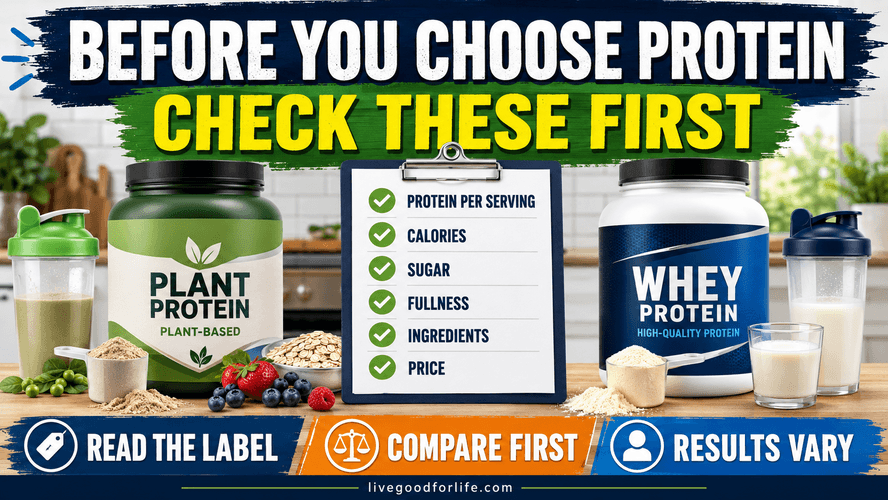
What to Check Before Choosing Protein Powder for Weight Loss
Protein Per Serving
Look at grams of protein per serving, not just the size of the tub or front-label claims.
Calories and Mix-Ins
Check the calories in the powder and what you mix it with. Milk, nut butter, bananas, oils, and sweet add-ins can change the calorie total quickly.
Sugar and Sweeteners
Review added sugar, sweeteners, and whether the flavor helps or hurts your routine.
Fullness
A shake that does not keep you satisfied may lead to extra snacking. A balanced shake can include protein plus fiber-rich foods.
Diet and Digestion
Choose plant protein if dairy is not a fit. Choose whey if you tolerate dairy and prefer whey isolate. The best choice is the one your body handles well.
Frequently Asked Questions
Is plant protein as good as whey for weight loss?
It can be. Weight loss depends more on calories, total protein, fullness, digestion, and consistency than whether the protein comes from plants or whey.
Is whey better for weight loss?
Not automatically. Whey may be convenient and high-quality, but it only helps if it fits your calories and routine. It is not suitable for people with milk allergy or people avoiding dairy.
Can plant protein help with fullness?
Plant protein may feel satisfying for some people, especially when blended with fiber-rich foods such as berries, oats, chia, or greens. Results vary by person and recipe.
Should I use protein powder as a meal replacement?
Protein powder alone is usually best viewed as a protein add-on, not a complete meal. A more balanced shake may include protein, fiber, healthy fats, and whole-food ingredients.
Do I need protein powder to lose weight?
No. Protein powder is convenient, but you can lose weight without it if your overall eating pattern supports your goals.
Are LiveGood protein powders FDA-approved for weight loss?
No. Dietary supplements are not FDA-approved to diagnose, treat, cure, or prevent disease, and protein powders do not guarantee weight loss.
Bottom Line: Plant Protein or Whey for Weight Loss?
Plant protein can be as good as whey for weight loss if it helps you hit your protein target, stay full, manage calories, and stick with your routine. Whey may fit dairy-tolerant users better. Plant protein may fit dairy-free users better.
Choose Whey If
You tolerate dairy, want whey isolate, and prefer a smooth dairy-based shake.
Choose Plant-Based If
You avoid dairy, follow a vegan or plant-based routine, or prefer plant ingredients.
Choose the Label First
Compare protein, calories, sugar, ingredients, serving count, price, and digestion before choosing.
Compare LiveGood Protein Options
Before buying, review protein per serving, calories, sugar, ingredients, allergens, current price, serving count, membership terms, shipping, testing information, and whether plant-based or whey fits your routine.
Disclosures
Affiliate Relationship: Some links in this article are affiliate links. If you purchase through these links, I may earn a commission at no extra cost to you. I only recommend products I personally use, have researched, or would consider using as part of a wellness routine.
Medical Disclaimer: This content is for informational and educational purposes only and is not medical advice. It is not intended to diagnose, treat, cure, or prevent any disease. Always consult a qualified healthcare professional before changing protein intake or using protein supplements, especially if you have kidney disease, liver disease, digestive conditions, food allergies, are pregnant or breastfeeding, take medication, or follow a medically restricted diet.
Results Disclaimer: Individual results vary. Protein powder does not guarantee weight loss, fat loss, appetite control, muscle gain, or body-composition changes.
FDA Disclaimer for U.S. Content: These statements have not been evaluated by the Food and Drug Administration. These products are not intended to diagnose, treat, cure, or prevent any disease.
Pricing and Availability: Prices, membership terms, product formulas, labels, testing information, shipping, and refund policies can change. Verify all details before publishing or purchasing. Last updated: August 2026