Men’s Wellness Supplements in 2026: What Is Worth Taking?
Written by Daniel Popa for LiveGoodForLife.com
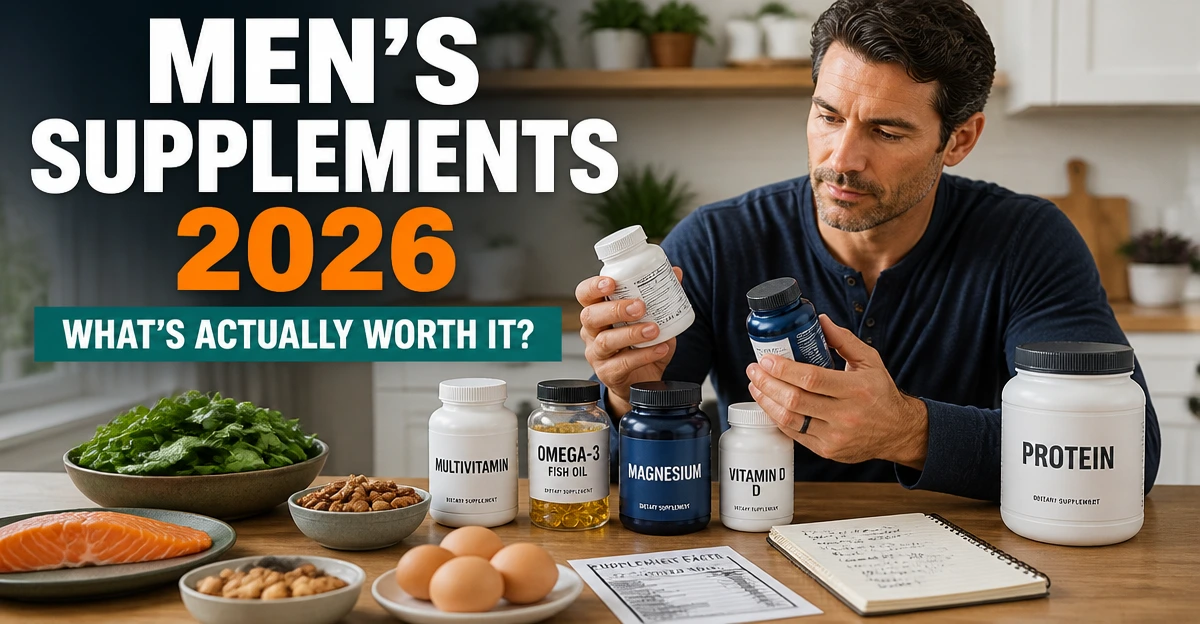
Men’s wellness supplements are marketed for energy, muscle, testosterone, heart health, sexual performance and healthy ageing. The promises are broad, but the evidence and usefulness vary considerably.
The short answer: no supplement routine is necessary for every man. A multivitamin, vitamin D, magnesium, omega-3 or protein powder may be useful when diet, lifestyle or a confirmed nutritional need provides a clear reason. Products promising dramatic increases in testosterone, strength, youth or sexual performance deserve much greater caution.
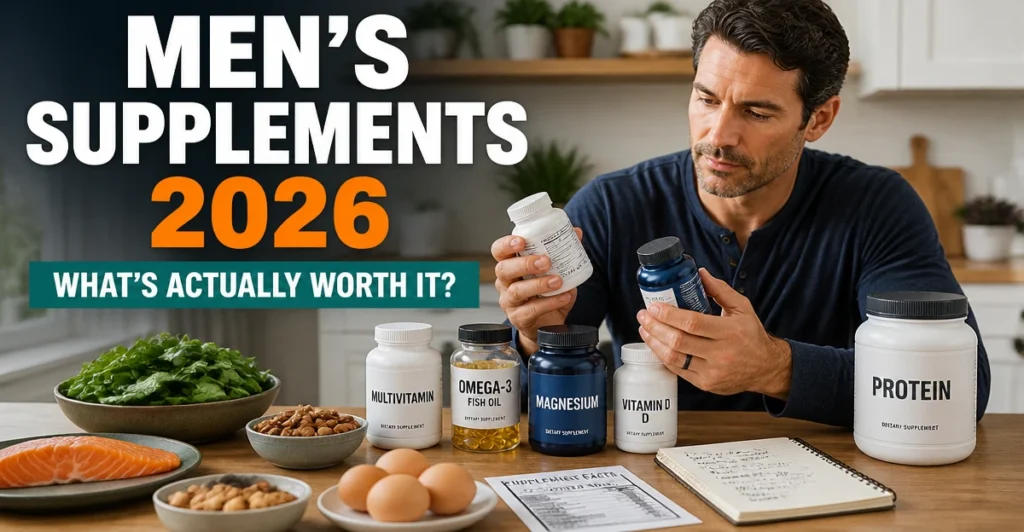
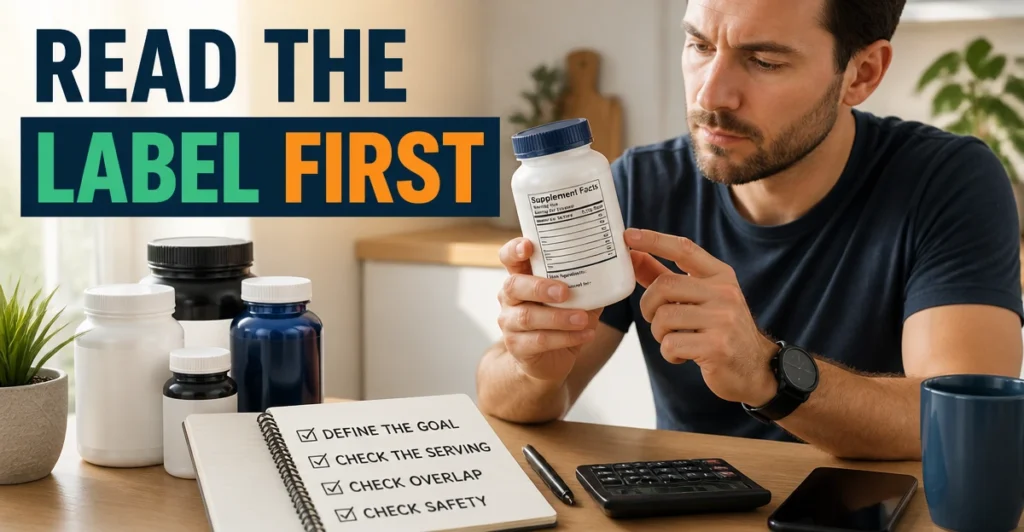
The most reliable buying process starts with food, defines a specific goal and compares amounts per complete serving. The product name and front-label promises matter far less than the Supplement Facts panel.
Affiliate disclosure: This article may contain affiliate links. If you purchase through one of these links, I may earn a commission at no additional cost to you. This does not affect how I explain evidence, safety concerns or product limitations.
Key Takeaways
- No supplement stack is appropriate for every man.
- Supplements can help fill nutritional gaps but cannot replace a varied diet.
- Zinc and magnesium are essential nutrients, not automatic testosterone or sleep boosters.
- Vitamin D supplementation should be based on individual circumstances rather than marketing.
- Omega-3 products should be compared using their EPA and DHA amounts.
- Protein powder is a convenient food product, not a shortcut around training and nutrition.
- Male-enhancement and bodybuilding products require particular caution.
- Check the complete routine for duplicated vitamins, minerals and stimulants.
What Are Men’s Wellness Supplements?
Answer: Men’s wellness supplements are products marketed to support general nutrition, exercise, energy or age-related concerns in men. They include multivitamins, individual vitamins and minerals, omega-3 products, protein powders and specialist herbal formulas.
The word “men’s” does not establish that a product is effective or suitable. A men’s multivitamin may differ from a general formula, but the useful comparison is between the actual ingredients and amounts.
The NIH Office of Dietary Supplements explains that supplements may help people obtain adequate amounts of essential nutrients when their diet does not provide enough. It also emphasises that supplements cannot replace the variety of foods needed for a healthy eating pattern.
Verified fact: The FDA does not determine whether dietary supplements are effective before they are marketed.
Do Men Need Supplements?
Answer: Some men may benefit from a particular supplement, but many can meet their nutritional needs through food. Suitability depends on diet, age, lifestyle, medication and individual health circumstances.
Possible reasons to investigate a supplement include:
- A restrictive diet
- Limited intake of a major food group
- A nutrient deficiency identified through appropriate assessment
- Difficulty meeting protein needs through food
- Professional advice related to a health condition
- Age-related changes in diet or nutrient absorption
Possible reasons to pause include:
- A vague goal such as “boost everything”
- Promises of dramatic or immediate results
- A proprietary blend hiding individual amounts
- Several existing supplements containing the same nutrients
- Medication or a health condition that could create an interaction
Common Men’s Wellness Supplements Compared
| Category | Why men consider it | What to check |
|---|---|---|
| Multivitamin | Broad vitamin and mineral coverage | Serving size, zinc, vitamin D, magnesium, iron and ingredient overlap |
| Vitamin D | Low dietary intake, limited sunlight or professional advice | Amount per serving, existing intake and whether testing is appropriate |
| Magnesium | Low dietary intake or a defined nutritional reason | Form, elemental amount, serving size and medication interactions |
| Zinc | Essential mineral commonly included in men’s formulas | Total intake, upper limit and duplication with multivitamins |
| Omega-3 | A concentrated source of EPA and DHA | EPA and DHA per serving, source, freshness and medication considerations |
| Protein powder | Convenient way to increase protein intake | Protein per serving, ingredients, taste and total dietary intake |
| Creatine | Training performance and exercise-related goals | Product form, serving directions, suitability and realistic expectations |
| Herbal men’s formulas | Marketed for energy, prostate health, testosterone or sexual performance | Evidence, disclosed amounts, interactions and contamination risk |
Does a Men’s Multivitamin Make Sense?
Answer: A men’s multivitamin may be convenient when diet is inconsistent, but it is not proven to prevent disease or compensate for an unhealthy lifestyle.
Men’s formulas often contain little or no iron and may emphasise nutrients such as zinc, vitamin D and B vitamins. Senior formulas may provide different amounts of vitamin B12, calcium or vitamin D.
Compare:
- Complete serving size
- Percentage Daily Value
- Zinc and vitamin D amounts
- Magnesium amount and form
- Whether iron is included
- Botanical ingredients
- Potential overlap with other products
- Cost per serving
The U.S. Preventive Services Task Force concludes that evidence is insufficient to determine whether multivitamin use prevents cardiovascular disease or cancer in generally healthy adults. It recommends against beta-carotene and vitamin E supplements for that purpose.
For a product-specific label example, read my Bio-Active Complete Multi-Vitamin for Men review.
Important limitation: A product review can explain a formula but cannot establish that every man needs a multivitamin.
Zinc: Essential Mineral, Not a Testosterone Shortcut
Answer: Zinc is essential for many processes in the body, but taking extra zinc does not automatically increase testosterone or improve performance.
Zinc occurs in foods such as meat, seafood, poultry, beans, nuts, whole grains, eggs and dairy products. It is also common in men’s multivitamins.
Before buying a separate zinc supplement:
- Check your multivitamin
- Check fortified foods
- Calculate the total daily amount
- Review medication interactions
The NIH sets the adult upper limit for zinc at 40 milligrams per day from all sources unless supplementation is being medically supervised.
Long-term excessive zinc intake can lower copper levels and cause other unwanted effects.
Magnesium: What Men Should Know
Answer: Magnesium supports normal muscle, nerve and metabolic functions. Supplementation may be reasonable when intake is low, but magnesium is not a guaranteed treatment for poor sleep or exercise recovery.
Food sources include:
- Beans and other legumes
- Nuts and seeds
- Whole grains
- Leafy green vegetables
- Fortified foods
- Milk and yogurt
Magnesium supplements use several forms. The Supplement Facts panel shows the elemental magnesium amount per serving.
High supplemental amounts can cause diarrhoea, nausea or abdominal cramping. Magnesium can also interact with certain antibiotics and other medicines.
Vitamin D: Should Men Be Tested First?
Answer: Vitamin D supplements may be useful in some circumstances, but routine testing or supplementation is not automatically necessary for every healthy man.
Factors that can affect vitamin D status include:
- Limited sun exposure
- Geographic location and season
- Skin pigmentation
- Age
- Diet
- Conditions affecting nutrient absorption
Do not select a large dose based only on a product claim. High vitamin D intake can be harmful.
Ask a qualified healthcare professional whether testing is appropriate for your circumstances and what amount, if any, makes sense.
Omega-3 Supplements
Answer: Omega-3 supplements provide fatty acids such as EPA and DHA, but their usefulness depends on diet and individual health circumstances.
Fatty fish such as salmon, sardines, anchovies, trout and mackerel provide EPA and DHA through food.
When comparing products, check:
- EPA per complete serving
- DHA per complete serving
- Number of softgels required
- Fish or algae source
- Storage directions
- Expiry or freshness information
Do not compare products solely using the total weight of fish oil. That number can be larger than the actual EPA and DHA amounts.
Discuss omega-3 supplementation with a healthcare professional if you take anticoagulants, have a bleeding disorder or are preparing for surgery.
Protein Powder
Answer: Protein powder is a convenient way to increase protein intake, but it is not necessary when normal food already provides enough.
Protein powders may be helpful for:
- Convenient post-exercise nutrition
- Busy schedules
- People who struggle to eat enough protein
- Plant-based diets requiring more deliberate planning
Compare products using:
- Protein per serving
- Total calories
- Added sugar or sweeteners
- Allergens
- Protein source
- Taste and practical usability
Food sources such as eggs, fish, meat, dairy products, tofu, beans and lentils also contribute protein and other nutrients.
What About Creatine?
Answer: Creatine is one of the better-studied sports supplements, particularly for repeated high-intensity exercise and resistance-training goals, but it is not required for general men’s wellness.
Men considering creatine should check:
- Whether the goal is exercise-related
- The product form and ingredient list
- Serving directions
- Other ingredients in flavoured blends
- Whether a health condition requires professional advice
Do not treat creatine as a replacement for progressive training, sufficient food, hydration or sleep.
B Vitamins and Antioxidants
Answer: B vitamins help the body process energy from food, but they do not provide energy in the same way as calories or stimulants.
A separate B-complex product may duplicate what is already present in a multivitamin, fortified drink or energy product.
Antioxidant is a broad marketing term rather than proof that a high-dose supplement improves health. The USPSTF recommends against beta-carotene and vitamin E supplementation for preventing cardiovascular disease or cancer.
This is especially important for current or former smokers considering high-dose beta-carotene products.
Collagen for Men
Answer: Collagen is a protein supplement marketed for skin, joints and connective tissue, but it is optional rather than a basic men’s wellness requirement.
When comparing collagen products, check:
- Protein or collagen peptides per serving
- Animal source
- Allergens
- Added ingredients
- Cost per serving
A product’s marketing claims should not replace realistic expectations or professional advice for persistent joint pain.
Products That Deserve Extra Caution
Answer: Male-enhancement, testosterone-booster, bodybuilding and rapid-energy products deserve extra scrutiny because some have contained undisclosed or potentially dangerous ingredients.
The FDA warns that many products marketed for sexual enhancement or sexual dysfunction may be contaminated with hidden drug ingredients.
These products can be sold online, in shops or as “all-natural” supplements. Positive reviews and professional-looking packaging do not establish safety.
Male-enhancement products
Avoid products that:
- Promise prescription-like effects
- Claim immediate results
- Use undisclosed proprietary blends
- Are sold as unlabelled capsules or honey products
- Claim to treat erectile dysfunction without medical evaluation
Erectile difficulties can be associated with cardiovascular, metabolic, hormonal, medication-related or psychological factors. Proper assessment matters.
Yohimbe and yohimbine
Yohimbe-derived products can affect blood pressure, heart rate and the nervous system. In 2026, the FDA published warnings and recalls involving products containing undeclared or dangerously high yohimbine.
Do not combine stimulant-style ingredients casually with caffeine, antidepressants, ADHD medication or other stimulants.
Testosterone boosters
Herbs or minerals marketed as testosterone boosters should not be used to self-diagnose low testosterone.
Symptoms associated with low testosterone can have many causes. Diagnosis requires an appropriate clinical assessment rather than a supplement quiz.
How to Choose Men’s Supplements
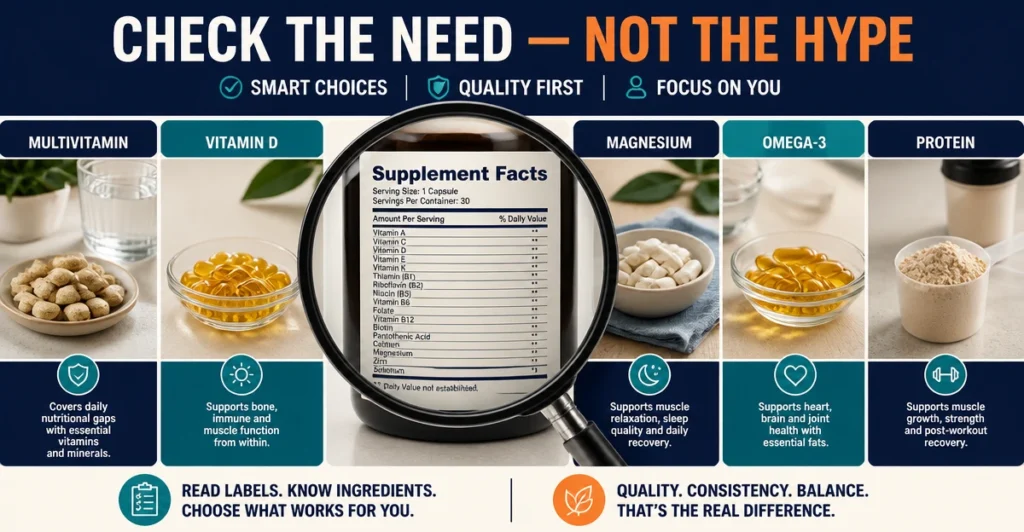
1. Define one clear goal
Write down what you want the product to add. “General wellness” is often too vague to justify a complicated formula.
2. Review your food intake
Check whether the nutrient is already well represented in your normal diet.
3. Read the complete serving
A bottle containing 60 capsules provides only 30 servings when two capsules are required.
4. Check ingredient amounts
Prefer labels that disclose each ingredient and amount rather than hiding everything inside one blend.
My guide on how to compare supplement ingredients before buying explains this process in more detail.
5. Check for overlap
A multivitamin, zinc product, B complex and energy formula may repeat several ingredients.
6. Calculate cost per serving
Divide the current product price by the number of complete servings. Do not compare bottle prices without checking serving size.
7. Consider independent quality testing
Where available, look for credible third-party testing. Understand that a quality seal may help verify manufacturing or contents but does not prove the product will deliver every advertised benefit.
8. Review safety
Check medicines, health conditions and upcoming surgery with a physician or pharmacist.
How to Build a Simple Routine
Answer: Start with food and add only products that have a defined role.
A simple evaluation might look like this:
- Review diet, fortified foods and current supplements.
- Identify one specific gap or practical need.
- Compare suitable products by complete serving.
- Introduce only one new product at a time.
- Monitor for unwanted effects.
- Reassess whether the product is still worthwhile.
If you use several LiveGood products, read my guide to taking LiveGood supplements together before building a larger routine.
What Matters More Than Supplements?
No supplement can replace:
- A varied diet
- Adequate protein
- Regular physical activity
- Resistance training
- Sufficient sleep
- Stress management
- Appropriate health screening
- Medical care for persistent symptoms
My practical recommendation: Treat supplements as a small support layer. If the routine becomes more complicated than the diet and lifestyle supporting it, simplify.
My Men’s Supplement Buying Checklist
- What exact goal does this product address?
- Could food meet the same need?
- What is one complete serving?
- Are all ingredient amounts disclosed?
- Does it duplicate another product?
- Does it exceed an established upper limit?
- Does the product make treatment-like claims?
- Does it contain stimulants or herbal extracts?
- Could it interact with medication?
- Is credible third-party testing available?
- What is the cost per serving?
- When will I reassess whether it is worthwhile?
Final Answer
The men’s wellness supplements most worth considering are products that fill a specific nutritional or practical gap—not those promising dramatic changes in strength, youth, testosterone or sexual performance.
A suitable multivitamin may offer convenient broad coverage. Vitamin D, magnesium, omega-3 or protein powder may make sense in particular circumstances. Zinc is important but should not be stacked carelessly, and creatine belongs mainly in an exercise-focused discussion.
Male-enhancement and testosterone-boosting products require much greater caution, especially when labels hide amounts or promise prescription-like results.
Start with food, read complete servings, check overlap and discuss medication or health concerns with a qualified professional.
Frequently Asked Questions
What supplements should men take every day?
There is no daily supplement list suitable for every man. A multivitamin, vitamin D, magnesium, omega-3 or protein product may be useful when there is a clear dietary or practical reason.
Do men need a multivitamin?
Not necessarily. A multivitamin may be convenient when diet is inconsistent, but it cannot replace healthy food and is not proven to prevent every disease.
Does zinc increase testosterone?
Zinc is essential, and deficiency can affect health. Taking extra zinc when intake is already adequate does not automatically increase testosterone.
Should men take magnesium for sleep?
Magnesium is essential, but it is not a guaranteed sleep treatment. Review dietary intake, the reason for poor sleep and possible medication interactions before using it.
Should men take vitamin D?
Some men may need vitamin D, while others obtain enough through food, sunlight or existing supplements. Ask whether testing or supplementation is appropriate for your circumstances.
Is fish oil worth taking?
It depends on diet and individual health circumstances. Compare EPA and DHA amounts rather than total fish-oil weight and discuss use if you take anticoagulants.
Is protein powder safe to use every day?
Protein powder can be a convenient food product for many adults, but suitability depends on the ingredients, total diet, allergies and health circumstances.
Are testosterone boosters safe?
Safety and evidence vary considerably. Do not use supplements to diagnose or treat suspected low testosterone. Bring the exact label to a healthcare professional.
Are male-enhancement supplements safe?
They require significant caution. The FDA warns that many sexual-enhancement products may contain hidden drug ingredients and pose serious health risks.
Can men take several supplements together?
Sometimes, but ingredients can overlap and interact with medicines. Compare all Supplement Facts panels together rather than reviewing each product separately.
How This Guide Was Prepared
This primary guide compares broad supplement categories rather than ranking products. It prioritizes information readers can verify through:
- Current Supplement Facts panels
- NIH Office of Dietary Supplements fact sheets
- FDA supplement-safety notifications
- U.S. Preventive Services Task Force evidence reviews
No personal product-testing results are claimed. Personal recommendations are practical buying suggestions, not medical conclusions.
Sources
- NIH Office of Dietary Supplements: Dietary Supplements—What You Need to Know
- NIH Office of Dietary Supplements: Zinc Fact Sheet
- NIH Office of Dietary Supplements: Magnesium Fact Sheet
- USPSTF: Vitamin and Mineral Supplements for Preventing Cardiovascular Disease and Cancer
- FDA: Sexual Enhancement and Energy Product Notifications
Medical Disclaimer
This article is for general educational and informational purposes only. It is not medical advice and is not intended to diagnose, treat, cure or prevent any disease.
Speak with a physician, pharmacist, registered dietitian or another qualified healthcare professional before starting a supplement, especially if you take medication, manage a medical condition, have kidney or liver concerns, are preparing for surgery or are considering a sexual-enhancement or hormone-related product.
Stop using a product and seek appropriate medical advice if you experience an unwanted reaction. Always read and follow the latest product label.