Probiotics vs Digestive Enzymes: Difference
Last updated: August 17, 2026
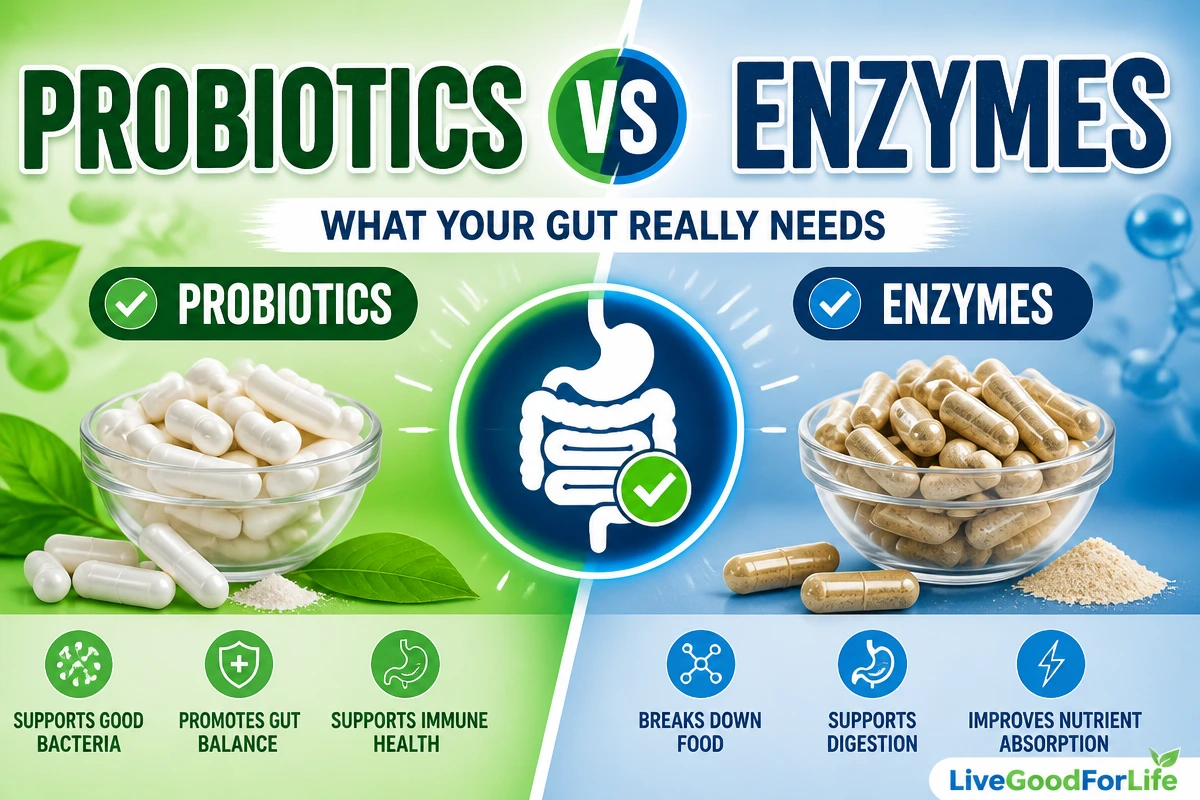
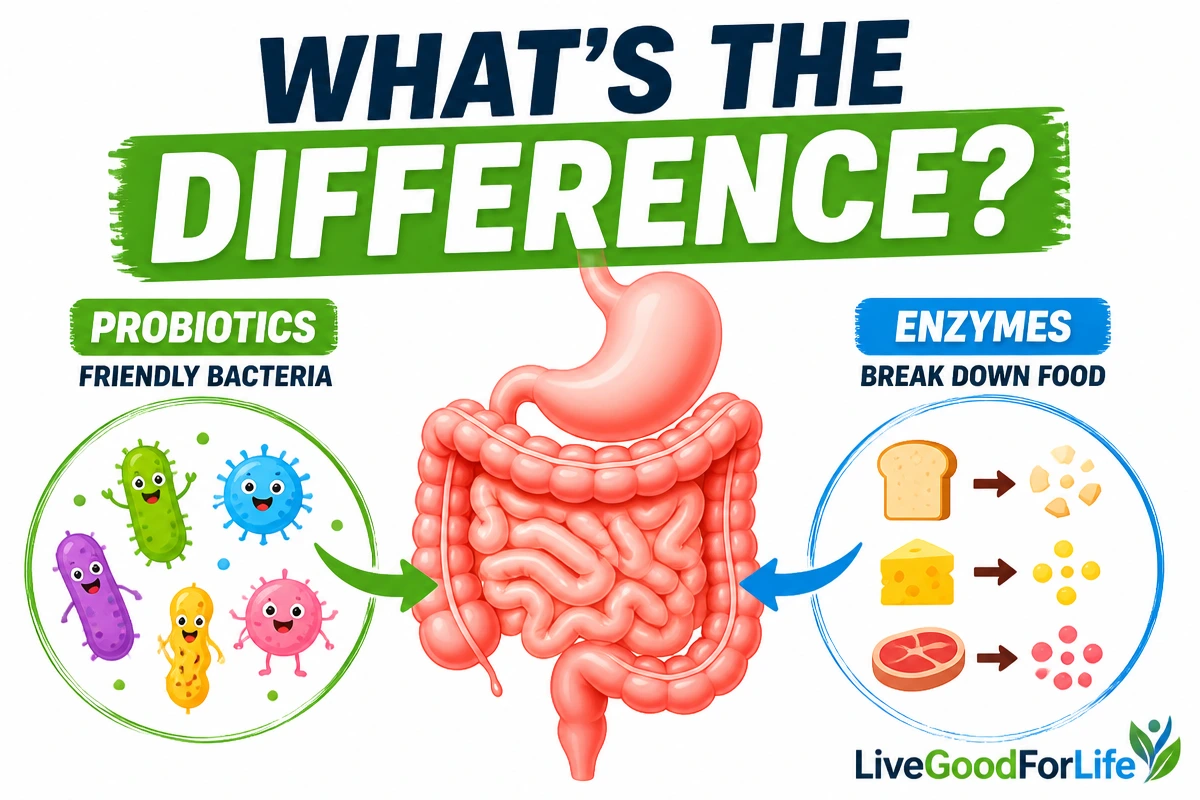
Probiotics vs digestive enzymes is a common gut health question because both are often found in digestive wellness supplements, but they do different jobs. Probiotics are live microorganisms that may help support the balance of gut microbes. Digestive enzymes help break down food components such as protein, carbohydrates, and fats.
Quick answer: Probiotics are mainly about gut bacteria and microbiome support. Digestive enzymes are mainly about food breakdown. Some people compare probiotics when they want gut balance support, while others compare digestive enzymes when they want help digesting specific meals. Some formulas include both, but that does not mean everyone needs both.
Important: This guide is educational only and is not medical advice. Digestive symptoms can have many causes, and supplements can interact with health conditions, medications, surgery, pregnancy, breastfeeding, and other supplements. Ask a qualified healthcare professional if symptoms are persistent, severe, new, or concerning.
Probiotics vs Digestive Enzymes: Quick Comparison
| Feature | Probiotics | Digestive enzymes |
|---|---|---|
| Main role | Support gut microbial balance | Help break down food |
| What they are | Live microorganisms such as bacteria or yeast | Proteins that help digest nutrients |
| Common label clues | Strain names, CFUs, storage directions | Enzyme names and activity units |
| Timing | Depends on product directions | Often taken with meals, if label says so |
| Best compared for | Microbiome support and gut routine | Meal digestion and food breakdown |
| Safety focus | Immune status, serious illness, infants, strain quality | Medical conditions, medication use, enzyme source, tolerance |
If you want the simplest rule, probiotics support the gut environment, while digestive enzymes support the digestive process of breaking down food. They are related, but they are not the same thing.
What Are Probiotics?
Probiotics are live microorganisms intended to provide a health benefit when consumed in adequate amounts. They may include bacteria such as Lactobacillus and Bifidobacterium, and some products may use yeasts such as Saccharomyces boulardii. Probiotics can be found in fermented foods and dietary supplements.
The NIH Office of Dietary Supplements explains that probiotic labels may list colony-forming units, often called CFUs. A higher CFU count alone does not automatically mean a better product. The specific strains, dose, quality, storage, expiration date, and intended use all matter.
What Are Digestive Enzymes?
Digestive enzymes help break food into smaller parts your body can absorb. Your body naturally makes digestive enzymes, and enzymes are also found in some foods and supplements. In supplements, digestive enzymes may be used to help break down protein, fat, carbohydrates, fiber, or lactose depending on the formula.
| Enzyme type | What it helps break down |
|---|---|
| Protease | Protein |
| Lipase | Fats |
| Amylase | Starches and carbohydrates |
| Lactase | Lactose from dairy |
| Cellulase | Plant fiber components |
| Bromelain or papain | Protein, from pineapple or papaya sources |
Digestive enzyme labels can be harder to compare because meaningful details go beyond ingredient names. Activity units, enzyme blend, serving size, timing directions, and the foods you actually eat all matter.
The Main Difference
The main difference between probiotics and digestive enzymes is function. Probiotics are living organisms that may influence the gut microbial environment. Digestive enzymes are not gut bacteria. They are substances that help break down food during digestion.
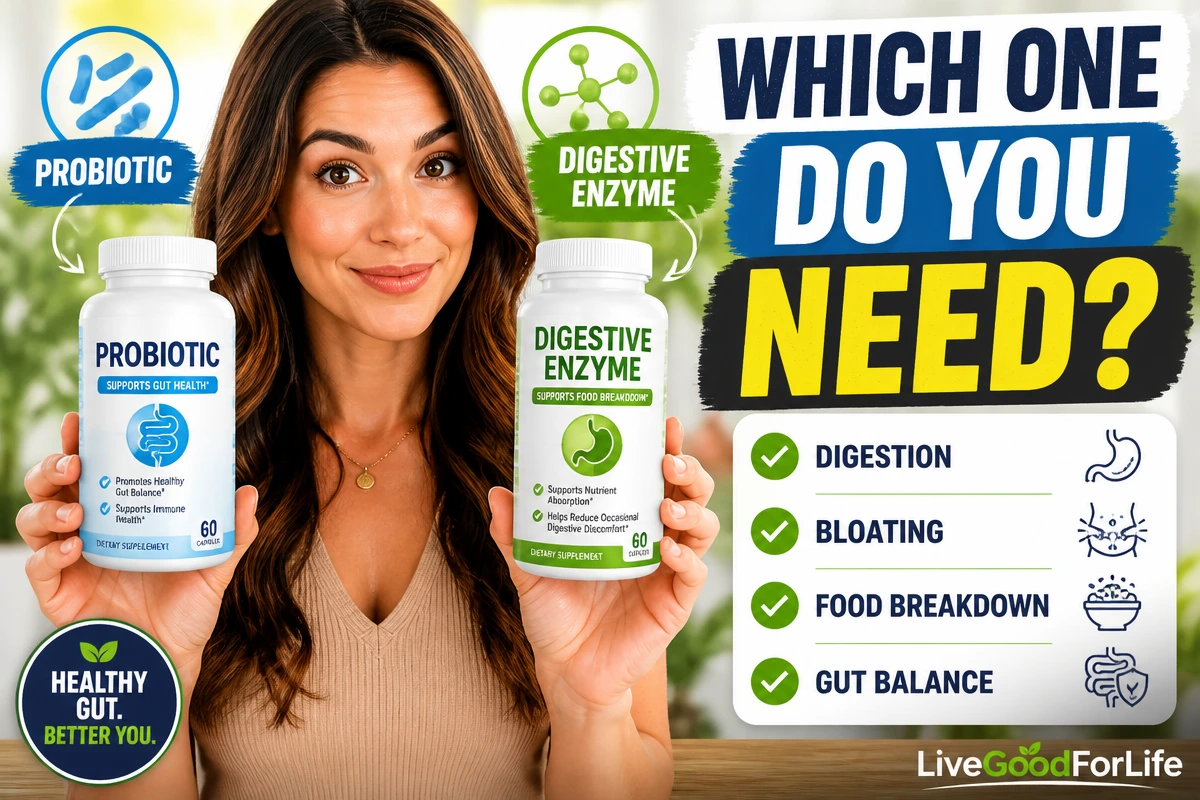
That means the better choice depends on the goal. Someone comparing probiotic support may care about strains, CFUs, storage, and gut routine. Someone comparing digestive enzymes may care more about meal timing, enzyme types, and whether the formula matches the foods they eat.
Which One Is Better for Bloating?
Bloating can happen for many reasons, including eating patterns, fiber changes, carbonated drinks, food intolerances, constipation, stress, gut conditions, medication, and more. Probiotics and digestive enzymes are not universal fixes for bloating.
A digestive enzyme may make more sense to compare if bloating seems connected to certain meals, such as dairy, high-fat meals, or large mixed meals. A probiotic may make more sense to compare if you are looking at longer-term gut routine support. If bloating is persistent, painful, severe, or comes with red flags, speak with a healthcare professional.
Best Choice by Goal
| Your goal | Compare first | Why |
|---|---|---|
| Gut microbiome support | Probiotics | They focus on live microorganisms and gut balance |
| Food breakdown with meals | Digestive enzymes | They are designed around digestion of nutrients |
| Dairy-related digestion | Lactase enzyme | Lactase helps break down lactose |
| Large mixed meals | Digestive enzyme blend | Some blends include protease, lipase, and amylase |
| General digestive routine | Depends on label | Some formulas combine probiotics, prebiotics, and enzymes |
| After antibiotics | Ask a healthcare professional | Timing, strain, medication, and health status matter |
| Immune-compromised or seriously ill | Medical guidance first | Probiotics may carry higher risk for some people |
Can You Take Probiotics and Digestive Enzymes Together?
Some supplement formulas include both probiotics and digestive enzymes. That can be convenient, but it is still important to check the full label. More ingredients are not automatically better. Look at the probiotic strains, CFUs, enzyme types, enzyme activity units, serving size, directions, storage notes, and warnings.
If you already take several supplements, use Supplement Stack Builder to think through overlap, timing, and label logic before adding another product.
How to Read the Label
- Check whether the product is a probiotic, enzyme, prebiotic, or combination formula.
- For probiotics, look for genus, species, strain, CFUs, expiration date, and storage directions.
- For enzymes, look for enzyme types, activity units, serving size, and meal timing directions.
- Check other ingredients such as fillers, sweeteners, capsule shell, allergens, and preservatives.
- Read warnings for pregnancy, breastfeeding, medication use, immune conditions, surgery, or serious illness.
- Avoid products that promise to treat, cure, or prevent disease.
- Compare cost per serving, not only bottle price.
Helpful next reads: LiveGood Probiotic Gut Support Review, 10 Best Digestive Enzymes and Supplements, and How to Improve Gut Health.
Common Mistakes
- Assuming probiotics and digestive enzymes do the same thing.
- Choosing the highest CFU count without checking strains.
- Buying digestive enzymes without checking which enzymes are included.
- Ignoring meal timing directions on enzyme formulas.
- Using supplements to cover up persistent digestive symptoms without asking for medical advice.
- Stacking multiple gut products with overlapping ingredients.
- Ignoring storage instructions, expiration date, or heat exposure.
Where LiveGood Products Fit
LiveGood Probiotic Gut Support is a good example of why labels matter. It is positioned as a digestive wellness formula, so a reader should look at the probiotic blend, prebiotic support, digestive enzyme details, serving size, directions, and whether the formula fits their routine.
Useful next reads: How to Compare Supplement Ingredients, Capsules vs Powders vs Gummies, and Can You Take LiveGood Supplements Together?.
Explore LiveGood wellness products
Frequently Asked Questions
What is the difference between probiotics and digestive enzymes?
Probiotics are live microorganisms that may support the gut microbial environment. Digestive enzymes help break down food components such as protein, fat, carbohydrates, or lactose.
Are probiotics better than digestive enzymes?
Neither is automatically better. Probiotics and digestive enzymes have different roles. The better choice depends on your goal, symptoms, label quality, health status, and professional guidance when needed.
Should digestive enzymes be taken with food?
Many digestive enzyme products are taken with meals, but you should follow the specific label directions. Timing can vary by product and enzyme type.
Do probiotics help digest food?
Some gut microbes may influence digestion in different ways, but probiotics are not the same as digestive enzymes. Enzymes are more directly focused on breaking down food components.
Can probiotics cause gas or bloating?
Some people may notice gas or digestive changes when starting probiotics. Safety and tolerance vary by person, strain, dose, and health status. Ask a healthcare professional if you are unsure.
Can I take probiotics and digestive enzymes at the same time?
Some products combine them, but you should check the label and consider your health situation. If you take medication or have ongoing digestive symptoms, ask a healthcare professional.
Final Thoughts
The difference between probiotics vs digestive enzymes comes down to their job. Probiotics are about live microorganisms and gut balance support. Digestive enzymes are about breaking down food. Both can be useful to compare, but only when they match your real goal and label needs.
Before buying, look past the front label. Check strains, CFUs, enzyme types, activity units, serving size, directions, safety warnings, storage instructions, and cost per serving.