
Omega-3 Fish Oil Guide: EPA, DHA, Safety, Price & Label Tips
Omega-3 Fish Oil Guide: EPA, DHA, Safety, Price & Label Tips
Omega-3 fish oil is a common supplement category for adults comparing EPA and DHA intake, softgel convenience, label quality, freshness, and price. Some people use fish oil because they do not eat fatty fish regularly, while others compare multi-ingredient formulas that include omega-3s alongside nutrients such as turmeric, CoQ10, or garlic.
This guide is educational only. Omega-3 supplements should not be used to treat heart disease, high triglycerides, inflammation, arthritis, joint pain, mood concerns, immune problems, eye disease, brain conditions, or any medical condition. If you have a diagnosis, symptoms, or abnormal lab results, use clinician-guided care rather than self-treating with supplements.

Quick Answer: What Should Buyers Check?
Main label check: EPA + DHA amount per serving, not just total fish oil amount.
Quality check: freshness, fish source, third-party testing, heavy metal testing, oxidation testing, and clear Supplement Facts.
Format check: softgels vs liquid, serving size, fishy aftertaste, and storage instructions.
Safety check: medication use, blood thinners, surgery, bleeding concerns, fish allergy, pregnancy/nursing, and total supplement overlap.
Value check: cost per serving and cost per EPA + DHA amount, not only bottle price.
What Is Fish Oil?
Fish oil is a dietary supplement usually derived from fatty fish. It contains omega-3 fatty acids, especially EPA and DHA. These are the omega-3 forms most buyers look for when comparing fish oil supplements.
Fish oil can be useful to compare if you rarely eat fatty fish such as salmon, sardines, mackerel, anchovies, or trout. However, a supplement should not replace a balanced diet or medical care.

EPA vs DHA: Simple Buyer Difference
| Omega-3 type | What buyers should know |
|---|---|
| EPA | Often discussed in heart-marker and inflammatory-response research. Compare the amount per serving and avoid treatment claims. |
| DHA | Important structural omega-3 found in the brain and retina. Compare amount per serving, especially if buying for general omega-3 intake. |
| ALA | Plant omega-3 found in foods like flax and chia. Conversion to EPA/DHA is limited, so it is not the same as fish oil EPA/DHA. |
The NIH Office of Dietary Supplements explains omega-3 types and evidence in its Omega-3 Fact Sheet for Consumers. Use this as an educational reference, not as personal medical advice.
Heart and Triglyceride Claims: What to Know
Omega-3s are often discussed in relation to triglyceride levels and cardiovascular wellness. That does not mean over-the-counter fish oil supplements should be used as a treatment for high triglycerides or heart disease.
Prescription-strength omega-3 products may be used under medical supervision for specific triglyceride situations, but retail supplements are not the same as prescription products. If triglycerides, cholesterol, blood pressure, heart rhythm, or cardiovascular risk are your concern, speak with a qualified healthcare professional.

Fish Oil Quality Checklist
Before buying any fish oil, compare the label carefully. The front of the bottle may say “1000 mg fish oil,” but the more useful number is the combined EPA + DHA per serving.
- EPA + DHA amount: check the combined total per serving
- Oil form: triglyceride, re-esterified triglyceride, ethyl ester, or phospholipid form may appear on some labels
- Freshness: strong fishy smell, heavy burps, or rancid taste can be quality red flags
- Testing: look for heavy metal, oxidation, purity, and potency testing when available
- Serving size: check whether the EPA/DHA number is for one softgel, two softgels, or a full serving
- Cost per serving: compare price by EPA + DHA amount, not only bottle price
Some studies compare omega-3 molecular forms and bioavailability, including research indexed on PubMed. For most buyers, the practical first step is still label clarity, freshness, and testing transparency.

Softgels vs Liquid Fish Oil
| Format | Pros | What to check |
|---|---|---|
| Softgels | Convenient, pre-measured, easier to travel with | Serving size, capsule count, fishy burps, freshness |
| Liquid | Flexible serving amount and easier for some people to swallow | Taste, refrigeration, oxidation, serving accuracy |
| Algae oil | Fish-free option for some vegetarian or vegan routines | EPA/DHA amount, price, testing, source |
The best format is the one you tolerate, use consistently, and can compare clearly by EPA/DHA amount and quality testing.
Safety: Who Should Check First?
You take medication
Ask a pharmacist or qualified healthcare professional before using fish oil, especially with blood thinners, antiplatelet drugs, blood pressure medication, diabetes medication, heart medication, or complex prescriptions.
You have bleeding concerns or surgery planned
Omega-3 supplements may need review before surgery or if bleeding risk is a concern.
You have a fish or seafood allergy
Fish oil may not be appropriate. Ask a qualified professional about alternatives.
You are pregnant or nursing
DHA is often discussed during pregnancy, but product quality, contaminants, dose, and personal health context matter. Ask your healthcare professional.
You already use multiple supplements
Check overlap with fish oil, cod liver oil, omega-3 blends, turmeric, garlic, CoQ10, vitamin D, or multivitamins.
For supplement quality context, the FDA dietary supplement compliance program describes inspections and GMP requirements for dietary supplement manufacturers. You can review the FDA Dietary Supplement Compliance Program.
Where Factor4 Fits Into the Comparison
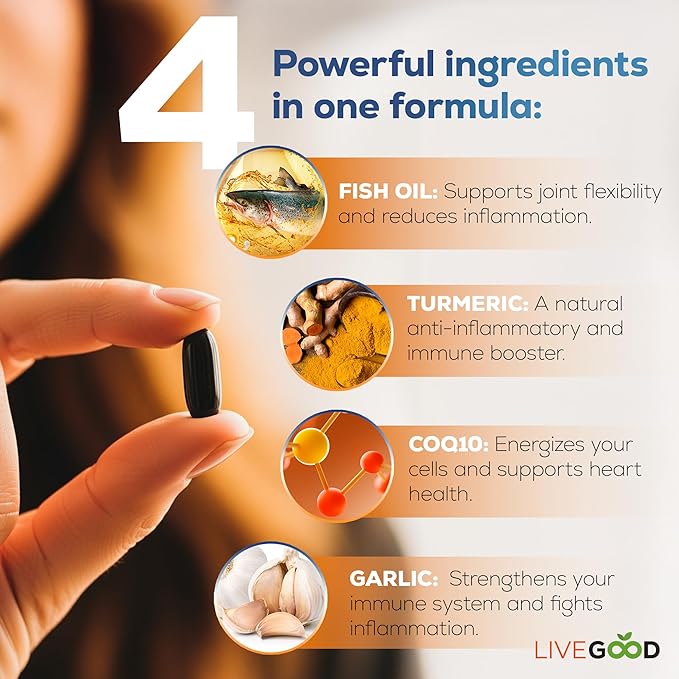
Some buyers want fish oil only. Others compare multi-ingredient formulas. Factor4 combines fish oil with turmeric extract, CoQ10, garlic extract, and black pepper extract.
That may appeal to people who already planned to compare those ingredients and prefer one formula instead of several bottles. It is still a supplement, not a treatment for inflammation, joint pain, heart disease, high triglycerides, circulation problems, immune concerns, fatigue, or any medical condition.
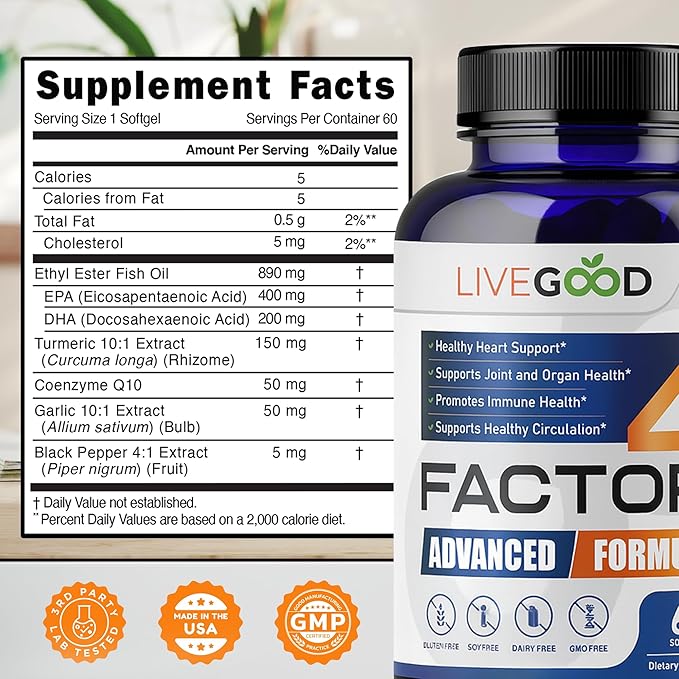
Regular Fish Oil vs Factor4
| Feature | Regular Fish Oil | Factor4 |
|---|---|---|
| EPA + DHA | Usually included | Included |
| Turmeric extract | Usually not included | Included |
| CoQ10 | Usually not included | Included |
| Garlic extract | Usually not included | Included |
| Best fit | People comparing omega-3 only | People comparing a multi-ingredient wellness formula |
| Main caution | Fish allergy, medication, bleeding, surgery, supplement overlap | Same cautions plus turmeric, CoQ10, garlic, and black pepper overlap |
For a deeper product page, see Factor4 price, features & ingredients. You can also review LiveGood product quality information here: LiveGood product QA page.
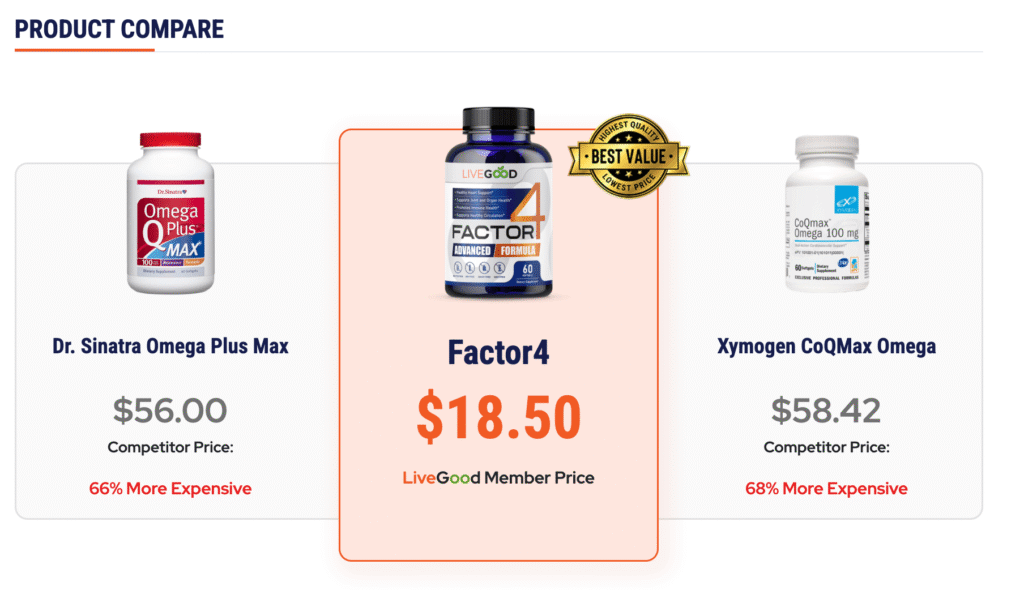
Price and Value
Do not compare fish oil products by bottle price alone. Compare EPA + DHA per serving, serving count, quality testing, freshness, and whether the product includes other ingredients you actually want.
Factor4 may be worth comparing if you want omega-3 plus turmeric, CoQ10, and garlic in one product. Regular fish oil may be a better fit if you only want EPA and DHA. Check the current price, serving count, label, member pricing, shipping, and reorder options before buying.
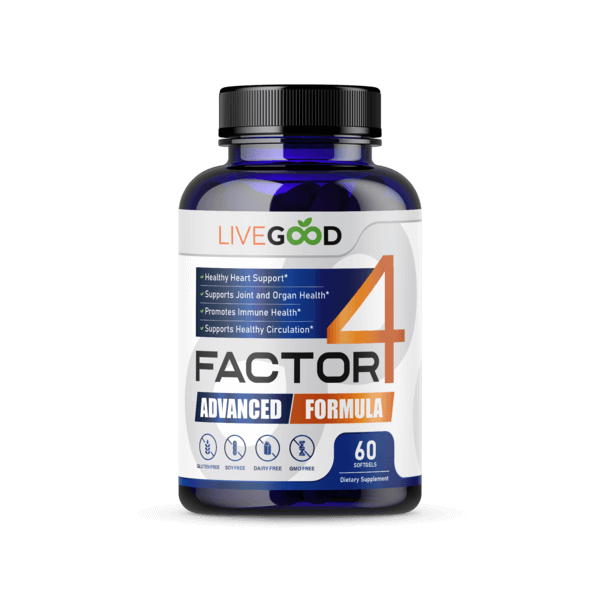
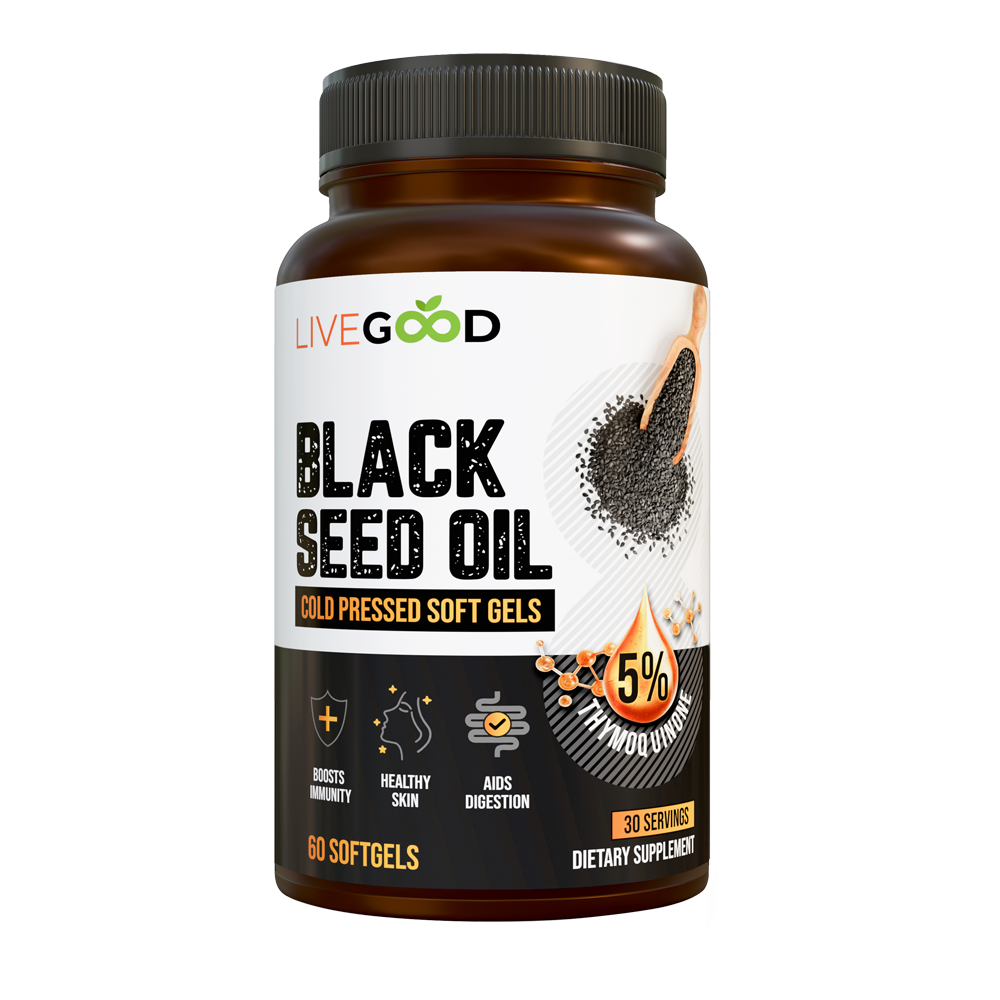
Recommended products
Common Questions
How much omega-3 should I take?
Follow the current product label and ask a qualified healthcare professional if you take medication, have health concerns, or are using omega-3s because of lab results. Compare EPA + DHA amount, not just total fish oil.
Does fish oil lower triglycerides?
Omega-3s are commonly discussed in triglyceride research, but do not use over-the-counter fish oil to treat high triglycerides. Speak with a qualified healthcare professional for lab-guided care.
Can fish oil help joint pain or inflammation?
Fish oil should not be used to treat joint pain, inflammation, arthritis, or mobility problems. Some people compare omega-3s as part of a wellness routine, but that is different from treatment.
What causes fishy burps?
Fishy burps can happen when capsules are taken without food, do not sit well in your stomach, or the product freshness is poor. Try taking fish oil with a meal and check product quality if the smell or taste is strong.
Is fish oil safe with blood thinners?
Ask a qualified healthcare professional first if you take blood thinners, antiplatelet drugs, or have bleeding concerns.
Is Factor4 better than regular fish oil?
It depends on what you want to compare. Regular fish oil may be enough if you only want EPA and DHA. Factor4 may be worth comparing if you want a multi-ingredient formula with omega-3, turmeric, CoQ10, garlic, and black pepper extract in one product.
Ready to Compare Omega-3 Options?
If you are comparing fish oil, start with the label. Check EPA + DHA amount, serving size, freshness, testing, safety cautions, and cost per serving.
If you want to compare a multi-ingredient option, Factor4 may be worth a closer look. Review the current label and price before ordering, and avoid using any supplement as a treatment for medical concerns.
Affiliate disclosure: This page may contain affiliate links. If you purchase through my links, I may earn a commission at no extra cost to you.
Important disclaimer: This article is for educational purposes only and is not medical advice. Dietary supplements are not intended to diagnose, treat, cure, or prevent any disease. Ask a qualified healthcare professional before using omega-3 fish oil, Factor4, or other supplements if you take medication, have a medical condition, are pregnant or nursing, have surgery planned, have bleeding concerns, have fish allergies, or already use other supplements.
Want a starting point?
Take the free health assessment.
It is educational only and not medical advice.
Why Take the Health Assessment?
- Personalized Health Insights: Get a deep dive into your current health, covering heart health, immune strength, stress levels, and more.
- Discover Your Hidden Potential: Uncover health risks you may not even be aware of and learn how to tackle them effectively.
- Actionable Expert Advice: Receive simple, customized tips that fit your lifestyle—whether you want to build muscle, lose weight, or improve your well-being overall.
- Quick & Easy: It only takes a few minutes, but the impact could last a lifetime.
- Absolutely Free: No hidden fees, no catch. Just a commitment to your better health.
Take the Quiz, Unlock Your Potential
Curious about what your body needs? Don’t let uncertainty hold you back any longer. Thousands have already taken their first step towards better health; now it’s your turn. This isn’t just a questionnaire—it’s your gateway to a healthier, more vibrant life.
Start Your Free Health Assessment Now