LiveGood Fundraiser Review: How It Works
Last updated: September 9, 2026
Quick answer: This LiveGood fundraiser review explains how the fundraiser works, who it may fit, what makes it different from old-style campaigns, and what organizers should know before sharing it with a school, team, church, club, nonprofit, rescue, or community group. The main difference is simple: many traditional fundraisers end when the campaign ends, while this model may keep creating support when customers place qualifying repeat orders through connected fundraiser links.
This article is educational and practical. Fundraising results are not guaranteed. Income depends on participation, customer interest, qualifying orders, repeat orders, communication, and the current program terms. A smart organizer should review the details, explain the fundraiser honestly, and treat it as a modern tool that may support a group over time.
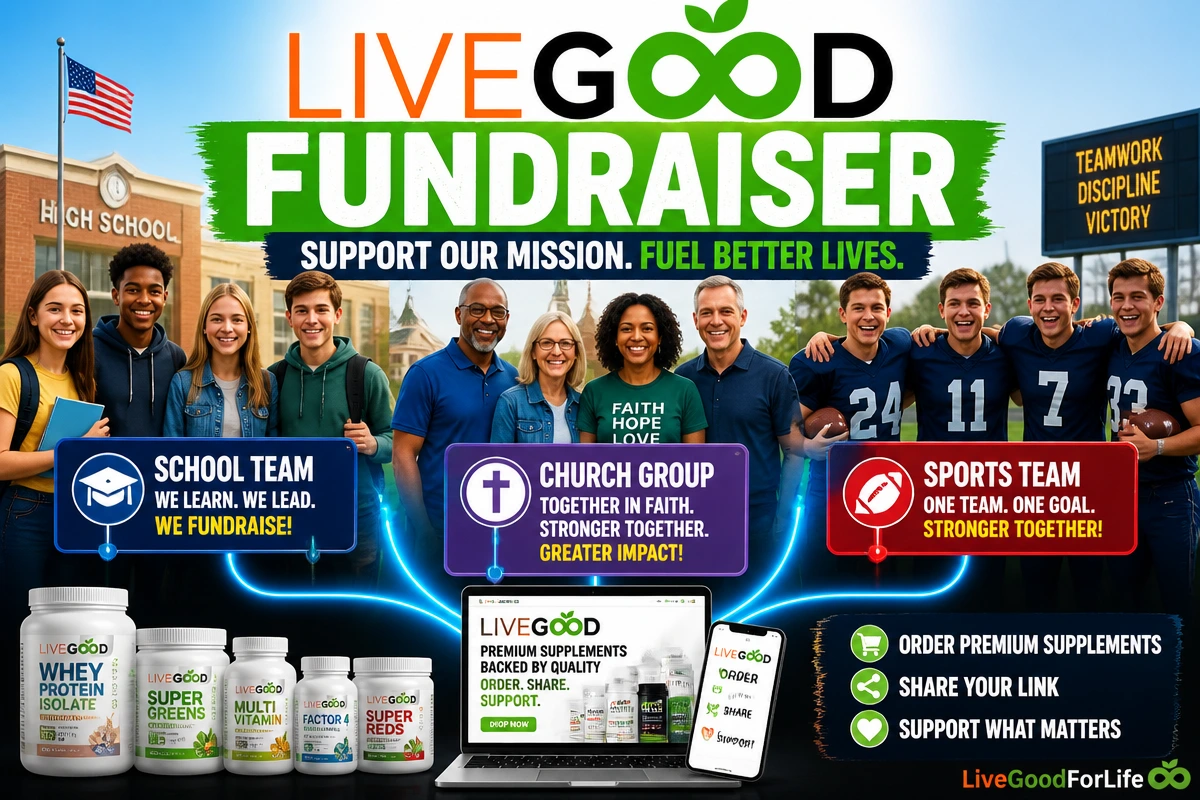
LiveGood Fundraiser Review: The Short Version
The LiveGood fundraiser is built around an online sharing model. Instead of asking families to buy candy, cookie dough, raffle tickets, car wash tickets, candles, wrapping paper, or discount cards, a group shares a fundraiser link connected to wellness products people may already use.
The basic idea is that a school, sports team, church, nonprofit, booster club, youth group, animal rescue, dance team, gym, community project, or other organization can start a fundraiser online. Participants can receive their own tracking links, share with supporters, and send people to shop. When qualifying orders happen through those connected links, the fundraiser may earn money.
Based on LiveGood fundraiser materials reviewed for this article, the model is commonly presented as 20% on initial qualifying orders and 10% on qualifying repeat orders. That repeat-order piece is the reason many groups may find the idea interesting. It gives the fundraiser possible ongoing value instead of depending only on a short campaign window.
How the LiveGood Fundraiser Works
The process is designed to be simple enough for busy organizers. A group signs up, gets set up with a fundraiser page or connected links, invites participants, and starts sharing. Supporters can review the products online and decide whether they want to order. The group does not need to stock inventory, collect paper order forms, deliver boxes, or chase people for cash.
- The organization starts the fundraiser. This may be a school, PTA, PTO, team, club, church, nonprofit, animal rescue, gym group, music program, dance group, travel team, or local cause.
- Participants are invited. Students, players, members, volunteers, parents, or supporters can be invited to help share the fundraiser.
- Participants share their link. The link can be sent by text, email, social media, team chats, newsletters, or community groups.
- Supporters choose whether to order. People are not buying a random fundraising item only to be polite. They can choose wellness products they may actually want to use.
- The organization may earn from qualifying orders. Initial orders may create a larger first-time fundraiser amount, while qualifying repeat orders may create smaller ongoing support.
- The group can track progress. LiveGood fundraiser materials describe dashboard tracking, real-time monitoring, and the ability to celebrate participants as the fundraiser grows.
Why This Is Different From Old Fundraisers
Traditional fundraisers can work, but they often depend on a short burst of selling. A group announces the campaign, families sell for a few weeks, orders are collected, products are delivered, and the fundraiser closes. Once it closes, the income stops. If the team needs money again, everyone has to start over.
That is why many parents, coaches, teachers, and volunteers feel burned out. The same families are asked to buy again and again. The same organizers handle forms and delivery. The same small circle of supporters carries the campaign. For groups with ongoing needs, that can become tiring fast.
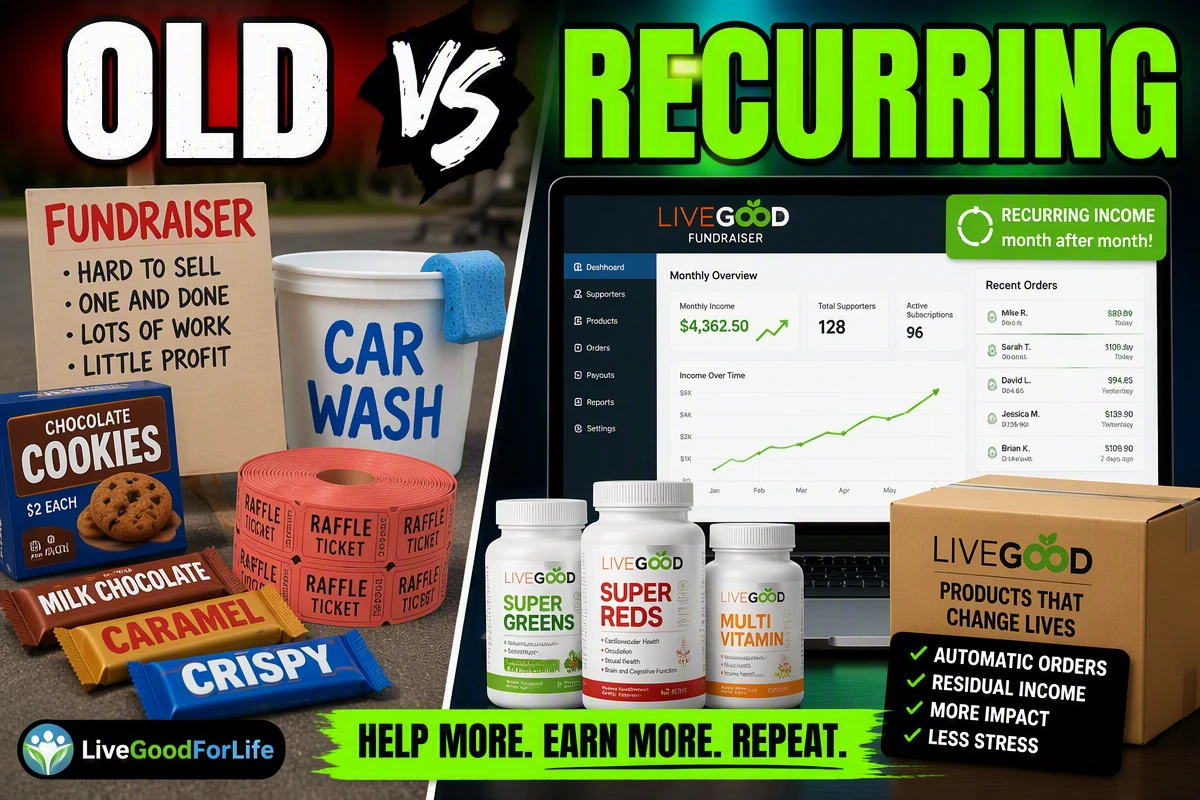
| Fundraiser type | What usually happens | Main limitation | LiveGood fundraiser angle |
|---|---|---|---|
| Cookie dough | Families sell tubs or boxes | Inventory, delivery, short window | Online sharing with no product handling |
| Candy bars | Participants sell individual items | Repeated pressure on the same buyers | Supporters choose wellness products online |
| Car wash | One-day local event | Weather, volunteers, location, time | Can be shared beyond one local day |
| Raffle tickets | People buy a chance to win | May need permits or prize planning | Supporters receive products they choose |
| Donation page | People give once | Usually one-time support | Repeat orders may create ongoing support |
Who Can Start a LiveGood Fundraiser?
A LiveGood fundraiser may fit almost any group with a real cause, a motivated organizer, and people willing to share. It is especially useful when the group wants a fundraiser that can be explained online, shared quickly, and repeated without storing products.
| Group | What they may raise money for | Why this model may fit |
|---|---|---|
| Schools, PTA, PTO | Classroom supplies, trips, programs, equipment | Parents can share online without managing boxes |
| Youth sports teams | Uniforms, travel, tournaments, training | Players and parents can share before and during the season |
| Churches and ministries | Youth programs, missions, outreach, community support | Support can come from a wider community network |
| Booster clubs | Band, cheer, football, basketball, baseball, soccer, hockey, gymnastics, wrestling, volleyball, dance, handball, swimming, track, and martial arts | Multiple families can share one clear fundraiser message |
| Animal rescues and shelters | Food, medical care, transport, adoption support | Supporters who care about health and pets may connect with the idea |
| Gyms and fitness groups | Competitions, events, member programs | Wellness products match the audience naturally |
| Community groups | Local projects, cleanups, emergency help, neighborhood needs | Easy to share by message, local pages, and social posts |
The Recurring Fundraiser Potential
The most interesting part of this fundraiser is the possibility of repeat support. With a normal campaign, someone buys once. They may enjoy the cookies, attend the car wash, buy the raffle ticket, or make a donation, but the transaction usually ends there.
With wellness products, the behavior can be different. If a supporter likes a product and continues ordering, the organization may continue to benefit from qualifying repeat orders connected to the fundraiser. That does not mean every supporter will reorder. It means the model is built around products that can be used repeatedly, not just one-time fundraising items.
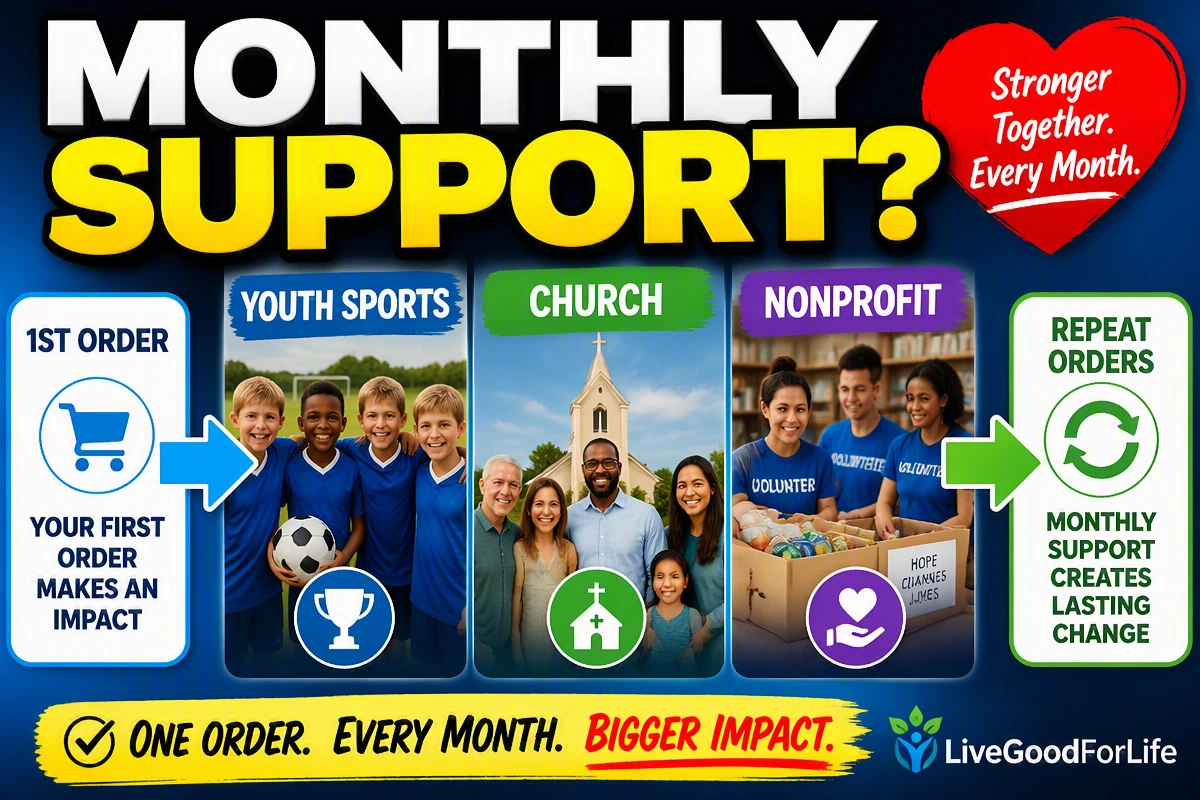
This is important for groups with ongoing needs. A football team does not only need support once. A church youth program does not only need support once. A rescue center does not only need food, transport, or veterinary help once. A school music program does not only need funds for one week. A fundraiser with possible recurring support can become part of a longer plan.
Why the Product Angle Matters
A fundraiser becomes easier to share when people understand what they are buying. LiveGood’s fundraiser is connected to wellness products such as multivitamins, magnesium, greens, reds, protein, hydration, collagen, probiotics, skincare, pet wellness, and other health-focused products. The official fundraiser product page shows a wide product range with retail and member pricing.
That product range matters because supporters can choose something that fits their own routine. One person may care about magnesium. Another may want greens. Another may look at hydration, protein, collagen, or pet wellness. A traditional fundraiser usually offers one product category. This model gives supporters more choice.
The value message also matters. LiveGood positions itself around premium ingredients, affordability, transparency, and third-party testing. For a fundraiser, that gives organizers a cleaner conversation: instead of asking people to buy overpriced items they may not want, the group can explain that supporters are looking at wellness products with everyday-use potential.
What I Like About the LiveGood Fundraiser
- No inventory pressure: organizers do not need to buy boxes upfront or store products.
- Simple online sharing: links can be shared through modern channels people already use.
- Useful product category: wellness products can be easier to explain than novelty fundraising items.
- Potential repeat support: qualifying repeat orders may continue helping the organization.
- Good fit for many groups: schools, teams, churches, clubs, nonprofits, rescues, gyms, and community causes can all understand the model.
- Less local limitation: supporters do not need to attend an event in person.
What to Be Careful About
No fundraiser is magic. The LiveGood fundraiser still needs organization, clear messaging, and follow-up. A group should not expect money to appear just because a link exists. The best results usually come when leaders explain the goal, invite participants properly, give supporters a simple reason to care, and keep communication consistent.
- Do not promise guaranteed income. Results depend on real orders and repeat customer behavior.
- Do not spam people. Share respectfully and explain the cause clearly.
- Do not hide the wellness product angle. Supporters should understand what they are buying.
- Do not make medical claims. Keep the message about products, value, and fundraising support.
- Do not launch without a plan. Prepare messages, participant instructions, and reminder posts before starting.
Best Way to Launch This Fundraiser
The best launch is simple and organized. Start with a clear fundraising goal, then make the first message easy for people to understand. Supporters should know who the fundraiser helps, what the money is for, and why this option is different from old fundraisers.
- Pick one clear goal. Example: “Help our team raise money for tournament travel.”
- Explain the fundraiser in one paragraph. Keep it simple: online wellness products, no inventory, possible repeat support.
- Invite participants. Give them simple share text they can send to friends and family.
- Share during launch week. Use text messages, Facebook groups, email, newsletters, team chats, and church/community announcements.
- Post progress updates. Thank supporters and remind people what the fundraiser supports.
- Follow up respectfully. A few reminders are helpful. Too many messages can make people tune out.
LiveGood Fundraiser vs GoFundMe
GoFundMe and donation pages can be useful when a group needs direct donations. They are simple to explain and can work well for emergencies, medical help, memorials, urgent repairs, or one-time needs. The limitation is that most donations are one-time gifts.
The LiveGood fundraiser is different because supporters are not only donating. They are choosing products. If they like the products and continue ordering, the organization may continue receiving support from qualifying repeat orders. For groups with recurring needs, that can be a major difference.
| Option | Best for | Weak point | Recurring potential |
|---|---|---|---|
| GoFundMe | Urgent one-time needs | Supporters usually donate once | Low unless donors keep giving manually |
| Traditional fundraiser | Short local campaigns | Inventory, delivery, campaign fatigue | Usually low |
| LiveGood fundraiser | Groups that can share online consistently | Needs clear communication and real product interest | Possible when customers reorder |
Is the LiveGood Fundraiser Legit?
Based on the official fundraiser materials reviewed, the fundraiser has a real structure: free signup messaging, participant sharing, connected tracking links, qualifying order commissions, repeat-order potential, and dashboard tracking. That does not mean every group will get the same result. Legit does not mean guaranteed. It means the model can be reviewed, explained, and used with realistic expectations.
The best approach is to be transparent. Tell people what the fundraiser is. Tell them the organization may benefit from qualifying purchases. Tell them they should only order products they actually want. That builds more trust than pressure selling.
Who This Fundraiser Is Best For
This fundraiser is best for groups that already have people willing to help share a cause. It can work especially well when the audience cares about health, fitness, family wellness, sports performance, nutrition, energy, recovery, skincare, or pet wellness.
- School classes, PTAs, PTOs, and booster clubs
- Football, basketball, baseball, soccer, hockey, volleyball, handball, wrestling, gymnastics, dance, cheer, swimming, track, and martial arts teams
- Churches, youth groups, mission teams, ministries, and outreach groups
- Animal rescues, shelters, veterinary support causes, pet centers, and zoo support groups
- Gyms, fitness challenges, wellness clubs, and health communities
- Art clubs, music programs, theater groups, travel clubs, and local nonprofits
Who It May Not Fit
This may not be the best fundraiser for a group that wants only a one-day event, does not want to share online, has no one willing to follow up, or feels uncomfortable explaining wellness products. It also may not fit groups that need guaranteed funds by a fixed date without depending on supporter action.
For those groups, a direct donation campaign, sponsored event, or local fundraiser may be better. The strongest use case for LiveGood fundraising is when the organization wants a modern online option with potential repeat support over time.
Simple Share Message for Organizers
Here is a simple message a group could adapt:
We are raising money for our group through an online wellness fundraiser. Instead of selling candy or handling inventory, supporters can choose health and wellness products online. Our organization may receive support from qualifying orders, and repeat orders may continue helping us over time. Thank you for supporting our team and our goal.
FAQ
Is the LiveGood fundraiser free to start?
LiveGood fundraiser materials describe the signup process as free to start for organizations. Organizers should review the current signup details before launching because program details can change.
How much can an organization earn?
The fundraiser is commonly presented as 20% on initial qualifying orders and 10% on qualifying repeat orders. Actual results depend on participation, customer orders, repeat behavior, and program terms.
Does the group need to buy inventory?
No inventory is the main advantage. The fundraiser is shared online, and supporters choose products through connected links instead of buying from boxes or paper forms.
Is this better than selling candy?
It can be better for groups that want a healthier, online, easier-to-share option. Candy fundraisers can still work locally, but they are usually short-term and require repeated selling.
Can sports teams use this fundraiser?
Yes. Sports teams may be one of the strongest fits because parents, players, coaches, relatives, and local supporters can all share the fundraiser before and during the season.
Can churches and nonprofits use it?
Yes. Churches, ministries, youth groups, nonprofits, rescue groups, and local community organizations may use this type of fundraiser when they have a cause people understand and a team willing to share it.
Does recurring income happen automatically?
No. Recurring support depends on customers placing qualifying repeat orders. The model has recurring potential, but results are not guaranteed.
Final Verdict
The LiveGood fundraiser is worth reviewing if your organization wants a cleaner alternative to candy, cookie dough, car washes, raffles, and one-time donation drives. The strongest benefit is not just that it is online. The strongest benefit is the possibility of repeat support when customers continue ordering qualifying wellness products.
It is not a guaranteed-income solution, and it still needs effort. But for a school, team, church, booster club, nonprofit, animal rescue, gym group, or community cause with people willing to share, it may be a practical way to build support without inventory, deliveries, or constant old-style fundraising fatigue.