Natural Remedies for Estrogen Dominance: Symptoms, High-Estrogen Foods, and a Science-First Plan
Last updated: February 2026
If you suspect estrogen dominance, you’re probably dealing with some mix of bloating, intense PMS, mood swings, breast tenderness, or stubborn weight changes that feel “hormonal.”
The good news: for many women, the most effective “natural remedies” aren’t extreme detoxes—they’re simple daily habits that support how your body processes and clears hormones. Written for education using reputable medical references and symptom-first tracking.
In this guide, you’ll learn:
- The most common estrogen dominance symptoms (and what “high estrogen” can feel like)
- How to think about high-estrogen foods and estrogen-rich foods without fear-mongering
- a practical plan to support estrogen metabolism and what “estrogen detox” really means
Quick safety note: This article is educational and not medical advice. If you’re pregnant, breastfeeding, have severe symptoms, or take prescription medications, check with a qualified clinician.
For the full supplement overview, see 10 Best Supplements for Hormone Balance (Science-Backed)
What Is Estrogen Dominance?
Estrogen dominance is a term people use when estrogen’s effects feel stronger than progesterone’s—often showing up as heavier PMS, bloating, breast tenderness, headaches, or mood swings. It doesn’t always mean estrogen is “too high.” Sometimes it’s more about lower progesterone, higher stress, or how your body processes hormones.
Estrogen vs. progesterone (why “balance” matters)
Estrogen and progesterone work as a team across your cycle. In plain English, estrogen is often associated with more “activation” (energy, stimulation), while progesterone is often linked to more “stability” (calm, steady mood, smoother sleep). When progesterone runs lower (common in certain phases and in perimenopause), symptoms can feel louder—even if estrogen isn’t extreme.
Why symptoms can happen even with “normal” labs
Hormones change throughout the month, so a single lab snapshot can look “normal” while symptoms still show up. Symptoms can be driven by:
- timing (where you are in your cycle when tested)
- sensitivity to shifts (how your body reacts to normal ups/downs)
- lifestyle amplifiers like sleep debt, stress load, and blood sugar swings
Common causes that mimic estrogen dominance (stress, thyroid, iron, blood sugar)
A lot of “estrogen dominance” symptoms overlap with other common issues:
- Chronic stress: can worsen sleep, cravings, irritability, and cycle symptoms
- Thyroid issues: can affect fatigue, mood, weight changes, and cycle patterns
- Low iron/ferritin: can drive fatigue, weakness, low resilience
- Blood sugar swings: can increase cravings, anxiety-like feelings, and mood volatility
If symptoms are persistent, it’s smart to consider these foundations—not only hormones.
Estrogen Dominance vs. Other Common Look-Alikes
| If your main issue is… | It can look like estrogen dominance because… | A practical first step |
|---|---|---|
| Stress overload | PMS feels worse, mood swings, sleep disruption | Stabilize sleep + reduce late caffeine |
| Thyroid imbalance | Fatigue, mood shifts, cycle changes | Ask clinician about thyroid labs if symptoms persist |
| Low iron | Fatigue, headaches, low stamina | Check diet + consider labs if heavy periods |
| Blood sugar swings | Cravings, irritability, anxiety-like restlessness | Protein + fiber at breakfast for 7 days |
Estrogen Dominance Symptoms

Estrogen dominance symptoms can vary, but the common theme is PMS feels stronger, bloating is more noticeable, and mood feels less steady—especially in the second half of the cycle. If you want the fast symptom checklist, see 7 Signs of Hormone Imbalance in Women (Guide)!
The most common symptoms women report
These are the symptoms most commonly associated with estrogen dominance (not diagnostic on their own, but useful to track):
- More intense PMS (emotional or physical)
- Breast tenderness (often pre-period)
- Headaches (often cycle-linked)
- Bloating/water retention
- Mood swings/irritability
- Fatigue or low resilience
- Irregular cycles or changes in timing
Estrogen Dominance Symptoms (Quick Tracker)
| Symptom | What it can feel like | Track it (1–10) |
|---|---|---|
| PMS intensity | “Everything feels harder” pre-period | ___ |
| Bloating | Tight rings/waistline, puffy feeling | ___ |
| Breast tenderness | Sore, heavy, sensitive | ___ |
| Headaches | Cycle-linked head pressure/migraines | ___ |
| Mood swings | Irritable, tearful, reactive | ___ |
| Fatigue | Low stamina, low motivation | ___ |
| Cycle irregularity | Earlier/later than usual | ___ |
Estrogen dominance symptoms vs. perimenopause symptoms (quick compare)
Estrogen dominance and perimenopause overlap a lot, which is why they get confused.
Estrogen Dominance vs. Perimenopause (Quick Compare)
| Feature | Estrogen dominance pattern | Perimenopause pattern |
|---|---|---|
| Timing | Often predictable, worse in luteal phase (pre-period) | More irregular, varies month to month |
| PMS | Heavier PMS, breast tenderness, bloating | PMS can worsen, but patterns may shift quickly |
| Cycles | Can be regular or slightly irregular | Cycles often shorten/lengthen over time |
| Sleep | Can be affected, often stress-linked | Sleep disruption becomes more common |
| Mood | Mood shifts often cycle-linked | Mood changes may feel less predictable |
| Best first steps | Sleep, stress, fiber, steady meals | Sleep, stress, strength training, steady meals |
When to get checked (quick safety note):
If you have very heavy bleeding, missed cycles not explained by pregnancy/menopause, fainting, heart palpitations, or persistent insomnia, get medical guidance rather than self-treating.
High Estrogen Symptoms (What “Too Much Estrogen” Can Feel Like)
People search high estrogen symptoms, estrogen too high symptoms, or estrogen excess symptoms when they feel “puffy,” more emotionally reactive, or stuck in heavier PMS. Symptoms can’t confirm hormone levels on their own, but they’re useful signals—especially when they follow a clear cycle pattern. For a baseline understanding of estrogen’s role and hormone-related symptoms, MedlinePlus is a solid starting point: https://medlineplus.gov/hormones.html
Common “high estrogen” symptom themes (non-diagnostic):
- stronger PMS (physical + emotional)
- breast tenderness or swelling
- bloating / water retention
- headaches that feel cycle-linked
- mood swings, irritability, anxiety-like restlessness
- fatigue or low resilience
- heavier or more uncomfortable periods (varies by cause)
High Estrogen Symptoms (Quick Scan)
| Symptom cluster | What it can feel like | Most common timing |
|---|---|---|
| PMS intensity | “Everything feels louder” pre-period | Late luteal phase |
| Bloating / water retention | Puffy, tight waistline, swollen feeling | Pre-period |
| Breast tenderness | Sore, heavy, sensitive breasts | Pre-period |
| Headaches | Cycle-linked headaches/migraines | PMS/period window |
| Mood swings | Irritable, tearful, reactive | PMS window |
| Fatigue | Lower stamina, less motivation | Variable |
High estrogen symptoms vs. high cortisol symptoms
High estrogen and high cortisol can overlap—especially around mood, cravings, and sleep—but they often “feel” different in daily life. If you want a practical overview of how stress affects the body and symptoms, Mayo Clinic’s stress resources are a useful read.
High Estrogen vs. High Cortisol (How People Commonly Describe It)
| Pattern | High estrogen-style symptoms | High cortisol-style symptoms |
|---|---|---|
| Mood | Emotional swings, cycle-linked irritability | Edgy, anxious, “on” all day |
| Bloating | Water retention/bloating more noticeable | Cravings + stress eating patterns |
| Sleep | Disrupted more around PMS | Trouble winding down, night waking |
| Body cues | Breast tenderness, heavier PMS signals | Tension, racing thoughts, “wired but tired” |
| Timing | Often worse pre-period | Can feel constant or spike with stress |
When symptoms are a red flag (when to get checked)
Natural strategies can help, but some symptom patterns deserve medical guidance—especially if they’re new, severe, or escalating.
Get checked if you have:
- very heavy bleeding that disrupts life
- missed cycles not explained by pregnancy/menopause
- severe pelvic pain, fainting, or dizziness
- heart palpitations, chest pain, shortness of breath
- persistent insomnia with worsening anxiety
- symptoms changing rapidly over a few weeks
Self-care vs. Get checked
| If this is happening… | Try lifestyle support | Get medical guidance |
|---|---|---|
| Mild PMS + bloating | ✅ Yes | — |
| Moderate but stable symptoms | ✅ Yes (track 14 days) | If not improving |
| Very heavy or painful bleeding | — | ✅ Yes |
| Palpitations, fainting, severe anxiety | — | ✅ Yes |
| Symptoms worsening fast month-to-month | — | ✅ Yes |
Estrogen High Foods (What People Mean—and the Better Way to Think About It)
The phrase “estrogen high foods” is popular, but it’s often misunderstood. Most foods don’t “create estrogen” overnight—what usually matters more is your overall pattern: fiber intake, alcohol, ultra-processed foods, sleep, and stress. A helpful nutrition reference point for minerals and dietary patterns (including magnesium and broader nutrition context) is the NIH Office of Dietary Supplements.
Foods don’t “create estrogen” overnight—context matters
It’s more useful to think in terms of hormone-supportive patterns rather than “bad foods.” A single meal won’t cause estrogen dominance. Symptoms usually reflect weeks of inputs—sleep debt, stress load, low fiber, inconsistent meals, and sometimes alcohol.
Better framing than “estrogen foods”
| Popular belief | Better way to think about it |
|---|---|
| “This food spikes estrogen” | Hormones respond to patterns over time |
| “I need to avoid everything estrogenic” | Focus on fiber, steady meals, and sleep first |
| “Detox foods fix it fast” | Support digestion + habits for 2–4 weeks |
The bigger drivers: alcohol, ultra-processed foods, and low fiber
If you want the highest-impact levers, start here:
- Alcohol: often worsens sleep and PMS intensity
- Ultra-processed foods: can displace protein/fiber and amplify cravings
- Low fiber: can worsen constipation and bloating, which makes symptoms feel louder
High-impact food levers (simple upgrades)
| Driver | Why it matters | Simple upgrade |
|---|---|---|
| Alcohol | Sleep disruption → worse PMS/mood | Reduce frequency; avoid late drinking |
| Ultra-processed foods | Cravings + less fiber/protein | Swap 1 snack/day for real food |
| Low fiber | Worse bloating/regularity | Add beans/berries/greens daily |
The most common “estrogen high foods” questions (soy, dairy, flax)
These are the three most searched topics—so the goal is calm clarity, not fear.
Soy: Soy contains phytoestrogens, which are not the same as human estrogen. For most people, moderate soy intake fits into a balanced diet. If you suspect sensitivity, reduce it for 14 days and track symptoms.
Dairy: Dairy doesn’t automatically cause high estrogen symptoms. Some people feel better reducing dairy due to digestion or skin sensitivity. If dairy worsens bloating, run a 14-day trial and compare your tracker scores.
Flax: Flax is a fiber-rich food often included in hormone-friendly eating patterns. If you tolerate it, it’s an easy add-in (smoothies, oats) because improving fiber intake is one of the most consistent “wins” for symptom support.
Soy vs. Dairy vs. Flax (practical approach)
| Food | Why people worry | Best realistic approach |
|---|---|---|
| Soy | “Estrogenic” fear | Keep moderate; track your response |
| Dairy | Bloating/skin sensitivity | Trial 14 days if symptoms flare |
| Flax | “Hormone balance” claims | Use as fiber add-in if tolerated |
Mini takeaway: The most reliable food strategy for estrogen-style symptoms isn’t cutting random foods—it’s building steady meals with protein + fiber, limiting alcohol if it worsens PMS/sleep, and tracking results for 14 days.
Estrogen-Rich Foods vs. Foods That Support Estrogen Balance
The terms “estrogen rich foods” and “estrogen natural foods” get searched a lot, but they often mix two different ideas: (1) foods that contain plant compounds that interact with estrogen receptors (phytoestrogens), and (2) foods that support the body’s overall hormone balance by improving digestion, blood sugar stability, and inflammation load. A helpful baseline on hormone basics is MedlinePlus.
Foods often called “estrogenic” (and why dosage matters)
Foods described as “estrogenic” usually contain phytoestrogens (plant compounds), not human estrogen. The most common examples people worry about are soy foods and flax. The key point is dose + pattern: one serving doesn’t “spike estrogen,” but your overall diet pattern can influence symptoms through sleep, stress, and digestion.
“Estrogenic foods” (common examples + practical approach)
| Food | Why it’s called “estrogenic” | Best realistic approach |
|---|---|---|
| Soy (tofu, edamame) | Contains phytoestrogens | Keep moderate; track your response |
| Flaxseed | Contains lignans + fiber | Add slowly; watch digestion |
| Legumes | Plant compounds + fiber | Usually helpful for fiber goals |
| Dried fruit / alcohol (often lumped in) | More about symptoms & sleep | Focus on overall pattern, not panic |
Quick rule: If you feel worse after a specific food, run a 14-day trial (remove → track → reintroduce). Your body’s response matters more than internet lists.
Fiber-first foods that support healthy estrogen metabolism
If you want one food strategy that consistently supports hormone symptom management, it’s fiber-first eating. Fiber supports regular digestion and steady blood sugar—two things that strongly influence bloating, cravings, and mood resilience. For a broader nutrition context, the NIH Office of Dietary Supplements is an excellent resource.
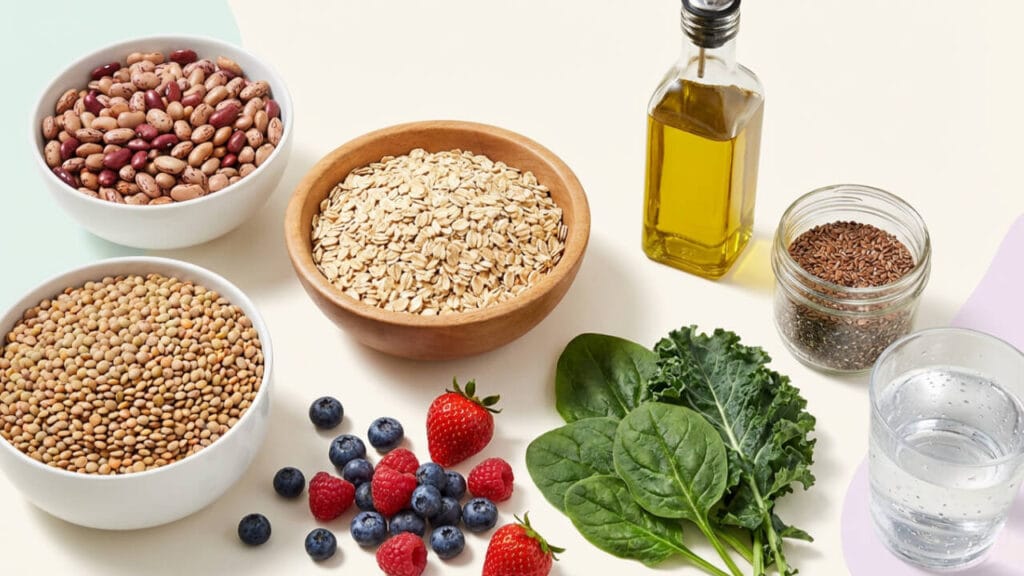
Fiber-first foods to prioritize:
- beans, lentils, chickpeas
- berries, apples, pears
- leafy greens + cruciferous vegetables (if tolerated)
- oats, whole grains
- chia and flax (start small if sensitive)
Fiber-first “swap list” (simple upgrades)
| Instead of… | Try… | Why it helps |
|---|---|---|
| Low-fiber breakfast | Greek yogurt + berries + chia | More protein + fiber → steadier mood/energy |
| Chips/cookies snack | Apple + nuts | Fewer blood sugar swings |
| White pasta most nights | Add beans + greens | Fiber supports regularity |
| Skipping veggies | Frozen veg mix | Easy consistency |
A simple 7-day “estrogen support plate” template
You don’t need a perfect diet—just a repeatable plate that stabilizes appetite and reduces “symptom chaos.” Use this template once per day for a week and track bloat, PMS intensity, and mood stability.
The plate formula:
- Protein: chicken, fish, eggs, Greek yogurt, tofu, beans
- Fiber: beans/lentils, oats, berries, leafy greens
- Color: at least 2 colors (greens + berries + peppers, etc.)
- Healthy fat: olive oil, avocado, nuts/seeds
7-day estrogen support plate (repeatable ideas)
| Day | Protein | Fiber | Color | Healthy fat |
|---|---|---|---|---|
| 1 | Eggs | Oats | Berries | Nuts |
| 2 | Chicken | Beans | Greens | Olive oil |
| 3 | Salmon | Lentils | Peppers | Avocado |
| 4 | Greek yogurt | Chia | Berries | Almonds |
| 5 | Tofu | Beans | Greens | Sesame/olive oil |
| 6 | Turkey | Whole grains | Mixed veg | Olive oil |
| 7 | Tuna/eggs | Lentils | Tomato + greens | Avocado |
Mini takeaway: In most cases, “estrogen support” food isn’t about banning foods—it’s about consistent protein + fiber so symptoms calm down over time.
Estrogen Metabolism (Plain-English Explanation)
Estrogen metabolism is simply how your body processes and clears estrogen. People often call this “estrogen detox,” but a more accurate framing is “supporting the systems that handle hormones”—especially digestion, liver processing, and regular elimination. Mayo Clinic’s overview of digestive health and constipation basics can be a useful general reference for understanding how digestion and regularity affect hormone-related symptoms.
How estrogen is processed and cleared (simple overview)
In plain English: your body uses the liver to process hormones, then your gut helps move waste out. When that system runs smoothly, you’re more likely to feel stable. When it’s sluggish (especially constipation + low fiber), symptoms like bloating and PMS intensity can feel worse.
Estrogen metabolism in simple steps
| Step | What happens | What supports it |
|---|---|---|
| 1) Process | Body prepares hormones for removal | Sleep + steady nutrition |
| 2) Move through gut | Waste gets carried through digestion | Fiber + hydration |
| 3) Eliminate | Regular bowel movements remove waste | Movement + routine |
Why digestion + regularity matter more than most people think
If digestion is slow, you may feel more bloated, more uncomfortable, and more sensitive around PMS. Regularity isn’t glamorous, but it’s a foundational signal that your basics (fiber, hydration, movement) are working.
Signs your digestion is “supporting you.”
| Green flags | Yellow flags |
|---|---|
| Regular bowel movements | Going only every few days |
| Less bloating after meals | Persistent bloating + discomfort |
| Stable appetite | Cravings + energy crashes |
| Better PMS resilience | PMS feels progressively worse |
What to do if you’re constipated (gentle, practical guidance)
Start with the lowest-drama fixes first. The goal is consistency, not extremes.
Step-by-step:
- Add 1 high-fiber food daily (beans, berries, oats)
- Hydrate earlier in the day (not all at night)
- Walk 10 minutes after one meal
- Try a “fiber + protein breakfast” for 7 days
- If you’re already sensitive, increase fiber slowly to avoid gas/bloating
Constipation support ladder (start at the top)
| Level | What to do | How long to test |
|---|---|---|
| 1 | Add beans/berries/oats daily | 7 days |
| 2 | Add 10-min walk after meals | 7 days |
| 3 | Increase hydration earlier | 7 days |
| 4 | Slowly increase total fiber | 2–4 weeks |
| 5 | If persistent, discuss with clinician | As needed |
Quick safety note: If constipation is severe, painful, or comes with bleeding, unexplained weight loss, or sudden changes that persist, get medical guidance rather than self-managing.
Estrogen Detox (What It Means and What Actually Helps)
The keyword “estrogen detox” is everywhere, but most people aren’t looking for a harsh cleanse—they’re looking for relief from bloating, PMS, mood swings, and that “my body isn’t clearing hormones well” feeling. A better, more accurate goal is supporting estrogen metabolism through habits that improve sleep, digestion, and stress resilience. For a clear, reputable overview of hormones and how the body uses them, MedlinePlus is a solid resource.
“Detox” vs. “support” (reframe without attacking)
Your body already has systems that handle hormones. What most “detox” plans really do (when they help) is improve the basics: they reduce alcohol and ultra-processed foods, increase fiber, and support sleep. So instead of “detoxing estrogen,” think: support the systems that process and eliminate hormones consistently.
“Estrogen detox” claims vs. what actually helps
| What people hope “detox” means | What usually helps in real life |
|---|---|
| “Flush estrogen fast” | Build consistency: sleep + fiber + movement |
| “One drink or cleanse fixes it” | Track symptoms for 14 days + adjust |
| “Avoid a list of scary foods” | Focus on protein + fiber + fewer ultra-processed foods |
| “Detox supplements do the work” | Habits create the baseline; supplements are optional |
The 4 biggest lifestyle levers (sleep, stress, fiber, movement)
If you only focus on four things, make it these. They’re the highest ROI “natural remedies” because they influence the exact drivers behind common estrogen-style symptoms.
1) Sleep: poor sleep amplifies PMS, cravings, mood reactivity, and stress sensitivity.
2) Stress: chronic stress can make symptoms feel worse even when labs look “normal.”
3) Fiber: supports regularity and steadier appetite, which reduces bloating and mood swings.
4) Movement: daily walking supports digestion, stress downshift, and appetite regulation.
The 4 levers + what to do today
| Lever | Why it matters | Simple action (today) |
|---|---|---|
| Sleep | Hormone symptoms feel louder when you’re sleep-deprived | Same bedtime for 3 nights |
| Stress | Stress can mimic “hormone imbalance” symptoms | 10-min wind-down (no screens) |
| Fiber | Helps regularity + steadier cravings | Add beans/berries/oats once daily |
| Movement | Supports digestion + stress response | 10-min walk after one meal |
The “minimum effective routine.”
If you’re overwhelmed, start here. This is the smallest plan that still works because it targets the biggest levers.
Minimum effective routine (14 days):
- 10-minute walk after meals (start with one meal/day)
- Bedtime consistency (same sleep/wake window)
- 25–35g fiber target (general guidance—build up gradually if sensitive)
Minimum Effective Routine (set it once, repeat daily)
| Habit | Goal | Easiest way to stick to it |
|---|---|---|
| Walk | 10 minutes after 1 meal | Tie it to lunch or dinner |
| Bedtime | Consistent schedule | Phone off 30 min before bed |
| Fiber | 25–35g/day (general) | Add 1 “fiber anchor” food daily |
Natural Remedies for Estrogen Dominance (The Step-by-Step Plan)
If you want the most practical, symptom-focused approach to natural remedies for estrogen dominance, this is it. The goal isn’t perfection—it’s a repeatable system that reduces bloating, stabilizes mood, and improves PMS over time.
Step 1 — Stabilize blood sugar (protein + fiber at breakfast)
Blood sugar swings can mimic “hormone chaos”: cravings, irritability, anxiety-like restlessness, and energy crashes. A protein + fiber breakfast is one of the fastest ways to calm that pattern.
Breakfast formula:
- Protein (eggs, Greek yogurt, tofu, chicken, protein smoothie)
- Fiber (berries, oats, chia/flax, beans if savory)
- Healthy fat (nuts, olive oil, avocado)
Blood sugar-stable breakfasts (pick one for 7 days)
| Option | Protein | Fiber | Bonus |
|---|---|---|---|
| Yogurt bowl | Greek yogurt | berries + chia | nuts |
| Savory plate | eggs/tofu | greens + beans | olive oil |
| Smoothie | protein base | berries + flax | nut butter |
| Oats upgrade | protein add-in | oats + berries | cinnamon |
Step 2 — Improve elimination (hydration + fiber + movement)
When digestion is slow, you often feel more bloated and more uncomfortable around PMS. You don’t need extremes—just consistent basics.
Daily basics:
- Hydrate earlier in the day
- Add one fiber anchor food (beans, berries, oats)
- Walk 10 minutes after one meal
Elimination support checklist
| Daily action | Why it helps | Track (yes/no) |
|---|---|---|
| Hydrate early | Supports digestion rhythm | ☐ |
| Fiber anchor | Improves regularity over time | ☐ |
| 10-min walk | Helps motility + stress | ☐ |
Step 3 — Reduce “estrogen load” inputs (alcohol, sleep debt, stress)
This isn’t about being strict—it’s about removing the biggest symptom amplifiers.
- Alcohol: often worsens sleep and bloating
- Sleep debt: makes mood and cravings harder to regulate
- Stress: increases symptom sensitivity and reactivity
High-impact reductions (choose one, not all)
| Input to reduce | Why it matters | Easy version |
|---|---|---|
| Alcohol | Worsens sleep → worse PMS/mood | Reduce frequency for 14 days |
| Late caffeine | Disrupts sleep quality | Cut off by early afternoon |
| Late-night screens | Wrecks wind-down | 30-min screen-free buffer |
| Ultra-processed snacks | Triggers cravings swings | Replace 1 snack/day |
Step 4 — Build a 14-day test (track 2–3 symptoms only)
This is how you make the plan measurable. Don’t track 12 metrics—track just the signals that matter most.
Track these daily (1–10):
- Bloat (1–10)
- PMS intensity (1–10)
- Mood resilience (1–10)
Table: 14-day symptom tracker (simple)
| Day | Bloat (1–10) | PMS intensity (1–10) | Mood resilience (1–10) |
|---|---|---|---|
| 1 | |||
| 2 | |||
| 3 | |||
| 4 | |||
| 5 | |||
| 6 | |||
| 7 | |||
| 8 | |||
| 9 | |||
| 10 | |||
| 11 | |||
| 12 | |||
| 13 | |||
| 14 |
Quick safety note: If symptoms are severe—very heavy bleeding, fainting, heart palpitations, severe pelvic pain, or worsening insomnia/anxiety—get medical guidance rather than self-treating.
Estrogen Dominance Treatment (Natural Approach vs. Medical Options)
When people search for estrogen dominance treatment, they’re usually asking two things: “What can I do naturally?” and “When should I stop guessing and get checked?” A balanced approach includes both—practical lifestyle changes plus medical support when symptoms suggest something more than a normal cycle variation.
What a natural plan can help with
A natural plan is most helpful when symptoms are mild-to-moderate and tied to lifestyle amplifiers like sleep debt, stress load, low fiber, and inconsistent meals. Many women notice improvements in:
- bloating and water retention
- PMS intensity and mood reactivity
- cravings and energy crashes
- sleep consistency and resilience
This is where your “minimum effective routine” and 14-day tracking shine—because you’re testing what helps instead of relying on vague advice.
Here’s the simplest way to think about it:
| Best fit for natural support | Better to involve a clinician sooner |
|---|---|
| Mild/moderate PMS, bloat, mood swings | Heavy bleeding, severe pain, fainting |
| Symptoms stable month-to-month | Symptoms escalating quickly over 2–3 cycles |
| Clear links to stress/sleep/food pattern | Signs of thyroid/PCOS or anemia concerns |
| You can track and test for 14 days | You can’t function normally due to symptoms |
When medical support is appropriate (heavy bleeding, severe symptoms, suspected PCOS/thyroid issues)
If bleeding is heavy or symptoms are severe, don’t try to “out-supplement” it. Heavy menstrual bleeding is a recognized medical issue and can signal underlying causes that need evaluation. ACOG’s patient guidance on heavy menstrual bleeding is a strong reference point.
Seek medical guidance sooner if you have:
- very heavy bleeding or bleeding that disrupts daily life
- severe pelvic pain or pain that’s new/worsening
- missed cycles not explained by pregnancy/menopause
- fainting, dizziness, palpitations, or shortness of breath
- signs that point toward PCOS (irregular cycles + acne/hair growth changes + weight shifts) — Endocrine Society overview.
- signs that point toward thyroid issues (persistent fatigue, hair changes, cold/heat intolerance, constipation, unexplained weight changes) — American Thyroid Association thyroid testing basics.
What labs people commonly discuss with clinicians (non-prescriptive)
Labs should match symptoms. These are commonly discussed topics to ask about—your clinician decides what’s appropriate.
| Concern pattern | Common clinician discussion points |
|---|---|
| Heavy periods + fatigue | Iron status (ferritin) + CBC for anemia |
| Irregular cycles + acne/hair changes | Androgen/hormone evaluation for PCOS |
| Persistent fatigue, constipation, hair changes | Thyroid function tests (TSH, often with Free T4) |
| Cravings/energy crashes + weight shifts | Blood sugar markers (screening based on history) |
Estrogen Dominance in Perimenopause
The keyword estrogen dominance in perimenopause is popular because many women feel “hormonal” in their late 30s and 40s—but symptoms can become more unpredictable. Perimenopause often starts with changes in period patterns (including irregularity) and can include mood changes, sleep problems, and brain fog. NHS guidance is a strong reference to read.
Why symptoms can feel stronger in your 40s
In perimenopause, hormone patterns can fluctuate more from month to month. That can make PMS, sleep disruption, and mood changes feel more intense—or simply less predictable. Irregular periods are commonly one of the earliest signs noted in NHS resources.
The most helpful basics to prioritize first
When symptoms are fluctuating, the “basics” become even more powerful because they stabilize your day-to-day experience:
- consistent sleep and wake time
- steady meals (protein + fiber)
- daily movement (walks + strength work)
- alcohol reduction if it worsens sleep/PMS
- fiber-first eating for digestion and appetite stability
The “after 40” support framework
Use this as a simple weekly framework:
| Focus | What to do | Why it matters |
|---|---|---|
| Sleep | Consistent bedtime 5 nights/week | Better resilience + fewer cravings |
| Meals | Protein + fiber breakfast daily | Fewer mood/energy swings |
| Movement | 10-min walk after one meal + 2 strength sessions/week | Better stress handling + metabolism |
| Fiber | Add one “fiber anchor” food daily | Regularity + bloat support |
If you’re in your 40s, start with the Best Vitamins for Hormone Balance After 40 guide.
Supplements That Fit an Estrogen-Support Routine (Optional)
This section stays educational on purpose: supplements can support foundations, but they don’t replace sleep, food consistency, and stress reduction. The best “supplement strategy” is less, but consistent.
Start with foundations (not 12 supplements at once)
If you add too many products at once, you won’t know what helped (or what caused side effects). A cleaner approach:
- Build the food + sleep baseline first
- Add one supplement category at a time
- Track symptoms for 14 days
| Goal | Foundation first | Then consider (optional) |
|---|---|---|
| PMS + mood resilience | Sleep + steady meals | One targeted addition, track 14 days |
| Bloat + digestion | Fiber + hydration + movement | Add-on only if basics are consistent |
| Energy + recovery | Protein + strength training | Supportive options, one at a time |
What to look for on labels (avoid fairy-dusting)
Look for:
- clearly listed amounts (not vague blends)
- a sensible serving size (not 12 pills/day unless necessary)
- ingredients you recognize and can tolerate
- avoid stacking duplicates (multi + separate zinc/iron + other blends)
If you want a quick refresher, see How to Read Supplement Labels (Fairy Dusting):
Simple ‘foundation stack’ (food-first + basics)
A simple foundation stack is about covering basics—not “treating estrogen dominance.”
Common, general-wellness categories many people start with:
- a multivitamin to cover nutritional gaps
- black seed oil as part of a general wellness routine
- essential aminos for protein support and recovery (especially if intake is inconsistent)
For a complete supplement breakdown, see 10 Best Supplements for Hormone Balance (Science-Backed Guide for 2026).
FAQ
What happens if a female lacks estrogen?
Low estrogen can show up as irregular or missed periods, vaginal dryness, sleep disruption, mood changes, hot flashes, and lower libido. It can also affect bone health over time. Because these symptoms overlap with thyroid issues, anemia, chronic stress, and perimenopause, it’s best to treat low estrogen as a “get context + get checked” situation rather than guessing.
Helpful overview here.
How can I tell if my estrogen is low?
The most useful first step is symptom and cycle tracking (cycle length, bleeding changes, hot flashes, sleep, mood), followed by discussing whether lab testing makes sense for your situation. One-off “random” labs without timing context can be misleading, so clinicians often interpret results in the context of cycle stage, age, and symptoms.
What does a woman with low estrogen look like?
There isn’t a reliable “look.” Some women notice skin dryness, changes in body composition, or hair changes, but these are non-specific and can also relate to nutrition, stress, thyroid, and sleep. It’s more accurate to focus on patterns (cycle changes, hot flashes, vaginal dryness, sleep disruption) rather than appearance.
How do I check my estrogen level at home?
At-home hormone tests exist, but they can be tricky to interpret because estrogen fluctuates across the cycle and results depend heavily on timing. If you use home testing, treat it as screening data, then confirm with a clinician if symptoms are significant. A reputable clinician-guided explanation of menopause/hormone transition is a good guide to read.
Does estrogen cause headaches?
Hormone shifts can influence headaches in some people—especially around cycle transitions. It’s often the change (up or down) rather than a single “high estrogen” number. If headaches are severe, new, or accompanied by neurological symptoms (vision changes, weakness, fainting), get medical guidance promptly.
What are the downsides of taking estrogen?
Estrogen therapy can be helpful for specific situations (often menopause-related symptoms), but it isn’t a DIY decision. Risks and benefits depend on age, symptom severity, medical history, and whether progesterone is needed for uterine protection. This is a clinician-guided conversation, not a “try it and see.”
Bottom Line
Most estrogen-dominance-style symptoms improve when you nail the basics: sleep consistency, stress reduction, fiber-first meals, daily movement, and stable protein intake. Run a 14-day tracker (bloat, PMS intensity, mood resilience) so you can see what’s actually changing instead of guessing. If you have red flags (very heavy bleeding, fainting, palpitations, severe pelvic pain, or rapidly worsening symptoms), get checked. For the full supplement overview, go here.
Disclaimer
This article is for educational purposes and is not medical advice. If you are pregnant, breastfeeding, have a medical condition (especially thyroid or kidney issues), take prescription medications, or have severe symptoms (very heavy bleeding, fainting, heart palpitations, persistent insomnia), consult a qualified healthcare professional before making changes or using supplements.