7 Signs of Hormone Imbalance in Women (2026 Guide)
Have you felt different lately — more tired than usual, more sensitive, gaining weight without changing anything — yet every test says you’re “fine”?
It can be frustrating when something clearly feels off, but there’s no clear explanation.
Many women start searching for the signs of hormone imbalance in women when everyday life begins to feel harder than it should. Energy drops. Mood shifts. Sleep changes. The body responds differently — even when habits haven’t.
You might wonder if you’re overthinking it.
You’re not.
Hormones are powerful chemical messengers that influence nearly every system in your body — metabolism, mood, sleep, weight regulation, skin health, reproductive function, and energy levels. When they’re balanced, you feel stable and steady. When they’re not, the changes can be gradual, subtle, and confusing.
How Do You Know If Your Hormones Are Off?
Hormone imbalance symptoms often overlap with stress, aging, and lifestyle changes. The key difference is pattern and persistence. When multiple symptoms appear together, last for weeks or months, or recur around your cycle, it may point to a deeper hormonal shift.
Understanding the early signs of hormone imbalance in women allows you to respond sooner — before symptoms become more disruptive.
If you want a complete breakdown of how female hormones interact and affect long-term health, read our comprehensive guide on Hormone Balance in Women.
In this guide, you’ll learn:
- The most common signs of hormone imbalance in women
- Why these symptoms happen biologically
- How modern lifestyle factors contribute
- Practical steps to begin supporting hormone balance naturally
Hormonal changes often begin subtly. Below are the seven most common signs of hormone imbalance in women, starting with the most visible and measurable indicator.
1. Irregular Periods
Your menstrual cycle is one of the clearest indicators of hormonal health.
If your period suddenly becomes:
- Heavier than usual
- Much lighter
- Shorter or longer than normal
- Completely unpredictable
- Accompanied by spotting between cycles
It may signal an imbalance between estrogen and progesterone.
These two hormones must rise and fall in a precise rhythm. When stress, poor sleep, blood sugar instability, or age-related shifts interfere, that rhythm gets disrupted.
Cycle changes are especially common during perimenopause, but they can also occur in women in their 20s and 30s under chronic stress. If your cycle has been inconsistent for more than a few months, it’s worth investigating.
2. Persistent Fatigue (Even After Sleeping)
Waking up exhausted after 7–8 hours of sleep is one of the most overlooked symptoms of hormonal imbalance.
This kind of fatigue is often linked to:
- Cortisol dysregulation
- Thyroid imbalance
- Blood sugar swings
- Low progesterone
Cortisol, your stress hormone, is meant to follow a daily rhythm — high in the morning, lower at night. Chronic stress can flatten or spike this rhythm, leaving you wired at night and drained during the day. If you rely on caffeine just to feel functional, hormones may be involved.
3. Unexplained Weight Gain (Especially Around the Midsection)
If your habits haven’t changed but your body has, hormones may be influencing fat storage.
Common hormonal contributors include:
- Elevated cortisol
- Insulin resistance
- Estrogen dominance
- Thyroid slowdown
High cortisol in particular encourages fat storage around the abdomen. Meanwhile, insulin resistance can make weight gain easier and fat loss harder.
After age 35, natural progesterone decline can also shift how the body responds to stress and stores fat. This isn’t just about calories. It’s about chemistry.
4. Mood Swings, Anxiety, or Increased Irritability
Hormones don’t just affect your body — they affect your brain.
Estrogen and progesterone influence neurotransmitters like serotonin and dopamine. When these hormones fluctuate, mood stability can change.
You may notice:
- Increased anxiety
- Sudden mood swings
- Irritability before your cycle
- Feeling emotionally overwhelmed
Many women describe this as feeling unlike themselves. Hormonal mood changes are biological, not personal weakness.
5. Adult Acne or Skin Changes
Breakouts along the jawline or chin are often hormonally driven.
Hormonal acne tends to:
- Appear cyclically
- Worsen before menstruation
- Feel deeper and more inflamed
Androgens (hormones women also produce in smaller amounts) can increase oil production, especially when stress levels rise. Skin is often one of the first visible indicators that something internal has shifted.
6. Low Libido
A decline in sex drive is common — but rarely talked about openly.
Low libido may be associated with:
- Lower estrogen levels
- Reduced testosterone
- Chronic stress
- Thyroid dysfunction
When the body is in survival mode, reproduction becomes secondary. High stress suppresses sex hormones. If you feel disconnected from desire, it may be hormonal — not relational.
7. Sleep Disruption
Trouble falling asleep or waking up between 2–4 AM consistently can signal hormone imbalance.
Possible causes include:
- Nighttime cortisol spikes
- Declining progesterone
- Blood sugar dips
- Estrogen fluctuations
Progesterone has calming properties. As it declines in the late 30s and 40s, sleep can become lighter and more fragmented. Poor sleep then worsens hormonal balance further — creating a cycle.
Left unaddressed, an ongoing hormonal imbalance can compound over time — affecting metabolic health, bone density, cardiovascular function, and overall quality of life. Early awareness allows for earlier intervention.
How Hormones Work Together (The Domino Effect)
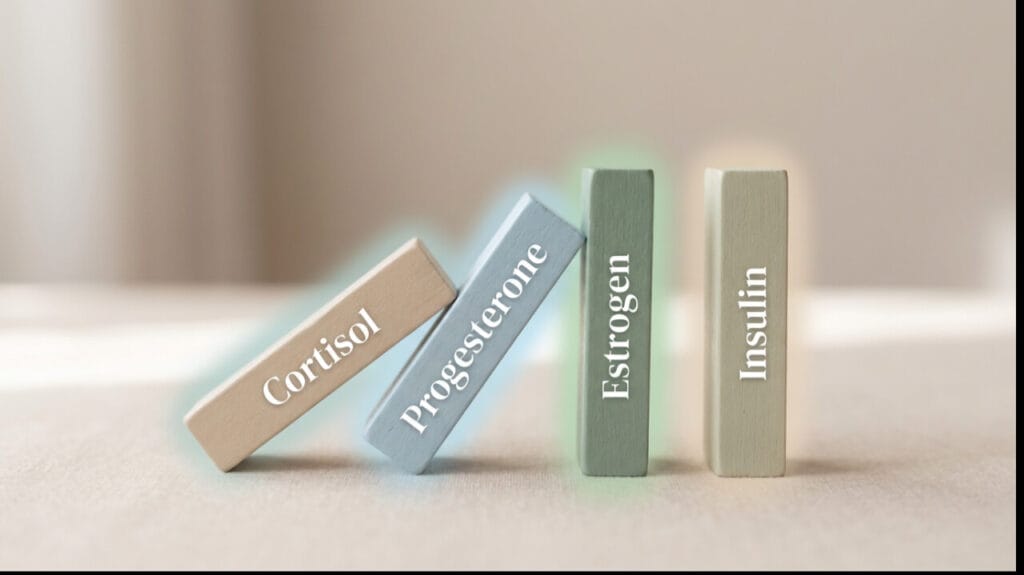
Hormones don’t operate independently. They function as a network.
For example:
- Chronic stress raises cortisol.
- Elevated cortisol suppresses progesterone.
- Low progesterone allows estrogen to dominate.
- Estrogen dominance can influence mood, weight, and cycle irregularity.
Research consistently shows that chronic stress can suppress reproductive hormones by prioritizing cortisol production — a survival mechanism designed to protect the body during perceived threat.
Meanwhile, blood sugar instability increases insulin secretion, further disrupting ovarian hormone levels. It’s rarely just “one hormone.” It’s usually a cascade. That’s why symptoms often overlap.
That’s also why the most effective approach is usually foundational—sleep, stress, nutrition, and consistency—before chasing quick fixes.
Why Hormone Imbalance Happens (And Why It’s More Common Today)
Modern lifestyle patterns are not hormone-friendly.
Contributors include:
- Constant psychological stress
- Inconsistent sleep schedules
- Ultra-processed diets
- Sedentary behavior
- Environmental toxin exposure
- Chronic blood sugar spikes
Many women are living in a prolonged stress response without realizing it. When stress becomes constant, hormone balance becomes difficult.
The Role of Thyroid and Insulin in Hormone Imbalance
While estrogen and progesterone often get the most attention, thyroid hormones and insulin also play critical roles in hormonal balance.
Thyroid hormones regulate metabolism and energy production. When thyroid function slows, symptoms like fatigue, weight gain, hair thinning, and mood changes can appear.
Insulin regulates blood sugar. Chronic blood sugar spikes can increase insulin resistance, which may influence ovarian hormone balance and fat storage patterns.
Because these systems are interconnected, addressing hormone imbalance often requires looking beyond just reproductive hormones. If symptoms persist, ask your healthcare provider about a full thyroid panel and metabolic markers—not just a basic screening.
How to Support Hormone Balance Naturally

Hormone balance is rarely restored through a single change. Because hormones function as a network, improvement usually requires addressing multiple lifestyle factors simultaneously.
Severe imbalances require medical guidance. However, many women experience noticeable improvements by strengthening core daily habits first.
1. Stabilize Blood Sugar
Eat protein with every meal.
Avoid skipping meals.
Limit refined carbohydrates.
Balanced blood sugar supports stable cortisol and insulin levels.
2. Prioritize Sleep Consistency
Aim for 7–9 hours nightly.
Go to bed at consistent times.
Reduce screen exposure before sleep.
Sleep is when hormone regulation resets.
3. Reduce Chronic Stress
Incorporate:
- Daily walking
- Strength training
- Breathwork
- Outdoor exposure
Even 20–30 minutes of consistent movement or stress-reduction practice daily can gradually improve cortisol rhythm.
4. Address Nutritional Gaps
Many women are low in essential vitamins and minerals that support overall wellness.
For example:
- Hormonal Balance for Women – $14.95 Member Price
- Premium Black Seed Oil (5% Thymoquinone) – $14.95 Member Price
- Essential Aminos – $21.95 Member Price
LiveGood operates on a low $9.95 monthly membership model that gives members access to wholesale-level pricing on high-quality supplements.
By removing traditional retail markups, this model helps reduce long-term supplement costs while maintaining product transparency. For individuals committed to consistently supporting hormone balance, affordability can significantly affect sustainability.
When Should You Get Hormone Testing?
Consider professional evaluation if:
- Symptoms persist longer than 3 months
- Your period stops unexpectedly
- Anxiety or depression becomes severe
- Rapid unexplained weight gain occurs
- Hair thinning accelerates
A healthcare provider may assess thyroid function, estrogen, progesterone, insulin, testosterone, and cortisol levels.
Frequently Asked Questions
What are the most common symptoms of hormone imbalance in women?
Irregular periods, fatigue, weight gain, mood swings, sleep problems, acne, and low libido are among the most reported signs.
Can stress really cause hormone imbalance?
Yes. Chronic stress elevates cortisol, which can suppress progesterone and disrupt reproductive hormone balance.
At what age do hormonal changes begin?
Many women begin noticing subtle shifts in their mid-to-late 30s during early perimenopause.
Can lifestyle changes improve hormone balance?
For mild imbalances, improving sleep, stress management, blood sugar control, and nutrient intake can significantly help.
Personalized Health Assessment

If you’ve recognized several of the signs of hormone imbalance in women, clarity should come before action.
A structured health assessment can help you better understand areas such as stress load, metabolic balance, recovery patterns, and overall wellness status. The questionnaire takes only a few minutes and generates a personalized report based on your responses.
Instead of guessing what your body needs, start with informed direction. This assessment is informational and not a medical diagnosis, but it can help you identify areas to focus on.
Take the free health assessment and review your personalized report today.
Final Thoughts
Hormone imbalance rarely happens overnight.
It develops gradually — through accumulated stress, disrupted sleep, nutritional gaps, and natural life transitions.
If you’ve recognized multiple signs of hormone imbalance in women, your body may not be failing — it may be signaling.
The goal is not perfection. It’s a regulation.
Start with awareness. Strengthen the foundations. Seek professional guidance when necessary. And give your body the support it needs to restore balance. For a deeper understanding of root causes and long-term strategies, visit our main hormone balance guide.
Medical Disclaimer
The information provided in this article is for educational and informational purposes only and is not intended as medical advice. It should not be used as a substitute for professional diagnosis, treatment, or medical guidance from a qualified healthcare provider. Always consult your physician or another licensed medical professional before making changes to your diet, supplement routine, or lifestyle — especially if you are pregnant, nursing, taking medication, or managing a medical condition.
Hormone-related symptoms can have multiple causes. Proper testing and professional evaluation are essential before making health decisions.
This article may contain affiliate links. If you choose to purchase through these links, I may earn a commission at no additional cost to you. I only recommend products that align with the topic discussed and that I believe provide value. Your support helps maintain and grow this educational content.