Plant-Based Protein vs Whey: Which Builds Muscle Better?
⚡ Quick Answer
Whey is usually more concentrated in leucine, but plant-based protein can still support muscle building when total protein, amino acids, calories, and training are consistent. Choose whey if you tolerate dairy; choose plant protein if you avoid dairy. Compare LiveGood Plant-Based Protein and Whey Protein before buying.
📌 Safety First
- Protein powders are not required for muscle building if you already meet your protein needs through food.
- Protein powder does not guarantee muscle growth. Training, total protein, calories, sleep, and consistency matter.
- Ask a healthcare professional before increasing protein intake if you have kidney disease, liver disease, digestive conditions, food allergies, pregnancy or breastfeeding considerations, or a medically restricted diet.
- Whey protein is dairy-based and is not suitable for people with milk allergy or people avoiding animal-derived foods.
- Dietary supplements are not FDA-approved to diagnose, treat, cure, or prevent disease.
Plant-Based Protein vs Whey
Which Is Better for Muscle Building?
The best protein is not always the one with the loudest claim. For muscle building, the real question is protein quality, leucine, total daily intake, digestion, diet preference, and whether you can use it consistently.
Affiliate disclosure: I may earn a commission if you purchase through my links, at no extra cost to you.
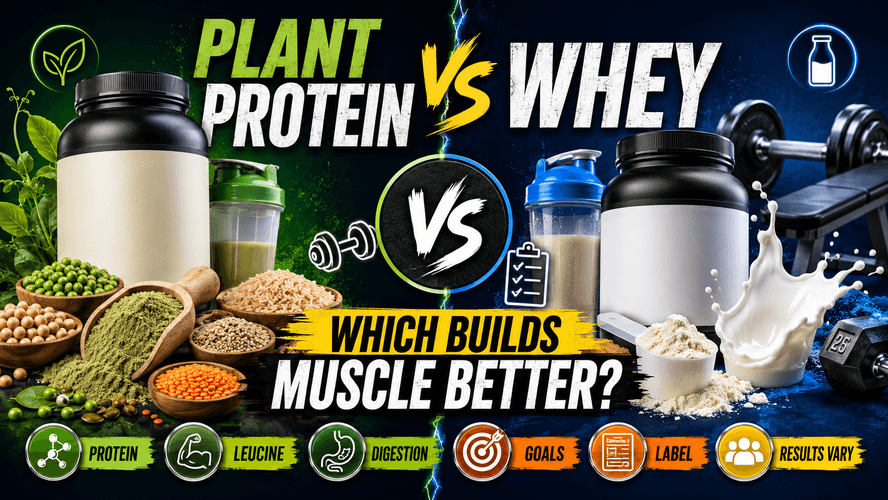
Quick Answer: Which One Builds Muscle Better?
Whey often has an advantage for leucine and fast digestion, which is why it is popular after workouts. But plant-based protein can still be effective when you get enough total protein and essential amino acids across the day.
🥛 Whey May Fit If
- you tolerate dairy
- you want a complete protein with a strong amino acid profile
- you prefer a creamy shake texture
- you want a simple post-workout protein option
🌱 Plant Protein May Fit If
- you avoid dairy
- you follow a vegan or mostly plant-based routine
- you prefer plant ingredients
- you want a protein powder for smoothies, oats, or daily meals
💪 The Real Muscle-Building Rule
Muscle building depends on progressive resistance training, enough total daily protein, enough calories, recovery, sleep, and consistency. Protein powder is a tool, not a guarantee.
What Actually Matters for Muscle Building?
The International Society of Sports Nutrition notes that resistance exercise and protein intake both stimulate muscle protein synthesis, and it lists a common daily protein range of 1.4–2.0 g/kg/day for many exercising individuals. It also notes that 20–40 g of high-quality protein per serving is a common practical range for athletes. Read the ISSN protein and exercise position stand.
Plain English: The best protein powder is the one that helps you hit your daily protein target, gives enough essential amino acids, fits your digestion, matches your diet, and is easy to use consistently.
Protein Quality, Leucine, and Total Intake
Whey usually scores well for essential amino acids and leucine. Plant proteins can vary more by source, so blends are often used to create a more balanced amino acid profile. For everyday results, total daily protein and training consistency usually matter more than arguing over one scoop.
Protein Per Serving
Both LiveGood Plant-Based Protein and LiveGood Whey Protein Isolate are listed as providing 20g protein per serving. Always confirm on the current label before buying.
Leucine
Leucine is one of the amino acids often discussed in muscle protein synthesis. Whey is usually naturally rich in leucine. Plant protein blends can still contribute meaningfully, especially when total protein intake is adequate.
Digestion and Tolerance
Whey may not fit people with milk allergy or strong dairy sensitivity. Plant protein may feel heavier or grainier for some people. Taste, texture, and tolerance matter because consistency matters.
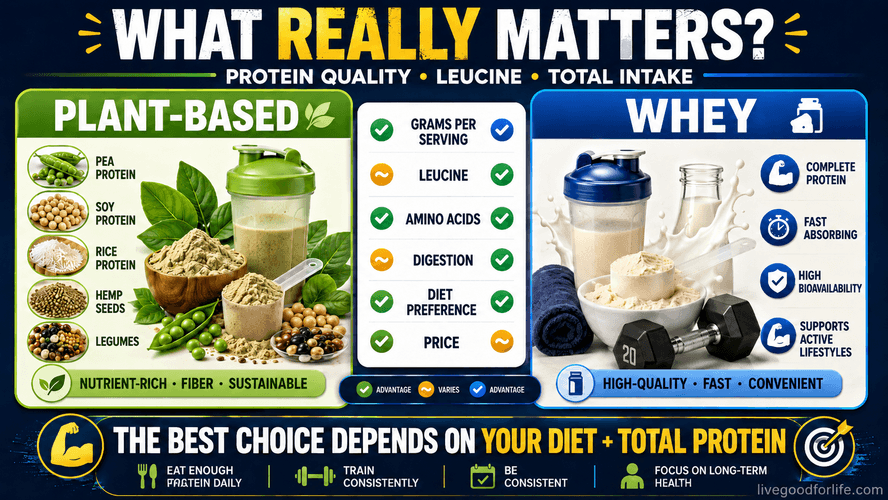
Plant-Based Protein vs Whey: Simple Comparison
What Research Says — Without the Hype
Research supports the idea that protein intake and resistance training work together. But no protein powder builds muscle by itself. Your training plan, daily protein total, calorie intake, recovery, and consistency are the foundation.
What research supports
- Resistance exercise and protein intake together support muscle protein synthesis.
- Total daily protein intake is a major factor for people training to build or maintain muscle.
- High-quality protein servings commonly fall around 20–40g, depending on body size, age, training, and meal pattern.
- Leucine and essential amino acids matter, especially when comparing protein sources.
What research does not prove
- that whey guarantees more muscle than plant protein for every person
- that plant protein cannot build muscle
- that a protein powder replaces training consistency
- that more protein is always better
- that any protein product treats a medical condition
For deeper reading, review the ISSN position stand on protein and exercise, this PubMed study on whey protein and muscle protein synthesis after resistance exercise, and this PubMed study comparing 20g vs 40g whey protein after whole-body resistance exercise. These references are educational and do not prove that any specific product guarantees muscle gain.
Why I Would Compare LiveGood Plant-Based Protein and Whey
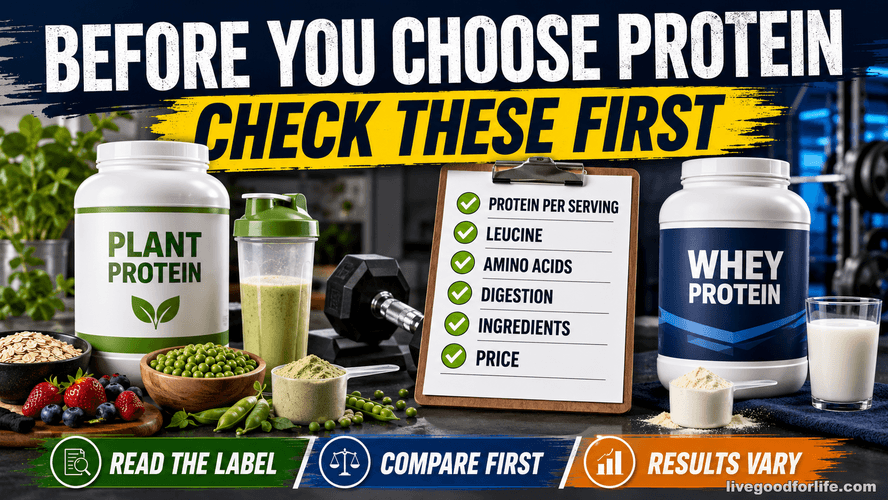
When I compare protein powders, I look for protein per serving, amino acid profile, digestion, allergens, ingredients, price, testing access, and whether the product fits the way someone actually eats.
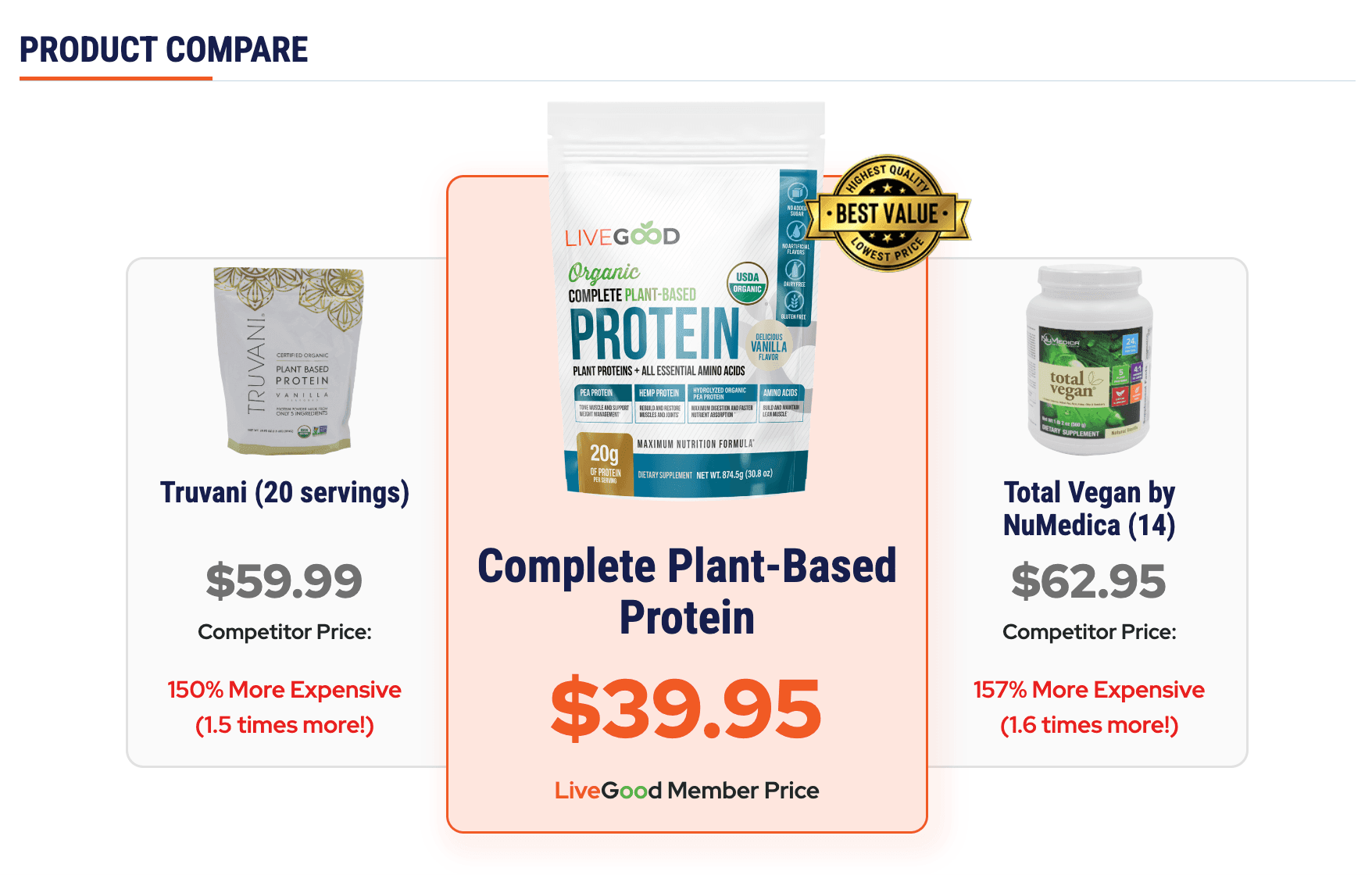
Important: This is a product comparison, not medical advice or a promise of muscle gain. Protein powders can help fill protein gaps, but muscle building still depends on training, nutrition, sleep, and consistency.
Plant-Based Protein Option
LiveGood Plant-Based Protein may fit adults who want a dairy-free, vegan-friendly protein powder with 20g protein per serving. It may be useful for smoothies, shakes, oats, and daily protein routines. Learn more here: LiveGood Plant-Based Protein Review.
Whey Protein Option
LiveGood Whey Protein Isolate with Colostrum may fit adults who tolerate dairy and want a whey isolate option with 20g protein per serving. Learn more here: LiveGood Whey Protein Isolate with Colostrum.
Member Price and Subscribe & Save
Both protein options are worth comparing by current checkout price, serving count, cost per serving, shipping, and membership terms. Subscribe & Save may help shoppers avoid running out, receive the product monthly, and cancel when needed. Always review current checkout terms before purchasing.
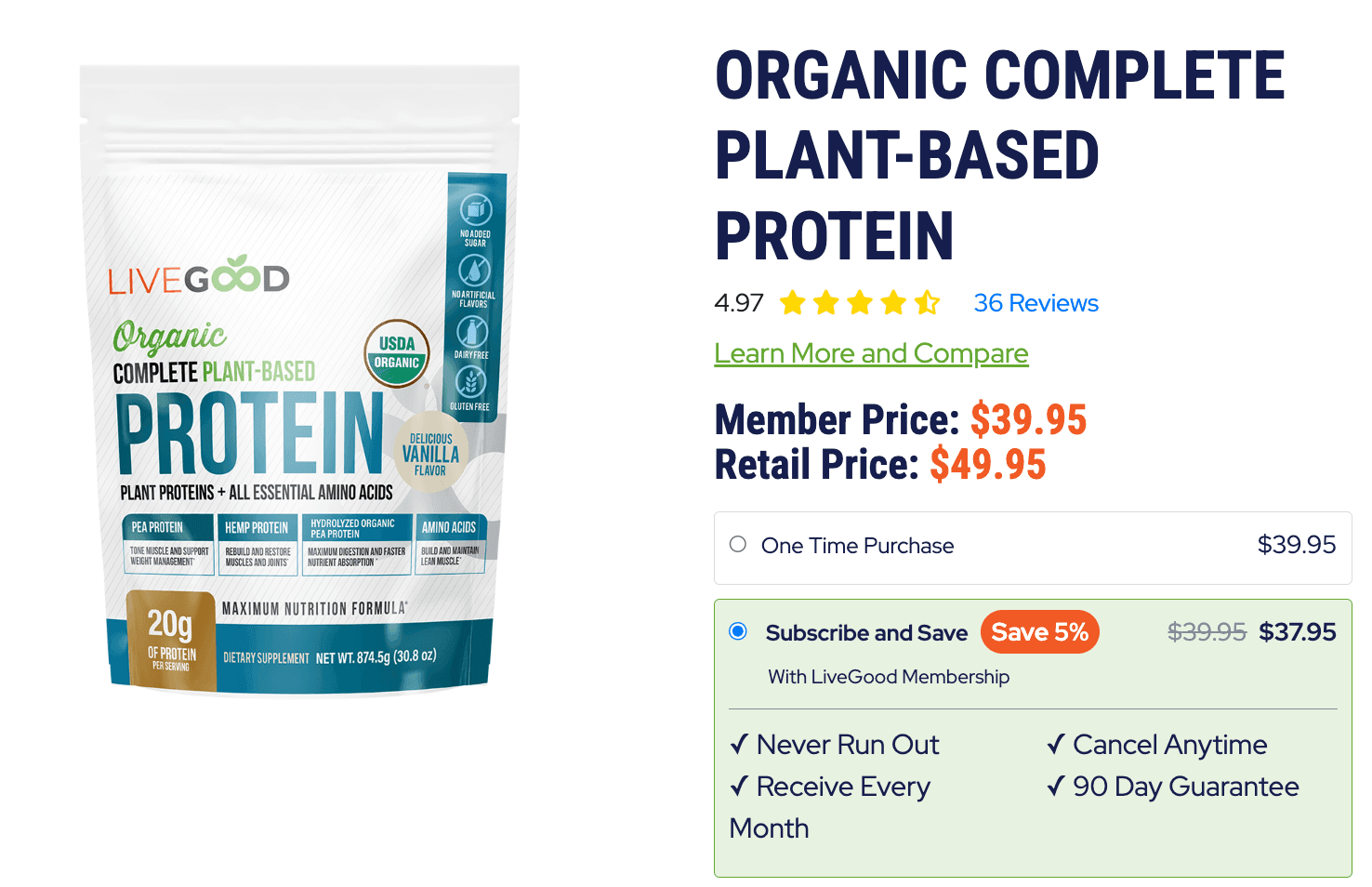
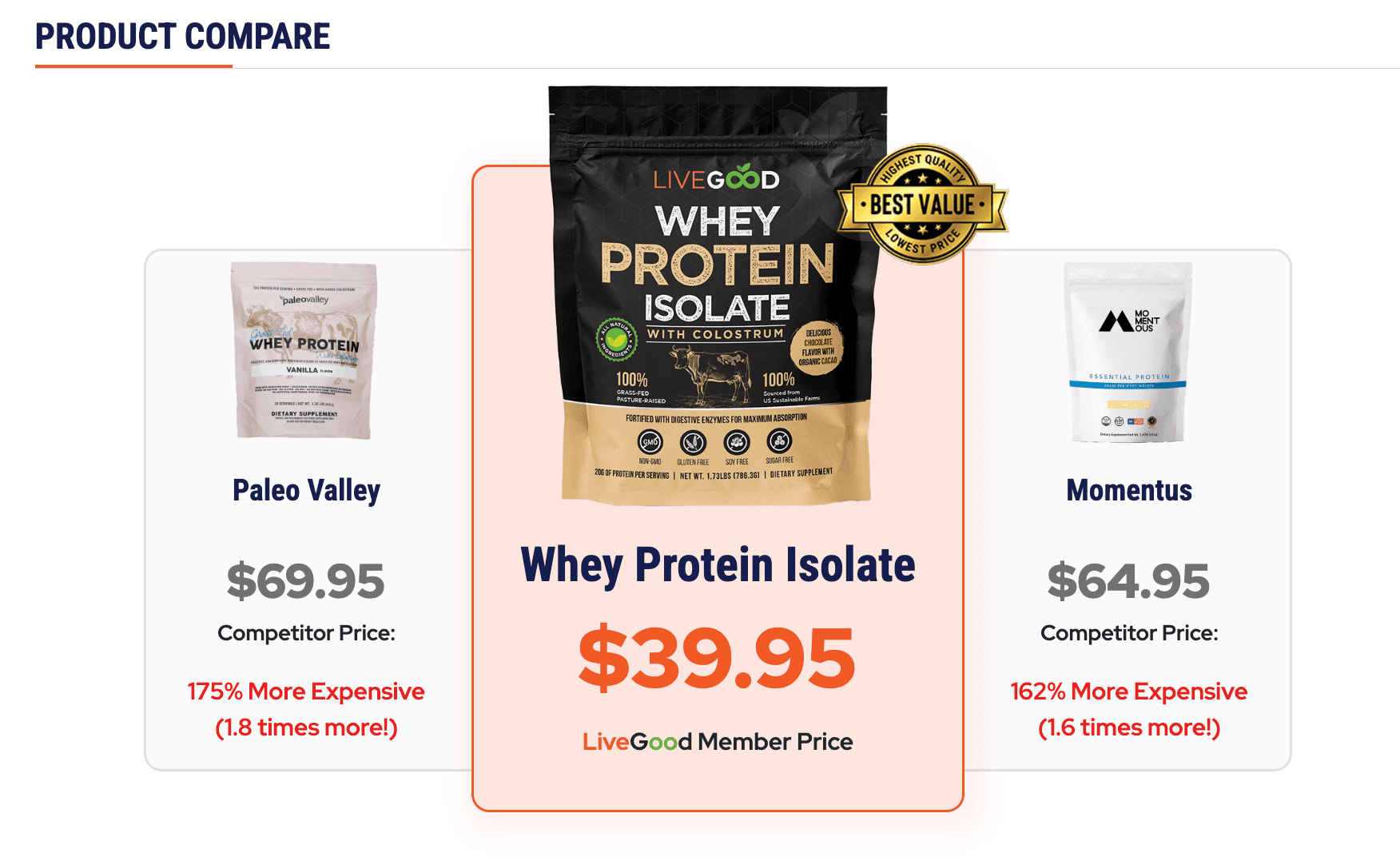
90-Day Guarantee
LiveGood may offer a 90-day guarantee, which can help shoppers compare products with less purchase hesitation. Guarantee terms can change, so review the current policy before ordering.
COA and Lab Testing
Testing access helps shoppers review quality information before buying. You can view available LiveGood certificates and lab-testing details here: LiveGood Products Certificates of Analysis.
What to Check Before Choosing Protein Powder
Protein Per Serving
Look at grams of protein per serving, not just the tub size or front-label marketing.
Amino Acid Profile
For muscle building, essential amino acids and leucine matter. Whey usually has a strong profile; plant blends can still work when planned well.
Digestive Fit
The best protein is one you tolerate. Check dairy, soy, gluten, sweeteners, fiber, and other ingredients.
Price and Serving Count
Compare cost per serving, protein grams per serving, shipping, and membership terms before choosing.
Frequently Asked Questions
Is whey better than plant-based protein for muscle building?
Whey often has a stronger leucine and essential amino acid profile, but plant-based protein can still support muscle-building goals when total protein, amino acids, calories, and training are consistent.
Can plant-based protein build muscle?
Yes, plant-based protein can fit a muscle-building routine when protein intake is adequate and the diet provides enough essential amino acids. A blend may be more practical than relying on one plant source.
Is whey protein good after workouts?
Whey is commonly used after workouts because it is convenient and rich in essential amino acids. Total daily protein intake matters more than a single timing window for most people.
Which is better for digestion?
It depends on the person. Whey may not fit people with milk allergy or strong dairy sensitivity. Plant protein may fit dairy-free routines, but texture and fiber content can affect tolerance.
Do I need protein powder to build muscle?
No. Protein powder is convenient, but you can build muscle with whole-food protein if you meet your protein needs and train consistently.
Are LiveGood protein powders FDA-approved for muscle growth?
No. Dietary supplements are not FDA-approved to diagnose, treat, cure, or prevent disease, and protein powders do not guarantee muscle growth.
Bottom Line: Plant-Based Protein or Whey?
Whey may have an edge for leucine and fast digestion, but plant-based protein can still work for muscle building when total intake and training are consistent. Choose the one that fits your body, diet, digestion, budget, and routine.
Choose Whey If
You tolerate dairy, want whey isolate, and prefer a creamy dairy-based shake.
Choose Plant-Based If
You avoid dairy, follow a vegan or plant-based routine, or prefer plant ingredients.
Choose Consistency First
The best protein powder is the one you can tolerate, afford, enjoy, and use consistently with a real training plan.
Compare LiveGood Protein Options
Before buying, review protein per serving, ingredients, allergens, current price, serving count, membership terms, shipping, testing information, and whether plant-based or whey fits your routine.
Disclosures
Affiliate Relationship: Some links in this article are affiliate links. If you purchase through these links, I may earn a commission at no extra cost to you. I only recommend products I personally use, have researched, or would consider using as part of a wellness routine.
Medical Disclaimer: This content is for informational and educational purposes only and is not medical advice. It is not intended to diagnose, treat, cure, or prevent any disease. Always consult a qualified healthcare professional before changing protein intake or using protein supplements, especially if you have kidney disease, liver disease, digestive conditions, food allergies, are pregnant or breastfeeding, take medication, or follow a medically restricted diet.
Results Disclaimer: Individual results vary. Protein powder does not guarantee muscle gain, strength gain, fat loss, or body-composition changes.
FDA Disclaimer for U.S. Content: These statements have not been evaluated by the Food and Drug Administration. These products are not intended to diagnose, treat, cure, or prevent any disease.
Pricing and Availability: Prices, membership terms, product formulas, labels, testing information, shipping, and refund policies can change. Verify all details before publishing or purchasing. Last updated: July 2026