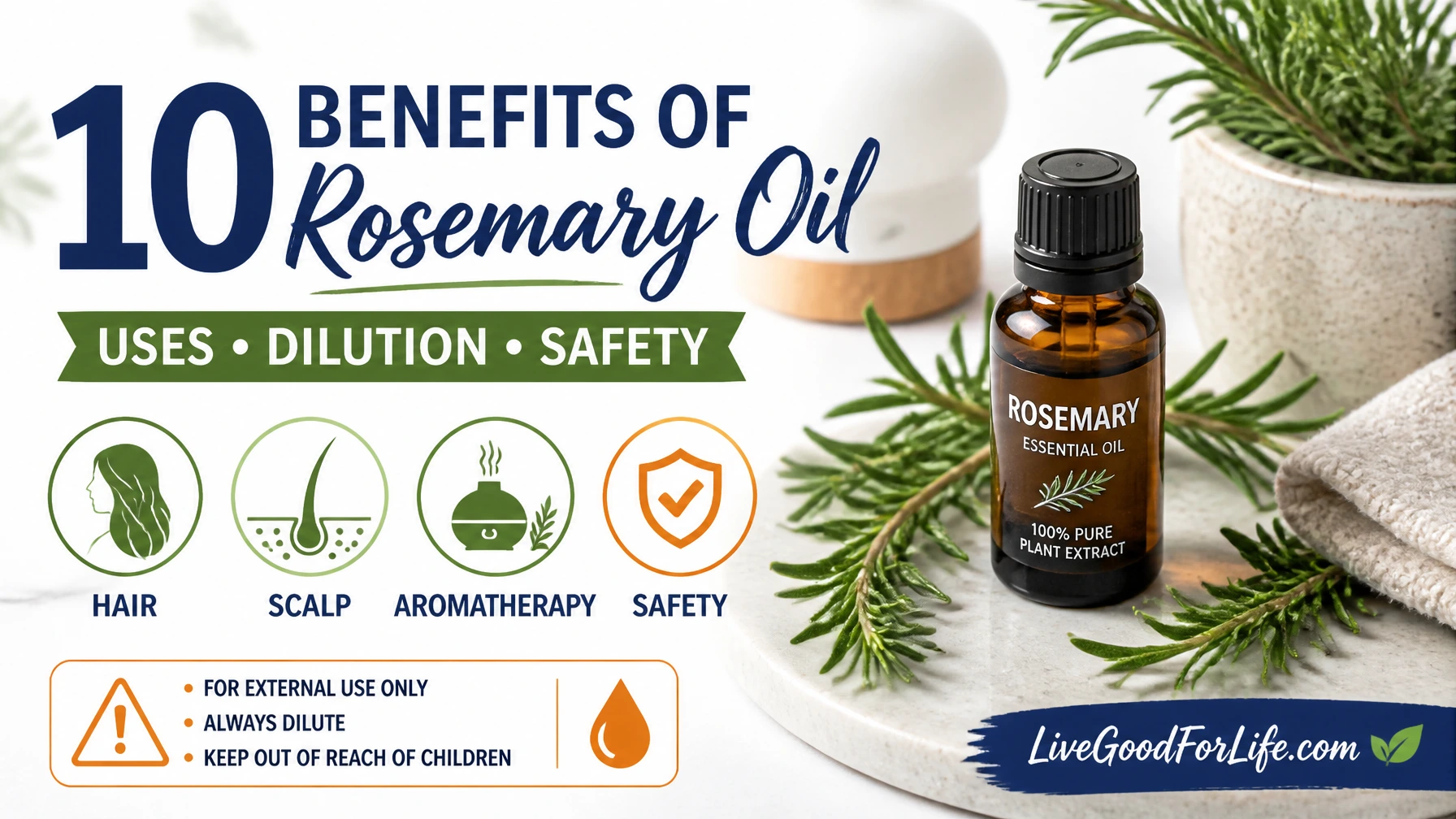
10 Incredible Benefits of Rosemary Oil
Rosemary Oil Benefits: Safe Uses, Hair Care and Dilution Tips
Rosemary oil is one of the most popular essential oils for scalp care, aromatherapy, massage blends, and natural home routines. It has a fresh herbal scent and is often used in hair oils, diffuser blends, shower routines, and DIY beauty recipes.
But rosemary essential oil is also concentrated. That means it should be used carefully, diluted properly, and kept away from eyes, children, pets, and anyone who may be sensitive to strong scents or topical oils.
This guide explains 10 rosemary oil benefits, how to use it safely, how to dilute it for hair and scalp care, and when to avoid it or ask a healthcare professional first.
Safety note: This article is educational and is not medical advice. Do not swallow rosemary essential oil. Do not apply it undiluted to your skin or scalp. Ask a qualified professional before using essential oils if you are pregnant, nursing, have epilepsy, asthma, allergies, a skin condition, or use medication.
Quick Answer: What Is Rosemary Oil Good For?
Rosemary oil is commonly used for scalp massage, hair care routines, aromatherapy, massage blends, focus-friendly scent routines, and natural cleaning or freshening blends. It may help the scalp feel refreshed, support a healthy-looking hair routine, and create an energizing herbal aroma.
The most important rule is safety: Rosemary essential oil should be diluted with a carrier oil before skin or scalp use. It should not be used in the eyes, inside the nose, in the ears, on broken skin, or taken internally.
If your goal is hair growth, be realistic. Rosemary oil has some limited research and a lot of online attention, but it is not a guaranteed hair-loss treatment and should not replace medical evaluation for sudden shedding, patchy hair loss, scalp disease, thyroid issues, anemia, hormone concerns, or medication-related hair loss.
Rosemary Oil at a Glance
| Use | How People Commonly Use It | Safety Tip |
|---|---|---|
| Scalp care | Diluted in a carrier oil and massaged into the scalp | Patch test first and avoid irritated skin |
| Hair routine | Added to carrier oils, shampoos, or scalp serums | Use small amounts and rinse if irritation occurs |
| Aromatherapy | Diffused or inhaled from a personal aroma stick | Avoid around babies, pets, or scent-sensitive people |
| Massage | Diluted with jojoba, coconut, olive, or almond oil | Do not use undiluted on the skin |
| Home freshening | Used in small amounts in DIY scent blends | Keep away from children and pets |
For more essential oil basics, read Aromatherapy Essential Oils Guide.
1. Rosemary Oil Can Support a Fresh Scalp Routine
Rosemary oil is often used in scalp care because it creates a refreshing herbal sensation and pairs well with carrier oils. Some people use it before washing their hair, while others use diluted leave-on scalp oils in very small amounts.
A simple scalp routine may include:
- 1 tablespoon carrier oil
- 1 to 2 drops rosemary essential oil
- A gentle scalp massage for a few minutes
- Washing out if your hair feels oily or your scalp is sensitive
Do not apply rosemary oil directly from the bottle to the scalp. Essential oils are concentrated and can cause irritation or allergic reactions.
2. Rosemary Oil Is Popular for Hair Care
Rosemary oil has become popular in hair care because of its use in scalp oils, shampoos, and natural hair routines. Some limited research has looked at rosemary oil in relation to androgenetic alopecia, but the evidence is not strong enough to treat it as a guaranteed hair-growth solution.
Use rosemary oil as a supportive hair-care ingredient, not as a replacement for proper evaluation when hair loss is sudden, severe, patchy, or connected to illness, stress, hormones, nutrition, medication, or scalp symptoms.
3. Rosemary Oil May Help Hair Look Healthier
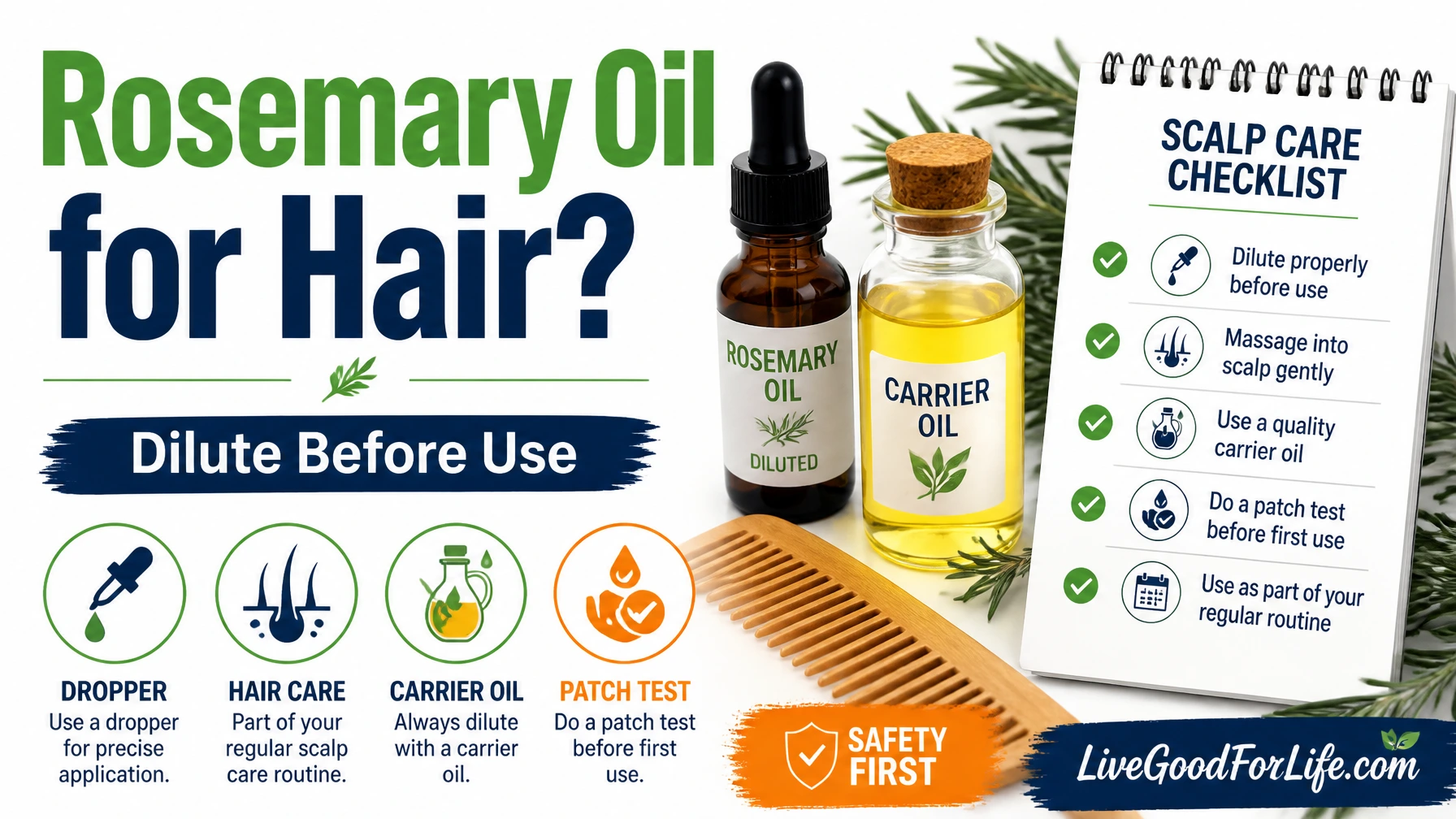
Even when an oil does not directly change the cause of hair loss, it may help a hair routine feel more nourishing. Diluted rosemary oil blends can add shine, support scalp massage, and help dry hair feel more conditioned when used carefully with a carrier oil.
Good carrier oils include:
- Jojoba oil
- Coconut oil
- Olive oil
- Argan oil
- Sweet almond oil
- Grapeseed oil
If your hair is fine or gets oily quickly, use a lighter oil and wash it out after a short contact time.
4. Rosemary Oil Has a Crisp Aromatherapy Scent
Rosemary essential oil has a sharp, herbal, clean aroma. Many people use it in diffuser blends when they want a fresh, focused, daytime scent.
Simple diffuser ideas:
- Rosemary and lemon
- Rosemary and peppermint
- Rosemary and lavender
- Rosemary and orange
- Rosemary and eucalyptus
Use diffusers in a ventilated room and avoid continuous diffusion. Be careful around children, pets, people with asthma, and anyone sensitive to scents.
5. Rosemary Oil Can Be Used in Massage Blends
Rosemary oil is often added to massage oils because of its warming herbal scent. It can pair well with carrier oils and other essential oils when diluted properly.
A basic massage blend can be:
- 1 tablespoon carrier oil
- 1 to 2 drops rosemary essential oil
- Optional: 1 drop lavender or peppermint oil if tolerated
Do not use essential oils on broken skin, rashes, burns, fresh shaving irritation, or sensitive areas.
6. Rosemary Oil Can Freshen DIY Home Blends
Rosemary oil is sometimes used in homemade room sprays, cleaning blends, or freshening routines because of its clean herbal aroma. It pairs well with citrus, mint, pine, lavender, and tea tree oil.
Safety still matters at home. Essential oils can irritate skin, stain surfaces, affect pets, and cause problems if swallowed by children.
If you like essential oil home routines, also read 10 Incredible Benefits of Tea Tree Oil and How to Use It.
7. Rosemary Oil Pairs Well With Tea Tree Oil
Rosemary and tea tree oil are sometimes used together in scalp or home blends, but both need careful dilution. Tea tree oil is especially strong and can irritate skin or cause reactions in some people.
If combining oils, use fewer total drops rather than treating each oil separately. For example, instead of using 2 drops rosemary plus 2 drops tea tree in a tablespoon of carrier oil, start with 1 drop total or 1 drop of each only if your skin tolerates essential oils well.
For dilution guidance, use this chart: How to Dilute Tea Tree Oil Safely. The same careful thinking applies to rosemary oil.
8. Rosemary Oil May Support a Focus-Friendly Scent Routine
Many people associate rosemary with a clean, alert, study-friendly scent. While scent responses are personal, rosemary oil can be useful in a daytime aromatherapy routine if you enjoy herbal aromas.
Try these low-risk options:
- Smell from the bottle briefly without touching the oil
- Add 1 drop to a cotton ball placed away from children or pets
- Use a personal inhaler rather than filling a whole room
- Diffuse for short periods in a ventilated space
Stop using it if you get a headache, nausea, coughing, wheezing, skin irritation, or eye irritation.
9. Rosemary Oil Can Be Part of a Natural Beauty Routine
Rosemary oil may appear in shampoos, scalp serums, body oils, soaps, and beauty blends. If you use finished cosmetic products, follow the product directions instead of adding extra essential oil yourself.
More is not better. Adding extra drops to a finished product can increase the chance of irritation, especially around the face, scalp, neck, and eyes.
For beginners, pre-formulated products may be easier than DIY blending because the dilution is already handled by the manufacturer.
10. Rosemary Oil Teaches Good Essential Oil Safety Habits
Rosemary oil is a useful example of essential oil safety because it is popular, easy to find, and often used incorrectly. Learning how to dilute and patch test rosemary oil can help you use other essential oils more carefully too.
Good safety habits include:
- Dilute before skin use
- Patch test first
- Use fewer drops than you think you need
- Avoid eyes, ears, nose, and sensitive areas
- Do not swallow essential oils
- Keep bottles away from children and pets
- Stop use if irritation occurs
How to Dilute Rosemary Oil
For most general adult skin or scalp use, start with a low dilution. A conservative beginner blend is 1 drop of rosemary essential oil in 1 tablespoon of carrier oil.
| Use | Carrier Oil | Rosemary Oil | Notes |
|---|---|---|---|
| Beginner scalp test | 1 tablespoon | 1 drop | Patch test first |
| Scalp massage | 1 tablespoon | 1 to 2 drops | Wash out if oily or irritating |
| Body massage | 1 tablespoon | 1 to 2 drops | Avoid broken skin |
| Face use | Not recommended for beginners | Use caution | Face skin is more sensitive |
How to Patch Test Rosemary Oil
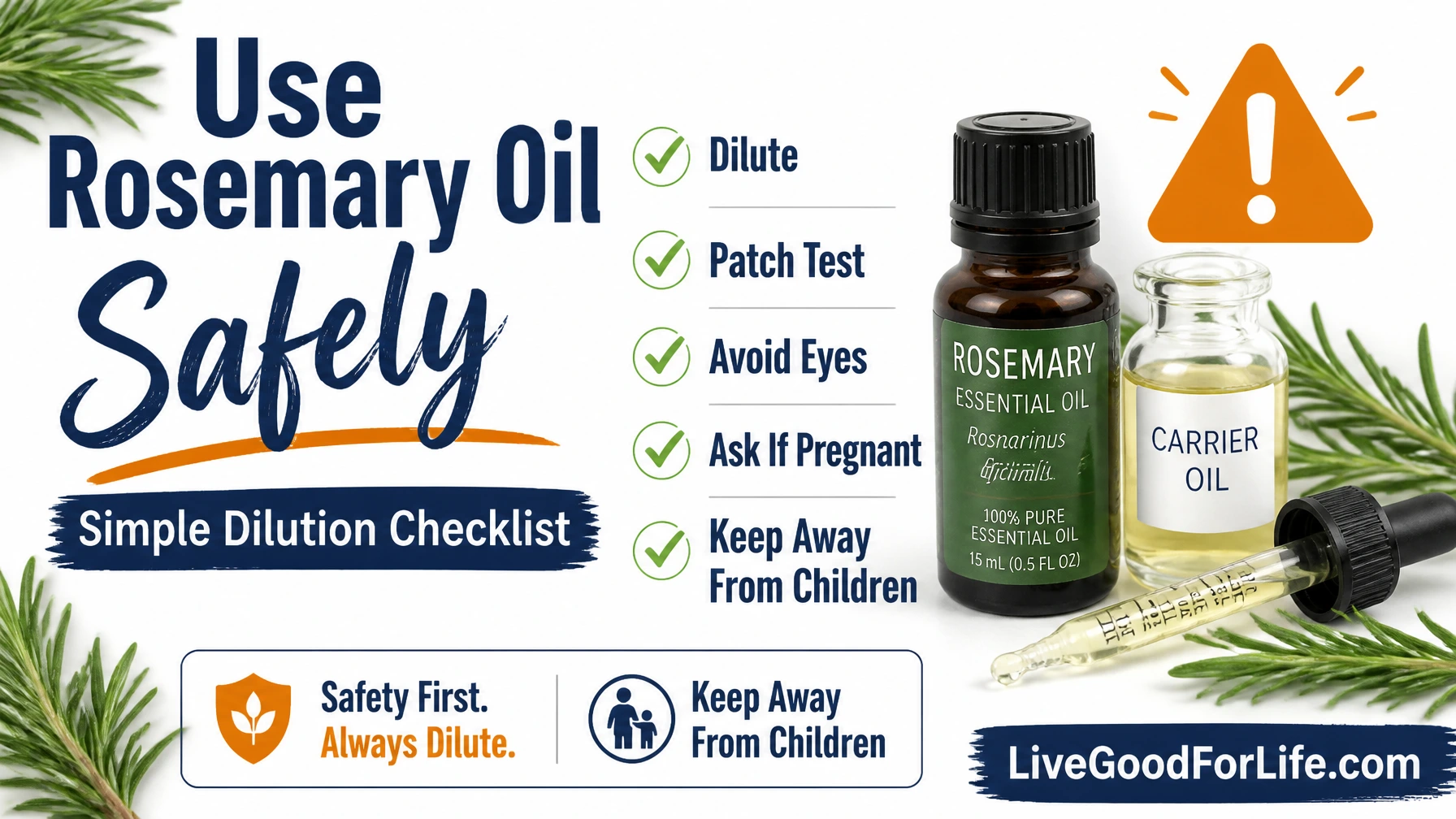
A patch test helps you check for irritation before applying a blend to a larger area.
- Mix rosemary oil with a carrier oil.
- Apply a tiny amount to a small area of skin, such as the inner arm.
- Wait 24 hours if possible.
- Watch for redness, itching, burning, bumps, rash, or swelling.
- Do not use the blend if your skin reacts.
A patch test does not guarantee you will never react, but it is a sensible first step.
Who Should Avoid Rosemary Oil or Ask First?
Rosemary oil may not be suitable for everyone. Ask a qualified professional before using it if you:
- Are you pregnant or nursing
- Have epilepsy or a seizure disorder
- Have asthma or breathing sensitivity
- Have allergies or sensitive skin
- Have eczema, psoriasis, or scalp inflammation
- Take blood pressure medication or blood-thinning medication
- Are you using it for a child
- Are you preparing for surgery
Keep rosemary oil and all essential oils out of reach of children and pets. Essential oils can be dangerous if swallowed.
Common Rosemary Oil Mistakes
| Mistake | Why It Matters | Better Choice |
|---|---|---|
| Applying it undiluted | Can irritate or sensitize skin | Mix with carrier oil first |
| Using too many drops | More oil increases irritation risk | Start with 1 drop in carrier oil |
| Putting it near the eyes | Can cause burning and irritation | Keep away from face and eyes |
| Using it on broken skin | Can worsen irritation | Wait until skin is healthy |
| Expecting guaranteed hair growth | Hair loss can have medical causes | Use realistic expectations and seek care when needed |
Rosemary Oil vs Rosemary Extract
Rosemary essential oil and rosemary extract are not the same thing. Rosemary essential oil is a concentrated aromatic oil. Rosemary extract is often used in food, skincare, or supplements and may contain different plant compounds depending on how it is made.
| Type | Common Use | Important Note |
|---|---|---|
| Rosemary essential oil | Aromatherapy, diluted topical blends, scent routines | Must be diluted for skin use |
| Rosemary extract | Food, skincare, supplements, antioxidant formulations | Follow product-specific directions |
| Fresh rosemary herb | Cooking and tea-style food use | Not the same concentration as essential oil |
Where LiveGood Essential Oils Fit
If you use essential oils, quality, labeling, and safe use matter. Look for clear labels, realistic directions, ingredient transparency, and safety warnings.
You can explore more here:
- LiveGood Essential Oils
- Essential Oil Remedies and Natural Solutions
- LiveGood Essential Oils Tips for Beginners
- How to Compare Supplement Ingredients Before You Buy
Frequently Asked Questions
Can I put rosemary oil directly on my scalp?
No. Rosemary essential oil should be diluted with a carrier oil before scalp use. Applying it directly can irritate the skin or cause an allergic reaction.
Does rosemary oil grow hair?
Rosemary oil has limited research and a lot of online attention, but it is not a guaranteed hair-growth treatment. It may be used as part of a scalp-care routine, but medical causes of hair loss should be evaluated by a qualified professional.
How many drops of rosemary oil should I use for hair?
A beginner-friendly amount is 1 drop of rosemary essential oil in 1 tablespoon of carrier oil. Some adults may tolerate 1 to 2 drops per tablespoon; start low and patch-test first.
Can I leave rosemary oil in my hair overnight?
Some people leave diluted oils on the scalp for longer periods, but beginners should start with a shorter contact time. Wash it out if you notice itching, burning, redness, flaking, or discomfort.
Can rosemary oil be used in a diffuser?
Yes, rosemary oil is commonly used in diffusers. Use short diffusion periods in a ventilated room and avoid use around babies, pets, people with asthma, or anyone sensitive to strong scents.
Can I swallow rosemary essential oil?
No. Do not swallow rosemary essential oil. Essential oils are concentrated and can be dangerous when ingested unless used under appropriate professional supervision.
Is rosemary oil safe during pregnancy?
Pregnant or nursing women should ask a qualified healthcare professional before using rosemary essential oil. Essential oils can be too strong for some people during pregnancy.
Can rosemary oil irritate skin?
Yes. Rosemary oil can irritate skin, especially if used undiluted, used too often, or applied to sensitive or broken skin. Dilute it, patch test first, and stop use if irritation occurs.
Use Rosemary Oil Carefully and Keep Expectations Realistic
Rosemary oil can be a useful essential oil for scalp care, aromatherapy, massage blends, and natural routines. The safest approach is simple: dilute it, patch test it, use small amounts, and avoid exaggerated claims.
If you are dealing with hair loss, scalp irritation, or a health condition, rosemary oil should not replace proper care. Use it as a supportive routine ingredient, not as a cure.
If you want another practical essential oil guide, read 10 Incredible Benefits of Tea Tree Oil and How to Use It next.
Reminder: Essential oil quality, directions, safety warnings, and formulas can vary. Always read the current product label before using any essential oil.
Affiliate disclosure: I am an independent LiveGood affiliate. If you choose to buy through my links, I may earn a commission at no extra cost to you.