10 Castor Oil Benefits and How to Use It Safely
Castor Oil Benefits: Safe Uses for Hair, Skin and Home Routines
Castor oil is a thick plant oil often used in simple hair, scalp, skin, massage, and self-care routines. It is popular because it feels rich, helps seal in moisture, and can be used in small amounts with other oils.
But castor oil is not magic. It will not fix every hair, skin, or health concern, and it should not be swallowed unless a qualified healthcare professional has told you to use it that way. The safest way to think about castor oil is as a supportive topical oil, not a cure.
This guide explains 10 castor oil benefits, how to use it safely, how to avoid common mistakes, and when to ask a professional before using it.
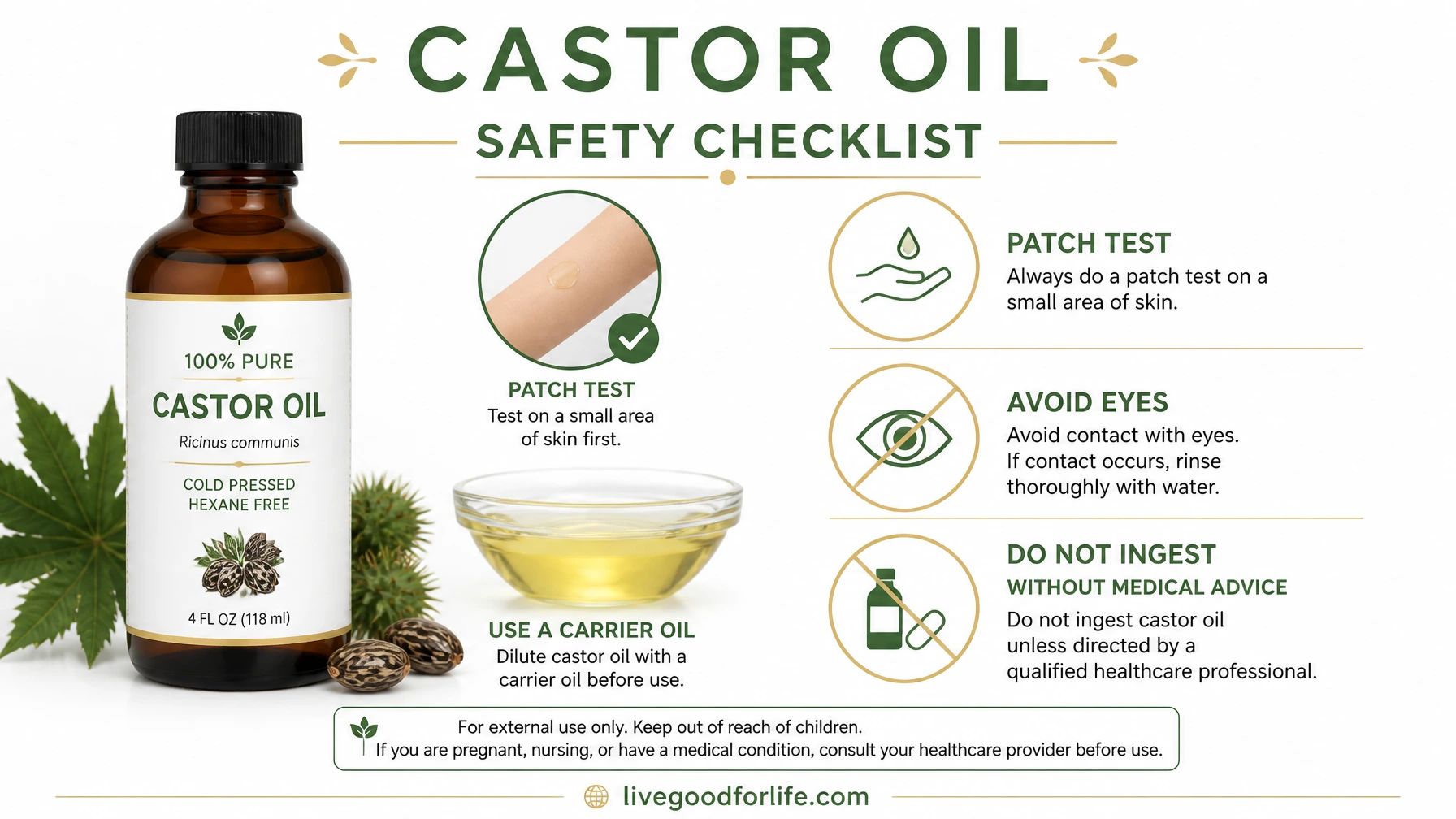
Safety note: This article is educational and is not medical advice. Do not ingest castor oil unless directed by a qualified healthcare professional. Avoid using castor oil on broken skin, infected skin, near the eyes, or if you have a known allergy. Ask a professional first if you are pregnant, nursing, using medication, managing a medical condition, or buying castor oil for a child.
Quick Answer: What Is Castor Oil Good For?
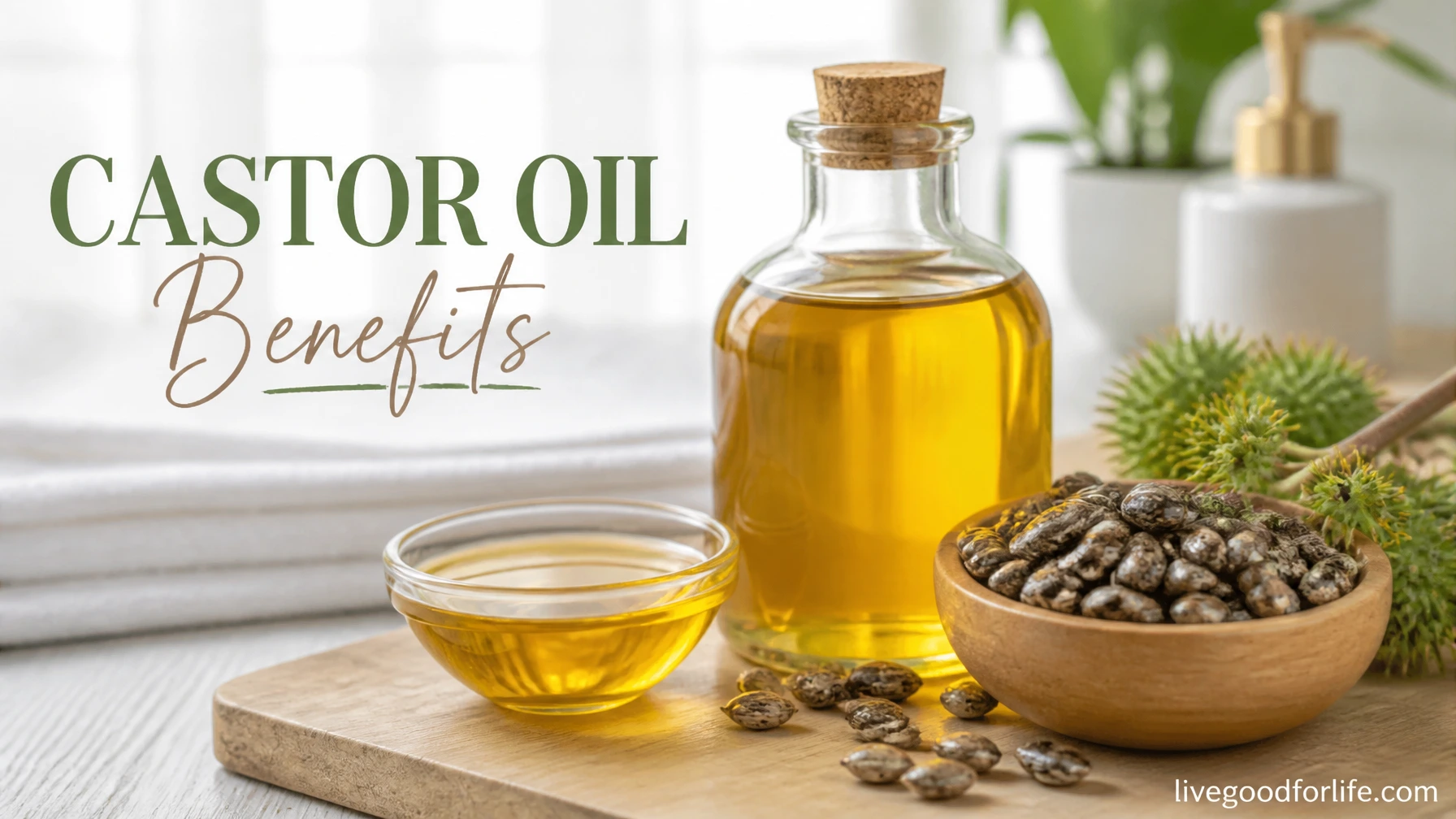
Castor oil is commonly used as a thick moisturizing oil for dry skin, scalp massage, hair shine, cuticle care, massage blends, and castor oil packs. It can help create a protective layer on the skin and reduce moisture loss, which is why many people use it in small amounts on dry areas.
The most realistic benefits are cosmetic and comfort-based: softer skin, smoother-looking hair, easier scalp massage, and a richer feel in oil blends. Claims about detoxing, curing illness, shrinking growths, or guaranteeing hair growth should be treated with caution.
For most people, castor oil works best when used externally, in small amounts, and patch-tested first.
Castor Oil at a Glance
| Use | How People Use It | Important Safety Tip |
|---|---|---|
| Dry skin | Small amount mixed with a lighter carrier oil | Patch test first and avoid acne-prone areas if it clogs your skin |
| Hair ends | Tiny amount on dry ends before washing or styling | Too much can make hair heavy or greasy |
| Scalp massage | Mixed with a lighter oil and massaged in before washing | Do not use on irritated, infected, or broken scalp skin |
| Massage blend | Combined with coconut, jojoba, almond, or olive oil | Castor oil is thick, so dilute it with a lighter oil |
| Castor oil pack | Applied to cloth and placed on skin for a short routine | Do not use during pregnancy unless your clinician says it is safe |
If you are building a broader natural routine, you may also like this guide: Aromatherapy Essential Oils Guide.
1. Castor Oil Can Help Dry Skin Feel Softer
Castor oil has a thick texture that can help dry skin feel softer and more protected. Many people use it on rough areas such as elbows, knees, heels, hands, or dry patches.
Because castor oil is heavy, it is usually better to mix it with a lighter oil instead of applying a large amount directly. A simple blend is:
- 1 teaspoon castor oil
- 2 teaspoons jojoba, olive, almond, or coconut oil
- Apply a small amount to dry skin after washing
Stop using it if your skin becomes itchy, red, bumpy, or irritated.
2. Castor Oil Can Support a Simple Scalp Massage
Scalp massage is one of the most common ways people use castor oil. The oil gives slip, helps the massage feel smoother, and can be washed out after the routine.
For a beginner scalp blend, try mixing castor oil with a lighter carrier oil. Castor oil alone can be sticky and difficult to rinse out.
3. Castor Oil May Help Hair Look Smoother
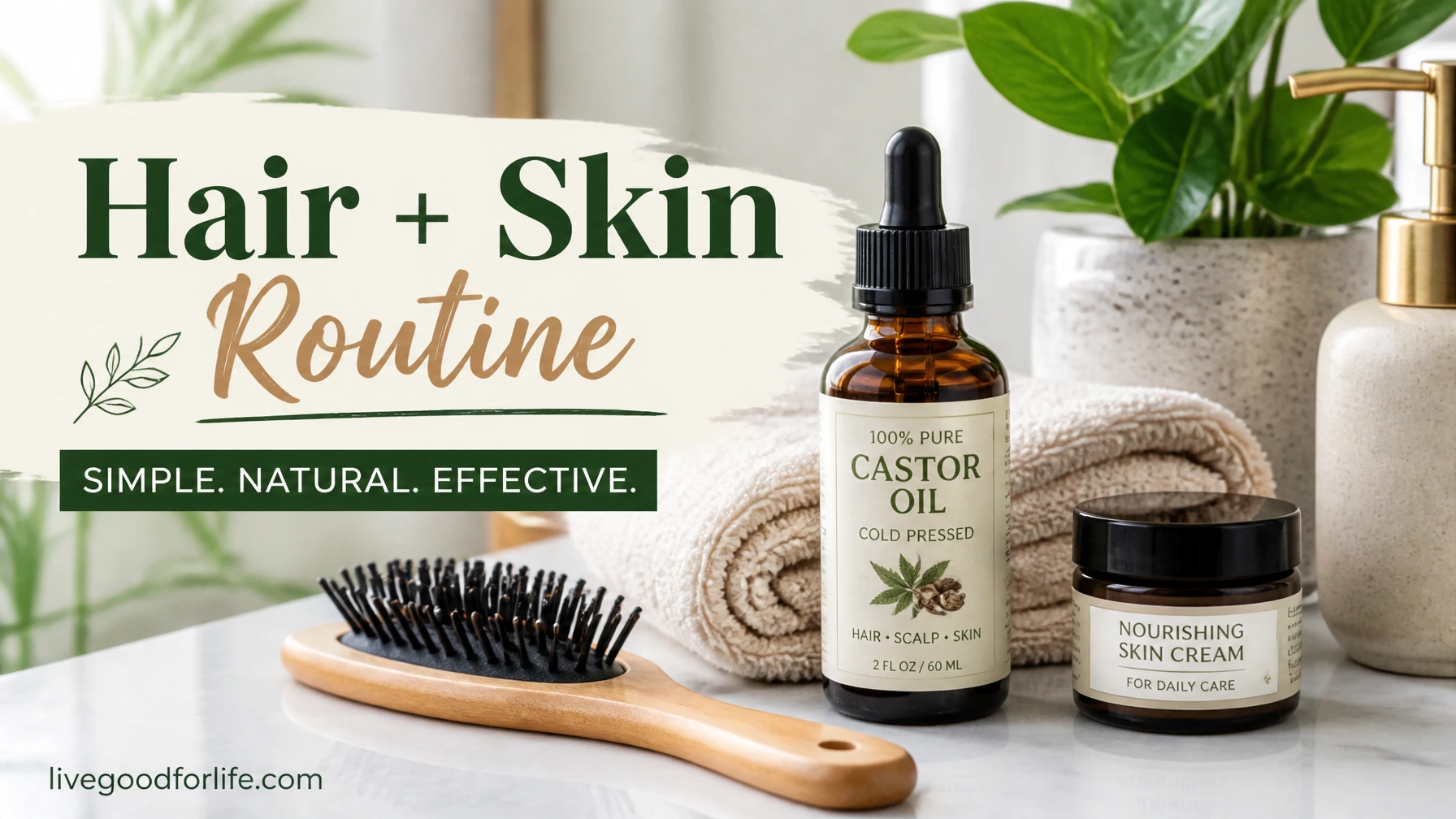
Castor oil can make dry hair ends look smoother because it coats the hair. This does not mean it repairs every cause of breakage or guarantees hair growth, but it can be useful as a cosmetic oil in a hair-care routine.
Use only a tiny amount on hair ends. If your hair is fine, thin, or gets oily quickly, castor oil may feel too heavy.
4. Castor Oil Is Often Used for Hair Edges
Some people use castor oil around the hairline or edges because it gives a thick, glossy finish. The important part is to be gentle. Tight hairstyles, harsh brushing, and tension can damage hair around the edges, and oil cannot undo ongoing stress on the hair.
If you have sudden hair loss, patchy shedding, scalp pain, scaling, or itching, get proper advice instead of relying only on castor oil.
5. Castor Oil Can Be Used for Cuticles and Nails
Castor oil can be used around dry cuticles to help them feel softer. Apply a tiny amount, massage it in, and wipe away extra oil if your hands feel too greasy.
This is one of the easiest low-risk ways to use castor oil because you only need a very small amount.
6. Castor Oil Can Make Massage Oils Feel Richer
Castor oil is thicker than many common carrier oils. Adding a small amount to a massage blend can make the blend feel richer and slower to absorb.
A simple massage blend:
- 1 teaspoon castor oil
- 3 teaspoons lighter carrier oil
- Optional: 1 drop essential oil only if you tolerate essential oils well
If you use essential oils, dilution matters. This guide can help you think more carefully about drop amounts: How to Dilute Tea Tree Oil Safely.
7. Castor Oil Can Be Used in a Pre-Wash Hair Routine
A pre-wash routine means applying oil before shampooing. Castor oil may be useful here because you can enjoy the conditioning feel without leaving the heavy oil in your hair all day.
How to try it:
- Mix castor oil with a lighter oil.
- Apply a small amount to hair ends or scalp.
- Leave it on briefly if your scalp tolerates it.
- Wash thoroughly with shampoo.
Do not sleep with castor oil on your scalp if you are prone to irritation, clogged follicles, acne, or sensitive skin.
8. Castor Oil Packs Are Popular, But Claims Are Often Overstated
Castor oil packs are made by applying castor oil to cloth and placing it on the skin, often over the abdomen or joints. Some people find the routine relaxing, especially when used as part of a quiet self-care habit.
However, castor oil packs should not be promoted as a detox treatment or a cure. Use them as a comfort routine only, and avoid them if you are pregnant, have skin irritation, have abdominal pain, or have a medical condition that needs proper care.
9. Castor Oil Can Pair With Essential Oil Routines
Castor oil is a carrier oil, not an essential oil. That means it can be used to dilute essential oils before applying them to skin. Because castor oil is thick, many people mix it with lighter carrier oils first.
For essential oil safety, read these next:
- 10 Incredible Benefits of Tea Tree Oil and How to Use It
- Rosemary Oil Benefits: Safe Uses and Dilution Tips
- LiveGood Essential Oils Tips for Beginners
10. Castor Oil Can Teach Better Product Safety Habits
Castor oil is a good reminder that natural does not always mean risk-free. Even simple oils can irritate skin, clog pores, trigger allergies, or be misused.
Good product habits include reading labels, patch testing, avoiding exaggerated claims, and buying products from brands that are clear about quality and ingredients.
For label-reading help, read How to Compare Supplement Ingredients Before You Buy.
How to Patch Test Castor Oil
Patch testing is a simple way to check whether your skin reacts before using castor oil on a larger area.
- Apply a small amount of castor oil or your castor oil blend to the inside of your arm.
- Leave it for 24 hours if possible.
- Watch for redness, itching, burning, bumps, or swelling.
- If irritation happens, wash it off and do not use it on a larger area.
Castor Oil Safety Mistakes to Avoid
| Mistake | Why It Matters | Better Option |
|---|---|---|
| Using too much on hair | Can make hair sticky, heavy, or hard to wash | Start with a few drops or mix with lighter oil |
| Skipping a patch test | Skin reactions can happen even with natural oils | Patch test before larger use |
| Putting it near the eyes | Can irritate sensitive eye-area tissue | Keep it away from eyes and eyelids |
| Using it on broken skin | May worsen irritation or discomfort | Use only on intact skin unless advised by a clinician |
| Swallowing it casually | Can cause cramping, nausea, diarrhea, dehydration, or medication concerns | Only ingest if directed by a qualified professional |
| Using it during pregnancy without advice | Castor oil has a history of being used to affect labor | Ask your healthcare professional first |
Castor Oil vs Essential Oils
Castor oil and essential oils are not the same. Castor oil is a fatty carrier oil. Essential oils are concentrated aromatic plant extracts. This difference matters because essential oils usually need dilution before skin use.
| Type | What It Is | How It Is Used |
|---|---|---|
| Castor oil | Thick plant carrier oil | Used on skin, scalp, hair, massage blends, and packs |
| Essential oil | Concentrated aromatic plant oil | Diluted before topical use or used carefully for aroma |
| Carrier oil | Base oil used to dilute essential oils | Examples include castor, jojoba, coconut, olive, and almond oil |
Who Should Ask Before Using Castor Oil?
Ask a qualified healthcare professional before using castor oil if you:
- Are pregnant or trying to become pregnant
- Are nursing
- Have abdominal pain, bowel problems, or unexplained symptoms
- Take medication
- Have allergies, eczema, dermatitis, or sensitive skin
- Have a scalp condition or active skin infection
- Want to use it for a child
Do not use castor oil as a substitute for medical care if symptoms are persistent, painful, spreading, or unexplained.
Simple Castor Oil Routine Ideas
| Goal | Simple Routine | How Often |
|---|---|---|
| Dry heels | Apply a tiny amount after washing, then wear socks | As needed |
| Dry cuticles | Massage a drop around nails | A few times per week |
| Hair ends | Rub a tiny amount into dry ends before washing | Weekly or as needed |
| Scalp massage | Mix with lighter oil, massage gently, then wash | Occasionally |
| Massage oil | Blend 1 part castor oil with 3 parts lighter oil | As needed |
How to Choose Castor Oil
When choosing castor oil, look for simple labeling and a product that clearly explains what is in the bottle. Many people prefer cold-pressed castor oil for beauty routines, but the most important thing is that the product is clean, clearly labeled, and appropriate for the way you plan to use it.
Useful label checks:
- Ingredient list is simple
- Clear directions for use
- External-use warnings when appropriate
- No unrealistic cure claims
- Packaging that protects the oil from heat and light
For more wellness product guidance, visit Supplement Reviews Hub.
Explore Wellness Products
If you are building a simple wellness routine, focus on the basics first: food, hydration, sleep, movement, stress management, and products you can use consistently.
Explore LiveGood wellness products
Castor Oil FAQs
Can I put castor oil directly on my skin?
Many people can use small amounts of castor oil on intact skin, but patch testing is important. Castor oil is thick and may clog pores or irritate sensitive skin in some people. Start with a small amount or mix it with a lighter oil.
Is castor oil good for hair growth?
Castor oil is popular in hair routines, but it should not be treated as a guaranteed hair-growth solution. It may help hair look smoother and support scalp massage, but sudden, patchy, or severe hair loss should be evaluated by a qualified professional.
Can I use castor oil on my scalp overnight?
Some people do, but it is not necessary and may irritate sensitive scalps or make hair difficult to wash. A shorter pre-wash routine is often easier. Avoid overnight use if you have scalp acne, itching, dandruff, irritation, or sensitive skin.
Can I take castor oil by mouth?
Do not take castor oil by mouth unless directed by a qualified healthcare professional. Oral castor oil can cause cramping, nausea, diarrhea, dehydration, and may not be appropriate for certain conditions or medications.
Is castor oil safe during pregnancy?
Pregnant women should ask a qualified healthcare professional before using castor oil, especially internally or over the abdomen. Castor oil has been used historically in relation to labor, so it should not be used casually during pregnancy.
Can castor oil clog pores?
It can for some people. Castor oil is thick, and skin reactions vary. If you are acne-prone or sensitive, patch test first and avoid using heavy oil on areas that easily break out.
Is castor oil the same as black castor oil?
No. Regular castor oil and black castor oil are processed differently and can look, smell, and feel different. Both are commonly used in hair and skin routines, but either one can irritate skin if it does not suit you.
How often should I use castor oil?
Use it as needed, not constantly. For many people, occasional use on dry skin, hair ends, or cuticles is enough. If your skin or scalp feels irritated, greasy, itchy, or clogged, use it less often or stop.
Use Castor Oil Simply and Safely
Castor oil can be a useful addition to a simple hair, skin, scalp, or massage routine. The best approach is to use a small amount, patch test first, avoid exaggerated claims, and treat it as a supportive topical oil.
For more natural routine ideas, read Essential Oil Remedies and Natural Solutions and LiveGood Essential Oils.
Reminder: Natural oils can support simple self-care routines, but they do not replace medical diagnosis or treatment. If you have pain, infection, sudden hair loss, severe irritation, pregnancy questions, or unexplained symptoms, speak with a qualified healthcare professional.
Affiliate disclosure: I am an independent LiveGood affiliate. If you choose to buy through my links, I may earn a commission at no extra cost to you.