Wellness Supplements in 2026: How to Choose Without Wasting Money
Shelf space for wellness supplements keeps growing, and so does the price of guessing wrong. A bottle can look premium, carry a long ingredient list, and still deliver a form of a nutrient your body absorbs poorly. The goal of this wellness supplements guide is narrower than general hype: help you decide what a product actually contains, what it costs per serving, and whether it belongs in your routine at all.
Everything below stays inside what current product pages and retailer listings actually say. Where a detail depends on a specific brand, that brand is named. Where a claim is unclear or unpublished, the honest answer is to check the label, the manufacturer, or a qualified professional before spending.
Quick Pick: Compare LiveGood Wellness Supplements Before You Buy
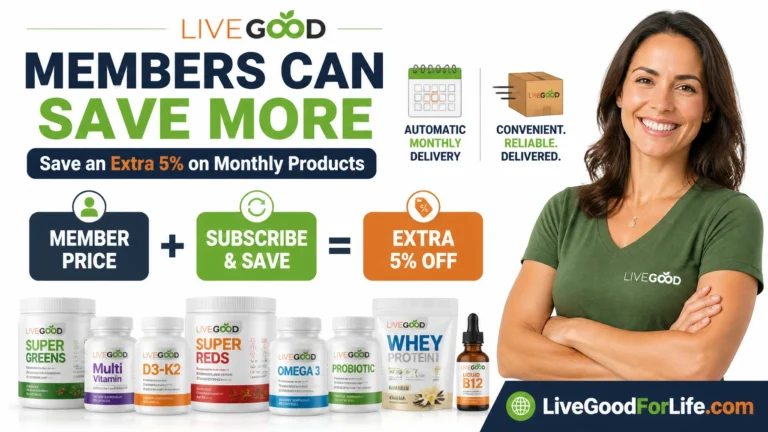
If you are looking for wellness supplements with a membership-style pricing model, compare LiveGood alongside the other brands in this guide. Look at the actual supplement facts panel, serving size, monthly membership cost, shipping, and whether the wellness supplements match what you already use.
What Counts as Wellness Supplements?
Retailers use the term broadly. Listings grouped under wellness supplements include children’s vitamins, multivitamins, herbals, single-nutrient products, and blends. Metagenics, for example, files products under an Essential Wellness category described as everyday essentials for energy, immunity, and overall health. Love Wellness organizes its shop around formulas for vaginal health plus daily vitamins and routine essentials. In other words, wellness supplements are a shopping category, not a guarantee that every formula is useful for every person.
That breadth is the first place money leaks out. A product labeled for wellness can be anything from a basic multivitamin to a blend marketed for sleep, stress, energy, or immune support. Source Naturals uses shop-by-need groupings that include Immune & Antioxidant, Sleep & Stress, and Energy, which shows how retailers expect shoppers to sort wellness supplements by outcome rather than by ingredient.
Sorting by outcome is convenient, but it puts the marketing decision ahead of the nutritional one. A better order is: identify the nutrient or category you want, then compare wellness supplements that contain it, then compare cost. That is why this article links to competitors as comparison references, while the LiveGood link is clearly marked as an affiliate option.
The Categories Most Wellness Supplements Aisles Are Built Around
Across the wellness supplements listings reviewed, a handful of categories show up repeatedly. Knowing them helps you spot duplicates and avoid buying the same thing twice under different names.
- Multivitamins and foundational blends, including products aimed at children and at general daily nutritional needs.
- Single vitamins and minerals, such as vitamin D and B vitamins, which appear in professional-grade wellness listings.
- Omega-3s and probiotics, also listed among professional-grade wellness categories.
- Adaptogens and herbs, which appear both in blends and as standalone products.
- Magnesium, sold in specific forms such as magnesium glycinate.
An example of a multi-ingredient approach is Source Naturals Wellness Formula, described as an award-winning blend of more than 30 vitamins, minerals, adaptogens, and herbs, with high potencies of vitamins A, C, and D. That is a different purchase than single-nutrient wellness supplements, and it costs differently too.
Magnesium glycinate shows the opposite pattern. The Vitamin Shoppe lists a magnesium glycinate product of 180 capsules at $54.99, positioned for healthy muscle function, relaxation, and cardiovascular wellness. One ingredient, one stated purpose, one listed price. Prices and listings change, so verify current details on the retailer page before you buy.
Read Wellness Supplements Labels Before the Marketing Copy
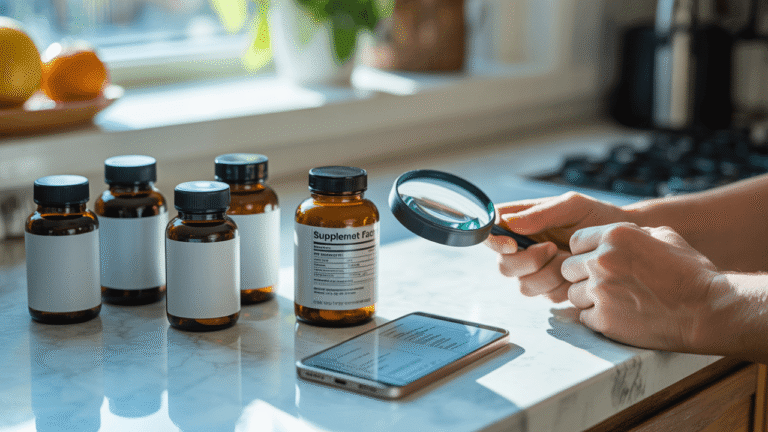
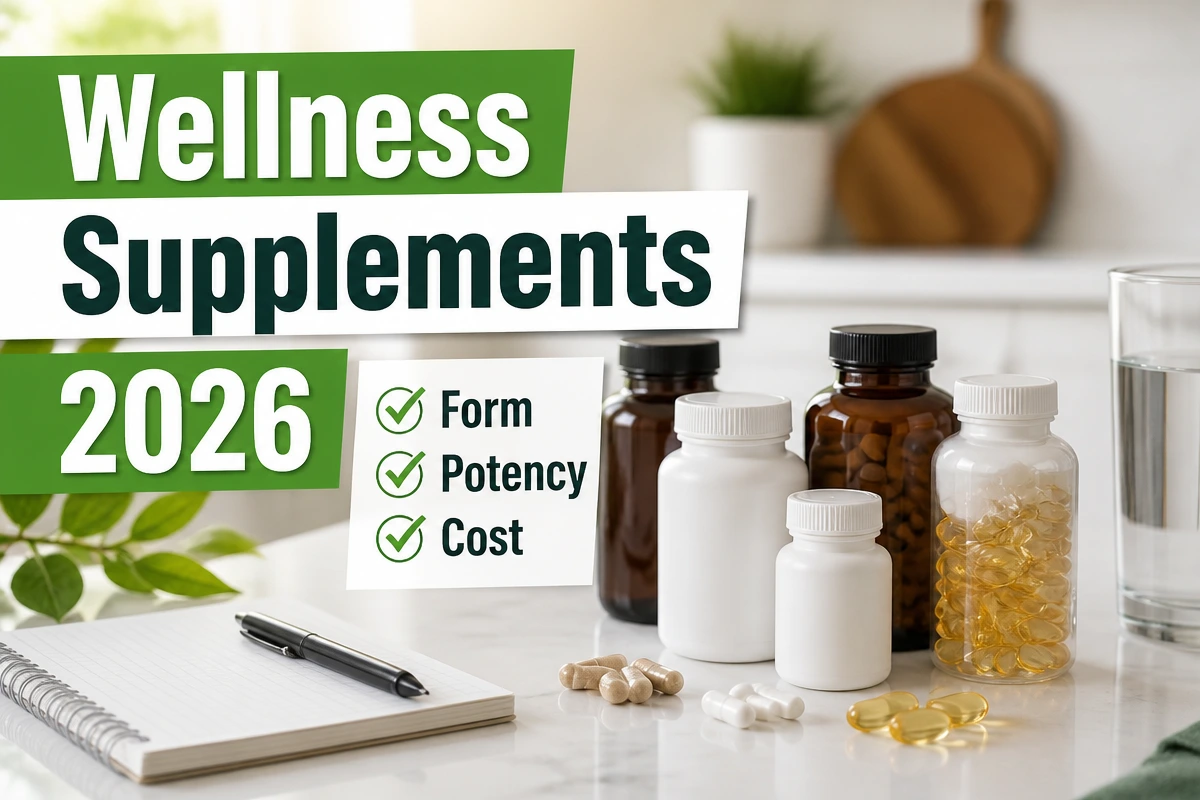
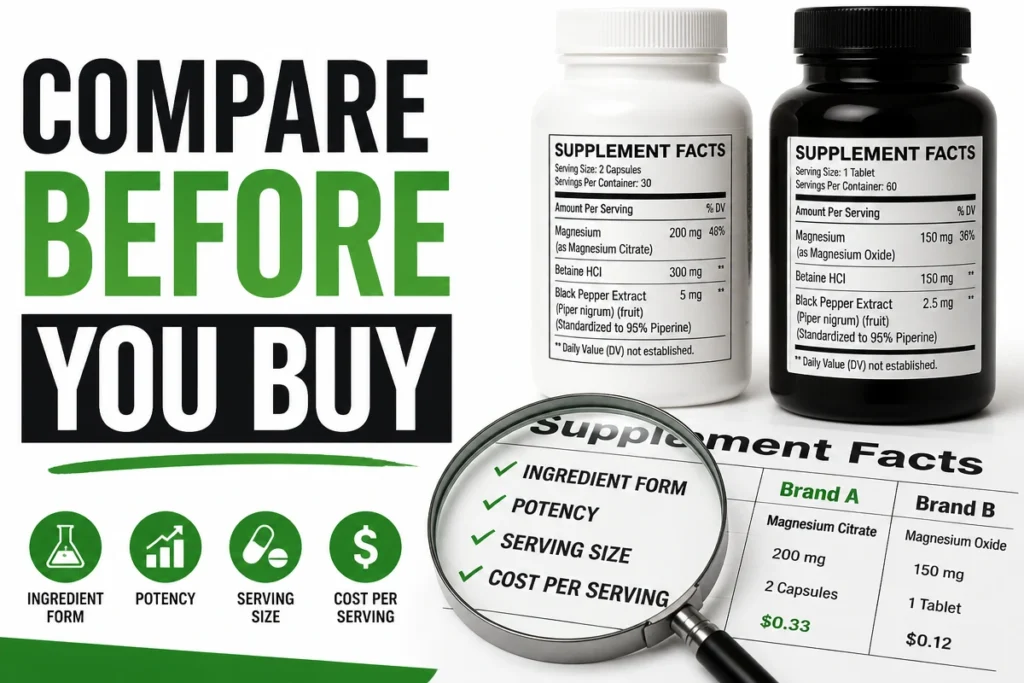
Two wellness supplements can contain the same nutrient name and behave nothing alike. The differences worth checking are form, potency, and what the label actually promises.
Ingredient form and absorbability
Magnesium is the clearest example in this wellness supplements research. Magnesium glycinate is named as its own product, which tells you form matters enough to appear in the product title. Wellness Resources states that it uses only the most absorbable forms of nutrients, a positioning claim that shows form is a competitive selling point rather than a footnote. When a label names a specific form, that is a signal you can compare; when it lists only a generic nutrient name, ask the manufacturer for details.
Potency and blend disclosure
Wellness Formula is described as using high potencies of vitamins A, C, and D within a large blend. High potency is a marketing term unless the label lists amounts, so read the supplement facts panel and confirm each ingredient has a number attached. If a blend hides behind a single total milligram figure, you cannot judge what you are getting.
Capsule count and serving size
The 180-capsule magnesium glycinate listing is useful to think through. Divide the capsule count by the number of capsules per serving to get the number of servings, then divide the price by servings to get cost per serving. Two wellness supplements at the same price can differ by a factor of two or three once serving size is included. This single calculation prevents more wasted money than any review.
Compare Wellness Supplements Programs, Not Just Products
Retailers wrap wellness supplements in subscription discounts, shipping thresholds, and rewards. Those terms change the real price, so compare them alongside the formula. The table below reflects what each source currently advertises or emphasizes, and it gives you direct links for checking updated details before you buy.
| Source | Offer stated in the source |
|---|---|
| LiveGood | Affiliate option to compare for membership-style supplement pricing; check the live product pages for current formulas, serving sizes, member pricing, and shipping |
| Metagenics | Save up to 20% plus free shipping when you subscribe; HSA/FSA eligible supplements noted; HSA/FSA funds can save up to 30%; 60-day money-back offer |
| Love Wellness | Save 35% on a first subscription; free shipping on orders $45 and up |
| Walgreens | Retail promotions may include percentage-off codes, rewards, and mix-and-match deals; verify the current offer before checking out |
| The Vitamin Shoppe | Useful for comparing single-nutrient products such as magnesium glycinate by capsule count, serving size, and price |
| Wellness Resources | Family-owned, formulating supplements since 1985, manufactured in the USA in GMP-certified facilities |
Discounts like these reward commitment, so they only save money if you already know the product works for you. A first subscription discount on a formula you never finish is a loss, not a saving.
Use HSA and FSA Rules to Your Advantage
Metagenics flags certain supplements as HSA/FSA eligible and notes that using those funds can save up to 30%. If you have a health savings account or flexible spending account, that is real money already set aside for eligible health purchases.
Eligibility rules are specific and can change, and this article cannot confirm which individual products qualify. Check the product page for an eligibility label, and confirm your own plan’s rules with your account administrator before you assume a purchase will be reimbursed.

What Actually Wastes Money on Wellness Supplements
Waste rarely comes from one bad bottle of wellness supplements. It comes from patterns that repeat month after month.
- Buying overlapping products, such as a multivitamin plus several single nutrients that already appear in it.
- Choosing by outcome label alone, then discovering the formula does not match the need you had in mind.
- Ignoring serving size, which hides the true cost of a bottle.
- Starting a subscription for the discount and forgetting the renewal date.
- Stocking more wellness supplements than you can use before expiration, especially when a discount requires a minimum order.
Shipping thresholds create their own pressure. A free shipping minimum of $45, like the one Love Wellness advertises, can push you to add items you did not plan to buy. Adding an unwanted product to save a shipping fee is almost never the cheaper outcome.
A Straightforward Wellness Supplements Buying Checklist
- Name the need first: foundational daily nutrition, sleep and stress, energy, immune and antioxidant support, or a specific nutrient such as magnesium, vitamin D, omega-3s, or a probiotic.
- Check whether an existing product already covers it, since many blends repeat common nutrients.
- Read the supplement facts panel and confirm every ingredient listed has a stated amount.
- Note the ingredient form, because forms are named for a reason.
- Calculate cost per serving using capsule count and serving size.
- Compare the subscription price against the one-time price, then check renewal and cancellation terms.
- Check HSA/FSA eligibility if you plan to use those funds.
- Buy a single unit of new wellness supplements first, and only subscribe once you know you will keep using them.
When to Get Personalized Guidance
Some providers go beyond shelf products. A clinic in Lawrence, Kansas advertises professional-grade wellness supplements and personalized nutritional support, with minerals, omega-3s, probiotics, adaptogens, and vitamin D and B vitamins among the categories. That kind of setting can help if you take prescription medication, manage a health condition, or have already tried several wellness supplements without a clear result.
Bring your current bottles and your questions. A professional can review overlaps and check whether what you already own covers the nutrients you were about to buy again.
Study and Reference Resources
Use these resources to check nutrient basics, safety limits, interactions, and what the evidence actually says. They are not a replacement for personal medical advice, but they are better starting points than a product ad.
- NIH Office of Dietary Supplements: Magnesium Fact Sheet for Health Professionals
- NIH Office of Dietary Supplements: Vitamin D Fact Sheet for Health Professionals
- NIH Office of Dietary Supplements: Omega-3 Fatty Acids Fact Sheet for Health Professionals
- NCCIH: Probiotics, What You Need To Know
- FDA: Information for Consumers on Using Dietary Supplements
Frequently Asked Questions
What is a wellness supplement?
The term covers a wide range of wellness supplements sold to support daily nutritional needs and general well-being, including multivitamins, children’s vitamins, herbals, single vitamins and minerals, omega-3s, probiotics, adaptogens, and magnesium. Because retailers group very different formulas under one label, treat the category name as a starting point and read the ingredient panel before deciding whether a product fits what you need.
Are subscription discounts worth it?
They can be, but only when you already know you will keep using the product. Metagenics advertises up to 20% off plus free shipping on subscriptions, and Love Wellness advertises 35% off a first subscription with free shipping over $45. Those savings disappear if you cancel early or let an unused bottle renew.
Does HSA or FSA money work for supplements?
Sometimes. Metagenics marks certain products as HSA/FSA eligible and notes that using those funds can save up to 30%. Eligibility depends on the specific product and your plan’s rules, and those rules can change. Confirm eligibility on the product page and check with your account administrator before you rely on reimbursement.
Should I choose a blend or a single nutrient?
It depends on the gap you are trying to fill. A blend such as Wellness Formula, described as containing more than 30 vitamins, minerals, adaptogens, and herbs with high potencies of vitamins A, C, and D, covers a lot at once. A single product such as magnesium glycinate targets one area. Choose the blend only if you are not already covering those ingredients elsewhere.
What is the fastest way to compare value?
Divide the number of capsules by the capsules per serving, then divide the price by the number of servings. A 180-capsule bottle at $54.99 tells you very little until you know whether a serving is one capsule or three. This one calculation exposes most of the difference between a product that looks cheap and one that actually is.
Medical Disclaimer
This article is for educational purposes only and is not medical advice. Wellness supplements may affect people differently and may interact with medications, health conditions, or medical treatments. Always talk with a qualified healthcare professional before starting, stopping, or combining supplements, especially if you are pregnant, nursing, taking prescription medication, managing a health condition, or buying supplements for a child.
Affiliate Disclaimer
This article may contain affiliate links. If you click a link and make a purchase, I may earn a commission at no extra cost to you. I only aim to share information that helps readers compare products, ingredients, pricing, and value more clearly. Affiliate relationships do not change the educational purpose of this content.