LiveGood Fundraiser for Sports Teams
Last updated: September 16, 2026
Quick answer: A LiveGood fundraiser for sports teams gives coaches, parents, booster clubs, and athletes a simple online way to raise money without relying only on car washes, candy bars, cookie dough, raffle tickets, or door-to-door selling. Families share a fundraiser link, supporters choose whether to order wellness products online, and the team may receive support from qualifying orders, including possible repeat support when customers reorder.
This guide explains how the sports team fundraiser works, which teams can use it, how it compares with traditional team fundraisers, and how to launch it without adding more stress to parents. Fundraising results are not guaranteed. Participation, communication, qualifying orders, repeat orders, and current program terms all matter.
What Is a LiveGood Fundraiser for Sports Teams?
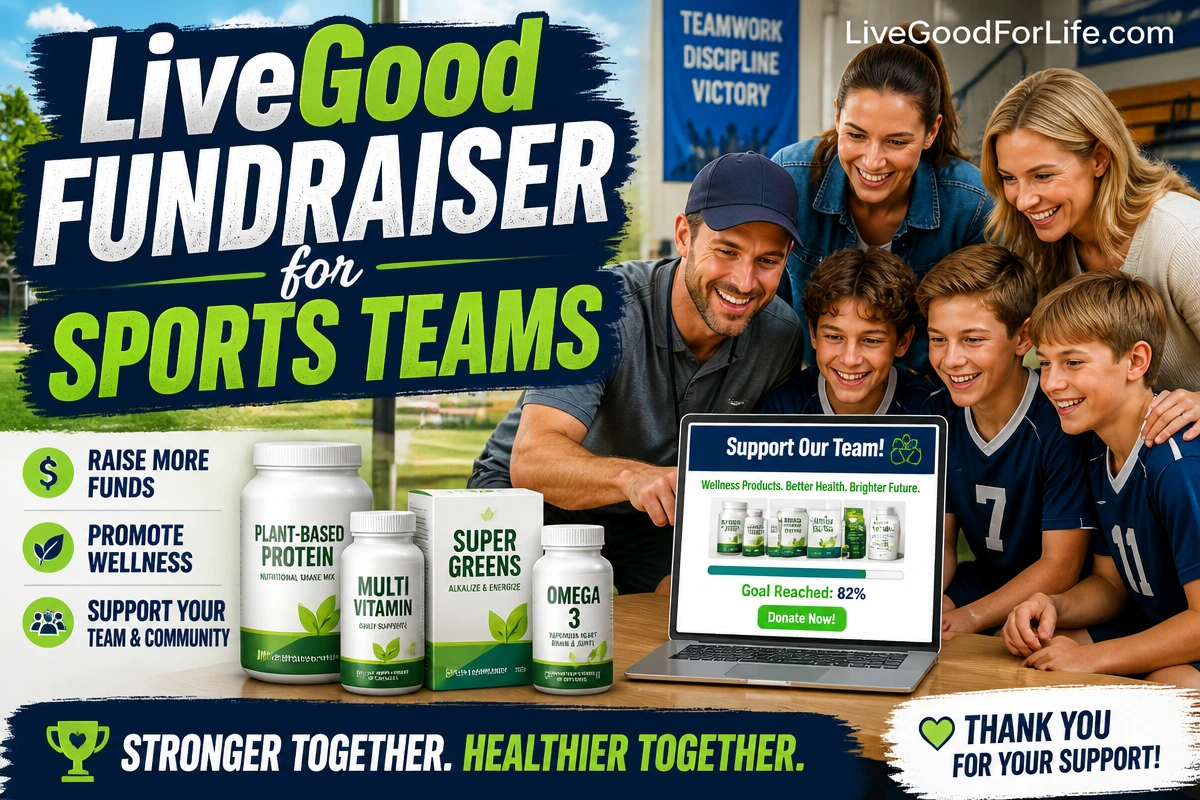
A LiveGood fundraiser for sports teams is an online fundraising option connected to wellness products. Instead of asking families to sell boxes, stand outside stores, wash cars, or chase paper order forms, the team can share one fundraiser link with friends, relatives, neighbors, coworkers, local fans, alumni, and community supporters.
The team does not need to buy inventory upfront, store products, deliver orders, or collect cash. Supporters can review products online and decide for themselves. Based on LiveGood fundraiser messaging, the model is commonly presented as 20% on initial qualifying orders and 10% on qualifying repeat orders. That repeat-order piece is what makes it different from many short-term team campaigns.
For the full model overview, read our main LiveGood fundraiser review. You can also browse the full LiveGood Fundraiser category for more group-specific fundraiser guides.
Why Sports Teams Need Better Fundraising Options
Sports teams usually need money more than once. A team may need uniforms before the season, travel money during the season, tournament fees near the end, and equipment again next year. Parents already pay for registration, shoes, gear, fuel, hotels, food, photos, training, and time away from work. When another fundraiser lands on the same families, people can feel tired before the campaign even starts.
Traditional team fundraisers can still work, but many of them are hard on parents. Car washes need supplies, signs, a location, good weather, and hours of volunteer time. Candy sales need boxes, tracking, payments, and repeated asks. Cookie dough can require cold storage and delivery coordination. Raffles need tickets, prizes, and careful tracking. Restaurant nights are easy but usually produce limited funds from one evening.
An online fundraiser gives teams another path. Families can share from home, supporters do not need to live nearby, and the team can keep the fundraiser available beyond one weekend. That matters for travel teams, school teams, club teams, and booster clubs with ongoing expenses.
Which Sports Teams Can Use This Fundraiser?
This type of fundraiser can fit almost any team with parents, athletes, coaches, or supporters willing to share. It may work especially well when the team has a clear goal and a schedule that gives families time to promote the link.
- Football teams are raising money for gear, travel, camps, and team meals
- Basketball teams are raising money for tournaments, uniforms, and gym costs
- Soccer teams are raising money for league fees, travel, and equipment
- Baseball and softball teams are raising money for uniforms, bats, field fees, and tournaments
- Hockey teams are raising money for ice time, travel, jerseys, and goalie gear
- Volleyball, handball, rugby, lacrosse, and tennis teams are raising money for competition costs
- Cheer, dance, gymnastics, wrestling, swimming, track, martial arts, and cross-country teams are raising money for events, travel, and training
- Booster clubs supporting multiple school sports programs throughout the year
LiveGood Fundraiser vs Car Wash and Candy Sales
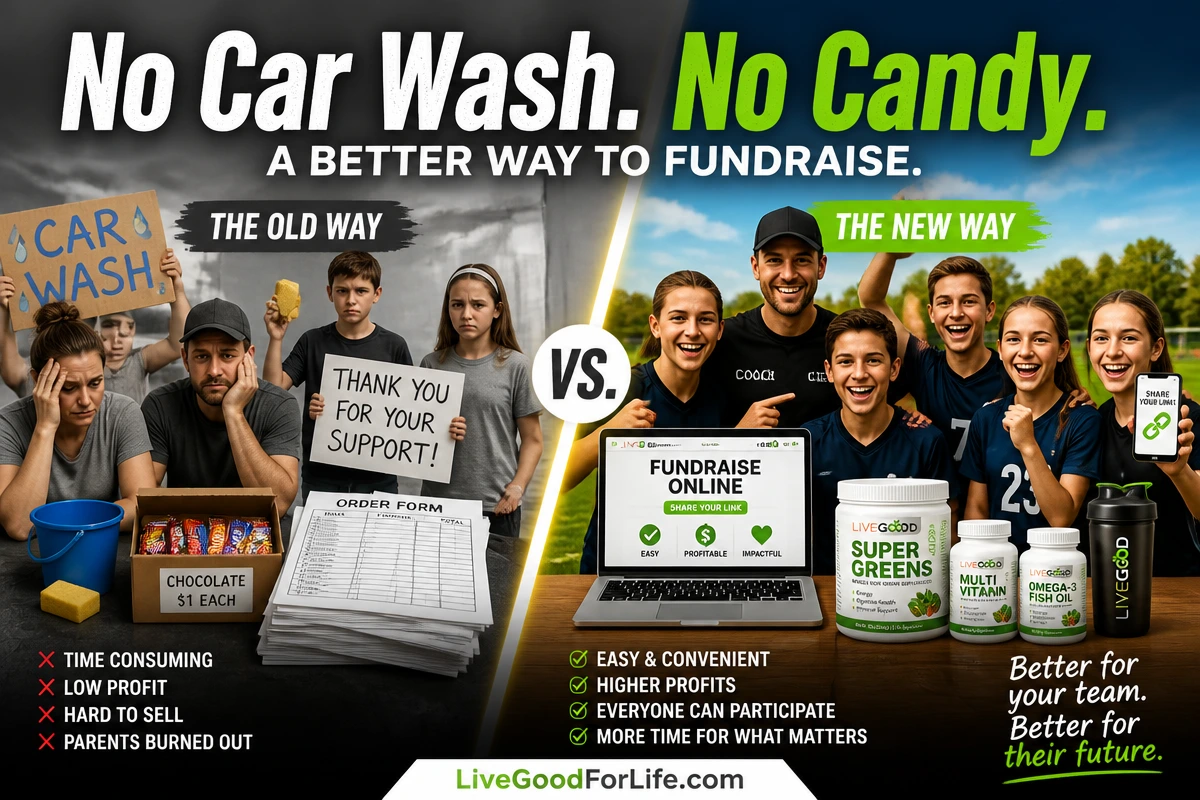
A car wash can build team spirit, but it is limited by weather, traffic, location, and volunteer turnout. Candy and snack sales are familiar, but they often put pressure on families to ask the same people again. A LiveGood sports team fundraiser can be shared online, which means grandparents, relatives, former players, local fans, family friends, and out-of-town supporters can all participate if they want to.
| Team fundraiser | What it requires | Common problem | Online wellness fundraiser advantage |
|---|---|---|---|
| Car wash | Supplies, location, signs, weather, volunteers | One day and local traffic only | Can be shared anytime and outside the local area |
| Candy bars | Boxes, tracking, cash collection | Repeated pressure on the same buyers | Supporters choose wellness products online |
| Cookie dough | Order forms, delivery, storage | Parent workload and pickup logistics | No team inventory or product delivery |
| Raffle tickets | Prizes, tickets, tracking, rules | People buy a chance, not a product they use | Supporters receive products they choose |
| Restaurant night | One evening at one location | Limited by attendance and local schedule | Link can stay active beyond one night |
| Donation page | One-time asks for support | Donor fatigue can build quickly | Repeat orders may create ongoing support |
What Sports Teams Can Raise Money For
The clearer the team goal, the easier the fundraiser is to share. “Support our team” is fine, but “help our 12U soccer team cover tournament travel” is stronger because supporters immediately understand the need.
| Team need | Example goal | Why supporters understand it |
|---|---|---|
| Uniforms | New jerseys, warmups, practice shirts | Visible team need that affects every player |
| Travel | Fuel, buses, hotels, meals | Families know travel costs add up fast |
| Tournaments | Entry fees and competition costs | Clear deadline and clear purpose |
| Equipment | Balls, nets, cones, bats, pads, bags | Easy to connect to player development |
| Training | Clinics, camps, coaching support | Supporters like helping athletes improve |
| Senior night or banquets | Recognition events and awards | Emotional reason for families and alumni to help |
| Scholarships | Helping athletes participate when costs are high | Strong community reason to support |
Why Recurring Support Matters for Teams
Most team expenses come back every season. Uniforms wear out. Equipment breaks. Tournament fees increase. Travel costs change. New athletes join. Booster clubs often support more than one team, which means the fundraising need can continue all year.
That is why the recurring part of the LiveGood fundraiser may be valuable. If a supporter places a qualifying order once, the team may receive first-order support. If that same customer continues ordering qualifying products later, the team may receive smaller repeat support. This is not automatic and should never be promised, but it gives teams a different kind of fundraising possibility compared with selling one-time items.
How Coaches and Parents Can Explain It
The message should be short, honest, and easy to share. Parents should not feel like they need to become salespeople. The team simply needs a clear fundraiser explanation and a link supporters can review.
Our team is raising money for this season through an online wellness fundraiser. Instead of selling candy or holding another car wash, supporters can use one link to review wellness products online. If someone places a qualifying order, our team may receive support, and repeat orders may continue helping over time. Thank you for supporting our athletes.
This works because it says what the fundraiser is, what it replaces, how it may help, and why the team is sharing it. It also avoids pressure and avoids guaranteed-income claims.
Simple Launch Plan for a Sports Team
- Pick the target amount and reason. Example: “We are raising money for tournament travel and new warmups.”
- Give every family the same message. Keep it short so parents can send it quickly.
- Launch before a busy team moment. A season kickoff, tournament announcement, or uniform deadline gives the fundraiser urgency.
- Share in multiple places. Text, Facebook, Instagram, email, team chat, parent groups, and alumni groups can all help.
- Ask each family to share with 5 to 10 people. A small, clear action is easier than a vague request to “promote the fundraiser.”
- Post progress updates. Thank supporters and remind people what the money helps cover.
- Keep the link available. Because repeat orders may matter, the fundraiser should not disappear after one weekend.
Best Places to Share a Team Fundraiser
Sports teams usually have more sharing channels than they realize. The key is to use the channels respectfully and give people a reason to care.
- Parent text groups and team apps
- Facebook pages and local community groups
- Instagram stories from parents, coaches, and older athletes
- School newsletters and booster club emails
- Alumni pages and former player groups
- Local business supporters and sponsors
- Game-day QR codes on flyers or team tables
- End-of-season banquet messages and team update emails
Mistakes Sports Teams Should Avoid
- Only posting once. Many supporters miss the first post. A launch message, reminder, and thank-you update work better.
- Making parents write their own message. Give them a simple message they can send immediately.
- Using pressure language. The fundraiser should feel optional and respectful.
- Promising guaranteed results. Support depends on qualifying orders, repeat orders, and participation.
- Not explaining the team goal. Supporters need to know whether they are helping with uniforms, travel, equipment, or scholarships.
- Forgetting local supporters. Restaurants, gyms, small businesses, alumni, and family friends may want to help if the message is clear.
Sports Team Fundraiser and School Fundraiser Connection
Many sports teams are connected to schools, booster clubs, and parent groups. If your team is part of a school community, our LiveGood fundraiser for schools guide may also help because it covers PTA, PTO, classroom, and school activity fundraising. The same simple sharing model can be adapted for teams and school programs.
For another supporting resource, Healthy Fundraiser Hub has helpful guides on online fundraisers for sports teams and youth sports fundraising ideas. Those can help coaches and parent volunteers think through campaign angles before launching.
FAQ
Can youth sports teams use a LiveGood fundraiser?
Yes. Youth sports teams may use this type of fundraiser for uniforms, travel, tournaments, equipment, team meals, training, and scholarship support.
Is this better than a car wash fundraiser?
It may be better for teams that want an online option without weather risk, one-day limits, supplies, or heavy parent volunteer hours. A car wash can still build team spirit, but it usually stops after the event ends.
Does the team need to carry inventory?
No. The team shares the fundraiser online. Supporters choose products online, so the team does not need to store boxes, collect paper forms, or deliver products.
How much can a team earn?
The fundraiser is commonly presented as 20% on initial qualifying orders and 10% on qualifying repeat orders. Actual results depend on participation, product interest, customer orders, repeat orders, and current program terms.
Can booster clubs use this fundraiser?
Yes. Booster clubs may be a strong fit because they often support multiple teams and recurring school-year expenses.
Can high school teams use it?
Yes. High school teams, club teams, travel teams, and youth teams can all review this model if they have parents or supporters willing to share the fundraiser link.
Is recurring support guaranteed?
No. Recurring support depends on qualifying repeat orders. The model has recurring potential, but teams should never present it as guaranteed income.
Final Thoughts
A LiveGood fundraiser for sports teams may be a practical option for coaches, parents, athletes, and booster clubs that want something easier to share than car washes, candy boxes, cookie dough, or raffle tickets. It gives families an online link, gives supporters product choice, and may create ongoing support when customers place qualifying repeat orders.
The best fit is a team with a clear goal, organized parent communication, and a few people willing to share consistently. If your team needs help with uniforms, travel, tournaments, equipment, or scholarships, this model is worth reviewing as part of your fundraising plan.
This article is for educational purposes only and is not medical, financial, or fundraising advice. LiveGoodForLife.com is an independent affiliate website and may earn a commission if you start a fundraiser or order through our links, at no extra cost to you. Fundraising results, product availability, commissions, repeat orders, and wellness outcomes are not guaranteed and may vary by person, group, and current program terms.