Supplement Stack Builder: Combine Safely
Last updated: August 8, 2026
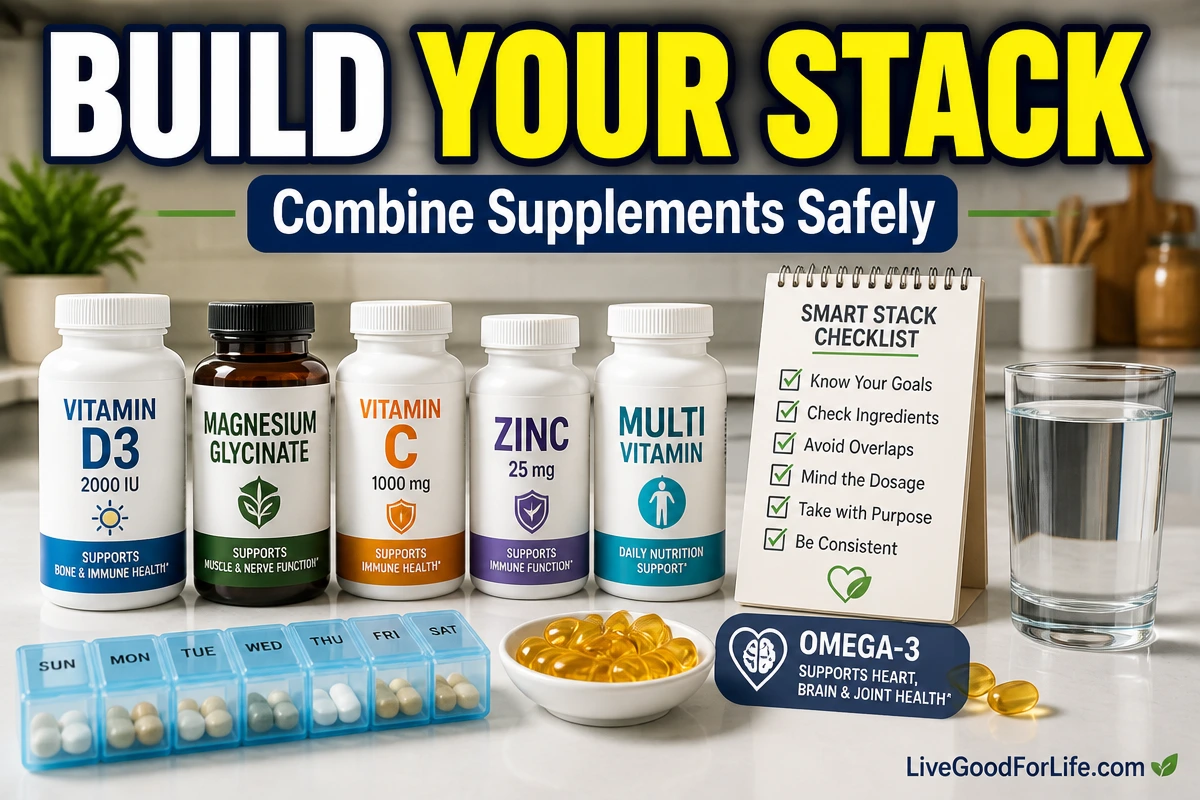
A supplement stack builder is a simple way to plan which vitamins, minerals, probiotics, omega-3s, powders, and specialty supplements belong together in your daily routine. The goal is not to take more products. The goal is to avoid overlap, reduce timing conflicts, and build a routine that matches your needs, your labels, and your safety situation.
This guide gives you a practical framework for combining supplements safely. It is written for people who want a clear supplement plan without guessing, stacking duplicate ingredients, or taking everything at the same time.
Important: This article is educational only and is not medical advice. Supplements can interact with medications, medical conditions, surgery, pregnancy, breastfeeding, and other supplements. If you take prescription medication or have a health condition, ask a qualified healthcare professional or pharmacist before changing your routine.
Supplement Stack Builder: Quick Answer
The safest supplement stack starts with a purpose, not a pile of bottles. Choose one main goal, check every Supplement Facts label, avoid duplicate high-dose nutrients, separate minerals when needed, and keep your routine simple enough to follow every day.
| Step | What to check | Why it matters |
|---|---|---|
| 1. Pick a goal | Energy, sleep, digestion, bones, general wellness | A clear goal prevents random stacking |
| 2. List everything | Supplements, medications, fortified foods, drinks | Overlap often hides across products |
| 3. Read labels | Serving size, %DV, warnings, suggested use | The dose is part of the safety decision |
| 4. Watch duplicates | Vitamin D, zinc, iron, magnesium, B6, iodine | More is not always better |
| 5. Plan timing | Morning, with meals, evening, separated doses | Timing can affect tolerance and medication spacing |
| 6. Review results | Energy, digestion, sleep, side effects, lab results | A stack should earn its place |
What Is a Supplement Stack?
A supplement stack is a group of products taken as part of one routine. For example, someone might take a multivitamin, vitamin D, omega-3, probiotic, magnesium, and a protein powder. Another person might use only a multivitamin and an electrolyte product. Both are stacks if the products are planned together.
The problem is that many people build a stack by adding products one at a time without checking the whole picture. A multivitamin may already contain zinc, vitamin D, iodine, magnesium, or B vitamins. A sleep product may also contain magnesium. A greens powder may add more vitamins and minerals. A hydration mix may add minerals again. This is why a supplement stack builder approach is useful.
Start With One Clear Goal
The best stack is built around a clear purpose. If your goal is general wellness, your routine may look different from someone focused on sleep, digestion, bones, muscle support, or hydration. Avoid building a stack around vague ideas like “more energy” without looking at food, sleep, stress, caffeine, medication, and lab results first.
A simple goal also makes the article and the routine easier for Google, AI search tools, and readers to understand. Instead of trying to rank for every supplement topic at once, this page answers one main question: how do you combine supplements safely without overlap?
Step 1: Write Down Everything You Take
Before adding anything new, write down every supplement, powder, drink mix, medication, and fortified product you use. Include serving size and how often you take it. This step sounds basic, but it often reveals duplicate ingredients immediately.
- Daily multivitamin
- Vitamin D or D3-K2
- Magnesium
- Zinc, iron, calcium, or iodine
- Omega-3 fish oil
- Probiotics or digestive enzymes
- Protein, collagen, greens, reds, fiber, or hydration powders
- Sleep, hormone, immune, or energy products
If you already take several products, also read Best Time to Take Vitamins and Can You Take LiveGood Supplements Together?.
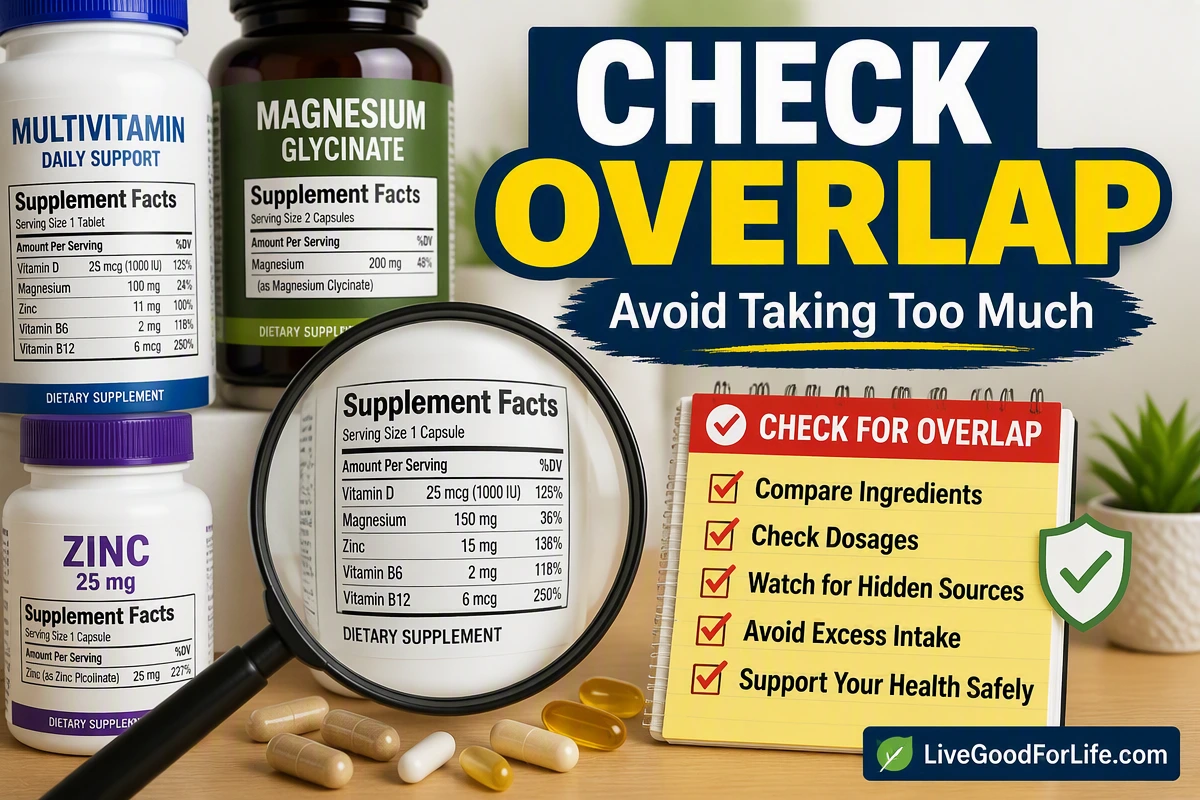
Step 2: Check for Ingredient Overlap
Overlap is one of the biggest mistakes in supplement stacking. It happens when two or three products contain the same nutrient, so the total daily amount becomes higher than expected. This is especially important for nutrients that have upper limits or deserve extra caution.
| Ingredient | Common overlap source | Why to check it |
|---|---|---|
| Vitamin D | Multivitamin plus D3-K2 plus immune formula | High-dose use may need testing and professional guidance |
| Zinc | Multivitamin plus immune product | Too much zinc can affect copper balance |
| Iron | Multivitamin plus separate iron | Iron is not appropriate for everyone |
| Magnesium | Multivitamin plus magnesium plus sleep product | Supplemental magnesium can cause digestive effects and interact with some medicines |
| Vitamin B6 | B-complex plus multivitamin plus energy formula | High long-term intakes deserve caution |
| Iodine | Multivitamin plus sea moss plus thyroid support formula | Extra caution is needed with thyroid concerns |
| Calcium | Bone formula plus multivitamin plus fortified drinks | Timing and total daily intake matter |
The NIH Office of Dietary Supplements explains that Supplement Facts labels show active ingredients, amounts, serving size, and % Daily Value. Use those details to compare the total from all products, not just one bottle.
Step 3: Build a Simple Morning and Night Plan
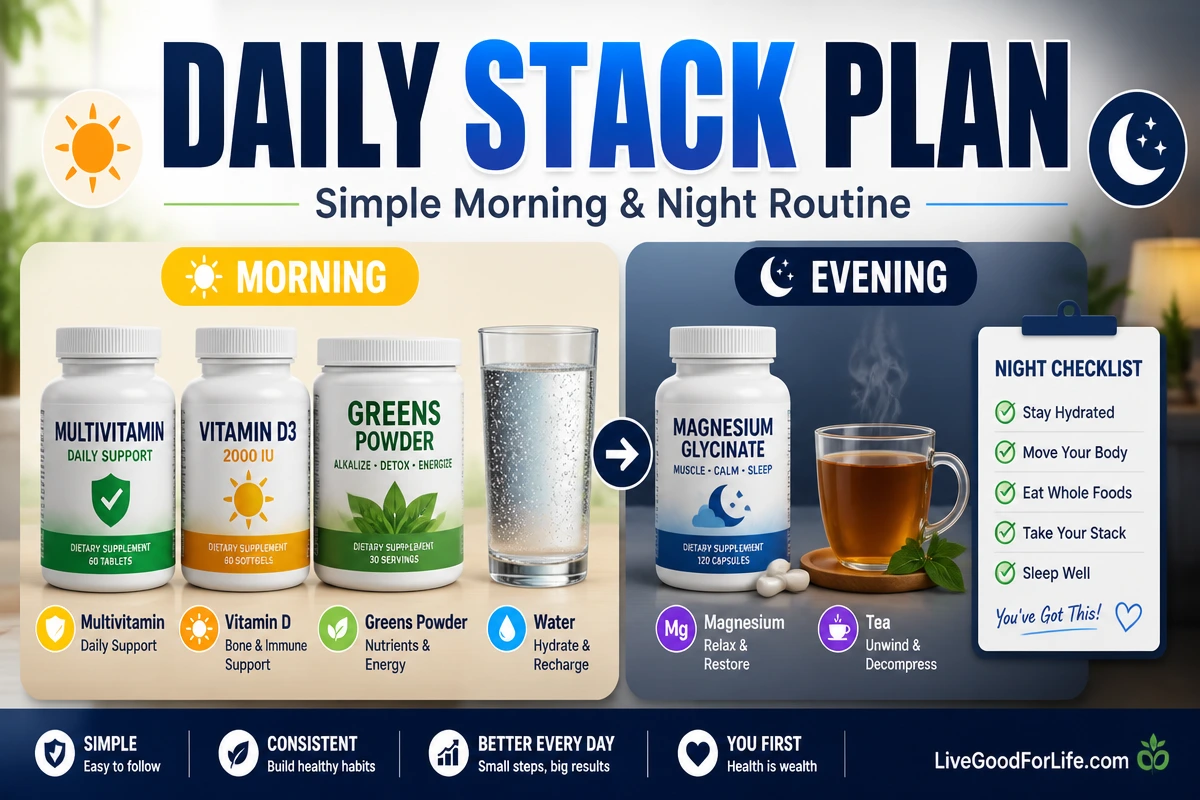
A good stack is easy to follow. Many people do better with a morning group, a meal-based group, and an evening group instead of taking everything at once. This is not because one schedule is perfect for everyone. It is because simple timing makes the routine easier to remember and easier to adjust.
| Time | Possible stack | Notes |
|---|---|---|
| Morning with breakfast | Multivitamin, vitamin D, greens, hydration | Works well for daily habit building |
| Lunch or main meal | Omega-3, protein, fiber if tolerated | Food can improve tolerance for many products |
| Afternoon | Electrolytes or protein if needed | Useful around heat, exercise, or appetite goals |
| Dinner | Minerals that fit your schedule | Separate from medications if advised |
| Evening | Magnesium or sleep support if appropriate | Avoid stacking multiple calming products casually |
For timing details, compare this with Should I Take Magnesium in the Morning or at Night? and the Supplement Capsule Count Calculator.
Step 4: Know Which Supplements Need Extra Caution
Some supplements deserve extra care because they can interact with medication, affect lab tests, or create problems when taken at high doses. The FDA and NIH both remind consumers that supplements can have unwanted effects and are not meant to diagnose, treat, cure, or prevent disease.
- Iron: do not add it unless you have a clear reason and professional guidance.
- Magnesium: separate from certain antibiotics and osteoporosis medicines if advised.
- Vitamin K: ask a clinician if you use blood-thinning medication.
- Fish oil and omega-3: ask before surgery or if using blood-thinning medicines.
- Biotin: tell your clinician because it can interfere with some lab tests.
- Herbs and botanicals: check interactions, especially with medication, pregnancy, breastfeeding, or surgery.
- Sleep products: avoid combining with alcohol, sedatives, or multiple calming formulas unless guided.
AIO SEO and GEO: Make the Answer Easy to Cite
For Google and AI search, a strong health article should answer the question directly, use clear headings, include source links, avoid exaggerated claims, and show practical steps. This is why this supplement stack builder guide includes a quick answer, tables, safety warnings, FAQ, and links to trusted sources.
AI tools often cite pages that provide a direct answer in plain language. The best signal is not keyword stuffing. It is clarity: explain what a supplement stack is, show how to check overlap, give a safe routine example, and mention when a professional should be involved.
Example Supplement Stacks
These examples are not prescriptions. They show how to think through a stack. Your personal routine should depend on your diet, health status, medications, labels, and professional advice.
| Goal | Simple stack idea | What to watch |
|---|---|---|
| General wellness | Multivitamin, vitamin D if needed, omega-3 | Check total vitamin D, zinc, iron, and iodine |
| Digestive support | Probiotic, fiber, digestive enzymes if appropriate | Start slowly and watch bloating or discomfort |
| Sleep routine | Magnesium or sleep support, not both automatically | Avoid stacking sedating products |
| Fitness support | Protein, hydration, electrolytes, omega-3 | Check sugar, caffeine, sodium, and total calories |
| Bone support | Vitamin D, calcium if needed, magnesium | Separate calcium and iron; check dose size |
Common Supplement Stack Mistakes
- Taking a multivitamin plus several single nutrients without adding the totals.
- Adding iron “just in case.”
- Using two sleep formulas with overlapping calming ingredients.
- Taking minerals at the same time as medication without checking spacing.
- Assuming a higher dose means a better result.
- Changing several products at once, then not knowing what helped or caused side effects.
- Ignoring food, hydration, sleep, movement, and lab testing.
Simple Supplement Stack Checklist
- Choose one main goal for your stack.
- Write down every supplement and medication.
- Check the Supplement Facts label for serving size and %DV.
- Add up duplicate nutrients across products.
- Look for warnings about pregnancy, surgery, medication, or health conditions.
- Separate minerals and medications when a pharmacist recommends spacing.
- Start simple and change one product at a time.
- Review the stack every 30 to 60 days.
For product research, use 7 Multivitamin Label Red Flags, How to Read an Omega-3 Label, and LiveGood Certificates of Analysis.
Frequently Asked Questions
What is a supplement stack builder?
A supplement stack builder is a planning method for combining supplements safely. It helps you list products, check labels, avoid duplicate ingredients, plan timing, and decide which products actually belong in your routine.
Can I take all my supplements together?
Sometimes, but not always. Some minerals compete, some supplements overlap, and some products can interact with medications. If you use multiple products, it is safer to review timing and total daily amounts.
Which supplements should not be stacked casually?
Be extra careful with iron, high-dose vitamin D, zinc, iodine, magnesium, vitamin B6, sleep products, herbs, and products that affect medication timing. Ask a professional if medication or health conditions are involved.
How many supplements should be in a stack?
There is no perfect number. A good stack is the smallest routine that supports a clear goal without unnecessary overlap. For many people, fewer well-chosen products are better than a long list of bottles.
How do I know if my supplement stack is working?
Track one goal at a time, such as sleep quality, digestion, consistency, energy, or lab markers when appropriate. Change only one product at a time so you can judge the effect more clearly.
Should I use a supplement stack if I take medication?
You can still use supplements in some situations, but medication changes the safety conversation. Ask your prescriber or pharmacist to check interactions and timing before adding or combining products.
Final Thoughts
A supplement stack builder should make your routine safer, simpler, and easier to understand. Start with one goal, check every label, avoid duplicate nutrients, and build around food, sleep, hydration, movement, and professional guidance when needed.
The best supplement stack is not the biggest one. It is the one that fits your real life, avoids unnecessary overlap, and gives every product a clear reason to be there.