LiveGood Fundraiser vs Cookie Dough
Last updated: September 11, 2026
Quick answer: When comparing a LiveGood fundraiser vs cookie dough fundraiser, the biggest difference is workload and long-term potential. Cookie dough fundraisers can work, but they usually involve paper order forms, frozen product delivery, pickup coordination, and a short campaign window. A LiveGood fundraiser is shared online, does not require the group to handle inventory, and may create repeat support when customers place qualifying reorder purchases.
This guide compares both options for schools, sports teams, booster clubs, churches, youth groups, and community organizations. It looks at parent workload, product handling, supporter experience, health fit, campaign timing, and recurring fundraising potential. Results are not guaranteed with any fundraiser, so the best choice depends on your group, your audience, and how well you communicate the goal.
LiveGood Fundraiser vs Cookie Dough Fundraiser: Main Difference
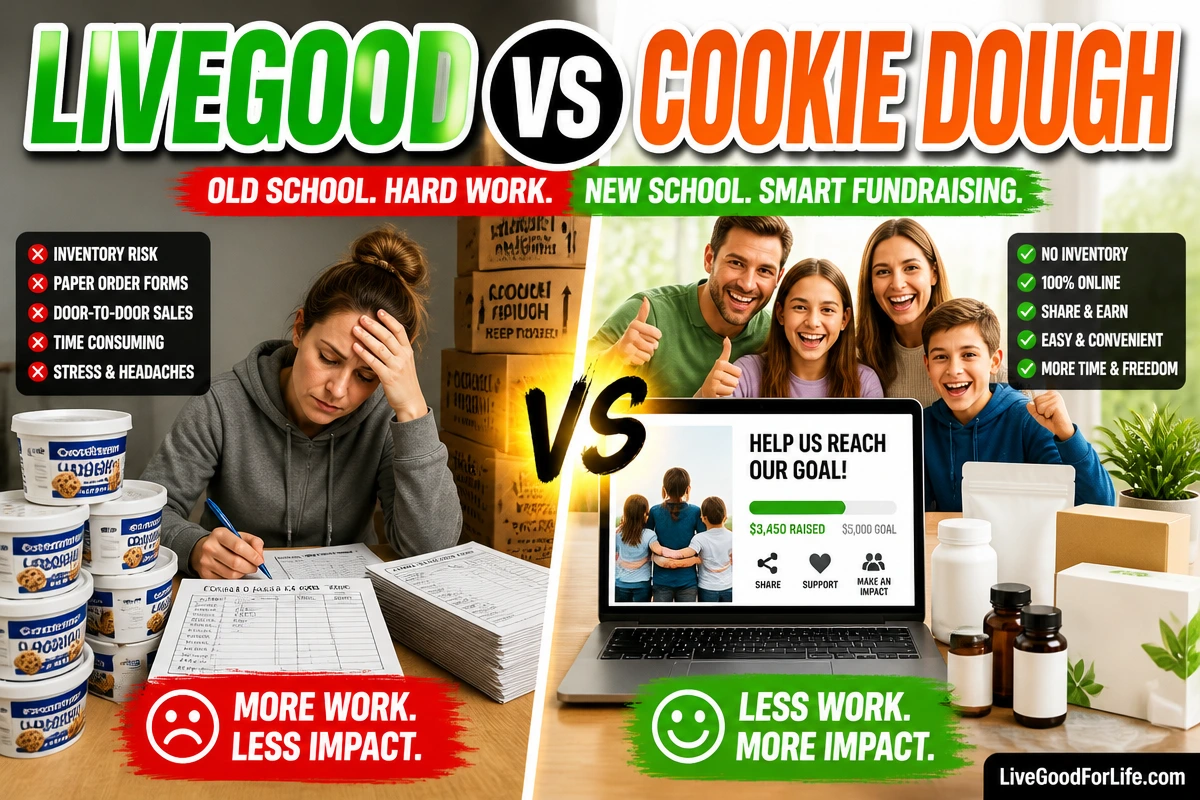
A cookie dough fundraiser is usually a traditional product-sale fundraiser. Students, players, parents, or members collect orders, money is tracked, frozen tubs or boxes are delivered, and families pick up or distribute the products. The campaign usually runs for a few weeks and then ends.
A LiveGood fundraiser is different because the group shares a link online. Supporters choose whether to order wellness products through the connected fundraiser page. The organization does not need to store frozen items, deliver products, or manage paper forms. Based on LiveGood fundraiser messaging, the model is commonly presented as 20% on initial qualifying orders and 10% on qualifying repeat orders.
For the full model, read our main LiveGood fundraiser review. You can also browse more guides in our LiveGood Fundraiser category.
Side-by-Side Comparison
| Feature | Cookie dough fundraiser | LiveGood fundraiser |
|---|---|---|
| Product type | Frozen cookie dough or dessert products | Online wellness products |
| How supporters buy | Usually paper forms, catalogs, or a product sale page | Online fundraiser link |
| Inventory | May require delivery, pickup, sorting, or cold storage | No group inventory handling |
| Volunteer workload | Often high during order collection and delivery | Mostly communication and sharing |
| Campaign length | Usually short-term | Can remain shareable beyond launch week |
| Supporter reach | Often local families and neighbors | Can reach friends, relatives, alumni, and supporters outside the local area |
| Repeat potential | Usually limited unless another campaign is launched | Possible repeat support when customers reorder qualifying products |
| Health positioning | Dessert-based | Wellness-focused |
Why Cookie Dough Fundraisers Are Popular
Cookie dough fundraisers are popular for a reason. People understand them quickly. Families know what is being sold. The product feels familiar, and supporters may enjoy buying something they can use for holidays, parties, school events, or family treats.
For some groups, that simplicity is helpful. A school class, youth team, or club can launch a cookie dough sale with a clear deadline and a clear product. If the community already likes this type of fundraiser and volunteers are ready to manage the work, it can still raise money.
The problem is not that cookie dough never works. The problem is that the same model can become tiring when a group needs to raise money again and again. Parents may be asked to sell to the same relatives. Volunteers may get stuck managing the same logistics. Supporters may buy once because they want to help, not because they want another freezer item.
The Hidden Work Behind Cookie Dough Fundraising
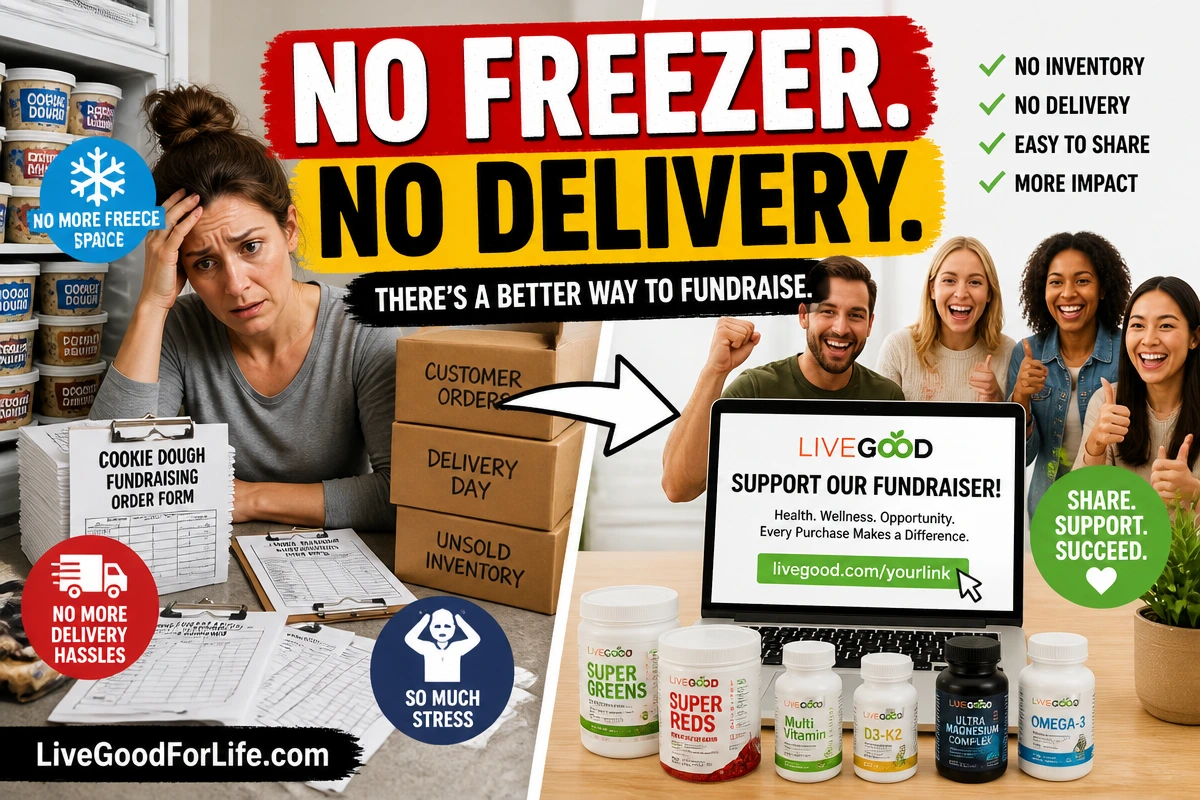
The biggest challenge with cookie dough fundraising is often what happens after people say yes. Someone has to track orders. Someone has to confirm payments. Someone has to coordinate delivery day. If the product is frozen, timing matters. If families miss pickup, the organizer may need to deal with storage, messages, and late collections.
That work often falls on the same small group of parents, coaches, teachers, or volunteers. They are not just promoting the fundraiser. They are managing a mini logistics operation. For a small team, that might be manageable. For a school, booster club, or large youth program, it can become a major job.
- Order forms can be lost, incomplete, or hard to read.
- Cash and payment tracking can create extra admin work.
- Frozen products may need quick pickup or freezer space.
- Delivery day can require many volunteers at the same time.
- Families may need to deliver products to buyers afterward.
- The campaign ends once the product sale closes.
How the LiveGood Fundraiser Reduces Workload
The LiveGood fundraiser moves most of the effort from product handling to communication. Instead of managing boxes, tubs, forms, and delivery days, the group focuses on sharing the fundraiser link, explaining the cause, and reminding supporters respectfully.
That is a major difference for busy parents and volunteers. A coach can send a message to the team. A PTA leader can include the link in a newsletter. A church youth leader can share it in a group chat. A booster club can add it to a campaign page. Supporters can open the link when they have time and decide whether to order.
The organizer still has work to do. A fundraiser without communication rarely performs well. But the work is lighter because it is built around sharing and follow-up instead of inventory, sorting, and pickup logistics.
Recurring Potential: The Big Difference
Most cookie dough fundraisers are one-time campaigns. A supporter buys a tub, uses it, and the fundraiser is finished unless the group launches another sale. That can help with a short-term goal, but it does not solve repeated fundraising needs.
A LiveGood fundraiser may create ongoing support when customers reorder qualifying products through connected fundraiser links. This is not guaranteed, and it depends on customer behavior. But the possibility matters because many groups have recurring needs: uniforms, travel, supplies, mission work, classroom expenses, tournament fees, food pantry support, animal rescue care, or community programs.
If a supporter likes a wellness product and orders again, the fundraiser may continue receiving support without launching the same campaign from zero. That is the advantage cookie dough usually does not have.
Which Groups May Prefer LiveGood?
A LiveGood fundraiser may be a better fit for groups that want an online, low-inventory, wellness-focused fundraiser. It may be especially useful when supporters are spread across different cities or when families are already tired of selling the same seasonal products.
- Schools and PTAs: useful for groups that want fewer boxes, fewer forms, and less classroom disruption.
- Sports teams: helpful for travel, uniforms, tournaments, and equipment when parents can share online.
- Booster clubs: useful when the group supports multiple programs across the school year.
- Churches and ministries: helpful for youth trips, missions, outreach, food pantry support, and recurring needs.
- Animal rescues and nonprofits: useful when the group needs repeat community support and can share a clear cause.
- Fitness and wellness groups: natural audience match because the fundraiser connects to wellness products.
When Cookie Dough May Still Make Sense
Cookie dough may still make sense when the group has a strong local audience that already expects it, volunteers ready for delivery, and a short-term goal. It can also work around holidays or school events when families are already planning treats or gatherings.
The best decision is not always one or the other. Some groups may keep a familiar local fundraiser and add an online wellness fundraiser as a second option. That way, supporters who want cookie dough can buy cookie dough, while supporters who prefer online wellness products have another way to help.
Best Launch Plan for Replacing Cookie Dough
If your group normally sells cookie dough, do not switch without explaining why. People need to understand the change. The best message is not “we are replacing cookie dough.” The better message is “we are trying an easier online fundraiser with no freezer, no delivery day, and possible repeat support.”
- Name the goal. Tell supporters exactly what the money helps fund.
- Explain the difference. No inventory, no freezer, no delivery, online sharing.
- Give families a short message. Make it easy to send by text or email.
- Use a simple launch week. Announce, remind, thank, and update.
- Keep the link available. Repeat support may happen later if customers reorder.
- Avoid pressure. Supporters should feel invited, not pushed.
Simple Message to Share
Here is a short message a school, team, church, or club can adapt:
We are trying an online wellness fundraiser instead of a traditional cookie dough sale. There is no freezer pickup, no delivery day, and no inventory for families to manage. Supporters can use one link to review wellness products online. If someone places a qualifying order, our group may receive support, and repeat orders may continue helping over time. Thank you for supporting our goal.
Related Fundraiser Guides
If you are comparing fundraiser options for a school, our LiveGood fundraiser for schools guide explains how the online model can work for PTAs, PTOs, classrooms, and school teams.
For additional planning context, Healthy Fundraiser Hub has helpful guides on LiveGood fundraising vs traditional fundraising, recurring vs one-time fundraisers, and school fundraising without candy.
FAQ
Is a LiveGood fundraiser better than cookie dough?
It may be better for groups that want less inventory, no frozen delivery, online sharing, and possible repeat support. Cookie dough can still work for short-term local campaigns, but it usually ends when the sale ends.
Does a LiveGood fundraiser require delivery?
No. The group shares the fundraiser online. Supporters choose products through the connected link, so the group does not manage tubs, boxes, pickup times, or delivery routes.
Why do parents get tired of cookie dough fundraisers?
Parents often handle order forms, payments, freezer pickup, product delivery, and repeated selling to the same relatives and coworkers. That workload can feel heavy when groups fundraise often.
Can a school use LiveGood instead of cookie dough?
Yes, a school, PTA, PTO, classroom, sports team, or booster club may review this model as an online alternative. The best results come from clear goals and respectful sharing.
How much can a group earn?
The fundraiser is commonly presented as 20% on initial qualifying orders and 10% on qualifying repeat orders. Actual results depend on participation, product interest, qualifying orders, repeat orders, and program terms.
Is recurring support guaranteed?
No. Recurring support depends on customers placing qualifying repeat orders. The model has recurring potential, but no fundraiser should be presented as guaranteed income.
Can we run both fundraisers?
Yes. Some groups may keep a familiar local fundraiser and add an online fundraiser for supporters who prefer a no-inventory option.
Final Verdict
Cookie dough fundraisers are familiar, but they can create a lot of parent and volunteer work. A LiveGood fundraiser may be a better option for groups that want online sharing, no freezer pickup, no delivery day, no inventory, and possible repeat support from qualifying reorder purchases.
The strongest fit is a group with a clear goal, families willing to share, and supporters who may be interested in wellness products. If your school, team, church, club, or community group is tired of starting over with the same short-term product sales, this online fundraiser is worth reviewing.
This article is for educational purposes only and is not medical, financial, or fundraising advice. LiveGoodForLife.com is an independent affiliate website and may earn a commission if you start a fundraiser or order through our links, at no extra cost to you. Fundraising results, product availability, commissions, repeat orders, and wellness outcomes are not guaranteed and may vary by person, group, and current program terms.