Why Does Magnesium Make Me Sleepy During the Day?
⚡ Quick Answer
Magnesium may make you sleepy during the day because of timing, serving size, magnesium type, food, medications, or already-poor sleep. Start by checking the label and your routine. If you want a multi-form option, compare LiveGood Ultra Magnesium Complex and check the current member price.
📌 Safety First
- Magnesium supplements are not a treatment for fatigue, insomnia, anxiety, or any medical condition.
- Use magnesium only as directed on the product label.
- Ask a healthcare professional first if you take medication, are pregnant or breastfeeding, have kidney disease, heart rhythm concerns, digestive disorders, electrolyte concerns, or follow a medically restricted diet.
- Magnesium can interact with some medications and can also add up across multivitamins, electrolyte blends, laxatives, and antacids.
- Dietary supplements are not FDA-approved to diagnose, treat, cure, or prevent disease.
Why Does Magnesium Make Me
Sleepy During the Day?
Feeling drowsy after magnesium does not always mean something is wrong. This guide explains the most common reasons to check first: timing, serving size, magnesium type, medications, food, and your sleep routine.
Affiliate disclosure: I may earn a commission if you purchase through my links, at no extra cost to you.
Quick Answer: Why Magnesium May Feel Sedating
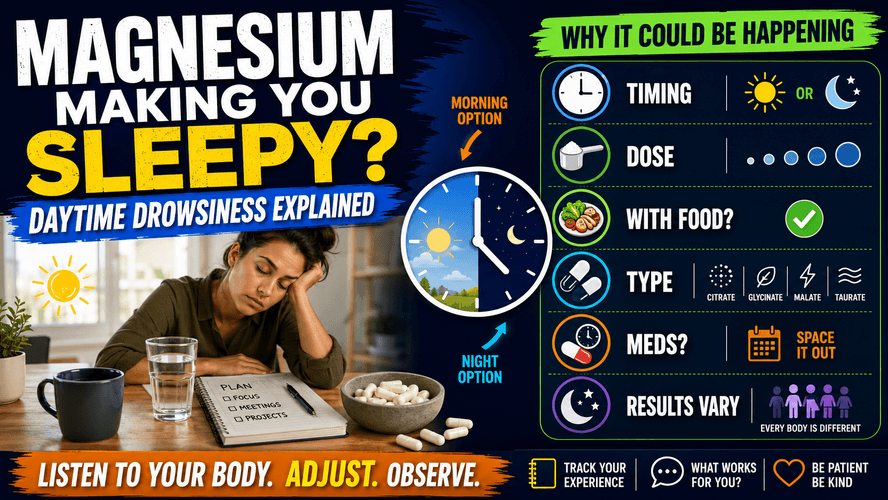
If you feel sleepy after taking magnesium, the cause may be your timing, the amount you take, the magnesium form, what you took it with, or the fact that you were already tired. For many people, this is a routine issue rather than a reason to panic.
☀️ Daytime Timing May Not Fit
If magnesium makes you feel too relaxed during work, driving, or daytime tasks, it may fit better later in the day.
💊 Serving Size May Matter
Check the elemental magnesium amount and add up magnesium from other supplements, antacids, laxatives, and electrolyte products.
⚠️ Medication Spacing Matters
Magnesium may interact with some medications or affect absorption, so ask a pharmacist if you take prescriptions.
Why Magnesium Might Make You Feel Sleepy
Magnesium is an essential mineral involved in muscle and nerve function, energy production, and many enzyme systems in the body. The NIH Office of Dietary Supplements explains that magnesium is naturally present in many foods, available as a supplement, and found in some medicines such as antacids and laxatives. Read the NIH magnesium fact sheet.
Important: Magnesium is not a stimulant or a sleep drug. If you feel sleepy after taking it, look at the full routine: what time you took it, how much you took, what type it was, whether you took it with food, and what else you used that day.
The Most Common Reasons to Check First
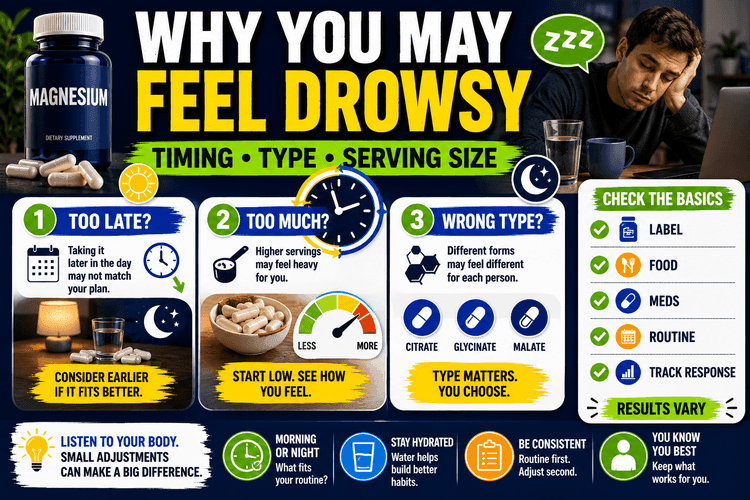
1. You Took It Too Early in the Day
Some people prefer magnesium in the evening because it feels better with a wind-down routine. If morning or midday use makes you drowsy, read this timing guide: Should I Take Magnesium in the Morning or at Night?
2. Your Total Magnesium Intake May Be Higher Than You Think
Magnesium can come from multiple products: multivitamins, electrolyte powders, sleep formulas, antacids, laxatives, and mineral blends. The NIH lists the adult upper limit for magnesium from supplements and medications at 350 mg per day unless medically directed.
3. The Magnesium Type May Not Fit You
Different forms can feel different. Some people compare glycinate, citrate, malate, oxide, and multi-form formulas for tolerance, label clarity, and routine fit. No single form is automatically best for everyone.
4. You Were Already Tired
Poor sleep, stress, dehydration, skipped meals, caffeine timing, and screen habits can all affect daytime energy. Magnesium may get blamed when the larger routine is the real reason you feel tired.
What Research and Safety Guidance Say
Magnesium matters for normal body function, but that does not mean magnesium supplements should be marketed as a fix for fatigue or a treatment for sleep problems. Research on magnesium and sleep is limited, and finished supplement products should not be treated as if they prove the same thing as a study ingredient.
Helpful context
- NIH explains that magnesium is involved in more than 300 enzyme systems.
- High doses from supplements or medications can cause digestive effects and, at very high levels, toxicity concerns.
- Magnesium may interact with certain medications, including oral bisphosphonates and some antibiotics.
- Some magnesium sleep research exists, but it does not prove magnesium treats insomnia or daytime fatigue.
What this does not prove
- that magnesium supplements treat sleep disorders
- that magnesium is the only reason you feel sleepy
- that higher servings are better
- that every magnesium form feels the same
- that magnesium can replace medical evaluation for ongoing fatigue
For deeper reading, review the NIH Magnesium Fact Sheet, this systematic review on oral magnesium supplementation for insomnia in older adults, and this randomized trial on magnesium supplementation and primary insomnia. These references are educational and do not prove that any specific magnesium product treats sleep problems.
What to Check If Magnesium Makes You Sleepy
Why I Would Compare LiveGood Ultra Magnesium Complex
When I compare magnesium supplements, I look for the magnesium forms, elemental magnesium amount, serving size, label clarity, testing access, digestive tolerance, price per serving, and whether the product fits a simple daily routine.

Important: This is a personal product comparison, not medical advice. LiveGood Ultra Magnesium Complex is not intended to diagnose, treat, cure, or prevent any disease.
Multi-Form Magnesium Formula
LiveGood Ultra Magnesium Complex is worth comparing if you want a capsule formula that includes more than one magnesium form. Different forms can vary in tolerance and absorption, so the label is an important part of the buying decision.
Member Price and Subscribe & Save
LiveGood member pricing may offer better value for people who order LiveGood products regularly. Subscribe & Save may also help shoppers avoid running out, receive the product monthly, and cancel when needed. Always review the current checkout terms before purchasing.

90-Day Guarantee
LiveGood may offer a 90-day guarantee, which can help shoppers feel more comfortable comparing the product. Guarantee terms can change, so review the current policy before ordering.
COA and Lab Testing
Testing access helps shoppers review quality information before buying. You can view available LiveGood certificates and lab-testing details here: LiveGood Products Certificates of Analysis.
More Magnesium Education
If you are still deciding when magnesium fits best, read Should I Take Magnesium in the Morning or at Night?. To understand magnesium forms, food sources, safety, and label tips in more detail, read the Ultra Magnesium Guide.
What to Do Next
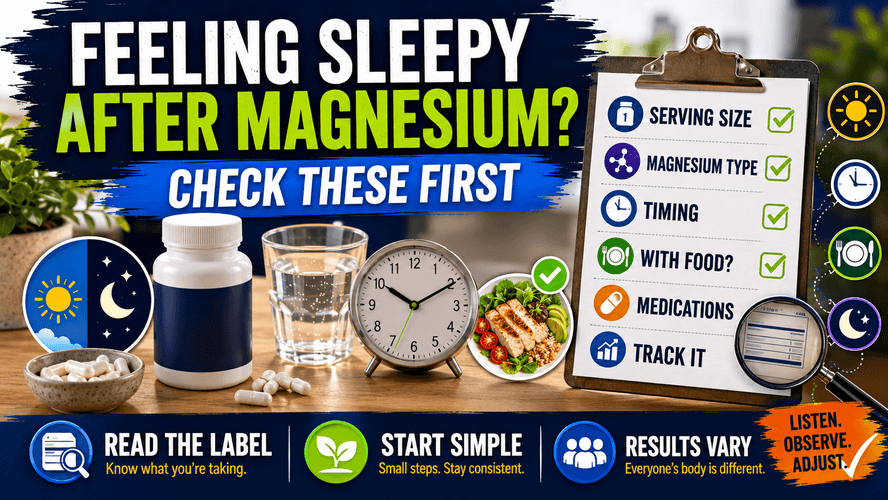
Start With the Label
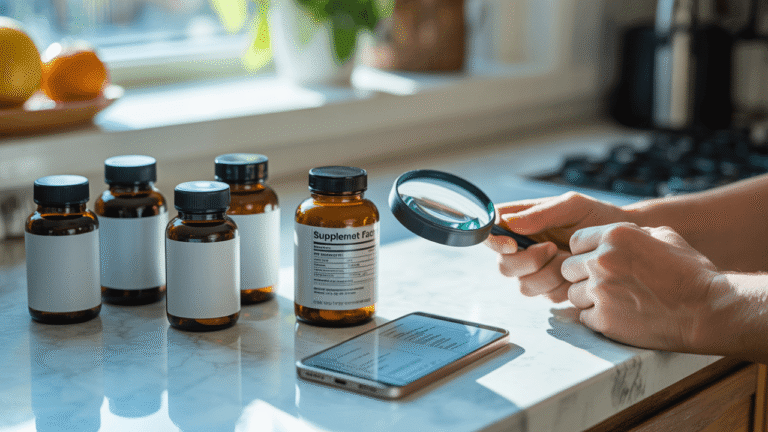
Review the serving size, elemental magnesium amount, form of magnesium, suggested use, and warnings.
Try a Different Time
If daytime drowsiness happens repeatedly, morning or midday may not be your best fit. Evening timing may be easier for some people.
Do Not Increase the Serving
More is not automatically better. Stay within the label directions unless a qualified healthcare professional tells you otherwise.
Track Your Response
Track what time you took it, how much you took, whether you took it with food, whether you felt sleepy, and what else changed that day.
Frequently Asked Questions
Why does magnesium make me sleepy during the day?
The most common reasons to check are timing, total intake, magnesium type, what you took it with, poor sleep, and whether you are taking other supplements or medications.
Should I stop taking magnesium if it makes me sleepy?
Not necessarily. First review the timing, serving size, label, and other products you take. If the sleepiness feels unusual, persistent, or concerning, speak with a healthcare professional.
Is magnesium supposed to make you sleepy?
Not for everyone. Some people feel fine taking it during the day, while others prefer evening timing. Individual response can vary.
Should I take magnesium at night instead?
Possibly. If daytime drowsiness happens consistently, evening timing may fit better. For more help, read Should I Take Magnesium in the Morning or at Night?.
Can magnesium interact with medications?
Yes. Magnesium may interact with or affect absorption of certain medications. Ask a pharmacist or healthcare professional about spacing if you take prescriptions.
Does LiveGood Ultra Magnesium Complex treat sleep problems?
No. It is a dietary supplement, not a medical treatment, and it is not intended to diagnose, treat, cure, or prevent disease.
Bottom Line
If magnesium makes you sleepy during the day, the first things to review are timing, serving size, total magnesium intake, magnesium form, food, medications, and your overall sleep routine. Start simple, read the label, track your response, and choose the timing that fits your day best.
Read the Label
Start with serving size, elemental magnesium amount, suggested use, and warnings.
Adjust Timing
If daytime use makes you drowsy, evening timing may fit better.
Ask When Needed
Get professional guidance for medications, kidney concerns, pregnancy, breastfeeding, or persistent symptoms.
Compare LiveGood Ultra Magnesium Complex
Before buying, review the label, forms of magnesium, elemental magnesium amount, current price, membership terms, shipping, refund policy, testing information, and whether magnesium is appropriate for your routine.
Disclosures
Affiliate Relationship: Some links in this article are affiliate links. If you purchase through these links, I may earn a commission at no extra cost to you. I only recommend products I personally use, have researched, or would consider using as part of a wellness routine.
Medical Disclaimer: This content is for informational and educational purposes only and is not medical advice. It is not intended to diagnose, treat, cure, or prevent any disease. Always consult a qualified healthcare professional before using magnesium or any wellness product, especially if you take medication, are pregnant or breastfeeding, have kidney disease, heart rhythm concerns, digestive disorders, electrolyte concerns, are preparing for surgery, have allergies, or are unsure whether a product is appropriate for you.
Results Disclaimer: Individual results vary. Personal experiences, examples, or opinions in this article are not guarantees and may not represent typical results.
FDA Disclaimer for U.S. Content: These statements have not been evaluated by the Food and Drug Administration. This product is not intended to diagnose, treat, cure, or prevent any disease.
Supplement Regulatory Note: Supplement rules vary by country, state, and product category. If this content targets readers outside the U.S., verify that all claims, labels, product links, and disclosures comply with local rules before publishing.
Pricing and Availability: Prices, membership terms, product formulas, labels, testing information, shipping, and refund policies can change. Verify all details before publishing or purchasing. Last updated: July 2026