Can I Build Muscle With Plant-Based Protein Only?
⚡ Quick Answer
Yes, you can build muscle with plant-based protein only if you get enough total protein, essential amino acids, calories, strength training, and recovery. The label matters. If you want a dairy-free option, compare LiveGood Plant-Based Protein and check the current member price before buying.
📌 Safety First
- Plant-based protein powder does not guarantee muscle growth.
- Muscle building depends on resistance training, total protein, calories, sleep, recovery, and consistency.
- Ask a healthcare professional before increasing protein intake if you have kidney disease, liver disease, digestive conditions, food allergies, pregnancy or breastfeeding considerations, or a medically restricted diet.
- Protein powder is not required if you already meet your needs with food.
- Dietary supplements are not FDA-approved to diagnose, treat, cure, or prevent disease.
Can I Build Muscle With
Plant-Based Protein Only?
Plant protein can work for muscle-building goals, but the details matter: total protein, amino acids, leucine, calories, progressive training, digestion, and consistency.
Affiliate disclosure: I may earn a commission if you purchase through my links, at no extra cost to you.
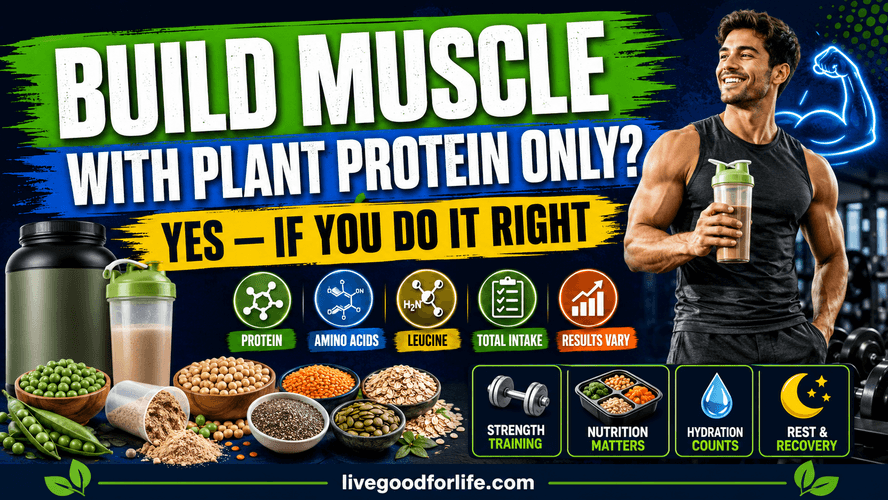
Quick Answer: Can Plant Protein Build Muscle?
Yes, plant-based protein can support muscle building when your full plan is strong. The biggest mistake is thinking the source alone decides the result. What matters most is total daily protein, essential amino acids, training, calories, and recovery.
🌱 Plant Protein Can Work If
- you eat enough total protein
- you use complete or complementary plant protein sources
- you train progressively
- you eat enough calories for your goal
- you stay consistent long enough to measure progress
⚠️ Plant Protein May Fall Short If
- you under-eat protein
- your meals are low in essential amino acids
- you skip resistance training
- you do not eat enough total calories
- you rely on shakes but ignore the rest of your diet
💪 The Simple Rule
Plant protein can support muscle-building goals, but it has to be part of a real plan: enough protein, enough food, progressive workouts, sleep, and patience.
What Really Matters for Building Muscle?
The International Society of Sports Nutrition notes that protein intake and resistance exercise both matter for muscle protein synthesis, and it lists 1.4–2.0 g/kg/day as a common daily protein range for many exercising individuals. It also notes that high-quality protein doses around 20–40g are commonly used in athletic settings. Read the ISSN protein and exercise position stand.
Plain English: Plant protein can work, but you may need to pay closer attention to amino acids, serving size, total daily protein, and meal planning than someone using whey.
The 6 Things That Matter Most
If your goal is muscle building with plant protein only, do not focus only on the front of the protein tub. The full plan matters more than the label claim.
1. Total Daily Protein
Your daily protein target matters more than one shake. A protein powder is helpful only if it helps you meet your daily intake consistently.
2. Essential Amino Acids
Some plant proteins are lower in certain essential amino acids. Blends can help create a better overall amino acid profile.
3. Leucine
Leucine is often discussed in muscle protein synthesis. Whey is naturally rich in leucine, but plant-based plans can still work when total protein and amino acid planning are adequate.
4. Calories
Building muscle usually requires enough energy. If you under-eat calories, it can be harder to train hard and recover well.
5. Strength Training
Protein supports the process, but progressive resistance training is the signal that tells your body to adapt.
6. Consistency
The best protein plan is one you can repeat. Taste, digestion, price, and convenience all affect consistency.
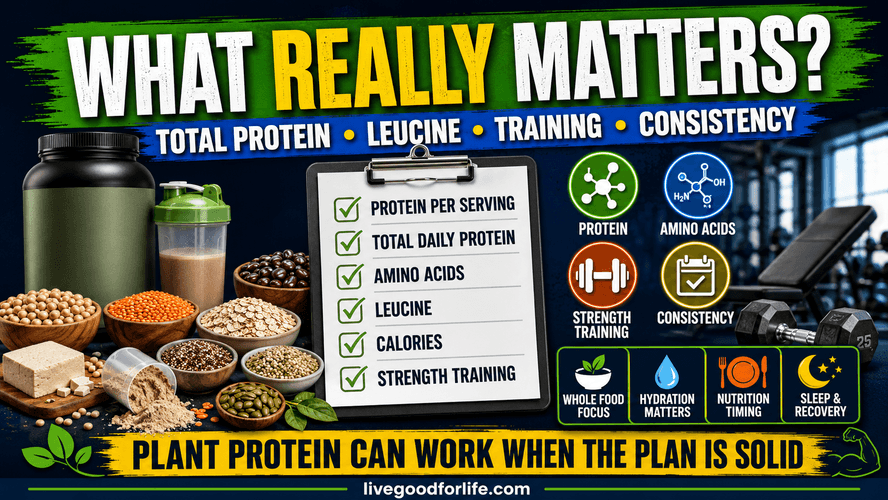
Can Plant Protein Compete With Whey?
Whey is often used as the benchmark because it is naturally complete, rich in essential amino acids, and high in leucine. But that does not mean plant protein cannot work. It means plant-based users should be more intentional with protein sources and serving targets.
For a deeper comparison, read: Plant-Based Protein vs Whey: Which Builds Muscle Better?
What Research Says — Without the Hype
Research supports the importance of total protein and resistance training. It also shows why protein quality, amino acids, and dose matter. But no plant protein powder guarantees muscle gain by itself.
What research supports
- Resistance training and protein intake together support muscle protein synthesis.
- Total daily protein intake matters for people training to build or maintain muscle.
- Essential amino acids and leucine are important when comparing protein sources.
- Plant-based protein plans can work when intake is adequate and well planned.
What research does not prove
- that plant protein guarantees muscle gain
- that protein powder replaces progressive training
- that more protein is always better
- that every plant protein has the same amino acid profile
- that any protein product treats a medical condition
For deeper reading, review the ISSN position stand on protein and exercise, this PubMed study on whey protein and muscle protein synthesis after resistance exercise, and MedlinePlus guidance on protein in the diet. These references are educational and do not prove that any specific product guarantees muscle gain.
Why I Would Compare LiveGood Plant-Based Protein
When I compare plant protein powders for muscle-building routines, I look for protein per serving, amino acid profile, taste, digestion, ingredients, added nutrients, serving count, current price, and testing access.
Important: This is a product comparison, not medical advice or a promise of muscle gain. Protein powders can help fill protein gaps, but muscle building still depends on training, nutrition, sleep, and consistency.
20g Plant Protein Per Serving
LiveGood Plant-Based Protein is listed as providing 20g plant protein per serving. That makes it easy to use in shakes, smoothies, oats, or protein-focused snacks when you want a dairy-free protein option.
Dairy-Free Routine Fit
Plant protein may be a better fit for people who avoid dairy, follow a vegan or mostly plant-based diet, or prefer plant ingredients. Always check the current label for allergens, flavor, sweeteners, and ingredient details.
Member Price and Subscribe & Save
LiveGood member pricing may offer better value for people who order LiveGood products regularly. Subscribe & Save may also help shoppers avoid running out, receive the product monthly, and cancel when needed. Always review current checkout terms before purchasing.
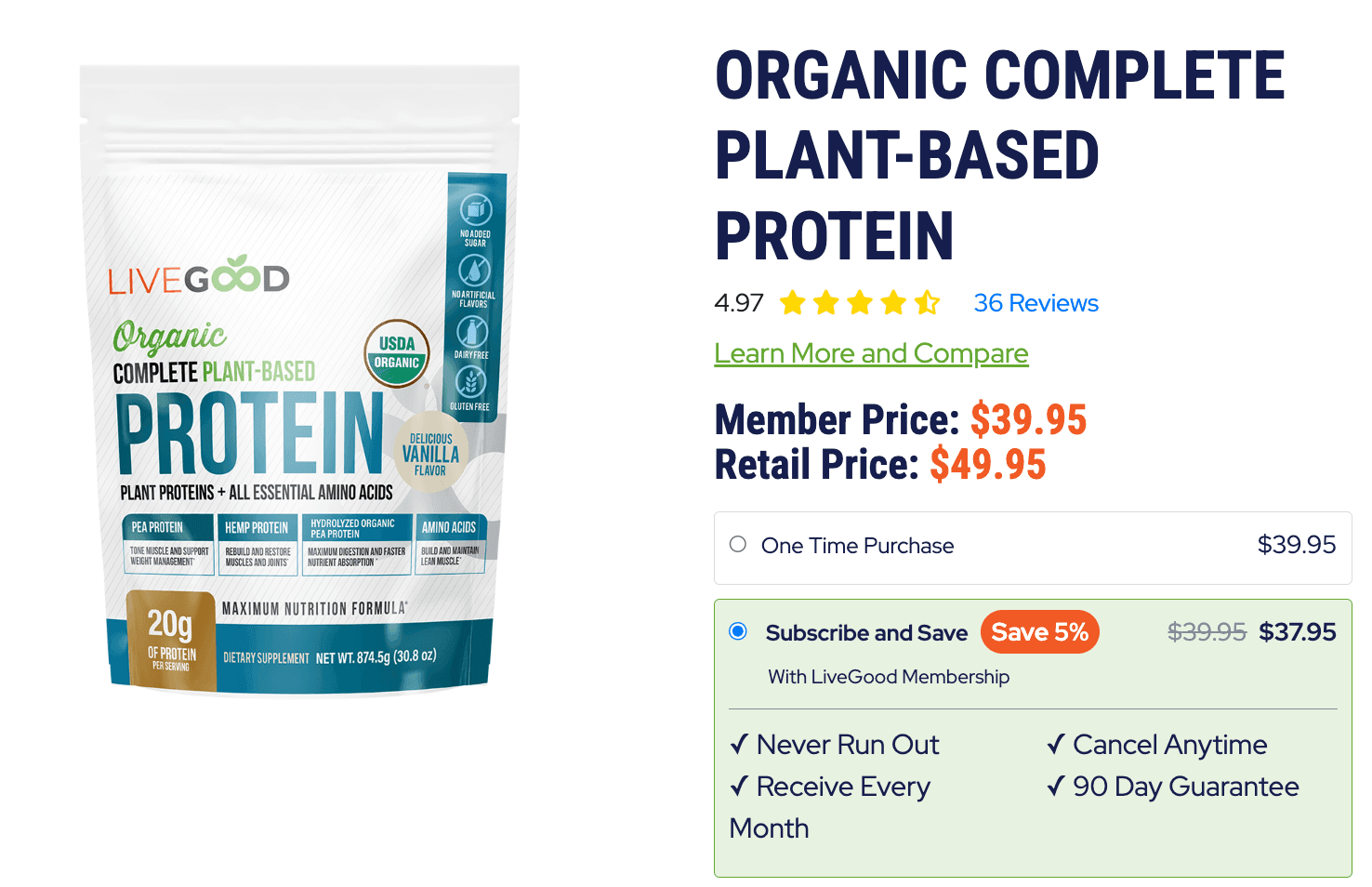
90-Day Guarantee
LiveGood may offer a 90-day guarantee, which can help shoppers compare products with less purchase hesitation. Guarantee terms can change, so review the current policy before ordering.
COA and Lab Testing
Testing access helps shoppers review quality information before buying. You can view available LiveGood certificates and lab-testing details here: LiveGood Products Certificates of Analysis.
More Protein Education
To compare plant protein with whey, read Plant-Based Protein vs Whey. To compare for weight-loss routines, read Plant Protein vs Whey for Weight Loss. For product details, see the LiveGood Plant-Based Protein Review.
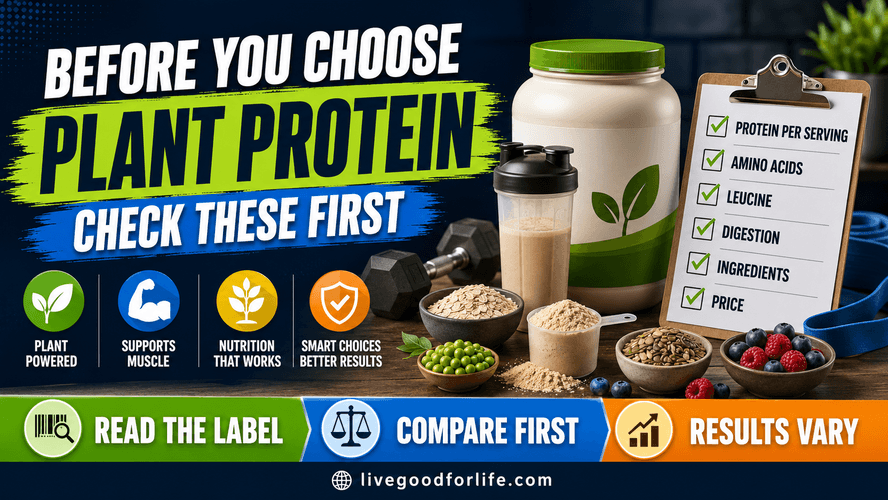
Plant-Based Muscle-Building Checklist
Protein Per Serving
Check grams of protein per serving and how many servings you realistically need each day.
Amino Acid Coverage
Use complete or complementary plant protein sources so your diet covers essential amino acids.
Training Plan
Progressive resistance training is required. Protein alone does not build muscle without the training signal.
Calories and Recovery
Eat enough total food, sleep enough, and give your body time to adapt.
Digestive Fit
The best protein powder is one you tolerate and enjoy. Taste and digestion affect consistency.
Frequently Asked Questions
Can I build muscle with plant-based protein only?
Yes, plant-based protein can support muscle building if your total protein, amino acids, calories, training, and recovery are consistent.
Is plant protein worse than whey for muscle?
Not automatically. Whey is often rich in leucine and essential amino acids, but plant protein can still work when the diet is planned well.
Do I need to combine plant proteins?
Many plant-based diets benefit from variety. Blends or complementary protein sources can help cover essential amino acids more reliably.
How much plant protein do I need to build muscle?
Needs vary by body size, training, age, calories, and goals. Many active people use protein targets based on body weight, but a qualified professional can help personalize this.
Can I use plant protein after workouts?
Yes. Plant protein can be used after workouts or at other times of day. Total daily protein and consistency usually matter more than a narrow timing window.
Does LiveGood Plant-Based Protein guarantee muscle growth?
No. It is a dietary supplement, not a guarantee of muscle gain, and it is not intended to diagnose, treat, cure, or prevent disease.
Bottom Line: Plant Protein Only Can Work
You can build muscle with plant-based protein only, but it has to be done with intention. Get enough total protein, cover essential amino acids, train progressively, eat enough calories, recover well, and choose a protein powder you can use consistently.
Read the Label
Start with protein per serving, ingredients, allergens, added nutrients, and serving count.
Plan Your Day
Use meals and shakes together so your full day covers protein and calories.
Train Consistently
Protein supports training, but it does not replace training.
Compare LiveGood Plant-Based Protein
Before buying, review protein per serving, ingredients, allergens, current price, serving count, membership terms, shipping, testing information, and whether plant-based protein fits your routine.
Disclosures
Affiliate Relationship: Some links in this article are affiliate links. If you purchase through these links, I may earn a commission at no extra cost to you. I only recommend products I personally use, have researched, or would consider using as part of a wellness routine.
Medical Disclaimer: This content is for informational and educational purposes only and is not medical advice. It is not intended to diagnose, treat, cure, or prevent any disease. Always consult a qualified healthcare professional before changing protein intake or using protein supplements, especially if you have kidney disease, liver disease, digestive conditions, food allergies, are pregnant or breastfeeding, take medication, or follow a medically restricted diet.
Results Disclaimer: Individual results vary. Protein powder does not guarantee muscle gain, strength gain, fat loss, or body-composition changes.
FDA Disclaimer for U.S. Content: These statements have not been evaluated by the Food and Drug Administration. This product is not intended to diagnose, treat, cure, or prevent any disease.
Pricing and Availability: Prices, membership terms, product formulas, labels, testing information, shipping, and refund policies can change. Verify all details before publishing or purchasing. Last updated: August 2026