Health Wellness Supplements: What the Term Covers
Walk down any supplement aisle or scroll through a vitamin retailer’s online menu and the same phrase keeps turning up: health wellness supplements. It sounds specific and tidy, as if it points to one defined shelf of products. In practice it behaves more like an umbrella.
Under that single heading, you will find vitamins, minerals, herbs and botanicals, probiotics, protein powders, fiber, collagen, fish oil, and green powders, all sitting side by side and all marketed toward roughly the same goal of supporting everyday health.
Understanding what the phrase does and does not mean makes shopping easier, because the words “wellness supplement” carry no defined ingredient list, no agreed dose, and no guaranteed benefit. They describe positioning. The actual content of a product lives on its label and in the reference material published by government and clinical sources.
For a broader buying guide, see our full guide to wellness supplements, including how to compare ingredient form, potency, and cost before choosing a product.
Where the Phrase Comes From
The term is largely a retail and marketing construction. Supplement sellers use it to organize their catalogs around everyday needs rather than around specific conditions. Nature Made, for example, groups products under a general wellness supplements collection. Metagenics labels a similar cluster Essential Wellness, describing everyday essentials for energy, immunity, and overall health. Vitacost frames its storefront as vitamins, supplements, and wellness essentials, and Walgreens stocks vitamins for children, multivitamins, and herbals under its vitamins and supplements section.
Government reference material takes a broader and more neutral view. The NIH Office of Dietary Supplements fact sheet collection uses the heading dietary supplements and covers vitamins, minerals, herbs and botanicals, probiotics, and more. Many of those resources exist in versions written for health professionals and in versions written for consumers. That is the vocabulary to use when you want to look something up rather than shop.
What the Term Covers in Practice
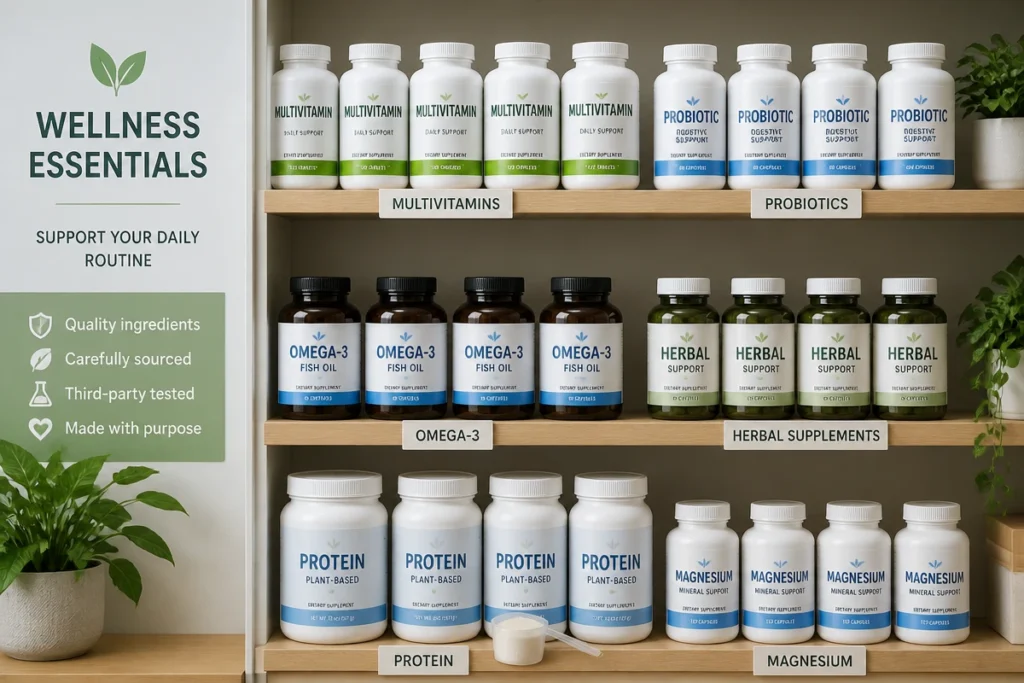
When a retailer says wellness, it is usually pointing at a handful of recognizable product families. The table below maps the groups that appear again and again in common supplement lists and retail catalogs, along with examples those sources commonly name.
| Group | Examples named in common supplement lists and catalogs | How it is typically positioned |
|---|---|---|
| Vitamins and minerals | Magnesium, Vitamin C, Vitamin D, Vitamin B complex, Calcium, Iron | Support for daily nutrition and general health |
| Herbs and botanicals | Ashwagandha | Traditional or plant-based wellness routines |
| Probiotics and prebiotics | Probiotics, Prebiotics | Gut health support |
| Protein and collagen | Protein powder, Collagen | Daily nutrition, hair, skin, and nails categories |
| Fats and oils | Fish oil, including omega oils with EPA and DHA | Foundational daily nutrition |
| Powders and fiber | Green powders, Psyllium | Everyday nutrition and digestive routines |
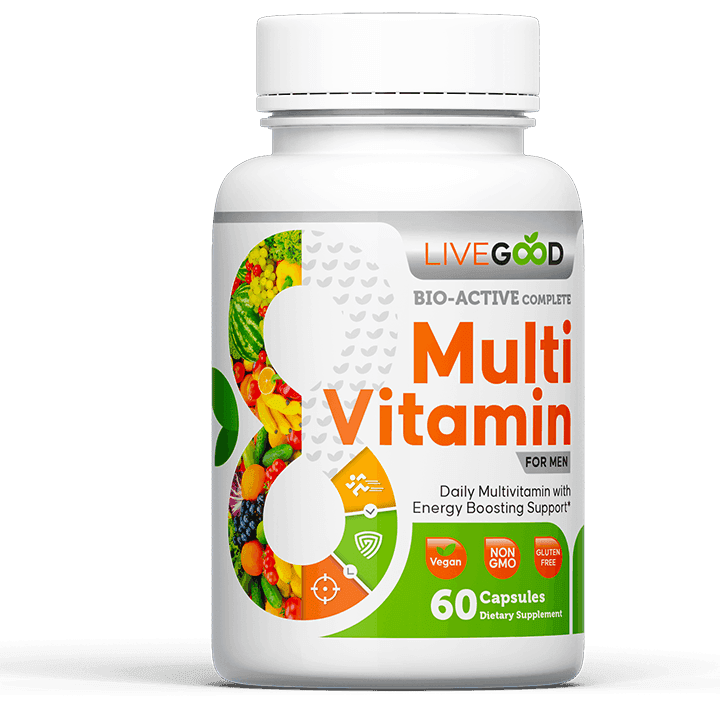
| All-in-one products | Multivitamins | A single product covering several nutrients |
That list comes from sources that describe the category rather than define it. A dietary supplement fact sheet collection will organize the same items differently, grouping by ingredient and by the evidence available for each one. The groupings above are useful for navigation, not for judging quality.
Vitamins and Minerals
This is the most familiar slice of the category, and the one most people picture first. Nutrients such as magnesium, Vitamin C, Vitamin D, and the Vitamin B complex can help support nutrition and overall health, according to general wellness product information. Calcium and iron appear on common supplement lists alongside them.
Two details matter more than the headline nutrient name. The first is the form of the nutrient, because some brands emphasize more absorbable forms of nutrients in their formulations. The second is duplication. If a multivitamin already carries a mineral and a separate product carries the same mineral, the amounts add up. That is one reason a professional review of everything in your cabinet is more useful than a review of one bottle.
For a practical label-reading method, see how to read supplement labels and spot fairy dusting.
Herbs and Botanicals
Ashwagandha is the clearest example of a botanical that has moved from specialist shelves into general wellness assortments. It appeared among fourteen common supplements discussed in a UCHealth Today article on popular supplements that asked whether they are beneficial or a waste of money. That framing is the honest one to carry into this group. Botanicals sit in the wellness category because shoppers ask for them, not because every product has the same level of supporting evidence.
Probiotics and Gut-Focused Products
Probiotics and prebiotics form their own cluster, and retailers often build a dedicated gut health section around them. Vitacost lists gut health as a category alongside vitamins, minerals, herbs, and hair, skin, and nails. The NIH fact sheet collection treats probiotics as one of the main ingredient families within dietary supplements.
Because these products are live or shelf-stable cultures in many cases, storage and handling instructions on the label matter as much as the ingredient name. Follow the manufacturer’s directions and check reference material before assuming two products with the same word on the front are interchangeable.
Protein, Collagen, and Powdered Blends
Protein powder, collagen, and green powders share a format rather than a function. They are scooped, mixed, and consumed as part of a routine, and they are marketed with the same wellness language as capsules and tablets. Psyllium, a fiber, sits in a similar place in many catalogs. None of these formats is inherently more effective than a capsule, and the word wellness on the front of a tub carries the same limited meaning it carries on a bottle.
Who Sells Wellness Supplements
The category is sold through several distinct channels, and the channel tells you something about how the product is positioned. Mass retail and drugstore chains stock vitamins for children, multivitamins, and herbals for broad consumer use. Online specialists carry vitamins and supplements including omega and fish oils with EPA and DHA, minerals, and herbs. Practitioner-oriented brands build their identity around professional recommendations, while specialist manufacturers may emphasize nutrient forms, testing, or manufacturing standards.
Buying terms vary by seller and change over time. Subscription savings, free shipping, HSA or FSA eligibility, and money-back windows are commercial details to verify at the point of purchase rather than fixed features of the category, since retailers update them.
What the Label Does Not Tell You
The phrase health wellness supplements answers a merchandising question, not a scientific one. It does not tell you whether an ingredient has strong evidence behind it, whether the dose in the bottle matches the dose studied, or whether the product duplicates something you already take. The UCHealth article that examined fourteen common supplements framed the subject around exactly that uncertainty, noting how confusing it can be to work out which supplements are healthy and which may be a waste of time and money.
Certain questions simply do not have a single authoritative answer. There is no universally agreed best supplement for overall wellness, no objectively most trustworthy supplement company, and no official top five list. Claims that any such ranking exists should be treated with caution, and any specific product decision is better discussed with a qualified health professional who knows your situation.
How to Evaluate a Wellness Supplement Before Buying
A short checklist keeps the marketing language from doing the deciding for you.
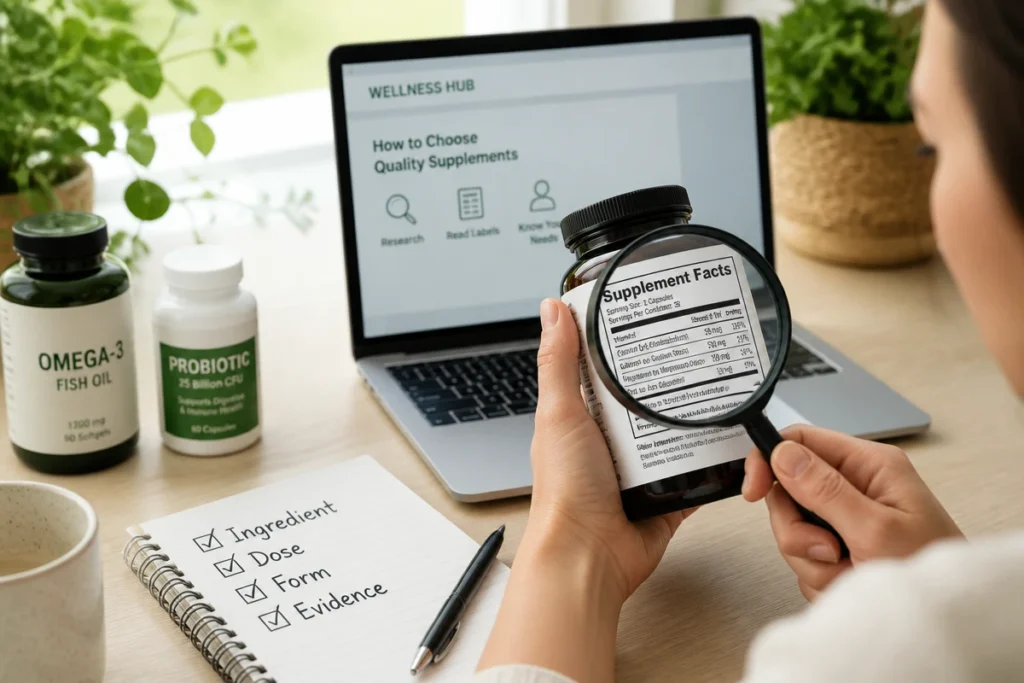
- Read the supplement facts panel rather than the front of the package, and note the amount per serving rather than the amount per container.
- Compare every product you already take against the new one to spot repeated nutrients.
- Check whether the manufacturer states the form of the nutrient, since some brands emphasize more absorbable forms.
- Look up the ingredient in the NIH Office of Dietary Supplements fact sheets, which cover vitamins, minerals, herbs and botanicals, probiotics, and more.
- Take the question to a health professional, particularly if you take medication or manage a health condition.
For more detail on how this site checks supplement claims, see how we evaluate LiveGood supplements, our Amazon supplements label accuracy study, and our guide to clinically studied ingredients in supplements.
Using the Term Well
Health wellness supplements is a useful shopping label and a poor standard of quality. It groups together nutrients such as magnesium, Vitamin C, Vitamin D, and the Vitamin B complex with herbs, probiotics, protein powders, fiber, collagen, fish oil, and green powders, and it describes an intention to support daily nutritional needs, foundational health, and overall well-being. What it cannot do is tell you whether a particular bottle is worth its place on your shelf.
The practical move is to treat the term as a starting point for research rather than a conclusion. Use retailer categories to browse, use government fact sheets to check, and use a professional to decide. That combination gives you the convenience of the wellness aisle without handing your judgment over to it.
Frequently Asked Questions
What counts as a health wellness supplement?
It is an umbrella term rather than a defined category. Common supplement lists and retailer catalogs place vitamins and minerals such as magnesium, Vitamin C, Vitamin D, and the Vitamin B complex alongside ashwagandha, collagen, fish oil, green powders, iron, multivitamins, prebiotics, probiotics, protein powder, psyllium, and calcium. If a product is sold to support everyday nutrition or general well-being, it usually lands under this heading somewhere in the market.
Are wellness supplements the same as dietary supplements?
They overlap heavily, but the vocabulary differs. Government reference material groups these products under dietary supplements, and the NIH Office of Dietary Supplements publishes fact sheets covering vitamins, minerals, herbs and botanicals, probiotics, and more. Wellness is the retail-facing word that sellers use to organize everyday products. When you want evidence about an ingredient rather than product positioning, search the dietary supplement resources instead.
Which nutrients appear most often in general wellness products?
Magnesium, Vitamin C, Vitamin D, and the Vitamin B complex show up repeatedly in general wellness lines, where they are described as supporting nutrition and overall health. Calcium and iron appear on widely cited common supplement lists. Beyond vitamins and minerals, the most frequent inclusions are probiotics, prebiotics, protein powder, collagen, fish oil, green powders, psyllium, multivitamins, and ashwagandha.
Do wellness supplements replace a balanced diet?
They are formulated and marketed to support daily nutritional needs and foundational health, which is different from substituting for food. A multivitamin or protein powder does not reproduce the range of nutrients in a varied diet. If you are considering using supplements to fill a gap, or you take medication or manage a health condition, discuss it with a qualified health professional before changing your routine.
How can I check whether a supplement claim is supported?
Start with the NIH Office of Dietary Supplements fact sheet collection, which covers vitamins, minerals, herbs and botanicals, probiotics, and more. Then read the supplement facts panel on the product itself, compare the dose and form, and confirm the details with a health professional when needed.
Medical disclaimer: This article is for educational purposes only and is not medical advice. Supplements may affect people differently and may interact with medications, health conditions, or medical treatments. Talk with a qualified healthcare professional before starting, stopping, or combining supplements.
Affiliate disclaimer: This article may contain affiliate links. If you click a link and make a purchase, I may earn a commission at no extra cost to you. Affiliate relationships do not change the educational purpose of this content.