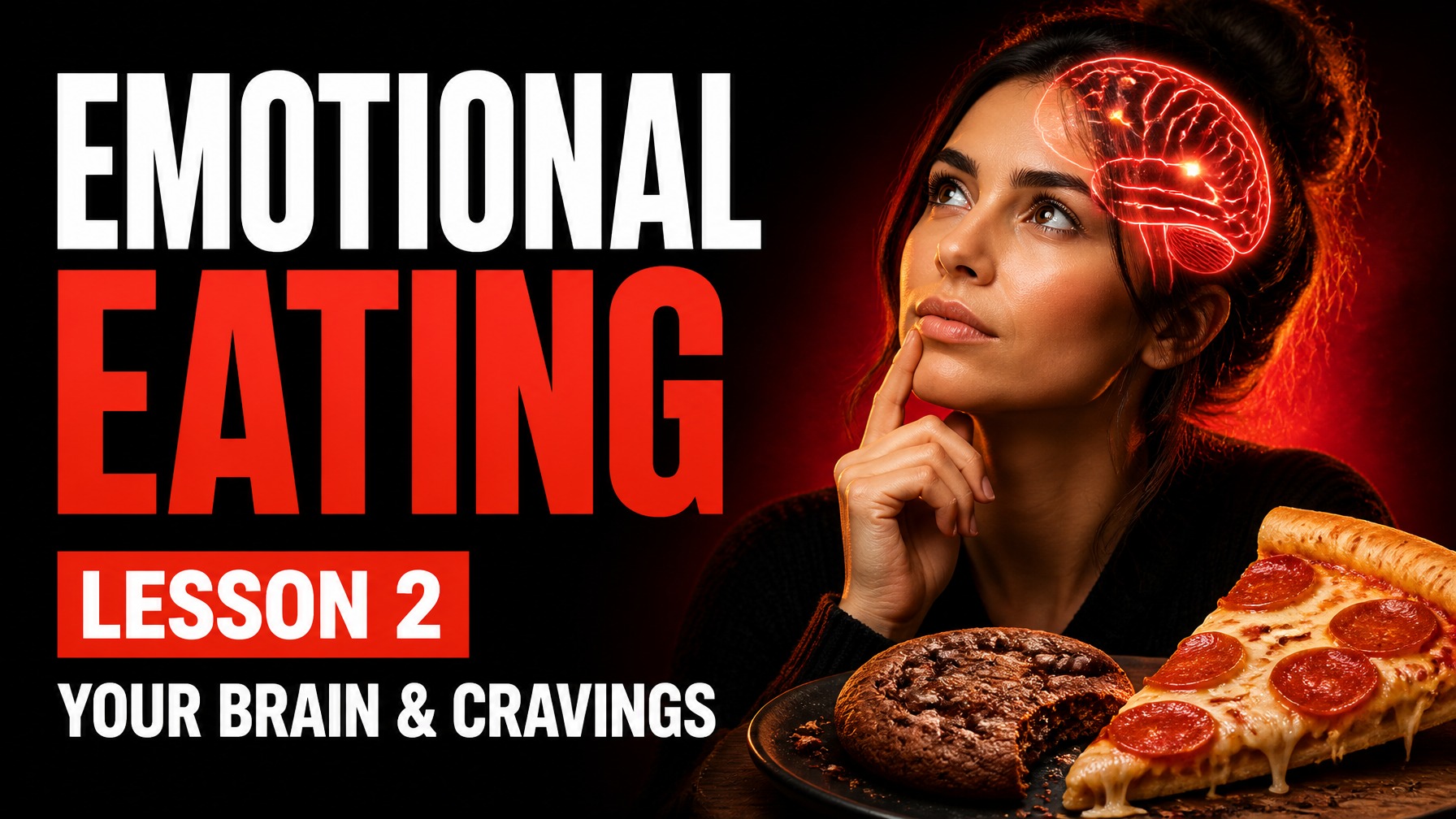
Emotional Eating and Your Brain: Stress, Cortisol & Cravings (Lesson 2)
Why does a stressful day sometimes leave you craving chocolate, biscuits or another favourite food? The answer involves more than willpower. Your brain, stress response, appetite signals and learned experiences all influence eating. In Lesson 2 of our free Emotional Eating course, we explore the neuroscience behind the cycle.
Quick answer: Stress can activate the brain–body stress response, including the HPA axis and the hormone cortisol. At the same time, the brain’s reward systems help make familiar comfort foods feel appealing. If eating briefly eases distress, that experience may reinforce the behaviour. Stress affects people differently, so not everyone will feel hungrier or crave the same foods.
Watch Lesson 2: Your Brain and Emotional Eating
The video introduces the HPA axis, cortisol, endorphins and the brain’s reward system as parts of the relationship between stress and eating. The explanations below add practical context and research-based nuance so you can apply the lesson without treating cravings as a personal failure.
How Does the Brain Influence Emotional Eating?
Our eating decisions involve several interacting systems. Some help regulate energy needs and hunger. Others help us notice, enjoy and remember rewarding experiences. Feelings, habits, sleep, environment and previous experiences also play a part. That is why wanting food can be about physical hunger, emotional comfort, pleasure—or a mixture of all three.
A pleasant food experience is not automatically a problem. Food also has social and cultural meaning. The point of learning about the brain is to understand patterns, not to label enjoyable foods as bad or to assume that every craving reflects a medical condition.
The Stress Response: What Is the HPA Axis?
HPA stands for hypothalamic–pituitary–adrenal. It refers to a communication pathway linking parts of the brain with the adrenal glands. In response to certain stressors, this pathway helps coordinate the release of hormones, including cortisol.
Cortisol has many normal jobs: it supports the body’s ability to respond to challenges, helps regulate metabolism and follows a daily rhythm. It is not a ‘bad hormone’ that needs to be eliminated. The effects of stress on appetite are complex: some people eat more, others lose their appetite, and the same person can respond differently at different times.
Research on stress and food intake suggests that stress-related hormones can interact with reward circuits and food motivation, but the relationship is not identical for everyone. For further reading, see the scientific review on stress and eating behaviours.
Why Can Comfort Foods Feel So Rewarding?
The brain’s reward pathways help us learn which experiences feel valuable and worth repeating. Food naturally engages these pathways because eating is essential for survival. Palatable foods may feel especially attractive when someone is tired, anxious or looking for reassurance.
Dopamine is involved in motivation, learning and the anticipation of rewards; calling it simply a ‘pleasure chemical’ leaves out much of its role. Endorphins are natural signalling molecules involved in pain regulation and aspects of wellbeing. Neither substance provides a single explanation for why one person reaches for chocolate while another does not.
The short-term comfort someone feels after eating may be genuine. But if food becomes the only coping strategy available, it may leave the original stressor unresolved. This is why understanding your needs matters as much as understanding food cravings.
The Emotional Eating Cycle Explained
The video introduces the idea that emotional eating can repeat. Here is a simplified example to help explain how the pattern may develop:
- 1. A trigger appears: a difficult conversation, a lonely evening or pressure at work creates discomfort.
- 2. A craving develops: a particular snack comes to mind because it has felt comforting before.
- 3. Eating brings temporary relief: the familiar taste, routine or distraction makes the moment easier.
- 4. The original feeling remains: the stress or sadness may return once the distraction ends.
- 5. The response becomes familiar: the brain may learn to associate that situation with eating for comfort.
This is a possible pattern, not an inevitable process. It does not happen every time someone eats for comfort. Rather than describing the cycle as a failure of self-control, you can think of it as a learned response that may be understood and, when helpful, changed.
Stress, Hunger and Cravings: Know the Difference
A craving is a desire for a particular food, while physical hunger is the body’s signal that it needs nourishment. They can occur together. Stress can also affect sleep, mood and meal routines, so a craving after a long day may coexist with genuine hunger.
| Experience | What you might notice | Supportive response |
|---|---|---|
| Physical hunger | Energy feels low or it has been a while since a meal. | Eat a satisfying meal or snack. |
| Stress-related craving | A particular food sounds appealing after an upsetting event. | Check hunger and consider whether rest, comfort or support would also help. |
| Habitual eating | A familiar time or place prompts the urge to snack. | Notice the routine without judgement and choose what suits your needs. |
| Enjoyment or celebration | Food is part of a social occasion or happy moment. | Enjoy it without unnecessary guilt. |
Seven Practical Ways to Respond to Stress-Related Cravings
These strategies add reader-focused guidance beyond the neuroscience introduced in the video. They are options, not rules, and none require banning comfort foods.
- Pause with curiosity. Ask, ‘What happened just before I wanted to eat?’ Even a short moment of reflection can reveal a pattern.
- Check whether you are hungry. If you have missed a meal or need nourishment, eating is an appropriate response. You do not have to earn permission to eat.
- Name the emotion. Stress, tiredness, frustration and loneliness may call for different kinds of support.
- Keep meals reasonably regular. Going long periods without enough food may make it harder to distinguish physical hunger from emotional urges.
- Try a second source of comfort. A conversation, a quiet walk, relaxing music or a few minutes of breathing may complement eating rather than replace it.
- Make sleep and rest part of the picture. Fatigue can affect both mood and appetite. Consider whether you need a break or a more sustainable routine.
- Avoid punishment after eating. Skipping meals or introducing strict restrictions out of guilt can create additional difficulties, particularly for people vulnerable to binge eating.
The British Dietetic Association’s guidance on emotional eating offers additional ways to reflect on emotional triggers and expand your coping options.
A Real-Life Example: The After-Work Chocolate Craving
Imagine arriving home after a stressful day and immediately wanting chocolate. One possible explanation is that a familiar sweet taste has become associated with comfort. Another is that you ate too little earlier and are genuinely hungry. Both can be true.
Instead of judging the craving, try asking: ‘When did I last eat?’, ‘What am I feeling?’, and ‘What would help right now?’ You might enjoy chocolate alongside a satisfying snack, have dinner first, or call someone you trust. The useful outcome is learning what works for you, not proving that you can resist a certain food.
What the Neuroscience Does—and Does Not—Tell Us
Research helps explain why stress and food reward are connected, but it cannot predict one person’s behaviour from cortisol or dopamine alone. Stress can reduce appetite in some circumstances, and experimental findings differ across individuals and methods. The HPA axis and reward circuits are parts of a larger system, not a simple ‘stress equals overeating’ formula.
A study of emotional eating and laboratory stress responses, for example, found differences in cortisol and food-reward-related brain activity between groups. Such findings help scientists investigate mechanisms, but they do not provide a test for diagnosing emotional eating in everyday life. Read the research study on stress and emotional eating for more context.
When to Seek Support
Occasionally eating for comfort is a common human experience. Consider talking to your GP or an appropriately qualified professional if eating patterns cause significant distress, involve frequent loss of control, severe restriction or compensatory behaviours, or affect daily life. Emotional eating is not automatically an eating disorder, but concerns deserve support rather than blame.
The NHS guidance on binge eating disorder treatment explains the role of professional assessment and structured support. Avoid relying on rigid diets to address a pattern that may involve emotional distress.
Continue the Free Emotional Eating Course
Watch the Full Emotional Eating Playlist
Keep the introduction and all available lessons together on YouTube, so you can follow the course in order.
Lesson 1: What Is Emotional Eating?
Revisit the earlier lesson for a simple explanation of emotional eating, common examples, and how to recognize patterns.
Course Introduction
New to the series? Read the overview of the complete Mindful Eating and Nutrition course.
Explore Free Nutrition and Wellness Guides
Find more practical and free learning resources in the LiveGoodForLife guide library.
Frequently Asked Questions
How does the brain influence emotional eating?
Brain systems involved in stress, motivation, memory and food reward interact with hunger signals. Together with habits and circumstances, they can influence when and why a person wants to eat.
What is the HPA axis in emotional eating?
The hypothalamic–pituitary–adrenal (HPA) axis is part of the body’s stress-response system. It helps coordinate hormonal responses, including cortisol release, which can interact with appetite and eating behaviour.
Does cortisol always increase appetite?
No. Stress and cortisol can affect appetite differently depending on the person, timing and circumstances. Some people feel hungrier during stress, while others temporarily lose their appetite.
What does dopamine do in food cravings?
Dopamine is involved in reward learning, motivation and anticipation. It can help make a familiar, rewarding food feel appealing, but it is not the only chemical or process involved.
Are endorphins responsible for emotional eating?
Endorphins take part in pain regulation and aspects of wellbeing, but emotional eating cannot be explained by endorphins alone. Stress, habits, reward learning and environment all contribute.
Why can emotional eating become a repeating cycle?
If eating temporarily eases uncomfortable feelings, the experience can strengthen an association between a situation and food. The cycle is possible, not inevitable, and can be approached with awareness and other coping tools.
Is craving chocolate after stress a sign of an eating disorder?
Not by itself. Wanting a comfort food after stress is common. Seek professional advice if eating regularly feels out of control, causes significant distress or involves harmful compensatory behaviours.
How can I interrupt the emotional eating cycle without dieting?
Notice what triggered the urge, check whether you need food, identify your emotion and consider another way to care for yourself alongside eating. Avoid rigid restrictions or punishment.
Where can I get help for emotional eating?
A GP, registered dietitian or suitably qualified mental health professional can offer guidance, especially if eating causes significant distress or you suspect an eating disorder.
Watch Lesson 2 and Keep Learning
Understanding the neuroscience behind emotional eating can help replace self-criticism with curiosity. Watch Lesson 2 above, then continue through the free course to explore emotional eating triggers and mindful eating habits.
Educational and affiliate disclosure: This video and article are for general education only, not personalised medical, dietetic or mental health advice. Individual responses to stress vary. If your eating patterns cause distress or involve a sense of loss of control, seek qualified professional support. Some pages on LiveGoodForLife may include affiliate links; if you purchase through those links, the site may earn a commission at no extra cost to you. This free course requires no product purchases.