LiveGood Fundraiser for Churches
Last updated: September 12, 2026
Quick answer: A LiveGood fundraiser for churches gives churches, ministries, youth groups, mission teams, small groups, outreach programs, and nonprofit faith communities a simple online fundraising option without bake sale tables, product inventory, paper order forms, or repeated one-time donation pressure. Supporters can choose wellness products online, and the church may receive support from qualifying orders, including possible repeat support when customers reorder.
This guide explains how the fundraiser works for churches, why it may be easier than old-style campaigns, where it fits best, and how to share it with the congregation in a clear and respectful way. Fundraising results are not guaranteed, and every church should review the current program details before launching.
What Is a LiveGood Fundraiser for Churches?
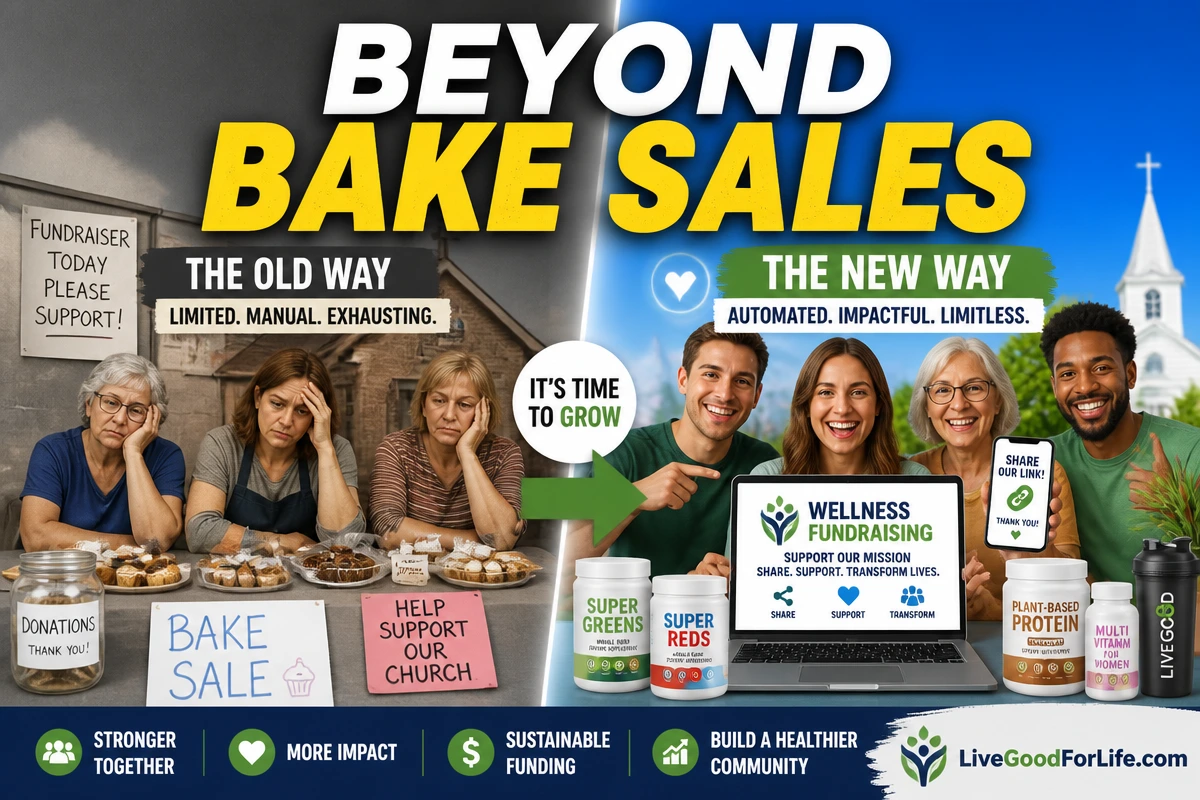
A LiveGood fundraiser for churches is an online fundraiser connected to wellness products. Instead of asking members to buy another plate of baked goods, raffle tickets, candles, coupon books, or one-time event tickets, the church can share a fundraiser link with members, relatives, friends, local supporters, and the wider community.
The model is simple: the church or ministry shares the fundraiser, supporters choose whether they want to order, and qualifying orders may generate support for the cause. Based on LiveGood fundraiser messaging, the program is commonly presented as 20% on initial qualifying orders and 10% on qualifying repeat orders. That repeat-order structure is what makes this different from many one-time campaigns.
For the broad overview, read our main LiveGood fundraiser review. You can also browse more articles in our LiveGood Fundraiser section.
Why Churches Need Easier Fundraising Options
Churches often raise money for important needs: youth trips, mission work, food pantry support, community outreach, building repairs, children’s ministry, transportation, emergency help, worship equipment, holiday programs, and local families in need. The challenge is that many traditional fundraisers create extra work for the same small group of volunteers.
A bake sale can work, but someone has to bake, set up, clean up, collect payments, and manage leftovers. A car wash needs weather, space, volunteers, supplies, and a full day of effort. A raffle needs prizes and sometimes extra rules. A donation drive can help, but many donations happen once and then stop.
An online wellness fundraiser gives churches another option. It can be shared by text, email, church newsletters, Facebook groups, small group chats, youth group messages, and Sunday announcements. The church does not need to carry inventory, deliver boxes, or ask members to buy something just because they feel obligated.
How a Church Fundraiser Works Step by Step
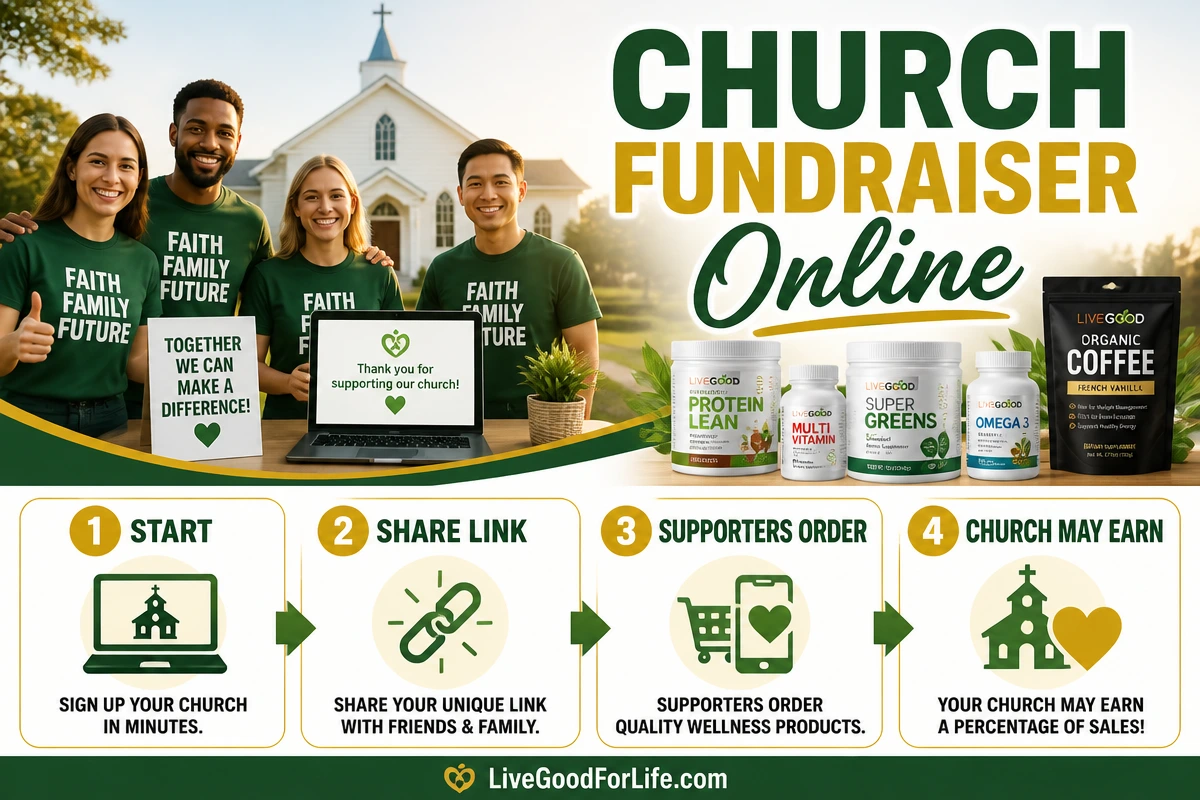
- Choose the church goal. Be specific. A youth camp fundraiser, mission trip fundraiser, food pantry fundraiser, or building repair fundraiser is easier to support than a vague request.
- Set up the fundraiser link. The link gives supporters a simple place to review the offer and order online if they choose.
- Invite helpers. Youth leaders, small group leaders, ministry volunteers, parents, and church members can help share the fundraiser respectfully.
- Share the message. Use church emails, Facebook, WhatsApp, text messages, printed bulletin mentions, QR codes, and personal invitations.
- Supporters decide for themselves. People can choose wellness products they may already want instead of buying a one-time fundraising item.
- The church may receive support. Qualifying first orders and qualifying repeat orders may help the fundraiser, depending on program terms and customer activity.
LiveGood Fundraiser vs Church Bake Sale
Bake sales are familiar, friendly, and easy to understand. They can still be useful for fellowship and local events. But they are usually one-day fundraisers. When the table closes and the baked goods are gone, the income stops.
A LiveGood fundraiser can be shared beyond one Sunday morning. Members can send the link to family in other cities, friends from work, neighbors, and online communities. If a supporter orders again later, the fundraiser may continue to benefit from qualifying repeat orders. That makes it a better fit for churches that have ongoing needs.
| Church fundraiser | What it requires | Main limit | Online fundraiser advantage |
|---|---|---|---|
| Bake sale | Baking, tables, volunteers, cleanup | Usually one day | Can be shared any day online |
| Car wash | Weather, supplies, location, helpers | Local only | Can reach family and supporters outside town |
| Raffle | Prizes, tickets, tracking | May need extra planning | Supporters receive products they choose |
| Donation drive | Repeated requests for giving | Often one-time | Repeat orders may create ongoing support |
| LiveGood fundraiser | Clear sharing and follow-up | Needs real participation | No inventory, no delivery, recurring potential |
Best Church Groups for This Fundraiser
This type of fundraiser may work especially well when the church already has a group with a clear purpose and people willing to share. It does not need to be limited to the whole church. Smaller ministries can use it too.
- Youth groups raising money for camp, conferences, or trips
- Mission teams raising money for travel, supplies, or outreach
- Children’s ministry raising money for events and classroom materials
- Food pantry teams raising support for local families
- Women’s groups, men’s groups, and small groups supporting community projects
- Choirs, worship teams, and music ministries raising money for equipment
- Church nonprofits and outreach groups with recurring community needs
Why Recurring Support Matters for Churches
Church needs often repeat. Youth ministry does not end after one event. Mission work continues. Food pantry shelves need to be filled again. Outreach programs need supplies, transportation, and volunteers throughout the year. That is why a recurring fundraiser model may be valuable.
The recurring potential comes from repeat customer orders. If a supporter likes the wellness products and continues ordering qualified items through connected fundraiser links, the church may continue receiving support. This is not automatic income and should not be promised. It is a possibility built into the model, and it depends on real customer behavior.
How to Share It Without Sounding Pushy
Church fundraising should feel respectful. The message should focus on the cause first, then explain the fundraiser simply. Members should never feel pressured to buy, and organizers should avoid medical claims or exaggerated income promises.
Our church is raising money for a specific ministry need through an online wellness fundraiser. Instead of selling baked goods or handling inventory, supporters can use one link to review wellness products online. If someone places a qualifying order, our fundraiser may receive support, and repeat orders may continue helping over time. Thank you for supporting this ministry.
That kind of message is clear, calm, and easy to send in a church email or group chat. It tells people what the fundraiser is, why it exists, and how support may happen.
Simple 7-Day Church Launch Plan
- Day 1: Announce the ministry goal and explain why the money is needed.
- Day 2: Give members a short message they can share with friends and family.
- Day 3: Share the fundraiser link in the church newsletter or group chat.
- Day 4: Highlight the mission, youth trip, food pantry, outreach project, or ministry story behind the fundraiser.
- Day 5: Thank people who have shared and remind members that buying is optional.
- Day 6: Post a respectful reminder with the link and the purpose.
- Day 7: Share an update and keep the link available for ongoing support.
Mistakes Churches Should Avoid
- Making the message too complicated. People should understand the fundraiser in less than one minute.
- Overpromising recurring income. Repeat support may happen, but it depends on qualifying repeat orders.
- Using pressure language. Church fundraising should feel voluntary and respectful.
- Skipping the purpose. Supporters care more when they know the fundraiser helps a real ministry need.
- Only sharing once. A few thoughtful reminders usually work better than one announcement.
- Making health claims. Keep the message about fundraising, product choice, and community support.
Church Fundraiser and School Fundraiser Comparison
Churches and schools often face the same fundraising problem: ongoing needs with limited volunteer time. If you are comparing different group types, you may also find our LiveGood fundraiser for schools guide helpful because many of the same online sharing ideas apply to PTAs, PTOs, youth teams, and parent-led programs.
For another supporting perspective on church fundraising, Healthy Fundraiser Hub has a simple guide to a LiveGood fundraiser for churches. Use it as an additional planning resource while deciding whether this model fits your church community.
FAQ
Can a church start a LiveGood fundraiser?
Yes. A church, ministry, youth group, mission team, nonprofit faith group, or outreach program may be able to use this model if it has a clear cause and people willing to share the fundraiser.
Is this better than a church bake sale?
It may be better for churches that want an online option without baking, tables, cleanup, or one-day limits. Bake sales can still be useful, but they usually stop when the event ends.
How can a church share the fundraiser?
A church can share the fundraiser through email, text messages, Facebook groups, church bulletins, QR codes, small group chats, Sunday announcements, and personal invitations.
Does the church need to handle inventory?
No. The fundraiser is shared online, so the church does not need to store products, deliver boxes, or collect paper order forms.
How much can a church earn?
The fundraiser is commonly presented as 20% on initial qualifying orders and 10% on qualifying repeat orders. Actual results depend on participation, customer orders, repeat orders, and current program terms.
Can a youth group use this fundraiser?
Yes. Youth groups may use this type of fundraiser for camp, conferences, mission trips, transportation, events, and ministry projects.
Is recurring support guaranteed?
No. Recurring support depends on qualifying repeat orders from customers. The model has recurring potential, but it should never be presented as guaranteed income.
Final Thoughts
A LiveGood fundraiser for churches may be a strong option for ministries that want something easier to share than bake sales, car washes, raffles, and one-time donation drives. It gives members a simple online link, gives supporters product choice, and may keep helping when customers place qualifying repeat orders.
The best fit is a church or ministry with a clear purpose, a respectful message, and a few committed people willing to share. If your church wants a fundraiser without inventory, delivery days, or repeated one-time campaign fatigue, this model is worth reviewing.
This article is for educational purposes only and is not medical, financial, or fundraising advice. LiveGoodForLife.com is an independent affiliate website and may earn a commission if you start a fundraiser or order through our links, at no extra cost to you. Fundraising results, product availability, commissions, repeat orders, and wellness outcomes are not guaranteed and may vary by person, group, and current program terms.