Magnesium and Hormone Health: Sleep, Stress, PMS Safety & Label Tips
Last updated: April 27, 2026
Magnesium and Hormone Health: The Simple Version
Magnesium is an essential mineral involved in normal muscle function, nervous system function, energy metabolism, and electrolyte balance. It is often discussed in hormone-health conversations because sleep, stress, muscle tension, and daily nutrition can all influence how people feel throughout the month.
The simple takeaway: magnesium may help support normal relaxation, sleep routines, muscle function, and daily mineral intake when used appropriately. It should not be used to treat hormone imbalance, PMS, anxiety, depression, fatigue, insomnia, cramps, headaches, thyroid issues, PCOS, menopause symptoms, or any medical condition.
Affiliate disclosure: This page may contain affiliate links. If you purchase through my links, I may earn a commission at no extra cost to you.
Important disclaimer: This article is for educational purposes only and is not medical advice. Dietary supplements are not intended to diagnose, treat, cure, or prevent any disease.

What Magnesium Does in the Body
Magnesium helps the body carry out hundreds of normal enzyme reactions. It is involved in muscle contraction and relaxation, nerve signaling, energy metabolism, protein synthesis, and normal electrolyte balance.
That is why magnesium shows up in conversations about sleep, stress, exercise, cramps, and hormone-related routines. The key is to describe it correctly: magnesium supports normal body functions. It does not directly “balance hormones” or treat symptoms.
| Area | Simple explanation | Important note |
|---|---|---|
| Nervous system | Magnesium contributes to normal nervous system function | Not a treatment for anxiety, panic, or mood disorders |
| Muscles | Magnesium contributes to normal muscle function | Persistent cramps or weakness should be evaluated |
| Energy metabolism | Magnesium contributes to normal energy-yielding metabolism | Not a fatigue treatment |
| Electrolyte balance | Magnesium contributes to electrolyte balance | Hydration, sodium, potassium, and diet also matter |
| Daily nutrition | Magnesium is found in nuts, seeds, legumes, greens, and whole grains | Food intake should come first when possible |
Why Magnesium Comes Up in Hormone Conversations
People often search for magnesium because they are dealing with sleep changes, stress, monthly discomfort, cravings, muscle tension, or energy dips. Those experiences can overlap with hormone-related seasons of life, but that does not mean magnesium is treating the underlying cause.
A safer way to think about magnesium is this: it can be part of a routine that supports normal relaxation, muscle function, and daily mineral intake. If symptoms are persistent, severe, or changing, it is better to ask a healthcare professional rather than guessing.
Magnesium-Rich Foods to Start With
Before adding another supplement, it helps to look at food sources. Magnesium-rich foods also provide fiber, protein, healthy fats, and other micronutrients that support overall nutrition.
| Food | Easy way to use it | Why people like it |
|---|---|---|
| Pumpkin seeds | Add to oatmeal, yogurt, or salads | Mineral-rich and easy to sprinkle |
| Chia or flaxseed | Add to smoothies or yogurt | Also adds fiber |
| Almonds or cashews | Use as a snack or in trail mix | Convenient and filling |
| Spinach or Swiss chard | Add to eggs, soups, or smoothies | Easy way to add greens |
| Black beans or lentils | Use in bowls, soups, or salads | Adds fiber and plant protein |
| Whole grains | Choose oats, brown rice, quinoa, or whole wheat | Helpful for balanced meals |
Magnesium Types: Glycinate, Citrate, Threonate, Malate, and Oxide
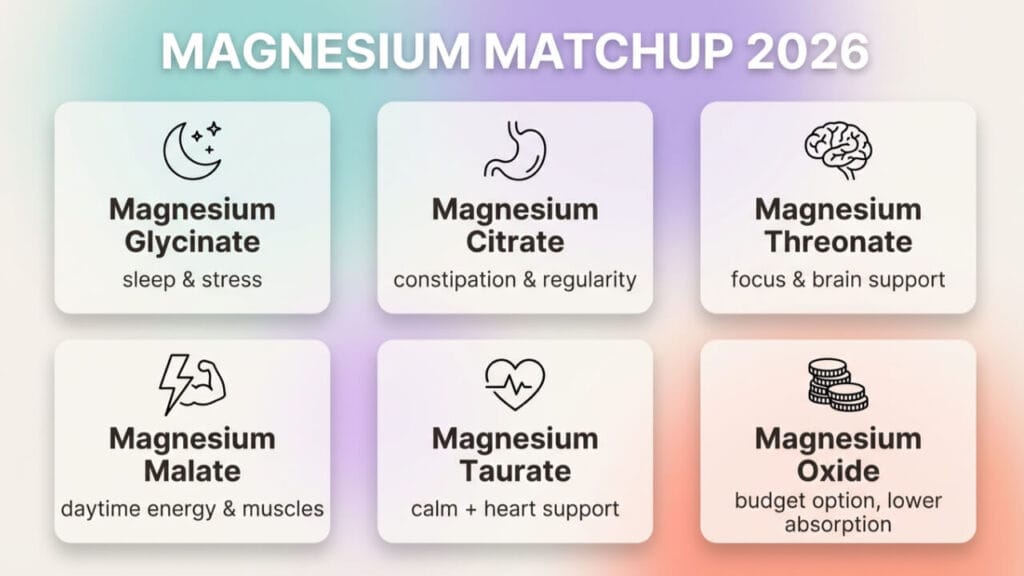
Different magnesium forms can feel different because they are bound to different compounds. The best choice depends on your goal, tolerance, label preference, and professional guidance when needed.
| Magnesium type | Common reason people choose it | What to watch for |
|---|---|---|
| Magnesium glycinate | Often used in evening relaxation routines | Still follow label directions and avoid overdoing total magnesium |
| Magnesium citrate | Often used when people want a form that may loosen stools | Can cause loose stools or cramping for some people |
| Magnesium threonate | Often marketed for brain-focused support | Can be expensive and usually provides less elemental magnesium per serving |
| Magnesium malate | Often chosen for daytime routines | Individual tolerance varies |
| Magnesium oxide | Common and inexpensive | Often more associated with laxative effects than repletion-focused use |
How to Use Magnesium Safely
Follow the product label and pay attention to the amount of elemental magnesium per serving. If you already take a multivitamin, electrolyte powder, sleep supplement, or mineral product, check for overlapping magnesium.
| Use tip | Why it matters |
|---|---|
| Start with the label serving | Helps avoid taking more than intended |
| Take with food if your stomach is sensitive | May reduce nausea for some people |
| Do not stack multiple magnesium products | Helps avoid too much supplemental magnesium |
| Separate from some medications and minerals | Magnesium can affect absorption of certain drugs and nutrients |
| Stop or reduce if loose stools occur | This can happen with certain forms or higher amounts |
Magnesium may need to be separated from thyroid medication, certain antibiotics, iron, zinc, and other supplements. Ask a pharmacist or healthcare professional if you take medication or are unsure about timing.
Who Should Check First
Magnesium supplements are not right for everyone. Some people should get professional guidance before using them.
| Check first if | Why | What to do |
|---|---|---|
| You have kidney disease | The kidneys help regulate magnesium levels | Do not supplement without medical guidance |
| You take prescription medication | Magnesium can affect absorption of some medications | Ask your doctor or pharmacist about spacing |
| You are pregnant or breastfeeding | Supplement needs are more individual | Ask your OB, midwife, or healthcare professional |
| You have severe anxiety, insomnia, cramps, heavy bleeding, weakness, numbness, or irregular heartbeat | These symptoms can have many causes | Do not self-treat; get evaluated |
| You already take a multivitamin, electrolyte, sleep aid, or mineral product | You may already be getting magnesium | Compare labels before adding more |
Signs People Commonly Associate With Low Magnesium
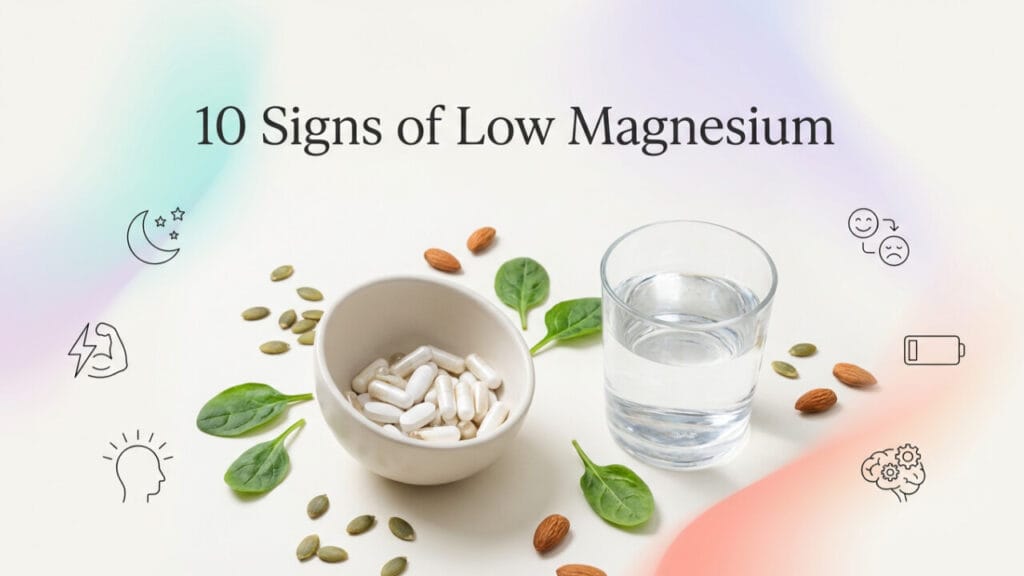
Symptoms alone cannot prove a magnesium deficiency because many signs overlap with stress, sleep loss, thyroid concerns, iron deficiency, B12 deficiency, medication effects, dehydration, and other health issues.
Common reasons people look into magnesium include poor sleep, muscle cramps, twitching, tension, constipation, irritability, stress sensitivity, low energy, and trouble focusing. These should be treated as clues to review your overall routine, not as proof that magnesium is the answer.
A Simple Magnesium Routine to Discuss or Try Carefully
If magnesium seems like a reasonable fit, keep the routine simple. Choose one form, follow the label, avoid changing too many things at once, and track how you feel without expecting guaranteed results.
| Step | What to do | Why it helps |
|---|---|---|
| 1 | Review food sources first | You may be able to improve intake through meals |
| 2 | Check your current supplements | Helps avoid duplicate magnesium |
| 3 | Choose one product if needed | Makes tolerance easier to judge |
| 4 | Follow the label and start conservatively | Reduces the chance of stomach upset |
| 5 | Track sleep, digestion, and muscle comfort | Helps you decide whether it fits your routine |
LiveGood Ultra Magnesium Complex Context
LiveGood Ultra Magnesium Complex may be an option to compare if you want a magnesium supplement and prefer a capsule format. Before buying, check the current label, magnesium forms, serving size, total elemental magnesium, and how it fits with your other supplements.
For a full product breakdown, read the LiveGood Ultra Magnesium Complex guide. For broader label help, see the Third-Party Lab Testing Guide, Label Red Flags Guide, and Supplement Cost Per Day Calculator.
View Ultra Magnesium Complex here
Common Questions About Magnesium and Hormone Health
Does magnesium balance hormones?
No. Magnesium should not be described as balancing hormones. It supports normal body functions such as muscle function, nervous system function, electrolyte balance, and energy metabolism.
Can magnesium help PMS, cramps, anxiety, or sleep problems?
Magnesium should not be used to treat PMS, cramps, anxiety, or insomnia. Some people use magnesium as part of a relaxation or mineral-support routine, but persistent symptoms should be discussed with a healthcare professional.
Which magnesium type is best?
There is no single best type for everyone. Glycinate, citrate, threonate, malate, and oxide all have different features. Choose based on your goal, tolerance, label details, and professional guidance when needed.
How long does magnesium take to work?
It is better not to promise a timeline. Some people notice changes in tolerance or routine quickly, while others do not. Track your response and avoid using magnesium to delay care for symptoms.
Can magnesium cause nausea or stomach upset?
Yes. Magnesium can cause nausea, loose stools, cramping, or stomach discomfort, especially with certain forms or higher amounts. Reduce the amount, take with food if appropriate, or stop and seek guidance if symptoms continue.
Can magnesium cause bruising?
Unusual bruising is not something to ignore. If bruising is new, frequent, or unexplained, speak with a healthcare professional because it can have many causes.
Is magnesium safe during pregnancy?
Pregnancy and breastfeeding require individualized guidance. Ask your OB, midwife, or healthcare professional before adding magnesium beyond what is already in a prenatal or prescribed plan.
What drink is high in magnesium?
Some mineral waters contain magnesium, but amounts vary widely. Check the label. Food sources like pumpkin seeds, legumes, leafy greens, nuts, and whole grains are often more reliable ways to build magnesium intake.
How do I know if I need magnesium?
Symptoms are not enough to confirm a deficiency. Review your diet, medications, health history, and current supplements. If symptoms are persistent or concerning, ask a healthcare professional about testing and next steps.
Bottom Line
Magnesium is an important mineral for normal muscle function, nervous system function, energy metabolism, and daily wellness. It can be part of a supportive routine, especially when food intake is low or a supplement fits your situation.
The safest approach is to avoid treating magnesium like a hormone fix. Start with magnesium-rich foods, compare labels carefully, avoid stacking multiple products, and get professional guidance if you have symptoms, take medication, are pregnant or breastfeeding, or have kidney concerns.