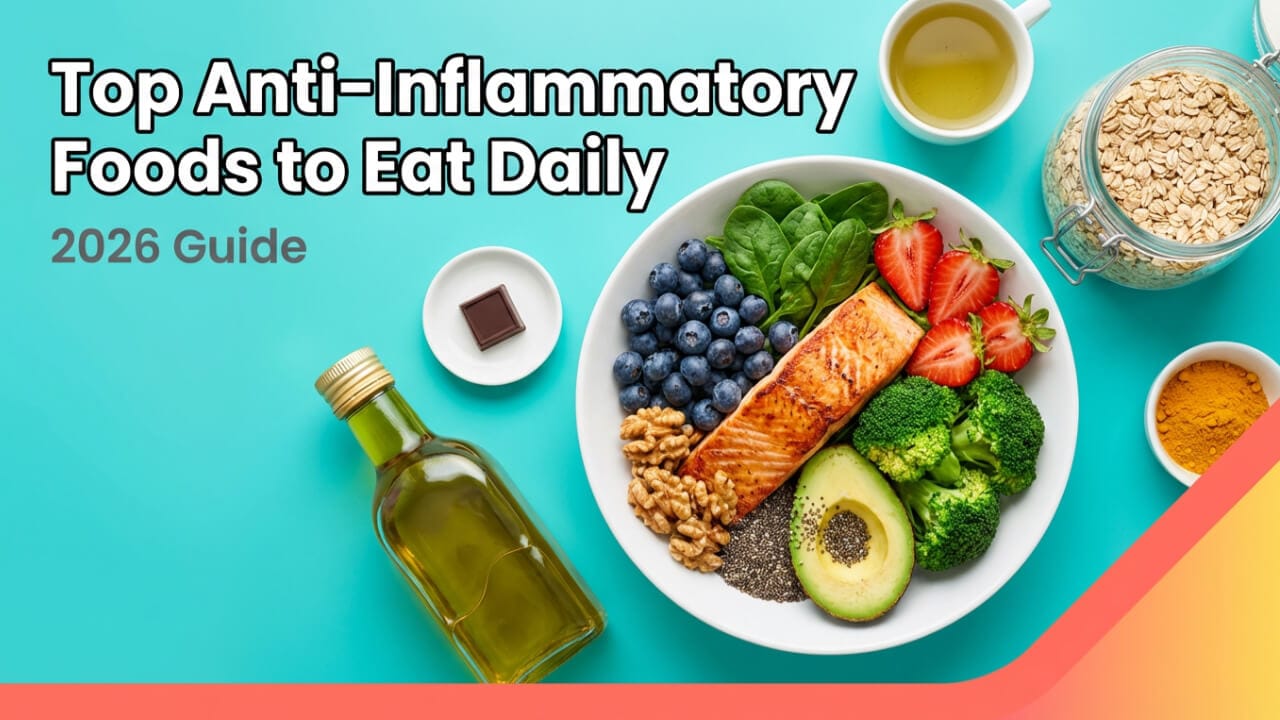
Top Anti-Inflammatory Foods to Eat Daily (Guide for Real Life)
If you’ve ever searched for an anti-inflammatory foods list, you’ve probably seen the same pattern: one site says tomatoes are “bad,” another says they’re “great,” and somehow every list ends with an expensive “superfood” you don’t actually eat.
This guide is designed for real-life eating, not perfect eating. We’ll focus on foods that fit daily routines, explain why they’re commonly included in anti-inflammatory dietary patterns, and keep the tone grounded (no detox claims, no miracle promises). If you want a clear foundation on what chronic inflammation is and why it can stick around, start here: Chronic Inflammation: Symptoms & Causes.
Here’s what you’ll get: a quick list of the top foods to lean on, a simple “daily plate” you can repeat, easy meal templates (breakfast through dinner), and a practical grocery list so you’re not guessing at the store.
This guide is for people looking to improve diet patterns. It isn’t medical advice. If you have a diagnosed inflammatory condition, take medications, or are pregnant/nursing, get personalized guidance.
Last updated: May 2026
Written by Daniel Popa, founder of LiveGoodForLife.com. This article is educational only and is not medical advice. For more about how LiveGoodForLife researches, writes, and updates wellness content, read our Editorial Policy and Disclaimer.
⚡ Quick Answer
The top anti-inflammatory foods to eat daily include fatty fish, extra virgin olive oil, berries, leafy greens, cruciferous vegetables, beans, lentils, walnuts, oats, turmeric, and ginger. What matters is the overall dietary pattern — consistent fiber, healthy fats, and colorful plants eaten most days — not any single superfood.
📌 Key Facts at a Glance
- Chronic inflammation is influenced by diet patterns, sleep quality, stress, and physical activity — not a single food.
- The Mediterranean dietary pattern is one of the most consistently cited anti-inflammatory eating frameworks in nutrition research.
- Omega-3 fatty acids (found in fatty fish, walnuts, and flaxseed) are among the most studied dietary fats in the context of inflammation markers.
- Ultra-processed foods displace fiber and protein in the diet, which is why reducing them tends to improve overall dietary quality.
- Polyphenols — compounds found in berries, olive oil, tea, dark chocolate, and herbs — are associated with beneficial dietary patterns in observational research.
- Dietary fiber, found in beans, oats, vegetables, and fruit, plays a role in gut microbiome diversity, increasingly linked to systemic wellness.
- No food or supplement is FDA-approved to treat, cure, or prevent inflammation or any disease.
What “Anti-Inflammatory Foods” Actually Means
When people search for anti-inflammatory foods or inflammation in the body, they’re usually looking for something practical: what to eat more often, what to stop overthinking, and how to build meals that support how they want to feel.
Acute vs chronic inflammation (30-second explanation)
Acute inflammation is the short-term response that helps your body handle injuries and stressors. Chronic inflammation is when that response stays elevated longer than it should, often influenced by lifestyle factors like diet patterns, sleep, stress, and activity levels. For a clear medical overview, see Cleveland Clinic: Inflammation.
Foods don’t ‘cure’ inflammation; they support a healthier pattern
Food isn’t a switch you flip to “turn off” inflammation. What it can do is support a dietary pattern that tends to be linked with better overall health markers: more fiber, more colorful plants, healthier fats, and fewer ultra-processed calories crowding out nutrient-dense meals.
In other words, the goal isn’t one magic ingredient. It’s building meals that are easier for you to repeat, week after week.
The goal is a repeatable dietary pattern, not perfection
Most people don’t need a strict “anti-inflammatory diet.” They need a few daily anchors they actually like: a quality fat (like olive oil), a high-fiber base (beans, oats, lentils), and consistent plants (greens, berries, cruciferous vegetables). If you can repeat those most days, you’re doing the work that matters.
Quick List — Top Anti-Inflammatory Foods to Eat Daily
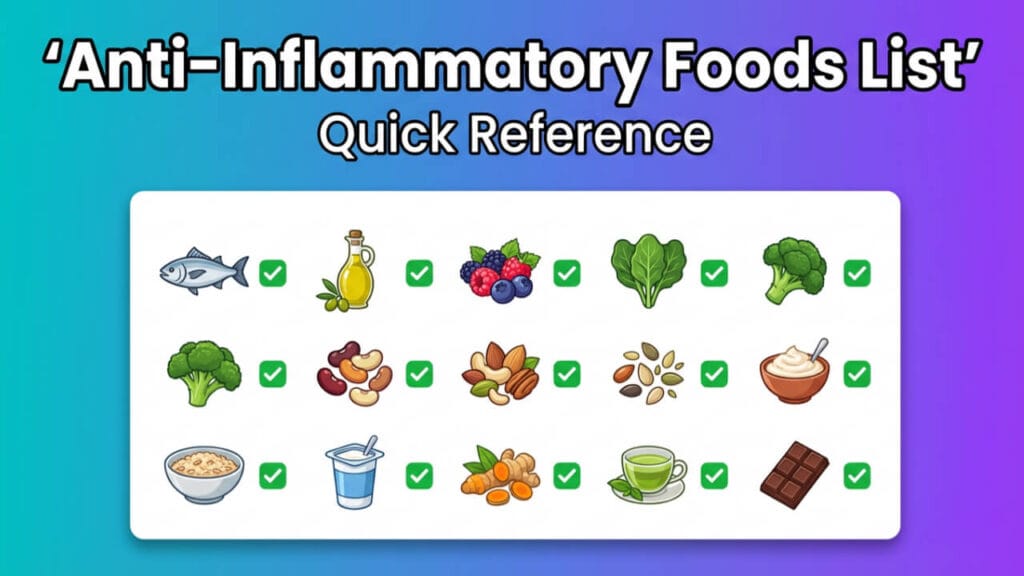
If you want a simple anti-inflammatory foods list you can use immediately, start here. Each item includes what it generally supports, an easy way to eat it daily, and a quick quality note so you can shop without overthinking. If you want a deeper overview of foods commonly included in anti-inflammatory eating patterns, see Harvard Health: Foods that fight inflammation.
How this list was chosen: These foods are common “anchors” in widely recommended anti-inflammatory eating patterns because they improve overall diet quality (more fiber and plant variety, healthier fats, and fewer ultra-processed calories). This is a practical guide, not a medical plan.
- Fatty fish (salmon, sardines, mackerel)
What it supports: overall dietary fat balance (often used in omega-3–rich eating patterns).
Easy daily: 2–4 servings/week, or add canned sardines/salmon to salads and toast.
Note: frozen and canned options count; choose lower-sodium if needed.
- Extra virgin olive oil
What it supports: a healthier fat pattern when used instead of highly refined oils.
Easy daily: drizzle on vegetables, beans, soups, or use as a salad base.
Note: look for “extra virgin” and store away from heat/light.
- Berries (blueberries, strawberries, raspberries)
What it supports: colorful plant intake and natural polyphenols.
Easy daily: add to yogurt, oats, smoothies, or snack bowls.
Note: frozen berries are often the best value and work perfectly.
- Leafy greens (spinach, arugula, kale)
What it supports: fiber, micronutrients, and “daily greens” consistency.
Easy daily: toss into eggs, soups, pasta, wraps, or quick salads.
Note: bagged greens save time; frozen spinach is great for cooking.
- Cruciferous vegetables (broccoli, cauliflower, Brussels sprouts)
What it supports: fiber and variety in vegetable intake.
Easy daily: roast a tray once, then add to bowls, eggs, and sides all week.
Note: frozen florets are a reliable shortcut and reduce waste.
- Beans and lentils
What it supports: fiber + plant protein foundations that make meals more filling.
Easy daily: add to salads, soups, tacos, chili, or grain bowls.
Note: canned is fine; rinse to reduce sodium and improve taste.
- Walnuts
What it supports: healthy fat + easy “add-on” calories that improve meal quality.
Easy daily: sprinkle on oats, yogurt, salads, or snack with fruit.
Note: buy raw/roasted without added sugar; store in the fridge for freshness.
- Almonds
What it supports: a more nutrient-dense snack pattern when replacing ultra-processed snacks.
Easy daily: handful snack, add to salads, or use almond butter on toast.
Note: Choose lightly salted or unsalted; watch portion sizes if calories matter to you.
- Chia seeds
What it supports: fiber intake and easy texture/volume in meals.
Easy daily: add to smoothies, oats, yogurt, or make chia pudding.
Note: drink enough water when increasing fiber-rich foods.
- Ground flaxseed
What it supports: fiber and convenient “sprinkle” nutrition.
Easy daily: mix into oats, yogurt, smoothies, or baked oats.
Note: choose ground (not whole) and store in the fridge/freezer.
- Oats
What it supports: a high-fiber breakfast base that supports steadier energy for many people.
Easy daily: overnight oats, hot oats, or blend into smoothies.
Note: plain oats beat flavored packets; add cinnamon/berries for taste.
- Yogurt or kefir (if tolerated)
What it supports: gut-friendly eating patterns for some people (tolerance varies).
Easy daily: use as breakfast base with berries and seeds, or as a savory sauce base.
Note: choose plain/unsweetened to avoid excess added sugar.
- Turmeric (as a cooking tool)
What it supports: adding flavor and variety that makes healthy meals easier to repeat.
Easy daily: add to soups, rice, eggs, roasted vegetables, or marinades.
Note: think “spice,” not miracle—use consistently in food.
- Ginger (fresh or powdered)
What it supports: flavor and variety (useful for simple meals that get boring).
Easy daily: add to stir-fries, tea, smoothies, dressings, or roasted carrots.
Note: fresh ginger freezes well and grates easily straight from frozen.
- Green tea
What it supports: a lower-sugar beverage habit and plant compounds in a simple routine.
Easy daily: swap one sweet drink for green tea (hot or iced).
Note: if caffeine affects sleep, keep it earlier in the day.
- Dark chocolate (small amounts)
What it supports: an “upgrade” treat that can replace higher-sugar desserts for some people.
Easy daily: 1–2 small squares after a meal if it helps consistency.
Note: look for 70%+ cocoa and keep portions modest.
The “Anti-Inflammatory Plate” You Can Repeat
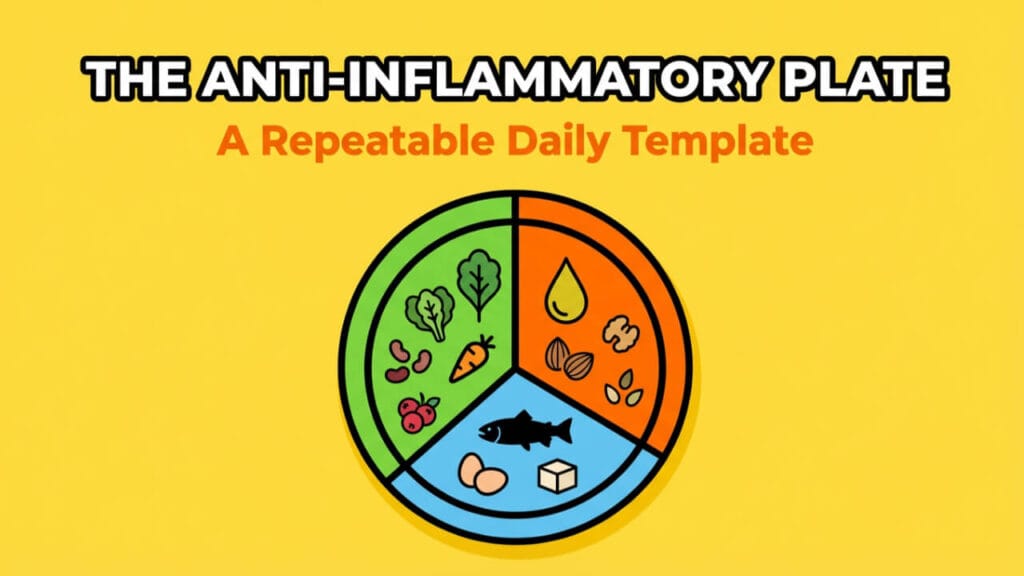
If you’re looking for “what to eat daily” without turning it into a strict meal plan, this is the simplest approach: build most meals around a repeatable plate. The foods can change, but the structure stays the same.
Protein + fiber + healthy fat (why this combo works)
Many people find meals feel steadier when on a stable base. A practical, repeatable combo is:
- Protein to help meals feel satisfying and steady
- Fiber from plants (beans, oats, vegetables, berries) to support gut and appetite rhythm
- Healthy fat (olive oil, nuts, seeds, fatty fish) to make meals enjoyable and easier to stick with
You don’t need to measure anything. Just make sure each meal has “something from each bucket” most of the time.
Aim for color and variety (polyphenols in plain English)
“Polyphenols” is just a fancy word for helpful plant compounds found in colorful foods like berries, leafy greens, herbs, spices, olive oil, tea, and cocoa. You don’t need to memorize them. You just need a simple rule:
- Try to get 2–3 colors on your plate most days
- Rotate your “staples” so you’re not eating the exact same plants forever
- Use herbs and spices to make repeat meals feel fresh
Variety matters because it makes your diet more resilient, not because one food is magical.
What to do if you hate meal prep (minimum effective plan)
If meal prep makes you quit, don’t do meal prep. Do a minimum plan that keeps you consistent:
- Pick 1 protein for the week (eggs, chicken, tofu, salmon, Greek yogurt)
- Pick 1 fiber base (oats, lentils, beans, brown rice)
- Pick 2 vegetables (one leafy green + one cruciferous or mixed frozen veg)
- Add 1 easy fat (olive oil, walnuts, chia/flax)
- Use frozen + canned to cut effort and waste
This isn’t “perfect.” It’s consistent. And consistency is what usually moves the needle.
Best Anti-Inflammatory Foods for Joint Comfort, Gut Support, and Energy
People often want anti-inflammatory foods for a specific reason: joints that feel stiff, digestion that feels off, or energy that dips too easily. Food won’t “fix” everything, but the right patterns can support how you feel day to day.
Joint comfort: omega-3 foods + consistent movement
For many people, the most helpful dietary pattern for joint comfort is simply eating more omega-3–rich foods and moving regularly.
- Fatty fish (salmon, sardines) a few times per week
- Walnuts, chia, flax as easy add-ons
- Daily movement that’s realistic (walking, mobility, light strength work)
If you want the vitamin side of joint-focused routines, see 9 Best Vitamins for Inflammation (and Arthritis Support).
Gut support: fiber foods + fermented foods (if tolerated)
Gut support usually comes down to two things: steady fiber intake and foods you tolerate well.
- Fiber basics: beans, lentils, oats, berries, leafy greens
- Fermented foods (optional): yogurt or kefir if they work for you
- Go slow: if you increase fiber quickly, your digestion may complain at first
The best “gut-friendly” food is the one you can eat consistently without feeling miserable afterward.
Energy and steady mood: balanced meals over sugar spikes
If your energy crashes easily, the fix is often less about adding one food and more about building meals that don’t swing wildly.
- Start meals with protein + fiber instead of “just carbs.”
- Use oats, beans,and vegetables as your steady base
- Keep treats, but pair them with a real meal when you can
This is not about being strict. It’s about fewer extremes, so your day feels smoother.
Easy Meal Templates (Breakfast, Lunch, Dinner, Snacks)
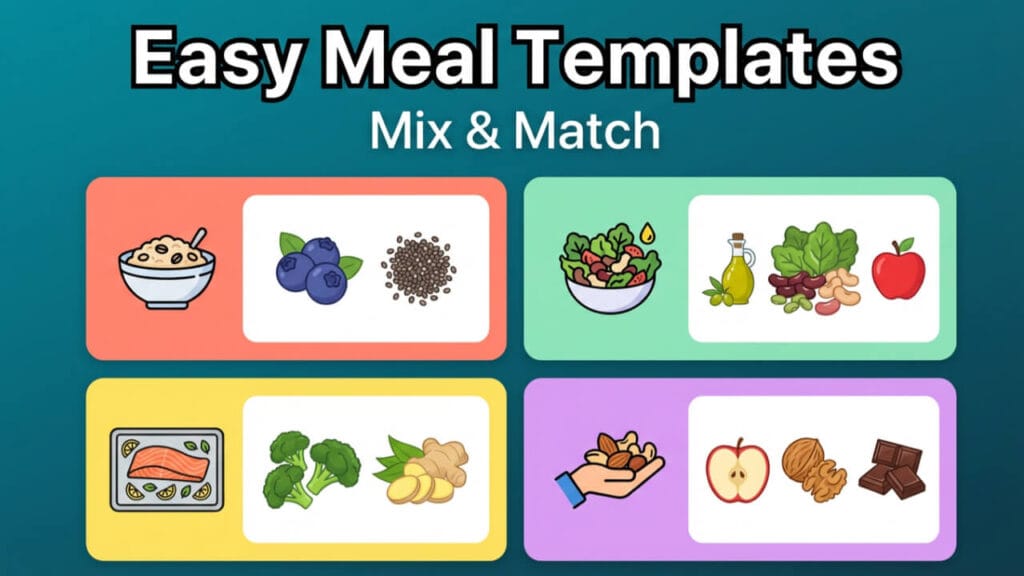
These are mix-and-match templates, not recipes. Pick one option per meal, swap ingredients based on what you like, and repeat what works.
Breakfast templates (3 options)
- Oats base: oats + berries + chia/flax + walnuts (add yogurt if you want)
- Eggs + greens: eggs + sautéed spinach/arugula + olive oil + fruit on the side
- Yogurt bowl (if tolerated): plain yogurt/kefir + berries + ground flax + a few nuts
Lunch templates (3 options)
- Big salad bowl: leafy greens + beans/lentils + olive oil + nuts/seeds + any protein
- Grain bowl: brown rice/oats (savory) + roasted veg + protein + olive oil + herbs/spices
- Quick wrap: whole-grain wrap + greens + canned salmon/sardines or beans + yogurt sauce or olive oil
Dinner templates (3 options)
- Sheet-pan dinner: salmon/chicken/tofu + broccoli/cauliflower + olive oil + spices
- Bean-based dinner: lentil/bean chili or soup + side salad + olive oil
- Stir-fry template: mixed vegetables + protein + ginger/garlic + served over brown rice
Snack swaps that don’t feel miserable (5 ideas)
- Fruit + nuts: berries or an apple + walnuts/almonds
- Yogurt + cinnamon: plain yogurt with berries (if tolerated)
- Hummus + vegetables: carrots/cucumbers + hummus
- Dark chocolate (small): 1–2 squares after a meal
- Tea swap: green tea instead of a sugary drink (earlier in the day if caffeine affects sleep)
Grocery List and Meal Prep That Doesn’t Take Over Your Life
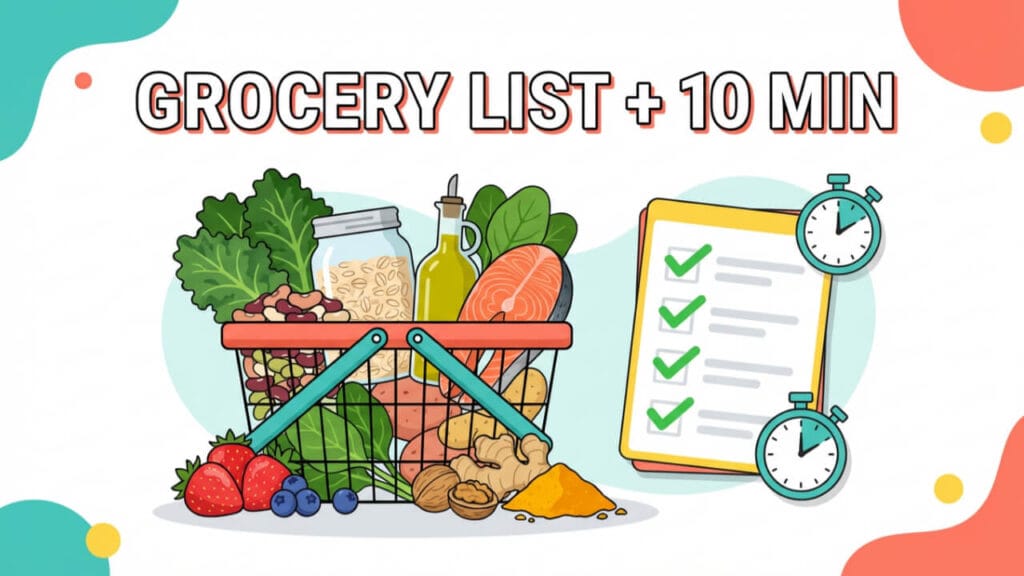
The easiest way to eat more anti-inflammatory foods is to make them the default in your kitchen. That usually means a simple weekly grocery list and a prep routine that takes less time than scrolling your phone.
Weekly grocery list (by category)
Use this as a flexible template. Pick a few options from each category, then repeat what you actually like.
- Proteins: salmon/sardines, eggs, chicken, tofu/tempeh, Greek yogurt (if tolerated)
- Fiber bases: oats, lentils, beans (canned or dry), brown rice, quinoa
- Vegetables: leafy greens, broccoli/cauliflower/Brussels sprouts, mixed frozen veg, onions/garlic
- Fruits: berries (fresh or frozen), apples, citrus
- Healthy fats: extra virgin olive oil, walnuts/almonds, chia, ground flax
- Fermented (optional): plain yogurt or kefir (if tolerated)
- Flavor helpers: turmeric, ginger, black pepper, herbs, lemon, vinegar
- Drinks: green tea, sparkling water, coffee (if it works for you)
Frozen and canned shortcuts (how to choose better options)
Frozen and canned foods are not “second best.” They’re often the difference between consistency and quitting.
- Frozen vegetables: choose plain (no sauces). Mixed veg and frozen broccoli are weeknight lifesavers.
- Frozen berries: great value, easy for smoothies and oats, and reduce food waste.
- Canned beans/lentils: rinse before using to reduce sodium and improve taste.
- Canned fish: sardines/salmon are simple protein options; choose lower-sodium if needed.
- Plain oats: better than flavored packets if you want less added sugar.
If you’re buying packaged foods, the biggest win is simple: fewer ingredients you don’t recognize, and less added sugar.
The 10-minute prep routine (2–3 steps)
This is a minimum plan you can repeat even when life is busy.
- Step 1: Wash and portion greens, or open a bag of pre-washed greens and make it your default salad base.
- Step 2: Cook one fiber base (oats for breakfasts, or a pot of lentils/beans/rice for bowls).
- Step 3: Roast or sauté one big tray of vegetables and store them for quick meals.
If you do just these steps, you can assemble meals in minutes without needing “meal prep Sundays.”
Foods That Can Make Inflammation Worse for Some People
This section isn’t about fear or perfect rules. It’s about patterns that tend to leave people feeling more inflamed, especially when they become the default. For a practical overview of anti-inflammatory eating patterns, see Johns Hopkins: Anti-inflammatory diet.
Ultra-processed foods (why they crowd out fiber/protein)
Ultra-processed foods aren’t automatically ‘bad.’ The issue is how easily they crowd out fiber, protein, and micronutrient-rich foods. They’re a problem because they often crowd out the basics that help most people feel steady: protein, fiber, and micronutrient-rich plants.
If most of your calories come from packaged snack foods, sweet drinks, and refined carbs, you can technically hit calories while still missing the foods that support a better daily pattern.
Added sugar and alcohol (pattern matters more than perfection)
Added sugar and alcohol are two common “amplifiers” for people who already feel inflamed. You don’t need to be extreme to see benefits. Often, the biggest win is reducing frequency and keeping them paired with real meals rather than using them as default snacks.
Personal triggers (why elimination isn’t step one)
Some people have specific triggers that make them feel worse (certain foods, eating patterns, or meal timing). But elimination diets often backfire when they’re used as the first step.
A smarter start is to add the foundations first (fiber, protein, healthy fats, plants), then notice what changes. If you suspect a real intolerance or you have diagnosed digestive issues, it’s worth getting guidance rather than guessing.
How to Judge Food Claims
Health content online is loud. The goal here is to help you think clearly: what matters, what’s marketing, and what you can test in your own routine without falling into detox culture.
“Detox” language vs real physiology
Most “detox” messaging sells the idea that your body is full of toxins and you need a special plan to flush them out. In real life, your body already has systems for processing and eliminating waste. What helps most people isn’t a cleanse. It’s consistent basics: whole foods, fiber, hydration, sleep, and a diet you can repeat.
Single superfoods vs dietary patterns (Mediterranean-style eating)
One food rarely changes everything. Patterns do. When you zoom out, the most consistently recommended approach is a plant-forward pattern with healthy fats, adequate protein, and plenty of fiber. “Mediterranean-style” eating is a common example, but you don’t need to eat perfectly Mediterranean meals to follow the principle.
Red flags: fear-based marketing, extreme restrictions
If a plan tells you normal foods are “poison,” promises fast results, or requires extreme restriction, it usually creates stress and inconsistency. Fear-based diets often reduce food variety, which can make nutrition worse over time, not better.
A simple way to test changes (one change for 2 weeks)
If you want to know what actually helps you, test one change at a time for about two weeks. Keep it small and specific:
- Add beans or lentils once per day.
- Swap one sweet drink for green tea or water.
- Add berries to breakfast most days.
- Use olive oil as your default fat for salads and vegetables.
If you want a simple framework for spotting low-quality claims and “fairy dusting” in the supplement world (the same logic applies to food marketing), read How to Read Supplement Labels (Fairy Dusting).
And if you want a grounded explanation of what “clinically studied” actually means (and what it doesn’t), see Clinically Studied Ingredients in Supplements.
When Supplements Make Sense (Optional, Non-Sales)
Food comes first because it builds the foundation: fiber, protein, healthy fats, and the daily plant variety that most people miss.
Supplements can make sense when you’re trying to fill a clear gap (like low sun exposure, inconsistent diet, or specific nutrient shortfalls), but they’re not a replacement for a solid eating pattern.
If you take medications, have a diagnosed inflammatory condition, or you’re pregnant/nursing, it’s smart to check with a qualified clinician before adding new supplements. If you want an educational overview of research-backed options people commonly compare, see Top 12 Anti-Inflammatory Supplements Backed by Research.
What the Research Suggests
The following summarizes what established nutrition research generally indicates about anti-inflammatory dietary patterns. These are observational and mechanistic findings — not clinical prescriptions for individuals.
- Mediterranean dietary pattern: Multiple large observational studies and systematic reviews associate Mediterranean-style eating — olive oil, fish, legumes, vegetables, fruits, whole grains — with lower levels of inflammatory markers such as C-reactive protein (CRP) and interleukin-6 (IL-6).
- Omega-3 fatty acids: EPA and DHA (found in fatty fish) are among the most studied dietary compounds in inflammation research, with a recognized role in eicosanoid metabolism, the biochemical pathway involved in inflammatory signaling.
- Dietary fiber and gut microbiome: Research increasingly links diverse fiber intake from legumes, oats, vegetables, and fruit to short-chain fatty acid (SCFA) production by gut bacteria, which has downstream effects on systemic immune regulation.
- Polyphenols: Compounds such as flavonoids (in berries and tea), oleocanthal (in extra virgin olive oil), and curcuminoids (in turmeric) have been studied in vitro and in clinical settings for effects on NF-κB signaling, a key inflammatory pathway.
- Ultra-processed food intake: Prospective cohort studies have associated high ultra-processed food consumption with elevated inflammatory markers, likely through displacement of fiber and micronutrient-dense foods rather than direct toxic effects.
Note: Most dietary inflammation research is observational or mechanistic. Randomized controlled trials on whole dietary patterns are limited by design complexity. These findings represent scientific consensus directions, not confirmed clinical outcomes for individuals.
🏛️ Expert Consensus Summary
Major nutrition and medical organizations — including the American Heart Association, Harvard T.H. Chan School of Public Health, Johns Hopkins Medicine, and the Cleveland Clinic — consistently point to the same broad dietary direction for supporting long-term health:
- Emphasize colorful vegetables and fruits, especially leafy greens, berries, and cruciferous vegetables
- Use extra virgin olive oil as a primary fat source
- Include fatty fish 2–3 times per week as a protein and omega-3 source
- Build meals around legumes, whole grains, nuts, and seeds for fiber and plant protein
- Limit ultra-processed foods, added sugars, and refined carbohydrates
- Moderate or reduce alcohol consumption
This reflects educational consensus, not personalized medical advice. Individuals with specific health conditions should consult a qualified healthcare professional.
FAQ
What are the top anti-inflammatory foods?
A practical top list includes fatty fish, extra virgin olive oil, berries, leafy greens, cruciferous vegetables, beans/lentils, nuts, seeds, oats, and (if tolerated) yogurt or kefir. The best choices are the ones you can eat consistently, not the “perfect” list you never follow.
What can I eat daily to reduce inflammation?
Start with daily anchors: olive oil as your default fat, a fiber base (beans, lentils, or oats), and at least one colorful plant (berries, greens, or cruciferous vegetables). Then add protein so meals feel steady and you’re less likely to fall back into ultra-processed snacks.
What is the best breakfast for inflammation?
One of the simplest options is oats with berries plus chia or ground flax and a handful of walnuts. If you prefer savory, eggs with leafy greens cooked in olive oil is another easy, repeatable pattern.
What foods should I avoid if I feel inflamed?
Most people do better when ultra-processed foods, sugary drinks, and frequent high-sugar snacks are reduced, mainly because they crowd out fiber, protein, and nutrient-dense meals. Alcohol can also be a trigger for some people. The goal isn’t perfection—it’s noticing what patterns leave you feeling worse.
How fast can diet changes affect how I feel?
It varies. Some people notice changes in energy and digestion within days, while bigger changes take longer and depend on sleep, stress, activity, and consistency. A practical approach is to make one change for two weeks (like adding beans daily or swapping one sugary drink), then reassess.
Final Thoughts
If you want anti-inflammatory eating to work in real life, keep the goal simple: consistency beats perfection. You don’t need a complicated plan—you need a few foods you can repeat most days.
Start with two or three daily anchors like extra virgin olive oil, berries, leafy greens, beans or lentils, and fatty fish a few times per week. Then build meals around protein, fiber, and healthy fats, and let the specific ingredients rotate based on what you enjoy.
Finally, remember that food works best alongside the basics: sleep you can count on, regular movement, and stress downshifts that are actually doable. And if you take medications or have a diagnosed condition, it’s worth getting a clinician’s guidance before you make major diet or supplement changes.
Sources & References
- Cleveland Clinic. Inflammation. my.clevelandclinic.org
- Harvard Health Publishing. Foods that fight inflammation. health.harvard.edu
- Johns Hopkins Medicine. Anti-inflammatory diet. hopkinsmedicine.org
- Calder PC. Omega-3 fatty acids and inflammatory processes: from molecules to man. Biochemical Society Transactions, 2017.
- Minihane AM et al. Low-grade inflammation, diet composition and health: current research evidence and its translation. British Journal of Nutrition, 2015.
- Sonnenburg JL, Bäckhed F. Diet–microbiota interactions as moderators of human metabolism. Nature, 2016.
- Schwingshackl L, Hoffmann G. Mediterranean dietary pattern, inflammation and endothelial function. European Journal of Nutrition, 2014.
- USDA Dietary Guidelines for Americans 2020–2025. dietaryguidelines.gov
Disclaimer
This article is for educational purposes only and is not medical advice. Food and supplements may not be appropriate for everyone. Consult a qualified healthcare professional for personal guidance, especially if you take medications, are pregnant or nursing, or have a medical condition. This content is not intended to diagnose, treat, cure, or prevent any disease.