Supplement Red Flags: Hype vs Ingredient Quality
Supplement Red Flags: Hype vs Real Ingredient Quality
Some supplements look impressive because the marketing is loud. The bottle may use bold claims, trendy ingredients, celebrity-style language, dramatic before-and-after wording, or a long list of benefits. But strong marketing does not always mean strong ingredient quality.
A better supplement-buying decision starts with the label, serving size, ingredient amounts, testing information, warnings, and the real price per serving. If those details are unclear, the product may be asking you to trust hype instead of showing you useful information.
This guide explains the most common supplement red flags, how to spot hidden doses, how to separate marketing language from real value, and how to compare products more carefully before you buy.
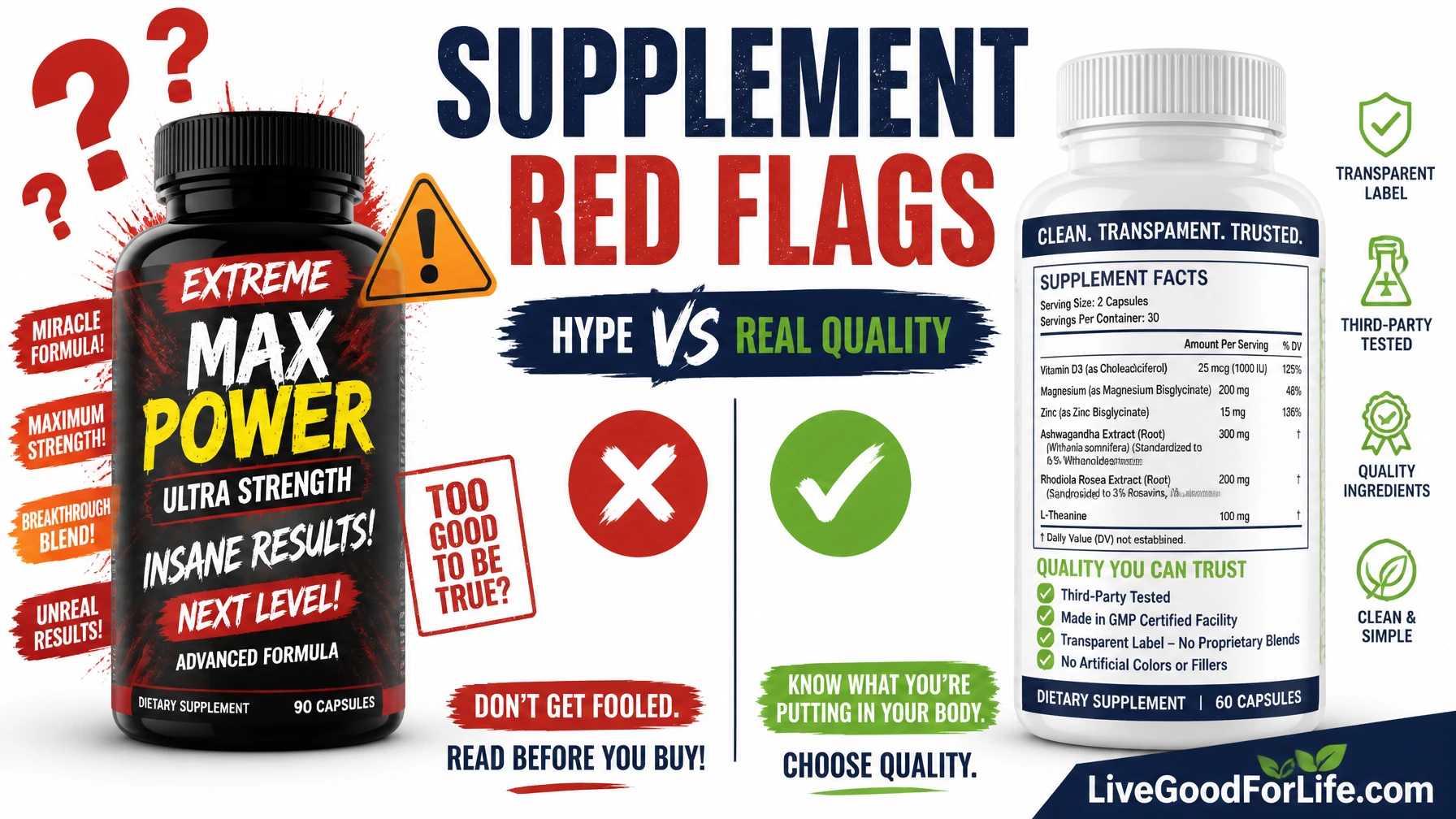
Quick Answer: What Are Supplement Red Flags?
Supplement red flags are signs that a product may rely more on marketing than on clear ingredient quality. The biggest red flags include hidden ingredient amounts, vague proprietary blends, miracle-style claims, unclear serving sizes, no testing information, no realistic warnings, and prices that are hard to justify from the label.
A supplement does not need to be perfect to be useful, but it should make the basics easy to understand: what is inside, how much is inside, how to take it, what it costs per serving, and whether any quality or testing information is available.
Before buying, ask this simple question: Can I clearly see what I am paying for? If the answer is no, slow down and compare the product against a more transparent option.
Supplement Red Flags Checklist
| Red Flag | Why It Matters | What to Look For Instead |
|---|---|---|
| Miracle claims | No supplement should promise guaranteed results, cures, or disease reversal. | Realistic support language and proper disclaimers. |
| Hidden doses | You cannot tell if the key ingredients are included at useful amounts. | Clear amount per serving for important ingredients. |
| Vague proprietary blends | A blend may show only the total weight, not the amount of each ingredient. | Transparent labels where individual amounts are listed where possible. |
| Confusing serving size | A bottle may not last as long as it first appears. | Clear servings per container and clear daily directions. |
| No testing information | There is less evidence for quality, identity, purity, or label accuracy. | Third-party testing, Certificates of Analysis, or quality documentation. |
| Price is hard to compare | A lower bottle price may still be expensive per serving. | Calculate the real price per serving and monthly cost. |
For the full comparison process, read the primary guide: How to Compare Supplement Ingredients Before You Buy.
Red Flag 1: The Front Label Does All the Talking
The front of a supplement bottle is built to attract attention. It may highlight one popular ingredient, one large number, one trendy phrase, or one emotional benefit. That does not automatically make the product poor quality, but it does mean you should move to the Supplement Facts panel before deciding.
If the front label promises everything but the back label explains very little, that is a warning sign.
Look for details such as:
- Full serving size
- Servings per container
- Amount per serving
- Ingredient forms
- Directions for use
- Warnings and allergens
- Testing or quality information
Good supplement buying is boring in the best way. The label should give you enough information to compare the product without guessing.
Red Flag 2: Hidden Doses and Tiny Amounts
A product may include a well-known ingredient, but the amount can still be too small to compare meaningfully. This is why the phrase “contains” is not enough. You need to know how much the product contains per serving.
Hidden or unclear doses can appear in different ways:
- The key ingredient is listed, but no amount is shown.
- The ingredient is inside a blend with only the total blend weight shown.
- The serving size is larger than expected.
- The label highlights a trendy ingredient that appears near the bottom of a long list.
- The front label number looks large, but it does not reflect the active ingredient amount.
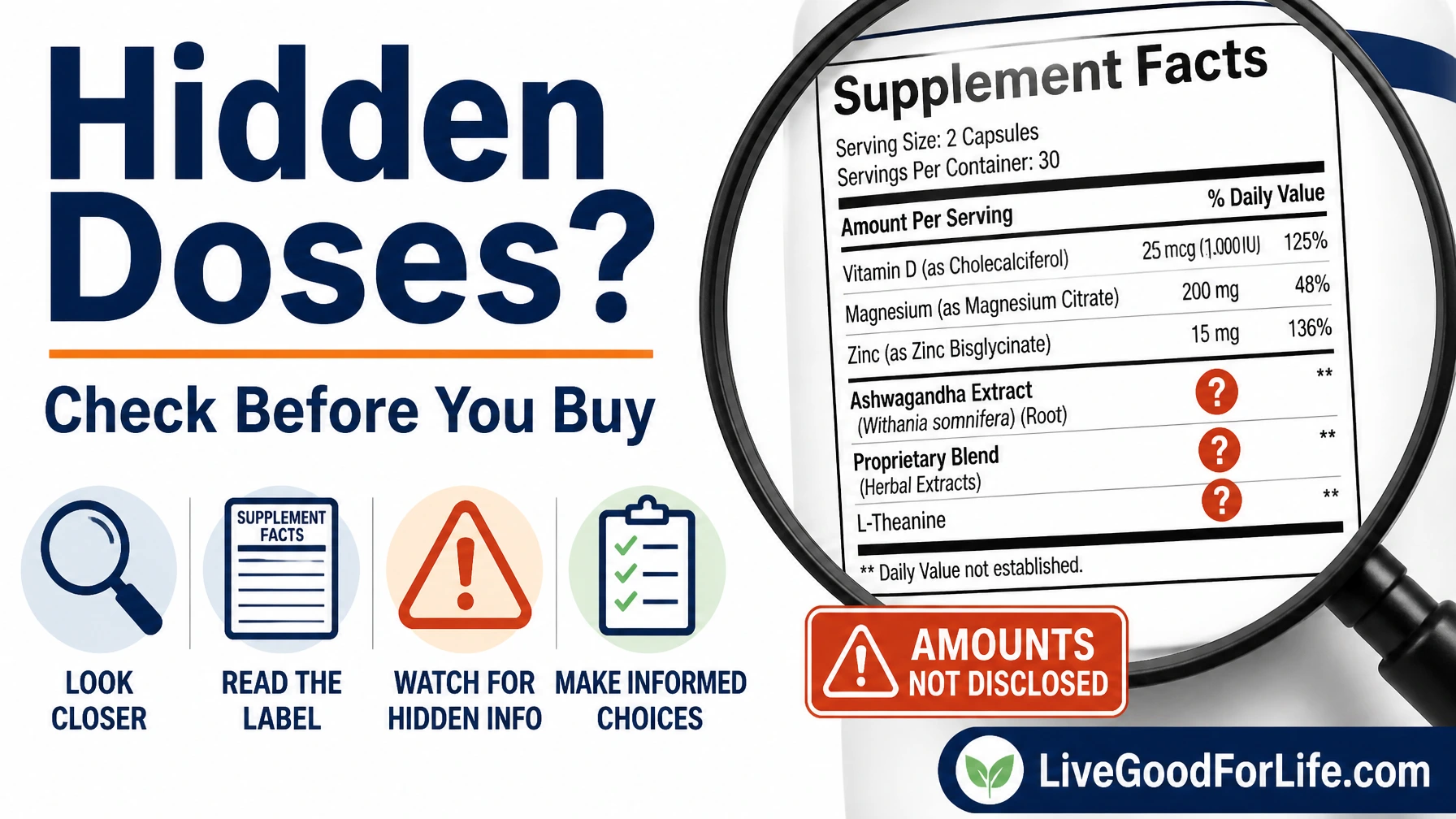
For more details on this problem, read How to Read Supplement Labels and Spot Fairy Dusting.
Red Flag 3: Proprietary Blends With No Useful Context
A proprietary blend is a group of ingredients listed under one total amount. The label may show the total blend weight, but not the individual amount of each ingredient inside the blend.
That can make comparison difficult. If a product is built around a specific ingredient but does not show how much of that ingredient is included, you cannot judge whether the formula matches the marketing.
| Label Type | What You Know | Red Flag Level |
|---|---|---|
| Clear ingredient amounts | You can see how much of each main ingredient is included. | Lower |
| Proprietary blend with context | You see the blend amount and enough supporting label detail to evaluate the product. | Moderate |
| Proprietary blend with big claims | The product makes strong claims but does not show key ingredient amounts. | Higher |
Proprietary blends are not automatically bad, but they deserve closer inspection. Read more here: Are Proprietary Blends Acceptable?
Red Flag 4: Clinical Research Words Without Label Detail
Research language can be useful, but it can also be vague. A supplement may say it uses a clinically studied ingredient, but that does not tell you whether the product uses the same form, a similar amount, or a comparable serving used in research.
Ask these questions when you see clinical research wording:
- Is the exact ingredient form named?
- Is the amount per serving clearly listed?
- Was the ingredient studied in humans?
- Does the research match the product’s claim?
- Is the full product studied, or only one ingredient inside it?
If the label does not give enough information to answer those questions, the research wording may be more of a marketing signal than a useful buying signal.
You already have a deeper guide on this topic here: Clinically Studied Ingredients in Supplements.
Red Flag 5: No Third-Party Testing or Quality Information
Testing information matters because it helps support confidence in quality, identity, purity, and label accuracy. Not every product page will show the same level of documentation, but a brand should make quality standards easier to understand, not harder.
Useful quality signals include:
- Third-party testing information
- Certificates of Analysis where available
- GMP manufacturing standards
- Clear lot or batch-related documentation
- Allergen and warning information
- Realistic claims that do not promise cures
You can review available LiveGood testing documents here: LiveGood Products Certificates of Analysis.
Red Flag 6: The Product Claims to Replace the Basics
No supplement should be presented as a replacement for food, sleep, movement, hydration, stress management, or appropriate medical care. Supplements can support a routine, but they are not shortcuts around the basics.
Be cautious when a product suggests you can ignore:
- A balanced diet
- Protein and fiber intake
- Sleep quality
- Regular movement
- Medical testing when symptoms are present
- Medication guidance from a qualified professional
A serious supplement routine should fit into your health habits, not pretend to replace them.
Red Flag 7: The Price Looks Good Until You Calculate the Serving
A bottle can look cheaper at first and still cost more per actual serving. This happens when the serving size is larger than expected or the bottle contains fewer servings than the front label suggests.
Use this simple formula:
Price per serving = product price divided by servings per container
| Example | Bottle Price | Servings | Price Per Serving |
|---|---|---|---|
| Product A | $24.95 | 15 | About $1.66 |
| Product B | $34.95 | 30 | About $1.17 |
| Product C | $49.95 | 60 | About $0.83 |
Product A has the lowest bottle price but the highest price per serving in this example. This is why smart supplement comparison looks beyond the first price you see.
Red Flag 8: Too Many Products With Overlapping Ingredients
Another red flag is not one product by itself, but the way multiple supplements are stacked together. A multivitamin, greens powder, energy product, immune formula, and standalone vitamins may repeat the same nutrients.
Overlapping ingredients can include:
- Vitamin D
- Vitamin K
- Magnesium
- Zinc
- Iron
- B vitamins
- Caffeine or stimulant herbs
If you are building a LiveGood routine, read Can You Take LiveGood Supplements Together? before stacking several products at once.
How to Tell Hype From Real Ingredient Quality
The easiest way to separate hype from quality is to compare what the product says with what the label proves.
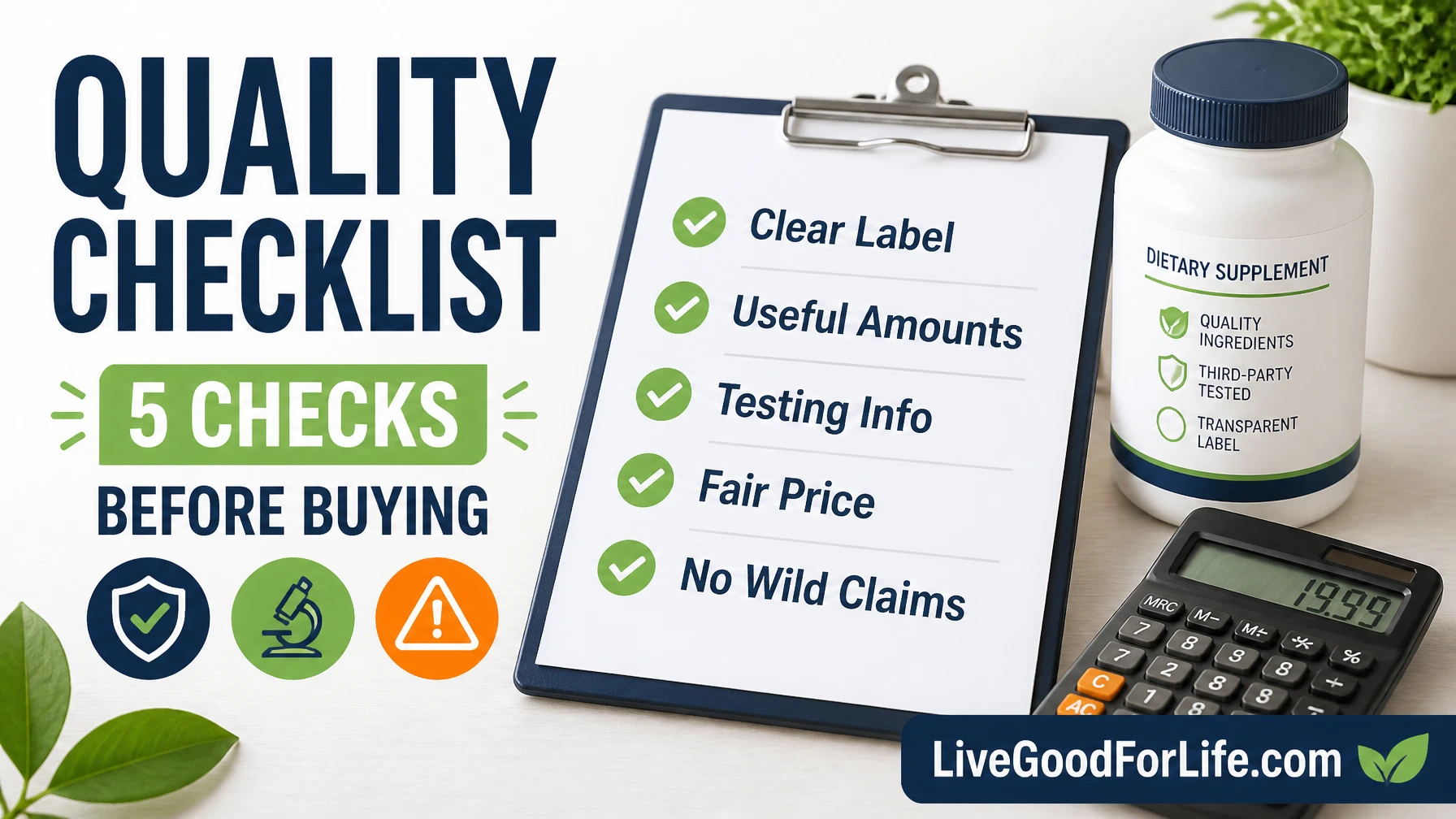
| Hype Signal | Quality Signal |
|---|---|
| Big claims on the front label | Clear Supplement Facts panel |
| Trendy ingredients with no amount shown | Named ingredients with amount per serving |
| Vague “research-backed” wording | The ingredient form and serving size you can compare |
| Price justified by branding only | Fair price per serving and clear value |
| No documentation or testing details | Quality standards and testing information where available |
Where LiveGood Fits Into This Checklist
LiveGood is useful to compare through this red-flag checklist because the company focuses on product transparency, testing information, and lower member pricing. That does not mean every product is right for every person, but it gives shoppers a more practical way to compare value.
When reviewing any LiveGood product, still use the same buyer checklist:
- Read the Supplement Facts panel.
- Check serving size and servings per bottle.
- Look at retail price, member price, and Subscribe and Save where available.
- Review available testing documents.
- Check for ingredient overlap with products you already use.
- Choose products that match a real goal, not just a trend.
Helpful starting points:
- LiveGood Products Guide
- LiveGood Supplement Reviews
- LiveGood Supplement Savings Calculator
- LiveGood Customer vs Member vs Affiliate
Compare LiveGood Products and Prices
Retail Price, Member Price, and Real Value
A supplement can be high quality and still not be good value if the price is inflated by middlemen, retail markups, celebrity campaigns, or heavy advertising. Price is not the only quality signal, but price should make sense when compared with the label.
LiveGood uses retail pricing for one-time customers and lower member pricing for people who order regularly. If you buy occasionally, retail may be enough. If you order every month, membership may be worth comparing.
| Buying Option | Best For | Guide |
|---|---|---|
| Retail customer | Trying one product without a membership | Buy LiveGood Without Membership |
| Member | Ordering regularly at lower member prices | LiveGood Membership Cost and Savings |
| Subscribe and Save | Regular monthly orders you can manage or cancel | LiveGood Subscribe and Save |
See LiveGood Membership Options
Quick Quality Check Before You Buy
Before buying a supplement, take two minutes to run this quick check:
- Can I see the full serving size?
- Can I see the ingredient amounts that matter most?
- Are the ingredient forms clear?
- Is anything hidden inside a blend?
- Does the product make realistic claims?
- Can I calculate the real price per serving?
- Is there testing or quality information available?
- Does it overlap with something I already take?
If a product fails several of these questions, it may not be the best choice, even if the front label looks exciting.
Frequently Asked Questions
What is the biggest red flag on a supplement label?
The biggest red flag is when the product makes strong claims but does not clearly show the serving size, ingredient amounts, or key formula details. If you cannot see what you are taking, you cannot compare the product properly.
Are proprietary blends a red flag for supplements?
They can be. Proprietary blends are not inherently bad, but they can mask the proportions of each ingredient. If the product’s main promise depends on an ingredient inside a blend, look carefully before buying.
Does a higher price mean a better supplement?
No. A higher price may reflect better ingredients, but it may also reflect retail markups, marketing, branding, or middlemen. Compare the serving size, ingredient amounts, testing information, and price per serving before deciding.
What does hidden dose mean?
A hidden dose means the label does not clearly show how much of an important ingredient is included. This often happens when ingredients are included in a proprietary blend or when a product highlights an ingredient without showing the amount.
How can I tell if a supplement claim is hype?
Look for extreme promises, cure-style wording, emotional marketing, unclear label details, or claims unsupported by the Supplement Facts panel. If the label does not back up the claim, treat it carefully.
Is third-party testing important?
Third-party testing can be an important quality signal because it helps support identity, purity, and label confidence. It does not make a supplement right for everyone, but it is useful when comparing brands. If you don’t see the test on the page or website when you buy the product, it means they hide something that will not benefit the buyer.
Should I avoid all supplements with long ingredient lists?
No and Yes. A long ingredient list is not automatically bad. The key question is whether the label clearly explains the serving size, ingredient amounts, purpose, warnings, and value. A long list with hidden amounts is harder to evaluate. 50 ingredients in one capsule make it a fairy-dust product.
What should I do if I already take several supplements?
Write down every supplement, medication, fortified drink, and powder you use. Check for repeated vitamins, minerals, herbs, caffeine, and other active ingredients. Ask a healthcare professional or pharmacist to review your routine if you take medication or have health concerns.
Choose Better Labels, Not Louder Claims
The best supplement buying decisions come from clear information. Look for products that make it easy to understand the serving size, ingredient amounts, quality standards, warnings, and price per serving.
Marketing can help you notice a product, but the label should help you decide whether it deserves your money.
Use this article together with the full primary guide: How to Compare Supplement Ingredients Before You Buy.
Reminder: Supplement labels, prices, formulas, testing documents, and policies can change. Always confirm the current information on the product page before ordering.
Affiliate and medical disclosure: This article is educational and is not personal medical advice. I am an independent LiveGood affiliate and may earn a commission if you use an affiliate link, at no extra cost to you. Supplements are not intended to diagnose, treat, cure, or prevent disease. Speak with a qualified healthcare professional before using supplements if you take medication, have a medical condition, are pregnant or nursing, are buying for a child, or are unsure what is appropriate for you.