Meal Prep for Beginners: 10 Easy Tips and Simple Hacks
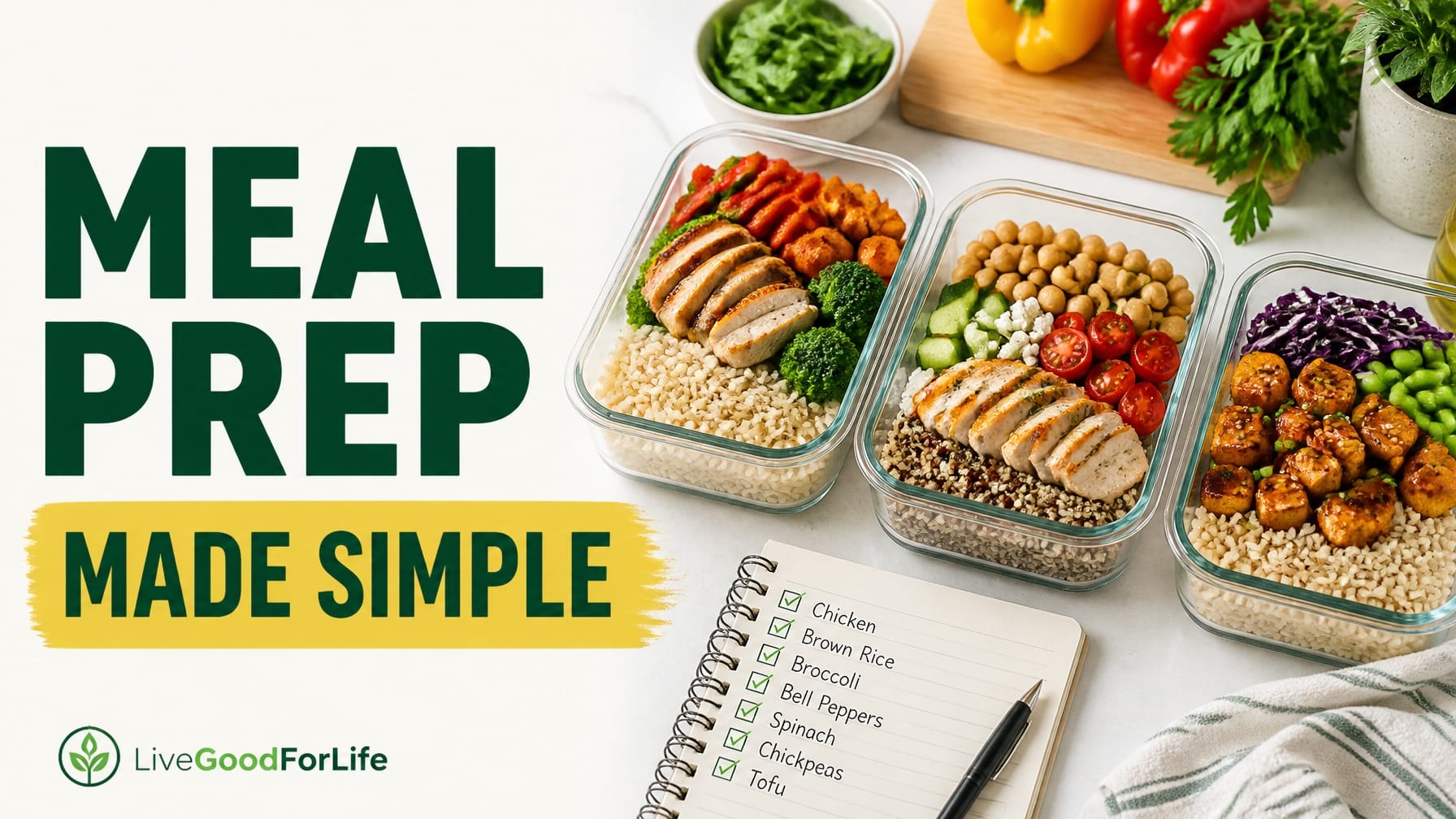
Meal prep does not have to mean spending your entire Sunday cooking or eating identical lunches all week. It can be as simple as planning two dinners, preparing a few ingredients and keeping a reliable backup meal ready.
This beginner’s guide accompanies our Meal Prepping video. It explains how to start, shares 10 easy meal-prep hacks and shows how to organise food safely. It is part of our Nutrition Basics course.
Watch the Video: Meal Prep for Beginners
The video introduces simple meal planning, shopping lists, snack preparation and making cooking a regular habit. The tips below build on those ideas with practical examples and food-storage guidance.
What Is Meal Prep?
Meal prep means doing some of the work for future meals in advance. That might involve planning a menu, measuring ingredients, cooking extra portions or assembling a lunch. You can choose the amount of preparation that suits your time, budget and kitchen space.
- Meal planning: deciding what you will eat and what to buy.
- Ingredient prep: chopping vegetables or preparing a sauce for later.
- Batch cooking: making extra portions of a suitable dish to refrigerate briefly or freeze.
- Meal assembly: combining prepared ingredients when it is time to eat.
Build a Simple Meal Before You Start
Choose a protein source, a carbohydrate food, vegetables or fruit, and a suitable amount of fat or sauce. This is a flexible starting point, not a fixed portion prescription. Examples include chicken with potatoes and vegetables, tofu with rice and broccoli, or lentil chilli with a wholegrain wrap.
For more background, explore our guides to protein and food sources, carbohydrates, and dietary fats.
Top 10 Meal-Prep Tips and Easy Hacks
1. Start with the meal that causes the most difficulty
If lunch regularly gets rushed, prepare lunch first. If evenings are the challenge, plan two dinners. Solving one recurring problem is more manageable than reorganising every meal.
Easy hack: choose one familiar recipe and make one extra portion for a suitable later meal or for freezing.
2. Check your fridge, freezer and cupboards first
Build your plan around food you already own, prioritising items that need using. Check use-by dates and storage instructions rather than assuming every ingredient will last until the end of the week.
Easy hack: keep a short “use first” list on your fridge door.
3. Reuse ingredients across different meals
Choose ingredients that work in several dishes. Roasted vegetables might go with a traybake, into a wrap or alongside eggs. Chickpeas can be used in a curry or a salad.
Easy hack: plan two meals with overlapping ingredients, then vary the seasoning or sauce.
4. Prepare components instead of complete meals
Cooking each element separately gives you more flexibility. You can combine beans, grains, vegetables and a dressing in different ways without committing to identical containers.
Easy hack: keep wet dressings and crunchy ingredients separate until serving.
5. Use convenient ingredients when they help
Frozen vegetables, canned beans, plain microwave grains and prewashed produce can reduce preparation work. Convenience foods vary, so check the label and preparation instructions.
Easy hack: keep one freezer ingredient and one cupboard protein source available for a quick backup meal.
6. Make a shopping list organised by section
Group your list into produce, protein foods, grains, dairy or alternatives, and freezer or cupboard items. Include quantities based on the meals you actually intend to make.
Easy hack: save a reusable checklist and remove anything you already have. Buying in bulk only helps when you can use or store the food.
7. Cook extra portions of freezer-friendly dishes
Soups, stews and bean-based chilli can be practical batch-cooking choices. Portion the food so you can defrost only what you need rather than repeatedly warming a large batch.
Easy hack: try our vegan chilli recipe and freeze suitable extra portions promptly after cooling.
8. Label containers with the food and date
A simple label helps you identify meals and decide what to eat first. Use food-safe containers appropriate for chilling, freezing and reheating, and follow their instructions.
Easy hack: write “lentil chilli — cooked [date]” on freezer tape before putting the container away.
9. Plan snacks and a backup meal
Snacks do not need elaborate preparation. Fruit, yogurt or other foods that suit your needs can help fill gaps in the plan. Allow room for changes, leftovers and meals out.
Easy hack: keep yogurt and fruit separate until needed. Our Greek yogurt and berries snack provides one simple idea.
10. Schedule a short reset rather than one huge session
Split planning, shopping and cooking across convenient times. A midweek preparation session can refresh ingredients and reduce the pressure to store everything from Sunday to Friday.
Easy hack: use a 10-minute planning session, a focused shopping list and a small cooking session as your starting routine. Adjust the time to the recipe.
Food Safety: Preparing a Week’s Meals Does Not Mean Refrigerating Them All Week
Plan storage before cooking. UK Food Standards Agency guidance recommends eating properly refrigerated leftovers within 48 hours, or freezing them if that will not be possible. Follow shorter product-specific instructions where applicable.
- Cool cooked food quickly and refrigerate or freeze within one to two hours. Divide large batches into smaller containers to help cooling.
- Keep your fridge at 5°C or below and store raw foods separately from ready-to-eat foods.
- For cooked rice, cool it as quickly as possible, ideally within one hour. Keep refrigerated rice for no more than 24 hours before use and reheat it only once.
- Freeze portions intended for later in the week promptly after cooling, rather than waiting until they have spent several days in the fridge.
- Defrost food in the fridge. Use it within 24 hours of being fully defrosted, following any product instructions.
- Reheat leftovers until steaming hot throughout and only reheat once. Stir microwave-heated food and follow standing-time instructions.
If you cook on Sunday, keep only the portions that fit those storage limits in the fridge and freeze later portions. Rice needs its shorter storage window. The video’s weekly-preparation idea should be understood alongside these storage rules.
A Beginner’s Example: Two Meals, Shared Ingredients
For a small first session, choose a bean chilli and a vegetable-and-protein wrap. Buy the beans, peppers, onions and wrap ingredients you need. Prepare the chilli and a small amount of vegetables, then decide what will be eaten soon and what should be frozen. Keep salad ingredients and sauces separate where practical.
You do not need to count every gram to start. If you want to understand packaged ingredients better, our food-label guide explains serving sizes and nutrition panels. Our portion-control guide offers more context for planning quantities.
Frequently Asked Questions
Do I need to cook every meal in advance?
No. Planning meals or preparing one ingredient ahead still counts as meal prep. Start with the task that makes your next meal easier.
Can I prepare five days of lunches on Sunday?
You can prepare food for later in the week if you store it safely. Under UK guidance, refrigerate leftovers for up to 48 hours or freeze them sooner for later use. Cooked rice has a shorter refrigerated limit of 12/24 hours.
Does meal prep have to involve identical meals?
No. Preparing separate components lets you assemble different dishes. Change the vegetables, seasoning or sauce while reusing suitable ingredients.
Does meal prep always save money?
No. Savings depend on ingredient prices, portions, food waste and what you would otherwise buy. Check your existing food and plan realistic quantities before shopping.
Do I need expensive containers?
No. Choose food-safe containers that suit the storage and reheating method you use. Follow the manufacturer’s instructions and replace damaged containers.
Is meal prep only for weight loss?
No. It can help organise shopping and cooking for many routines. It does not guarantee weight loss, and your food choices should suit your own needs.
Your First Step
Choose one meal you already enjoy, check the ingredients and prepare a manageable amount. Keep notes on what you used and what went uneaten. Next time, adjust the quantity or recipe so the routine becomes easier.
Educational note: This guide offers general information, not personalised dietary advice. For food allergies or a medically prescribed diet, follow your healthcare team’s guidance.