Easy Portion Control for Beginners: A Simple Guide to Balanced Eating
Last updated: June 2026
Written by Daniel Popa, founder of LiveGoodForLife.com. This content is for educational purposes only and is not medical advice.
A Simple Way to Eat Better Without Overthinking Food
Do you ever feel like you are not eating badly, but something still feels off?
Maybe your meals look healthy, but you still feel too full after eating. Maybe you snack without thinking and then wonder why your energy drops later. Maybe you try to eat better, but portion sizes still confuse you. One day you feel like you ate too much. The next day you feel hungry all the time.
This is where portion control can help, but not in the strict way people often imagine.
Real portion control is not about tiny meals, cutting out foods, or turning every plate into a maths problem. It is about learning what a balanced amount of food looks like for you, so meals feel more satisfying, more steady, and easier to manage.
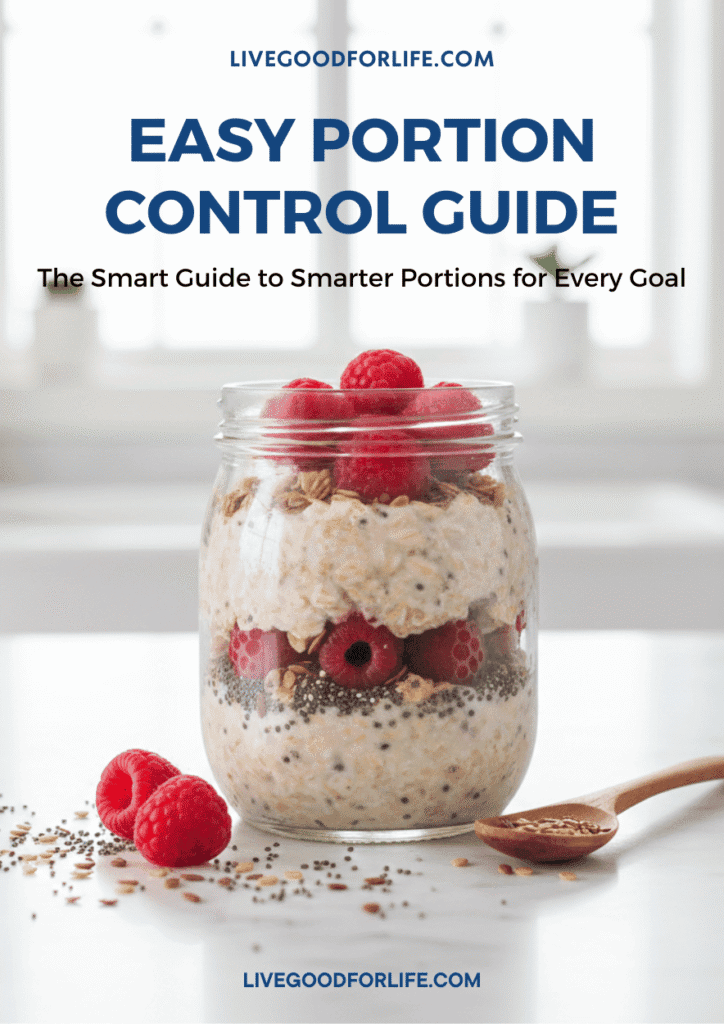
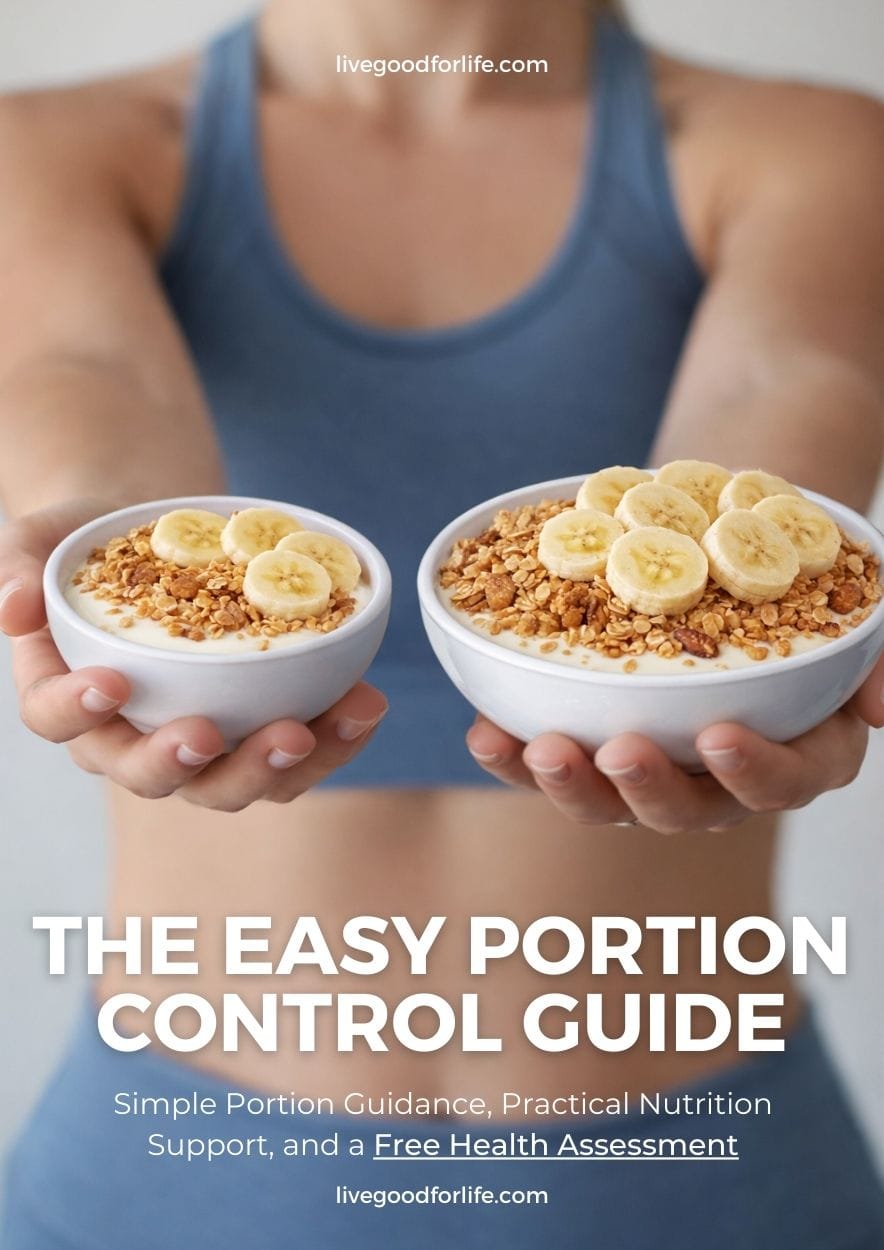
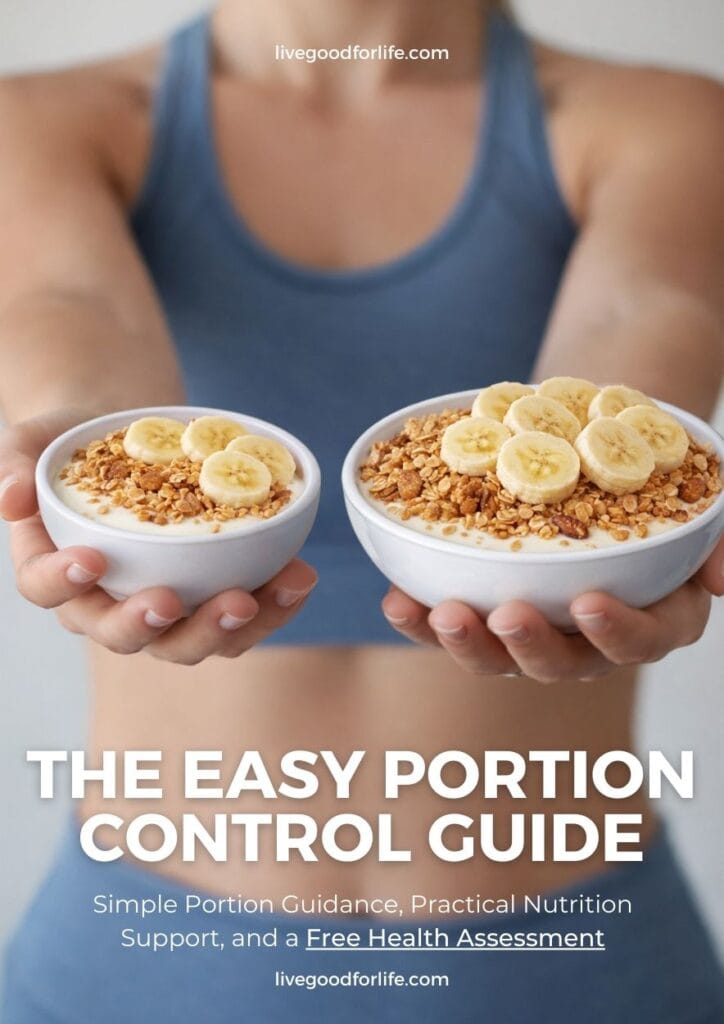
If that sounds like what you need, I created a simple printable resource to help: The Easy Portion Control Guide.
Why Portion Control Feels Hard for So Many People
Most people are not bad at portion control. They are just trying to eat well in a world that makes it harder than it should be.
- Restaurant portions are often too big.
- Packaged foods make large amounts look normal.
- People eat while distracted, scrolling, or working.
- Fast eating makes it harder to notice fullness.
- Many foods are easy to overeat without realising it.
That is why portion control is not really about having more willpower. It is more about having better awareness and easier tools.
What Portion Control Really Means
Portion control means paying attention to how much food you eat at one time.
It does not mean:
- starving yourself
- eating tiny meals
- cutting out foods you enjoy
- tracking every bite forever
- being strict every day
Portion control is simply about matching food amounts to your body’s needs instead of following oversized portions or outside pressure.
Portion control is not food restriction. It is simply learning what a helpful amount looks like.
Portion vs Serving: Why People Get Confused
A serving is the standard amount shown on a label. A portion is the amount you actually eat.
That means:
- a serving size is not automatically the perfect amount for you
- your portion may be smaller, the same, or larger
- what works can change based on hunger, activity, and the meal itself
This small shift helps people stop treating food labels like strict rules.
Why Bigger Portions Often Lead to Mindless Eating
Have you ever noticed how easy it is to finish what is in front of you, even when you were not that hungry?
Bigger portions often make people eat more simply because more food is there. Over time, this can change what feels normal and make it harder to judge what your body actually needs.
This is why portion awareness matters so much. It helps you step back from what is being offered and pay more attention to what actually feels right.
The Easiest Way to Build a Balanced Plate
If portion control feels confusing, start with the simple plate method.
- Half the plate: non-starchy vegetables
- One quarter: protein
- One quarter: carbohydrates
- A small amount: healthy fats
This is a very easy way to build meals without weighing food or counting everything.
It also helps solve common problems like meals that are too heavy on carbs, plates with hardly any vegetables, and meals that leave you hungry too soon.
If you want to understand meal building better, you may also like reading about why protein matters, carbohydrates and what they do, and the difference between good and bad fats.
The Hand Method Makes Portion Control Much Easier
One of the best tools in the guide is the hand-based portion method. It uses your hand as a simple way to estimate food portions.
- Protein: 1 palm
- Carbohydrates: 1 cupped hand
- Vegetables: 1 fist or handful
- Healthy fats: 1 thumb
This works almost anywhere: at home, at work, when eating out, or when you do not want to use scales or apps.
It is simple, flexible, and much easier to stick with than trying to measure every meal.
Why Portion Needs Are Not the Same for Everyone
Not everybody needs the same amount of food.
Body size, activity level, daily movement, appetite, and energy needs all affect portion sizes. Two people can eat the same foods but still need different amounts.
That means portion control should not feel like a rigid rulebook. It should feel more like a starting point that you adjust.
- a very active person may need bigger portions
- someone with lower appetite may need smaller ones
- portion needs may change from meal to meal
- some days you will need more, some days less
Same Food, Different Portion, Different Result
One of the most helpful things to understand is that the same food can have a very different effect depending on the amount.
You do not always need better foods. Sometimes you simply need a better amount.
This is one reason portion control can feel more practical than strict dieting. It gives you more flexibility while still helping you build better habits.
Easy Portion Control by Food Group
Here is the easy version:
- Protein: about 1 palm per meal
- Carbs: about 1 cupped hand per meal
- Vegetables: about 1 to 2 fists per meal or more
- Fats: about 1 thumb per meal
This is not meant to be perfect. It is a practical starting point.
What 25 Grams of Protein Looks Like
A lot of people think they are eating enough protein, but when they look closer, they are often underestimating it.
The guide includes helpful examples of what around 25 grams of protein looks like from foods like chicken breast, salmon, eggs, Greek yogurt, cottage cheese, chickpeas, tofu, canned tuna, and a protein shake.
This is useful because protein can make a big difference with fullness, meal balance, muscle support, and fewer random cravings later.
You may also find these helpful: top high-protein foods and a simple guide to protein.
Carbs and Fats Are Easier to Manage When You See Real Portions
Many people either eat much more than they realise or feel confused about what a normal amount even looks like.
For carbs, examples include:
- rice
- pasta
- potatoes
- oats
- bread
- quinoa
- fruit
- legumes
For fats, examples include:
- olive oil
- avocado
- nuts
- nut butter
- seeds
- cheese
This helps take the guesswork out of eating.
How to Use Food Labels Without Overthinking Them
Food labels can help, but only if you use them in a simple way.
Three key things to look at are:
- servings per container
- serving size
- calories per serving
The big point is this: labels give information, not instructions. The serving size is just the reference amount used for the label. You still decide what portion makes sense for you.
If you want help reading labels more clearly, have a look at how to read supplement labels and spot fairy dusting.
Snacks Are Not the Problem — Mindless Snacks Are
A lot of people feel bad about snacking, but snacks are not automatically unhealthy.
A better way to think about snacks is this:
- have one when your next meal is still far away
- combine protein with fibre or healthy fat
- keep snack portions smaller than a full meal
Simple ideas include apple and nuts, crackers with hummus, or chia pudding with berries.
Where Supplements May Fit In
Some people use products like protein, greens, omega support, or daily nutrition support alongside balanced meals, not instead of real food.
That is the right mindset. Food first. Support where it makes sense.
If you want to look into that side more carefully, these pages may help: the Supplement Education Hub, the Supplement Reviews Hub, the Supplement Savings Calculator, Probiotic Gut Support, and Fish Oil Benefits.
Download The Easy Portion Control Guide
If portion control has ever made you think of dieting, cutting back, or feeling restricted, this guide offers a much better way to look at it.
It is really about understanding what helps you feel balanced, satisfied, and more in control of your eating habits. It is not about being perfect. It is about having a simple system you can use in everyday life.
If you want a clear place to start, download The Easy Portion Control Guide. It makes portion sizes easier to understand without turning food into hard work.
Helpful External Resources
- NHS guide to eating a balanced diet
- MedlinePlus nutrition basics
- American Heart Association healthy eating overview
Frequently Asked Questions
What is portion control in simple words?
Portion control means paying attention to how much food you eat at one time so meals feel more balanced and easier to manage.
Is portion control the same as dieting?
No. Portion control is not about strict dieting. It is about learning what a helpful amount of food looks like for you.
Do I need to weigh food to control portions?
No. The hand method and plate method are both simple ways to guide portions without weighing food.
Why do portion sizes feel harder now than before?
Because bigger portions, packaged foods, visual cues, and distracted eating can all make larger amounts feel normal.
What is the easiest place to start?
Start with the plate method or hand method. Both give you a simple way to build meals without overcomplicating things.